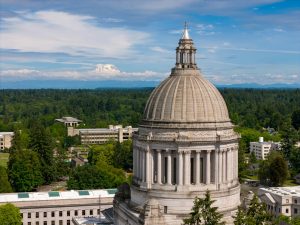





Imagine you’re sitting at your kitchen table, coffee in hand, opening the latest letter from the state. The envelope is bland, but the message inside feels anything but. For years, Washington was one of the few places in America where you could work, raise a family, build a business, and eventually retire without the shadow of a state income tax following you around. That sense of freedom—of keeping what you earned—became part of who we are. But this year, Olympia changed the rules. Lawmakers quietly passed a new state income tax, and now they’re asking you to trust them that it will only touch the “rich.” The problem is, the fine print tells a very different story. Initiative 645 on the November ballot gives us the chance to push back, to repeal this tax before it sinks its teeth into every last one of us. This isn’t about some abstract policy debate between political insiders. It’s about whether the state we love will remain a place where hard work pays off, or whether it will become just another bloated, high-tax state where families and businesses slowly pack up and leave.
Let’s talk about why so many people are skeptical. Politicians told us the income tax would only apply to households making over a million dollars a year. But if you read the law closely—and more importantly, if you watch what Olympia did after passing it—the real intention becomes crystal clear. Actions speak louder than campaign slogans, and the legislators’ actions are deafening. First, they wrote the tax specifically to include pensions. Right now, teachers, firefighters, and other public servants aren’t paying it, but why on earth would you write their retirement income into the tax code unless you planned to lower the threshold later and start taxing them? The only reason to make their pensions subject to the tax is because you intend to collect from them eventually. Second, the Legislature didn’t just pass the income tax once. They voted on it twice—once to pass it, and a second time to make sure they could expand it to everyone. That’s not the behavior of a group of people who see this as a one-time tax on the ultra-rich. That’s the behavior of a group of people laying the groundwork for a universal income tax. State Sen. Jamie Pedersen has even said outright that he supports a state income tax on all Washingtonians. So when supporters of the tax say, “Don’t worry, it’s only for millionaires,” the lawmakers themselves are telling us, “Just wait.”
And if that isn’t enough, consider what happens next. The income tax is already pushing people out of the state. When wealthy residents leave, tax revenues go down. And when revenues go down, what do you think Olympia will do? They’ll use that shortfall as the perfect excuse to expand the tax to more and more families. It’s the oldest trick in the book. They create a small crack in the dam, wait for the pressure to cause a leak, and then tell everyone the only way to fix the leak is to widen the crack. Unless voters pass I-645, you won’t need to be a millionaire to feel this tax. You just need to be patient enough to let the politicians keep their promise about broadening it. The warning signs are everywhere. Even some of the most prominent Democratic leaders in the state are raising the alarm. Former Gov. Christine Gregoire recently told business leaders that Washington has “a spending problem, not a revenue problem.” She watched the budget explode from $33 billion to $80 billion since she left office. Another former governor, Gary Locke, called the spending “out of control.” These are not right-wing talking heads or anti-tax radicals. These are two Democratic governors who led our state and are now saying, with visible frustration, that Olympia has lost its way.
So why are we still being asked to hand over more money? Instead of even trying to find savings, the state’s political leaders passed the largest tax and spending increase in Washington history—$9.3 billion in 2025—and then followed it up with another $2.3 billion spending increase the next year. Let that sink in. Not only did they not try to cut waste, they went on the biggest spending spree in the history of the state, all while knowing that people were already struggling with the cost of groceries, rent, and gas. The pattern is as familiar as it is frustrating. No matter how much we give, it’s never enough. Olympia always has another program, another agency, another pet project. And every time we open our wallets, they find new ways to spend it. This isn’t a revenue problem. It’s a spending addiction. Giving these lawmakers more of our hard-earned money when they have completely failed to manage what they already have doesn’t just hurt your paycheck—it hurts everyone. It sends a message that responsibility doesn’t matter, that there are no consequences for poor decisions, and that the people who work hard and succeed in this state will be treated like endless piggy banks for political vanity projects.
Now, let’s talk about the real-world cost beyond your wallet. Because even if you are lucky enough to never write a check for this income tax, you are going to feel the consequences. The first consequence is that jobs are leaving Washington. National IRS migration data shows that high-income earners are already leaving high-tax states at an accelerating rate, and Washington ranks sixth in the country for losing higher-income residents. A state income tax will only pour gasoline on that fire. A recent Association of Washington Business survey found that nearly one in four Washington employers are now considering packing up and moving out of state—almost triple the rate from just a year earlier. That’s not a coincidence. That’s a direct response to a toxic tax climate and the rising cost of doing business here. Companies like Starbucks, which is moving a large portion of its corporate workforce to Nashville, are shifting operations and good-paying jobs elsewhere. The sad result is that Washington’s unemployment rate is now hovering near 5%, tied for sixth highest in the country, and nearly a full percentage point above the national average. These are not just statistics. These are families who can’t find work. These are college graduates leaving for better opportunities in Texas, Florida, or Tennessee. These are small businesses deciding that the risk of staying is greater than the pain of leaving.
The second consequence is more personal and, in some ways, more heartbreaking. Under the new law, avoiding the income tax effectively means cutting all ties to Washington. To shed your domicile, it appears you must spend 30 days or fewer in the state each year, and you have to sell your home. Think about what that means for the people who have lived here for decades. They have to choose between their memories, their community, their children, their grandchildren—or their financial future. And make no mistake, financial advisors are already telling clients that the “gold standard” for severing ties is to stop all charitable giving in Washington entirely. That means local nonprofits, food banks, arts organizations, and scholarship funds are about to lose thousands of donors who feel forced to cut off their own hometown. It’s no surprise that active home listings are up an average of 27% across much of the state. People aren’t just listing their homes because they want to downsize. They’re listing their homes because they’re being forced out by a tax policy that punishes success and severs deep roots. The saddest part is that this tax hurts the very people who make Washington special. It pushes out the philanthropists who fund our museums, the mentors who support our students, the entrepreneurs who create jobs, and the retirees who volunteer at our hospitals. Whole communities will feel the loss, not just the wealthy.
We’ve been here before, and we know what to do. The last time Washingtonians voted on an income tax was in 2010, when Initiative 1098 appeared on the ballot. It was defeated by a resounding 64% to 36% margin. Do you remember who stood up to fight it? Microsoft, Boeing, Expedia, and the founders of Amazon and T-Mobile. They were not trying to protect fat cats. They were protecting their employees, their customers, and the very fabric of our state’s economy. They understood that an income tax is a slippery slope, and they were right. In the years that followed, without an income tax, Washington’s economy boomed. The state budget grew from under $30 billion to more than $80 billion—without an income tax. That’s proof that we don’t need to tax income to fund a vibrant, growing state. We just need responsible leaders who will live within their means. Washington cannot afford to follow the path of New York or Oregon, where out-of-control spending leads to ever-higher taxes and an increasingly difficult climate for families and businesses. We need a state that can compete. We need a state where a teacher can retire in peace, where a small business owner can expand without fear, and where a young person can build a future without wondering if they’ll be forced to leave.
This November, voters have an opportunity to send a powerful message. We have done it before, and we can do it again. Vote yes on I-645 to repeal the state income tax. Tell Olympia that we see through the millionaire talkcars, that we recognize the expansion tactics, and that we are tired of being treated as an endless source of revenue for irresponsible spending. Most importantly, tell them that Washington belongs to all of us—not to politicians who think they know better. We have a choice to make. We can let the tax-and-spend crowd continue on their path, watching our neighbors pack their bags, our businesses leave, our nonprofits struggle, and our communities shrink. Or we can stand up and say enough is enough. We can pass I-645, slam the brakes on this income tax, and send a clear message that Washington is still a place where innovation, hard work, and generosity are rewarded. Let’s protect the future for our children and grandchildren. Let’s keep Washington a place where people want to live, work, and give. Vote yes on I-645. Let’s bring sanity back to Olympia and make sure the state we love thrives for generations to come.