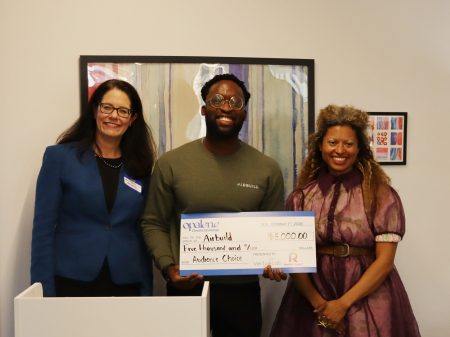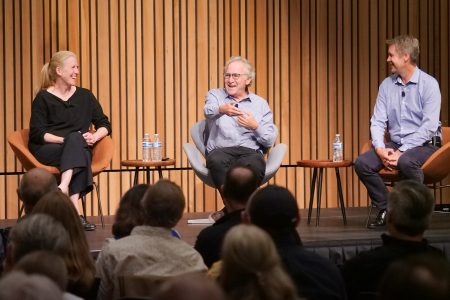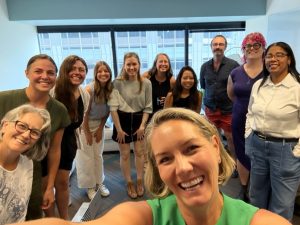





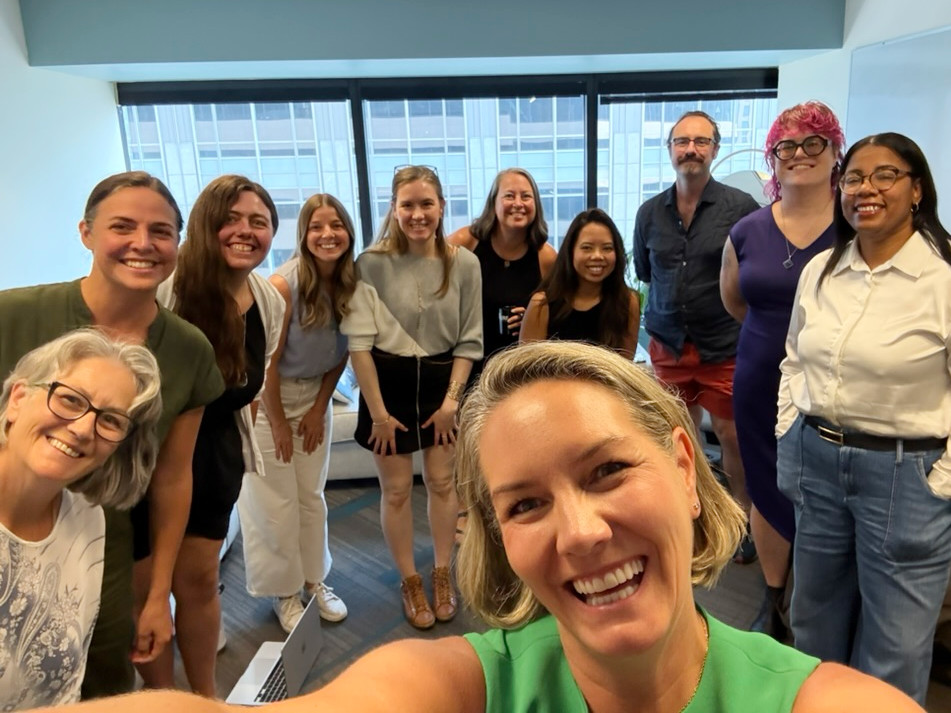
On a cool October evening in downtown Seattle, a new kind of gathering is taking shape. Tonight marks the official launch party for The SWELL, a freshly minted hub for women entrepreneurs that, despite being open for less than ten weeks, has already attracted 53 members and built a surprisingly deep rhythm of programming. The space is buzzing with the kind of energy that comes when people who have spent years feeling isolated in their ambitions suddenly find themselves in a room full of kindred spirits. There are founders scribbling notes during a “hot seat” session, where one woman’s business challenge becomes a group problem-solving exercise. Others are lingering over coffee, swapping stories about clients, pricing, burnout, and the strange joy of finally working for themselves. The founder of it all, Sally Revell, moves through the crowd with the ease of someone who has hosted hundreds of meetings in her career, but there’s something different in her smile. This isn’t just another networking event. “What we’ve created is a community that happens to have a co-working space,” she says. “I am not in the business of co-working. I’m in the business of building a women’s founder community, and we have a space that we convene in.” That distinction matters. The SWELL—an acronym for “Seattle women entrepreneurs leading and lifting”—has taken up residence at SURF Incubator, a longtime co-working and events venue in the city’s core. But from the start, Revell was clear that rentable desks were never the point. The point is belonging. In just two and a half months, the organization has already spawned an accelerator, a consulting startup, and weekly gatherings where founders bring their messiest problems and leave with a path forward. It’s a pace that matches the hunger of its members—women who are done waiting for permission.
Sally Revell’s path to this moment was not a straight line, nor was it a sudden whim. For 25 years, she climbed through marketing leadership roles at some of the biggest and most demanding technology companies in the world: Google, Amazon Web Services, Philips, and Intuit. She knew what it was like to operate in high-pressure corporate environments, to manage teams, to build brands, to stay late and get up early. She was good at it. And yet something was shifting. In 2024, both of her parents died. The loss, she says, was a “catalyst for change.” It had a way of stripping away the noise and forcing a very basic question: What did she actually want to do with the rest of her working life? The answer, at first, was to strike out as an independent consultant. She had the skills, the network, and the reputation to make that work. But what she hadn’t fully anticipated was the loneliness. Consulting, for all its freedom, can be an isolating pursuit—especially for someone who had spent decades inside teams and buildings full of people. She missed the professional camaraderie, the watercooler moments, the sense of being part of something. She craved an in-person community where she could think out loud with other smart, ambitious people who were also building things on their own terms. The more she looked around Seattle, the more she realized there wasn’t quite what she was looking for. There were co-working spaces, yes, and networking groups, and meetups. But there was no central home for women founders specifically—a place that understood the unique pressures of starting a business while also managing life’s many other demands. So she decided to build it herself. The SWELL opened its doors, and within weeks it was clear that she wasn’t the only one who had been waiting for this.
The structure of The SWELL is built on three pillars, and each one reflects a deliberate choice about how to support women in a way that doesn’t just replicate the old boys’ club with better snacks. The first pillar is the shared physical workspace. For $200 a month, members get access to the co-working space Monday through Friday. It’s a modest price for a professional home in a downtown Seattle building, and the cap is currently set at 75 members—an intentional limit that keeps the community tight enough for real relationships to form. Revell is also exploring a virtual membership option, because she knows that not every woman can physically come to a space, especially those managing young children or caring for aging parents. The second pillar is the organization’s stance on funding. The SWELL is explicitly supportive of bootstrapping—building a company with your own revenue and grit—rather than pressuring founders to chase venture capital. That’s a meaningful counterweight to the prevailing startup culture, which often equates success with raising ever-larger rounds of outside money. For many women, especially those who have spent years in corporate jobs, the idea of taking on investors feels less like a prize and more like a trap. Bootstrapping offers control, and The SWELL treats that control as a kind of power. The third pillar is the most personal: programming that is supportive of women’s actual lives. That means daytime sessions in a central location, so evenings are left open for childcare, eldercare, pets, and the thousand other obligations that disproportionately fall on women. It also means integrated self-care offerings, like midday meditation breaks, woven into the schedule as standard practice rather than an afterthought. The result is a workspace that feels less like a treadmill and more like a sanctuary—one where ambition and humanity are allowed to coexist.
The women who have already joined The SWELL tell a revealing story about the moment we’re living in. A survey of participants found that 40% resigned from corporate roles to launch their own ventures, while another 30% were laid off. For many of them, the leap was not a rejection of work itself, but a rejection of the conditions of work—the endless meetings, the rigid hierarchies, the subtle devaluation of their time and judgment. The overwhelming majority had worked for big companies, and the cohort has a median of 17 years of professional experience. These are not wide-eyed novices. They are seasoned operators with a clear-eyed sense of what they don’t want anymore. Notably, about 60% said they never want to return to corporate roles. That’s a striking statistic on its own, but it becomes even more powerful when you consider the fact that all of them are using artificial intelligence in their businesses. This is a generation of women who are not just leaving corporate America—they are building a different kind of future in real time, using the latest tools to operate lean, move fast, and compete without asking anyone for a seat at the table. Revell sees it as a movement. “There’s this movement of middle-aged women [feeling] like, ‘I’m empowered. I can choose to do something different,’” she says. “And when they get together, then the magic starts to happen.” The magic is not always visible from the outside. It happens in small moments: a woman sharing her pricing structure and realizing she’s been undercharging; another woman offering to make an introduction that could change a business overnight; someone else admitting she’s exhausted and having the room nod in understanding rather than judgment. In a world that often tells women to be smaller, quieter, and more grateful, The SWELL exists to encourage the opposite.
The SWELL is not an isolated phenomenon. It is part of a broader surge in women-led enterprise, one that has been building for years and accelerated dramatically in the wake of the pandemic. According to Gusto, a payroll and HR platform, women launched 44% of all new businesses last year. That number would have been almost unthinkable a generation ago. Researchers at the Rutgers Center for Women in Business have identified a key driver: many mid-career women are leaving corporate roles not because they are burned out on work, but because the jobs themselves “did not line up with their needs, values, or realities.” That phrase—realities—gets to the heart of it. Women are still the ones most likely to shoulder caregiving responsibilities, and the rigid structures of corporate employment often demand that they either hide that part of their lives or sacrifice it entirely. Entrepreneurship offers a different bargain: the freedom to build around your life instead of the other way around. Seattle, in particular, has a long history of ventures designed to support women founders and leaders. The Riveter, a pioneering, investor-backed co-working space for women, launched in 2017 with great fanfare and became a symbol of the movement before shuttering its physical locations in 2020 amid the COVID-19 pandemic. But the idea didn’t die—it pivoted online, becoming a community with expert webinars, mentoring, and retreats. Other efforts have grown up in its wake. The Female Founders Alliance has evolved into a national organization operating alongside its own investment fund, Graham & Walker. TheWMarketplace is an e-commerce platform specifically dedicated to promoting women’s businesses. Intentionalist highlights small businesses with diverse owners, helping consumers vote with their dollars. These initiatives have all contributed to a fertile ecosystem, but what Revell noticed was a gap: there wasn’t a dedicated physical hub where the next generation of women founders—especially those in mid-career, with decades of experience—could come together in person and support one another day to day.
The SWELL is already building bridges to that broader ecosystem. Revell is working with other women-focused efforts in the city, including the University of Washington’s Women’s Entrepreneurial Leadership program. That connection brings academic rigor and a pipeline of aspiring founders into the community. The SWELL recently announced a partnership with Formidable Media, a Seattle-based media and membership organization that helps women across the country promote their businesses—a powerful resource for members who have spent years making other people’s brands successful and now need to learn how to tell their own stories. And perhaps most excitingly, Nicole Doyle, who leads the Founder Institute’s Pacific Northwest cohort, has created a custom accelerator for SWELL members that kicks off in January. It’s a clear signal that the traditional gatekeepers of startup education see real potential in this group. The accelerator will offer structured curriculum, mentorship, and accountability—without forcing the venture-capital agenda that so many members want to avoid. The weekly open house, held for anyone curious about the community, continues to draw newcomers every week. On a typical Tuesday, you’ll find a mix of members and non-members, some clutching laptops, others just arriving to see what the buzz is about. Sally Revell is often there, mid-conversation, making introductions, remembering a detail from someone’s last pitch, encouraging someone who is still in the idea stage to just start. The SWELL is not trying to be the biggest co-working space in Seattle. It doesn’t need to be. It is trying to be the place where women who are ready to build something different can find each other, roll up their sleeves, and get to work. If the first ten weeks are any indication, the magic she talks about is already happening. The door is open, the coffee is on, and the next chapter for women entrepreneurs in Seattle has just begun.