






It is the kind of move that says as much about an industry as it does about an individual. Pedram Rezaei, a nearly 20-year Microsoft veteran and the former chief technology officer of Copilot, is joining Amazon Web Services. Rezaei, most recently a corporate vice president on Microsoft’s Superintelligence team, starts this week as a distinguished engineer in AWS’s Agentic AI and Emerging Technologies organization, led by Swami Sivasubramanian. The hire is a reminder that the battle for AI superiority is being fought not only in data centers and research labs, but also in the careers of the technologists who build the products. Rezaei is not a detached executive. In a memo to his team on Monday, Sivasubramanian described him as a hands-on engineer who is still in the code every day, and who plans to keep it that way at AWS. That description resonates at a company like Amazon, which values deep technical expertise and a bias for action. Rezaei’s initial focus will be on Kiro, the AWS coding tool, and Quick, Amazon’s AI assistant for workplace tasks. It is a fitting assignment for someone who spent more than two decades at Microsoft working on some of the most complex and widely used products in the industry. His plan for his first few months at AWS is simple and refreshingly modest: meet people, learn how things work, and ship something real. It suggests that he understands the importance of earning credibility inside a new organization, no matter how impressive his résumé. It also suggests that AWS is in a hurry. The company has been expanding its AI team, and the addition of a veteran like Rezaei is a clear signal that it wants to accelerate its work on agentic AI.
The products Rezaei will work on are at the heart of Amazon’s attempt to catch up in the generative AI race. Kiro, the coding tool, has seen its user count double from the first quarter to the second, according to Sivasubramanian’s memo. Quick, the AI assistant for workplace tasks, has seen its monthly AI users grow fourfold. These are promising numbers, though they are still small compared to the scale of Microsoft’s Copilot ecosystem. Still, they show that Amazon is finding a foothold among developers and knowledge workers who want AI assistance. Rezaei’s role will be to help turn those early signs of momentum into a broader platform. The Agentic AI and Emerging Technologies organization was expanded in July, part of a larger reshuffling of Amazon’s AI teams. That expansion suggests that Amazon sees AI agents as a strategic priority, distinct from its work on models and cloud infrastructure. Agents are the next step in the evolution of AI: instead of simply answering questions or generating text, they take actions on behalf of users—writing code, managing workflows, making decisions. But they also raise difficult questions about reliability and safety. How do you know an agent will do what you asked it to do, and nothing else? This is where automated reasoning and neurosymbolic AI come in, and it is where Rezaei’s experience becomes valuable. He has worked on everything from search and data analytics to conversational AI and foundation models. That breadth of experience makes him well suited to a role that sits at the intersection of many different technologies. He will not just be a strategic adviser; he will be a working engineer who can contribute to the design and implementation of these systems. In a field where product cycles are measured in months, not years, having someone who can ship code is a competitive advantage.
The move also highlights the increasingly direct competition between Microsoft and Amazon in the market for AI-powered work tools. Microsoft in September unveiled an all-in-one Copilot app that combines chat, coding, and agents, positioning it as a direct rival to consumer and enterprise AI apps from OpenAI and Anthropic. The app represents Microsoft’s vision of a single, unified interface for interacting with AI across different tasks. Amazon, meanwhile, made its Quick desktop app generally available in September and brought its main features to mobile. The timing was not coincidental; Amazon is clearly aiming to match Microsoft’s feature set and reach. The two companies are now fighting on multiple fronts: cloud infrastructure, foundation models, coding assistants, and workplace productivity apps. Rezaei, who spent years building Microsoft’s AI products, is now being asked to help build Amazon’s competing products. That is the kind of high-profile move that makes the rivalry tangible. It also raises interesting questions about talent retention. Microsoft has invested heavily in AI, and it has produced a generation of leaders who know how to build and deploy AI systems at scale. But it cannot take all of them for granted. The fact that Rezaei chose to leave after nearly 20 years suggests that even the most loyal employees can be swayed by the opportunity to take on a new challenge. For Amazon, hiring a former Copilot CTO is not just about the skills he brings; it is also about the message it sends to the market. AWS is serious about competing in AI work tools, and it is willing to recruit from its biggest rival to do so.
Rezaei’s background suggests he will be able to make an immediate impact. He joined Microsoft in 2006 and held senior technical roles on Power BI, Dynamics 365, Cortana, Bing, and Azure Maps before moving to Copilot, according to his LinkedIn profile. Each of those products taught him something different. Power BI taught him how to build tools that make sense of complex data. Dynamics 365 taught him how enterprise software functions in the real world. Cortana gave him early experience with conversational AI, long before large language models made chatbots mainstream. Bing taught him the fundamentals of search and machine learning. Azure Maps taught him how to build geospatial services on top of cloud infrastructure. Together, these experiences made him an unusually versatile engineer. In February, he became Copilot’s CTO. In June, he moved to Microsoft’s Superintelligence team, where he was working on training foundation models. That role put him at the center of Microsoft’s effort to build the next generation of AI systems. It also likely gave him insight into the challenges of scaling and deploying models in a way that is both powerful and safe. Now he is bringing that experience to AWS. Rezaei is also the latest in a series of Microsoft executives to make the jump to AWS this year. Shawn Bice returned to AWS in May from a security role at Microsoft to lead its Automated Reasoning Group. Bice had previously spent years at AWS, so his return was a homecoming. Rezaei’s move is different; he is a Microsoft lifer who has chosen to switch sides. That makes the hire more significant, and it may signal a broader shift in the balance of talent between the two companies. Microsoft was contacted for comment on his departure, but it is unlikely to be happy about losing someone with his background.
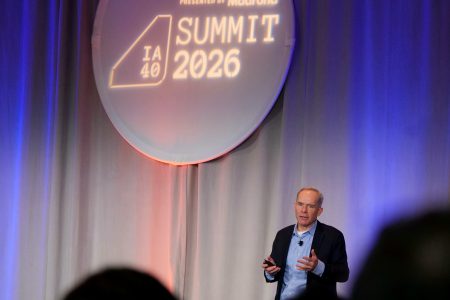
Rezaei’s arrival is not the only news from Sivasubramanian’s team. In the same memo, Sivasubramanian announced that two longtime AWS engineers, Marvin Theimer and Reto Kramer, have returned to work on neurosymbolic AI and automated reasoning. He called this work “one of our biggest bets for the future.” Both Theimer and Kramer had left AWS for Microsoft at different points, and both have now come back. Theimer, who spent nine years as an AWS distinguished engineer before leaving in 2022, joined Microsoft in July 2024 as a corporate vice president and technical architect. He stayed until March, then rejoined AWS in July as a vice president and distinguished engineer. Kramer, who led an automated reasoning team at AWS before leaving in 2023, joined Microsoft in September 2025 as vice president of Security Platform & AI and stayed until May. He rejoined AWS in September as vice president of applied science. The fact that these two engineers felt comfortable returning to AWS after time at Microsoft suggests that the relationship between the two companies is not adversarial at the personal level. It also shows that AWS is investing heavily in an area that is often overlooked in discussions of AI: trust. Neurosymbolic AI pairs large language models with rule-based systems that can check whether an AI agent is following a company’s policies and procedures. This is exactly the kind of reassurance that enterprise customers need before they hand over critical tasks to an AI agent. Sivasubramanian raised this issue at Madrona’s IA40 Summit in Seattle last week. He said nearly every CIO and CEO he talks to asks the same question: “How do I know it is always going to obey all my rules and regulations?” He called this a real concern and said solving it “actually unlocks so many use cases for all these enterprises.” The return of Theimer and Kramer, along with the arrival of Rezaei, is a sign that AWS is building a team around this problem.
Taken together, these moves paint a picture of a company that is thinking strategically about the future of AI. Sivasubramanian hinted at more hires to come, writing that Rezaei joins “as we continue to build out our technical leadership team to help take on the ambitious work we have planned.” The phrase suggests that this is not a one-off acquisition but part of a larger effort to assemble a world-class AI organization. The combination of Rezaei’s product experience and the automated reasoning expertise of Theimer and Kramer gives AWS a more balanced team than it had before. It is one thing to have brilliant researchers who can push the boundaries of what models can do. It is another thing to have engineers who know how to turn those models into reliable, trustworthy products. AWS seems to be building both. For Rezaei, the move to AWS is a personal and professional gamble. He is leaving a company where he had deep relationships and a proven track record. He is joining a competitor that is still trying to establish itself as a leader in AI productivity tools. But he is also joining a team that is focused on one of the hardest and most important problems in the field: making AI agents that enterprises can actually trust. If he and his new colleagues can solve that problem, the impact could be enormous. The rivalry between Microsoft and Amazon will continue, and the flow of talent between them will likely continue as well. But for now, the addition of Pedram Rezaei, Marvin Theimer, and Reto Kramer gives AWS reason to be optimistic about its ambitious plans. Their combined experience spans decades, and their decision to come to AWS—or return to it—says a lot about the momentum the company is building. The work ahead is difficult, but the people now in place have the skills, the experience, and the hunger to take it on.