




The Pacific Northwest’s technology sector is experiencing a significant wave of leadership transitions, marked by high-profile departures, strategic appointments, and the emergence of new ventures. This period of change underscores the dynamic nature of the industry as established giants recalibrate and innovative startups surge forward. These movements are not merely shuffles in corporate titles; they represent a convergence of experienced talent, fresh ideas, and a shifting focus toward next-generation technologies like artificial intelligence, robotics, and the fusion of the physical and digital worlds. From a veteran’s emotional farewell after a quarter-century to the strategic hiring of specialists in nuclear fuel and AI governance, the local tech ecosystem is visibly transforming. These shifts highlight the deep pool of talent in the region and the high-stakes competition for leaders who can navigate complex technological and market challenges. As these executives step into new roles, their collective experience is set to shape the future of their respective companies and the broader tech landscape for years to come, signaling an era of growth, innovation, and reinvention.
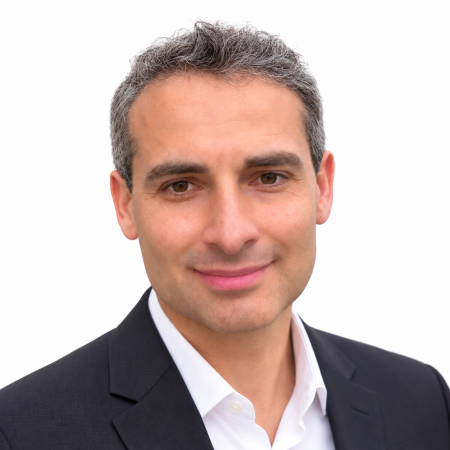
One of the most poignant transitions is the departure of Ravi Vedula from Microsoft, where he spent 26 years as a corporate vice president. Vedula, who led a team of over 1,000 people managing the data and analytics platform behind Microsoft 365 and Copilot, announced his exit with a heartfelt LinkedIn post: “26 years. It’s time. Goodbye and thank you, Microsoft. It’s been a privilege. I gave it my all.” His journey with the company began in 2000, when he became the first engineering manager for Exchange Online, a role that placed him at the very foundation of Microsoft’s cloud-based communication services. His career has been more than just a professional tenure; it’s a deeply personal story that he shared in his memoir, “Hyderabad Days: The code we lived by before we coded,” published by Microsoft’s 8080 Books. The book recounts his childhood in a Hyderabad government housing colony, weaving life lessons about leadership and engineering with his personal history. In an interview with GeekWire, Vedula expressed gratitude for the people and experiences that shaped his career, and he’s looking forward to writing, traveling, and exploring another professional chapter if the right opportunity arises. His story adds a layer of heartfelt reflection to the often-unforgiving world of corporate tech, showcasing the deep bonds formed and the legacy left behind by long-time executives.
In a significant shift for the robotics industry, Boston Dynamics announced that Rohit Prasad will become its new CEO, effective October 7. Prasad, based in the Boston area, previously served as Amazon’s senior vice president and head scientist for artificial general intelligence, a role he left at the end of 2025. He steps into the position vacated by Robert Playter, who retired in February after more than three decades, and takes over from interim CEO Amanda McMaster. Prasad’s background is steeped in AI and innovation; he joined Amazon in 2013 during the early days of Alexa and was instrumental in overseeing the creation of Amazon’s Nova AI models. His appointment signals a strong commitment to advancing Boston Dynamics’ mission in “Physical AI,” which aims to integrate sophisticated software intelligence with their renowned robotics hardware, including the Spot, Stretch, and the development of the Atlas humanoid robot. Prasad expressed his enthusiasm, stating, “Boston Dynamics is uniquely positioned to advance Physical AI through its world-class robotics expertise,” and he is expected to join the company’s board, subject to approval. This move brings together two major forces in the tech landscape—Amazon’s AI leadership and Boston Dynamics’ physical robotics—and is poised to drive innovation in a critical sector of the industry.
The Seattle and Provo, Utah-based experience management giant Qualtrics has also made a strategic leadership move by appointing Mike Potter as its new chief technology officer. Potter comes to Qualtrics from Petal, an Ontario-based healthcare company, and brings a wealth of experience from previous leadership roles at Qlik, IBM, and Cognos. His motivation for joining the company is rooted in a passion for building at scale: “I have spent the better part of my career building platforms at scale, the kind of work that requires deep technical conviction, strong collaboration, and a relentless focus on what customers actually need. That is what drew me to Qualtrics.” His appointment comes at a pivotal time for the company, which recently cut 117 jobs in its Seattle operations, largely in engineering and product teams, and made a substantial $6.75 billion acquisition of Press Ganey Forsta last year. Potter’s task will be to navigate the company through this period of change and strategic focus, leveraging his deep technical expertise to guide its platform development. His extensive background in scaling technology platforms is seen as key to Qualtrics’ next phase of growth as it looks to consolidate its position and refine its offerings in the competitive experience management market.
The healthcare and defense sectors in the Seattle area are also seeing important additions to their leadership teams. Fred Hutch Cancer Center named Shawn Stapleton as its first vice president and chief AI and innovation officer, a newly created role. Stapleton joins the Seattle nonprofit from MD Anderson Cancer Center, where he led AI lifecycle management for over three years, and previously served as the Seattle-based head of data science for Philips. His experience is specifically geared toward scaling AI initiatives in clinical, research, and administrative settings, and the center believes his expertise at the intersection of strategy, governance, and implementation will be instrumental in building the foundation for AI-enabled medicine and discovery. In the defense arena, Seattle-based startup Overland AI has appointed Jon Abramovic as its vice president of international growth. Abramovic, who has held sales leadership roles in Taiwan, Prague, and Beijing, was most recently the director of global defense sales at SIG Sauer and spent eight years at Oshkosh Defense. “Having spent years operating overseas, I’ve seen firsthand what our allies face against near-peer adversaries and what it takes to stay ahead. Overland AI’s technology represents a generational leap in the ground domain,” he said, emphasizing the strategic importance of his role in a company that is currently ranked No. 7 in the GeekWire 200.
Beyond these high-profile individual appointments, new ventures are solidified their leadership teams and established companies are making strategic moves. Noosphere Labs, a Seattle-area AI startup, has announced a robust leadership team for its mission of pursuing “human-centered physical intelligence.” The company, launched by former Meta AI research director Kevin Carlberg, includes co-founder and COO Tyler Simpson, a former Meta and Microsoft employee; engineering leader Andrew Ma from Google Cloud; design partner Joshua Walton from Meta’s Reality Labs; and hardware partner Louis Barinaga from Meta’s AR program. Meanwhile, Earth Finance appointed Liz Pearce as its first chief commercial officer; the Seattle startup recently launched its SpatiaFi platform for location-based capital decisions. In other news, Charlie Bell, the longtime Amazon Web Services executive now at Microsoft, has been appointed to the board of cybersecurity firm Tenable. Amazon also made two notable internal moves, adding Fırat Güder, a professor from Imperial College London, as a scholar in its special projects organization, and promoting Leonardo de Moura to vice president and distinguished scientist with AWS. Finally, the Washington Technology Industry Association (WTIA) has named Amelia Marckworth as its director of programs, innovation and entrepreneurship, and Hyperparam has brought on Hernan Alvarez to lead product and go-to-market efforts, while Zap Energy has added Philip Jensen as its vice president of fuel programs and operations to support its expanded focus on nuclear fission.
This wave of personnel changes, from the deeply personal farewell of a long-tenured Microsoft executive to the strategic appointments shaping the future of robotics and AI, paints a vivid picture of an industry in flux. The common thread is a focus on advanced technology—generative AI, physical intelligence, and even nuclear fusion—and the need for leaders who have both the technical depth and the business acumen to bring these concepts to market. The movements also highlight a healthy churn of talent, with experienced leaders from giants like Amazon, Microsoft, and Google lending their expertise to innovative startups and established companies alike. As these skilled individuals settle into their new roles, the choices they make will not only define their own career trajectories but will also significantly influence the technological landscape and the strategic direction of the organizations they now serve. The Seattle area continues to prove itself as a breeding ground for technological innovation, with its talent pool in high demand as companies across the globe compete for the best minds to navigate the next wave of digital and physical transformation.