




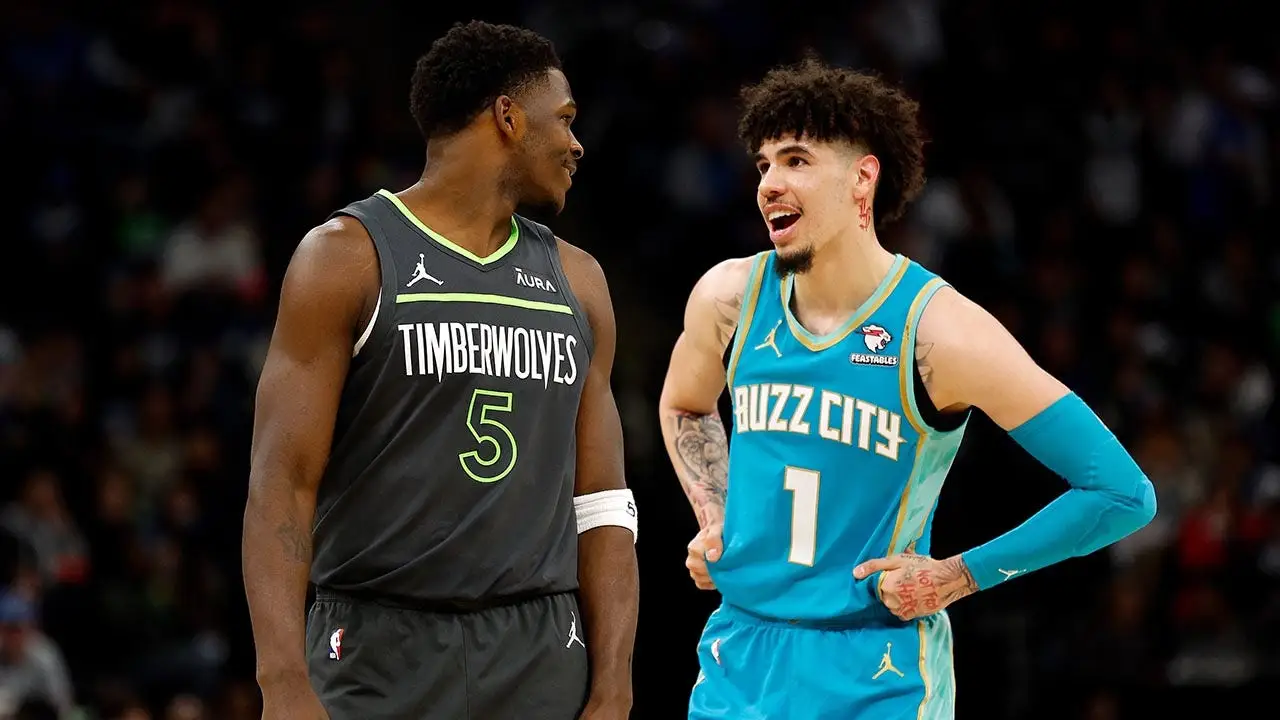
In the hyper-accelerated landscape of the National Basketball Association, where loyalty is frequently balanced against spreadsheet calculations and life-altering decisions can be finalized in a matter of minutes, few events shake the sports world quite like a blockbuster trade. On an otherwise ordinary Thursday, the basketball universe experienced a seismic shift with the announcement that LaMelo Ball, the flamboyant and incredibly talented point guard of the Charlotte Hornets, was being traded to the Minnesota Timberwolves. This move represents far more than a simple exchange of players and draft assets; it is a fascinating cultural collision that unites two of the most electrifying young stars of their generation. By inserting Ball into a Minnesota lineup already anchored by the charismatic Anthony Edwards, the Timberwolves have paired the third overall pick of the 2020 NBA Draft with the top overall selection from that very same class. For sports fans, it is the ultimate “what if” scenario brought to life—a masterclass in front-office ambition that brings together two distinct brands of basketball genius under one chilly midwestern sky, transforming the Timberwolves from an admirable playoff contender into an absolute must-watch spectacle.
To truly understand the human drama at the core of this trade, one must look back at the mesmerizing but deeply frustrating journey of LaMelo Ball. Emerging from a family that was already a household name in American sports culture, Ball bypassed the traditional collegiate route, honing his skills across international professional leagues before arriving in Charlotte as a teenage savior. His impact was instantaneous and intoxicating; with his effortless, court-stretching passes and contagious joy for the game, he marched away with the 2020-21 Rookie of the Year trophy and injected life into a dormant franchise. Yet, the physical demands of the NBA can be incredibly cruel, and Ball’s meteoric rise was repeatedly interrupted by the fragile reality of his own ankles. Over the three seasons stretching from the autumn of 2022 to the spring of 2025, Ball was restricted to playing in just 105 games, a heartbreaking statistic that meant he spent more time wearing designer suits on the sidelines than he did in his basketball jersey. Every setback in his rehabilitation was a quiet tragedy, not just for a player eager to prove his worth, but for a fanbase that desperately wanted to believe he could lead them to the promised land.
For the Charlotte Hornets, executing this trade represents a painful, pragmatic capitulation to reality. The franchise has carried the heavy, exhausting burden of a playoff drought stretching all the way back to the 2015-16 season, a prolonged era of mediocrity that has tested the patience of even the most dedicated North Carolina basketball fans. By choosing to trade Ball and Josh Green to Minnesota, the Hornets’ front office chose to hit the reset button, trading short-term star power for long-term security. In return, Charlotte acquired Naz Reid—a tough, incredibly skilled big man adored by fans—along with an unprotected 2033 first-round draft pick, three first-round pick swaps, and three valuable second-round selections. This massive collection of draft capital joins a treasure chest that already features six first-rounders and eight second-rounders over the next three seasons. By pivoting toward a future built around newly drafted prospects Hannes Steinbach and Christian Anderson, alongside sophomore standout Kon Knueppel, the Hornets’ executives have essentially admitted that building around a brilliant but injury-prone superstar was a gamble they could no longer afford to take.
On the other side of this blockbuster transaction lies the frozen, basketball-crazed state of Minnesota, where the Timberwolves are operating with the fierce urgency of a franchise that knows its championship window is open right now. Having made the playoffs for five consecutive seasons—including back-to-back trips to the Western Conference Finals in 2024 and 2025—the Timberwolves have cast aside their historically cautious reputation in a desperate bid to win a championship. In Anthony Edwards, they have a rising superstar who poured in a breathtaking career-high 28.8 points per game last season, a player whose explosive athleticism and competitive fire demand an equally dynamic partner in crime. The addition of Ball, despite his durability concerns, gives Minnesota a visionary playmaker who can ease the ball-handling duties on Edwards, allowing both stars to thrive in an uptempo, creatively free-flowing offense. While parting ways with Naz Reid—the heartbeat of the team’s bench and a beloved local icon—undoubtedly stings the hearts of local fans, the front office recognized that chasing a historic championship sometimes requires making deeply unpopular and emotionally difficult sacrifices.
This trade also serves as a stark, humanizing reminder of the fleeting nature of modern professional sports contracts and the illusion of long-term security. It was only back in the summer of 2023 that a beaming LaMelo Ball sat before reporters in Charlotte, signing his name to a massive five-year, $260 million maximum contract extension that was supposed to bind his prime years to the city. At the time, Ball spoke with genuine warmth and optimism about the organization’s trajectory, telling the media that he truly believed everyone was “going the right way now.” Yet, in the high-stakes theater of professional sports, plans can disintegrate, and the path that seemed so clear in 2023 quickly became blocked by repetitive injuries and a roster that struggled to keep up with the elite teams in the Eastern Conference. For Ball, the trade to Minnesota is a bittersweet reminder that in this league, you can buy a house and build a home, but you are ultimately a piece in a high-stakes chess game played by billionaires.
Ultimately, this blockbuster deal is about the pursuit of self-actualization for two young men who represent the very future of the NBA. For LaMelo Ball, escaping the heavy expectations of Charlotte and heading to a team with established championship aspirations offers him a clean slate and a chance to rewrite his career narrative away from his injury history. For Anthony Edwards, it is an opportunity to share the spotlight with a peer who possesses the same court vision and star power required to navigate the grueling journey of a deep postseason run. As the dust settles on this massive trade, Charlotte embark on a patient, draft-fueled rebuild, while Minnesota prepare to welcome one of the most charismatic backcourts in basketball history. When Ball eventually steps onto the hardwood of the Target Center, wearing the green and blue of the Timberwolves, it will mark the beginning of a fascinating new chapter—a moment when the business of sports steps aside, and the pure, unadulterated joy of basketball takes center stage once again.