





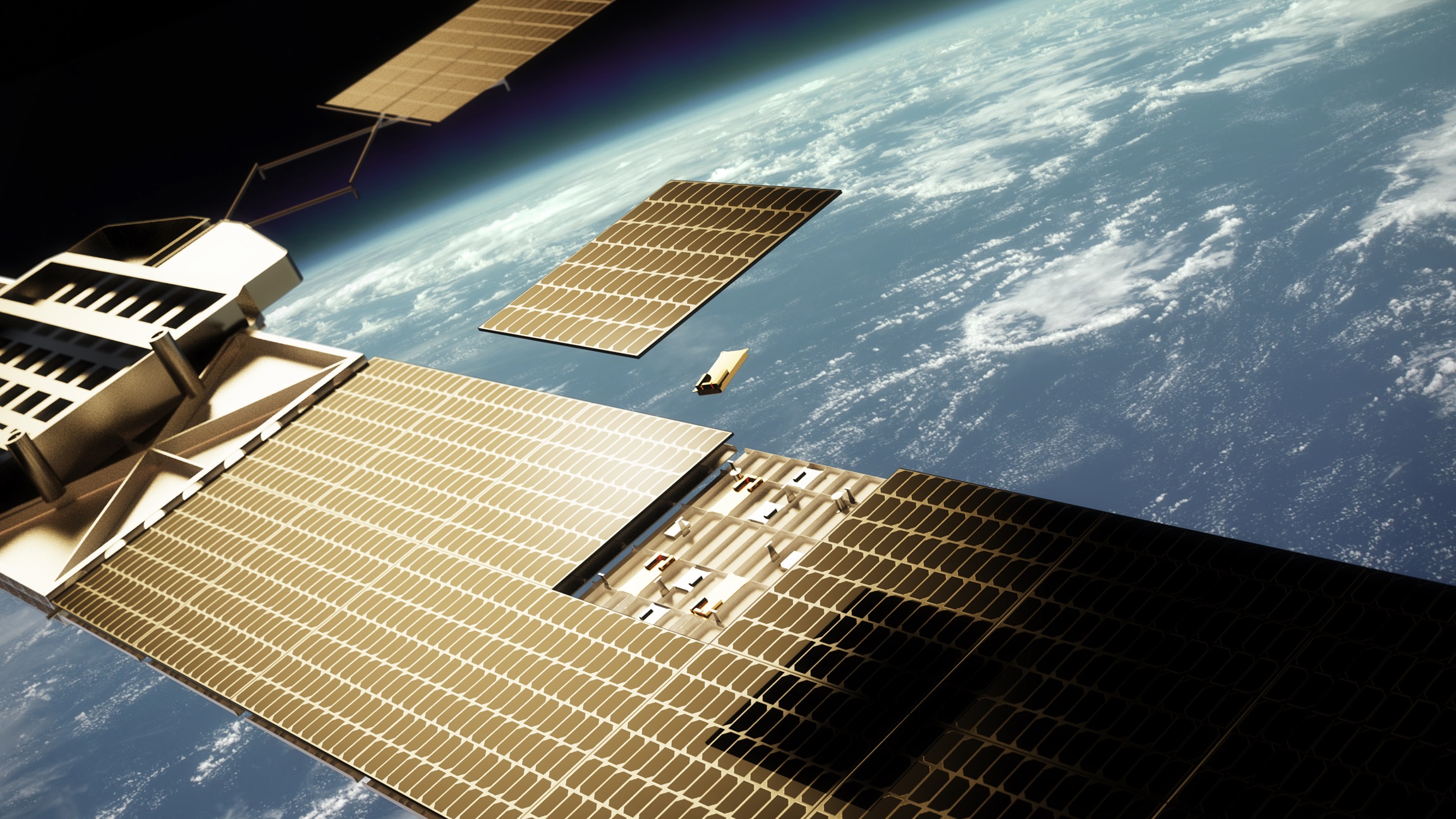
The rapid expansion of artificial intelligence has sparked an unprecedented global crisis on Earth: an insatiable hunger for electrical power and cooling water that our current terrestrial infrastructure simply cannot sustain. As mass-scale neural networks, large language models, and deep-learning operations grow larger, physical data centers are aggressively consuming regional power grids, drying up local water resources used for thermal regulation, and monopolizing vast tracts of valuable land. It was against this backdrop of escalating ecological and technological strain that Sophia Space emerged, driven by a paradigm-shifting vision: to migrate our planet’s heaviest computational burdens off-world and into the cold vacuum of space. By positioning data centers in orbit, humanity can tap into a virtually infinite supply of direct, unfiltered solar energy while simultaneously freeing Earth’s delicate ecosystems from the carbon footprint of digital growth. Yet, for decades, the fatal flaw of space-based high-performance computing was not a lack of power, but the physics of heat. In a vacuum, there is no air to carry heat away via traditional convection fans, forcing satellites to rely on heavy, complicated, and failure-prone cooling systems. Sophia Space has shattered this thermal bottleneck by designing a revolution in satellite design that naturally sheds waste heat directly into the dark, absolute zero of deep space without consuming a single drop of liquid coolant.
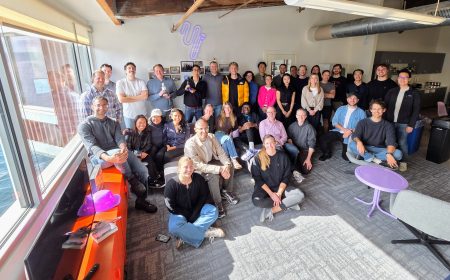
This technological breakthrough did not materialize overnight, but evolved through the cross-pollination of elite public space science and academia. Dr. Leon Alkalai, the co-founder, chairman, and chief technology officer of Sophia Space, initiated this venture following an illustrious 32-year career at NASA’s Jet Propulsion Laboratory (JPL), transitionally leaping into the fast-paced, high-risk space startup arena in 2021. Drawing on deeply rooted connections between Pasadena, California, and Seattle, Washington, Alkalai joined forces with Caltech researchers on a project that was originally aimed at developing space-based solar power transmission networks. When the debut of ChatGPT in late 2022 fundamentally shifted global computational demands, Alkalai and his team recognized an immediate, high-priority pivot: instead of transmitting harvested energy back to Earth to power energy-hungry data centers, they could process the data directly in space. The critical breakthrough came when the research team calculated that a balanced mathematical harmony could be achieved between the solar energy absorbed on the sun-facing side of a micro-satellite module, the electricity consumed by integrated processors, and the thermal radiation emitted from the shaded side. This “eureka moment” confirmed that a self-contained, passively cooled processing node was mathematically and physically possible, laying the groundwork for a revolutionary partnership between JPL, Caltech, and the private space sector.
At the core of this thermal and computational revolution is a modular masterpiece known as TILE, an acronym for Thermal Integrated LEO Edge designed specifically for low Earth orbit operations. Traditional satellite electronics are housed in a central chassis, relying on a complex web of internal heat pipes, circulating coolant fluids, mechanically driven pumps, and massive radiator panels that quickly reach their physical scaling limits. Sophisticating and simplifying this format, the TILE architecture completely decentralizes both power and thermal management by breaking the satellite down into independent, four-inch-square modular building blocks. Each individual TILE functions as an autonomous processing cell: its upward-facing surface is covered in ultra-efficient solar cells that capture pristine sunlight, which directly powers four localized graphical processing units (GPUs) situated inside the module’s core. The opposite, outward-facing underside of the tile is designed with a specialized high-emissivity coating, allowing the waste heat generated by the GPUs to be silently and passively radiated out into the freezing void of space. To make the system fully scalable, these tiles are linked exclusively through flexible fiber-optic connectors, ensuring that only data is shared between modules. Because there are no copper wiring systems, common power lines, or centralized coolant loops connecting the units, a failure in one tile remains completely isolated, allowing data centers to scale to massive wattages without facing thermal limits.
This collaborative engineering triumph was officially validated on July 14, 2024, when Sophia Space and Caltech were granted a joint patent for “Space-Based Data Centers,” following an application filed in October 2024. Reflecting the academic and governmental spirit of the invention, the patent carries the names of Leon Alkalai alongside an elite roster of co-inventors, including John Brophy, Jonathan Sauder, Timothy McElrath, and Douglas Sheldon from JPL; Sergio Pellegrino of Caltech; and retired JPL specialist Don Hunter. Sophia Space’s unique corporate structure ensures that these intellectual pioneers are directly integrated into the company’s financial and operational success, holding equity stakes and active consulting mandates. Rather than severing ties after the initial patent award, Sophia Space has established structured research agreements with Sergio Pellegrino’s laboratory at Caltech, keeping students and academic researchers actively engaged in refining the hardware. The project stands as a prime example of how public resources, academic research, and private commercial enterprises can join forces to tackle complex engineering challenges of global importance.
With intellectual property protections secured, Sophia Space has charted an ambitious, structured timeline to translate their theoretical designs into an operational reality. The company’s immediate milestone is set for 2025, when they will launch their first orbit-bound technology demonstrator in partnership with satellite bus manufacturer Apex. This pioneering mission will integrate a prototype TILE unit containing four high-performance GPUs onto Apex’s flight-proven “Nova” satellite bus, testing the passive thermal radiation cycle in the harsh, real-world conditions of space. Following successful telemetry validation from this initial flight, Sophia Space plans to begin commercializing and selling individual TILE systems and auxiliary components to aerospace clients by 2028. The operational roadmap then peaks in the 2029-2030 timeframe with the deployment of a dedicated test constellation consisting of four to six custom-built satellites. This constellation will showcase the first end-to-end orbital network, paving the way for massive, interconnected structures capable of handling complex AI applications in the next decade.
Ultimately, Sophia Space’s mission is driven by a deep sense of global stewardship and a desire to build a more sustainable future. While other commercial giants like SpaceX and Starcloud are pursuing their own orbital computing networks, their designs rely on more traditional satellite architectures that do not feature the fully passive, modular cooling of the TILE system. Rather than using their newly acquired patent to monopolize the market and block industry growth, Alkalai and his team view their intellectual property as an invitation for global collaboration and licensing. They hope to establish the TILE system as the open, standard architecture for orbital computing worldwide, allowing any operator to license the design and scale their own green networks. For Dr. Alkalai, this journey is about far more than computational efficiency or commercial profit; it is a vital step toward safeguarding Earth’s environment. By utilizing the cold void of space to cool our digital infrastructure, Sophia Space is helping to build a clean, sustainable outer-space economy that supports the next stage of human progress while actively protecting and preserving our home planet.