





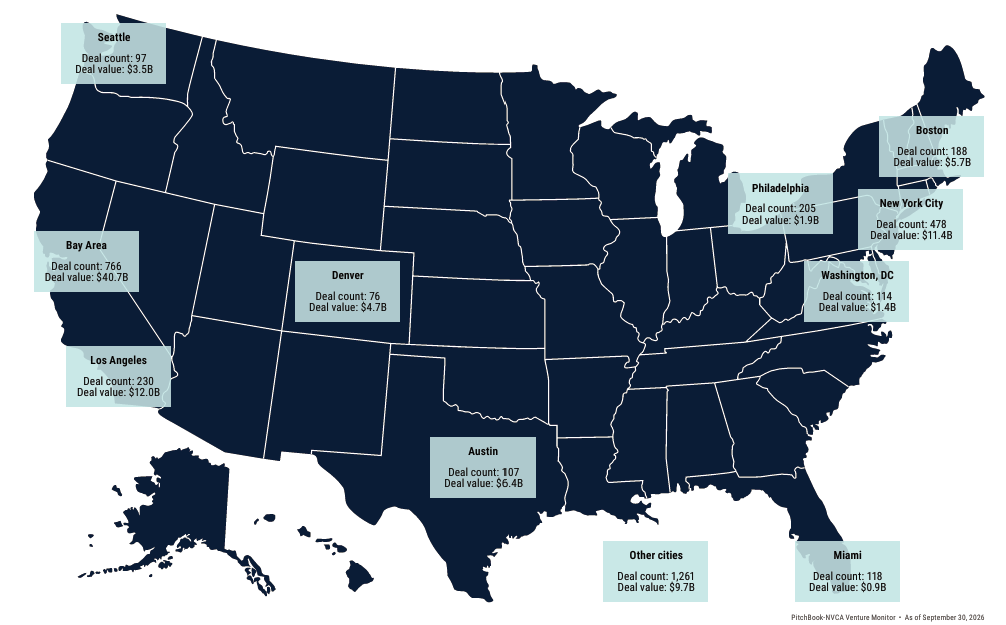
Here’s a humanized take on the latest venture capital numbers out of the Seattle area, based on Todd Bishop’s reporting from GeekWire.
You know that feeling when a city just decides it’s time to show up and show out? That’s essentially what happened in the Seattle area during the third quarter of 2026. Startups across the region raised a staggering $3.5 billion in venture capital—the most in a single quarter in at least a decade, and a number so far above the usual rhythm that it stops you cold. To put it in perspective, the same quarter a year earlier brought in just $1 billion. So this wasn’t a gentle uptick or a steady climb; it was a massive leap, more than tripling what had felt like a respectable number just twelve months before. And it blew past the previous regional records of roughly $2.4 billion set in late 2018 and again in late 2022, both of which were boom moments in their own right. The money didn’t just trickle in, either. It came in big, concentrated chunks, and it was aimed at a very particular kind of company: the ones that build physical things. Not another social app, not a fintech widget, but rockets, satellites, spacecraft, and fusion power plants. That’s the through-line of this entire quarter, and it tells a much bigger story about where the Pacific Northwest tech scene is headed—and why the rest of the country should be paying attention.
The real engine behind this historic quarter was a handful of companies doing jaw-droppingly ambitious work. The biggest names were Kent-based rocket maker Stoke Space, Bellevue developer platform Temporal, and Everett fusion company Helion. Stoke is part of a new wave of aerospace startups trying to make rockets as reusable and routine as airplanes, and its presence in the Seattle area is no accident—the region has quietly become a hub for space hardware, drawing on talent from Blue Origin, SpaceX, and a deep pool of aerospace engineers. Temporal, on the other hand, is a software company, but don’t let that fool you; it’s building infrastructure for complex workflows and data orchestration, the kind of heavy-lift technology that enterprise developers rely on when they need to manage distributed systems at scale. Then there’s Helion, which is chasing the holy grail of clean energy: fusion power. The company announced its $500 million round back in June, and while the timing of when the money hits the books can vary depending on the data provider, PitchBook counted it in the third quarter, which gave the regional total an extra boost. But here’s the kicker that makes the record feel even more solid: even if you completely removed Helion’s $500 million from the math, the quarter would still have been the best in the region’s history. That’s not a fluke or an accounting quirk. That’s a sign that the underlying momentum is real, broad-based, and sustainable in a way that previous booms weren’t.
When you start pulling apart the numbers, the pattern becomes even more striking. The lion’s share of the capital went to companies that are best described as “deep tech” or “hard tech,” and no category loomed larger than space. Three space companies in the Seattle area alone raised a combined $1.6 billion in the quarter. Stoke Space, which is working on a fully reusable launch vehicle, was joined by Redmond-based Starcloud and Seattle’s Hubble Network. Each of those companies is attacking a different piece of the space economy: launch, satellite technology, and the kind of connectivity infrastructure that could make everything from global IoT to rural broadband work better. That’s $1.6 billion going toward what sounds like science fiction—but is actually happening in the warehouses and clean rooms scattered across the region. What’s especially telling is that these aren’t just concept-stage startups burning through pitch decks. They’re raising enormous sums to solve hard engineering problems, manufacture hardware, test prototypes, and push the boundaries of what’s physically possible. It’s a reminder that the Seattle area’s identity is no longer just about software and cloud computing, even though giants like Amazon and Microsoft continue to loom large. The region is increasingly defined by a kind of industrial renaissance, one where the next breakthrough isn’t a new algorithm but a new machine that can leave the Earth’s atmosphere or provide near-limitless clean energy.
Of course, the headline numbers deserve a little context, because not all of the record-breaking total arrived in the way you might expect. The $3.5 billion figure includes Helion’s $500 million round, which the company initially announced back in June. PitchBook, however, counted it in the third quarter, and that timing nuance actually matters. It’s tempting to write off the record as a bit of accounting sleight of hand—a round that landed in a different quarter than you might have assumed. But here’s the thing: even if you strip out Helion’s entire half-billion-dollar raise, the region still would have logged its best quarter ever. That’s the part that makes this feel less like a fluke and more like a structural shift. There’s something fundamentally healthy about a funding environment where one giant check isn’t making the whole quarter look good by itself. The underlying momentum was already there, driven by a broad and diverse set of companies, and Helion’s round simply added an exclamation point. That distinction matters because it suggests the region isn’t just riding one lucky streak or one hot company. It suggests that investors, both local and out-of-state, have decided the Seattle area is where you go for high-risk, high-reward ventures in aerospace, energy, and deep technology.
If you want to zoom in on exactly how deep this shift goes, just look at the space companies. Three of them alone raised a combined $1.6 billion: Stoke, Redmond-based Starcloud, and Seattle’s Hubble Network. These aren’t three startups with similar names hoping to catch a trend. They’re playing in different corners of the space economy—rocket manufacturing, satellite technology, and space-to-ground connectivity—and they’re all getting funded at levels that would have been unthinkable for Seattle-area space startups even five years ago. Stoke is working on making rocket engines and vehicles with an eye toward rapid reusability, and its massive valuation has made it one of the region’s most valuable private companies. Starcloud, based in Redmond, is doing something in the satellite constellation space, likely tied to communications or Earth observation, and it’s benefiting from the same broader investor appetite for space infrastructure. Hubble Network, meanwhile, is building a satellite-based network that could eventually connect devices anywhere on Earth, which sounds like science fiction until you realize how many companies are racing to make it a reality. Together, these three space companies alone raised $1.6 billion combined, nearly half the region’s entire quarterly haul. That’s not just a good few months for the local space industry; it’s a statement that the Seattle area has become one of the most important places in the world for the next generation of aerospace and deep-tech innovation.
What makes this quarter feel especially significant is how much it flips the script on the wider national picture. Nationwide, U.S. venture funding actually fell hard—down 40% from the previous quarter, to $98.4 billion. That sounds like a huge number, and it is, but the drop tells you something important about the broader market. The first half of 2026 was dominated by enormous, history-making rounds for a handful of frontier artificial intelligence labs. Those deals were so massive that they distorted the entire national landscape, making it look like money was flowing everywhere when in reality it was concentrated in a small number of mega-deals. When those rounds tapered off in the third quarter, the national total cratered. But the Seattle area went the other way, and that’s the fascinating part. While the rest of the country was digesting a 40% drop in venture funding quarter over quarter—down to $98.4 billion nationally—the Pacific Northwest was having its best three months on record. That disconnect is a reminder that national totals can be heavily skewed by a few enormous AI rounds in Silicon Valley. The real story is in the regional and sectoral currents, and Seattle’s current is flowing strongly toward industrial innovation.
Space is perhaps the clearest symbol of this shift. Three local space companies alone raised a combined $1.6 billion in the quarter: Stoke, Redmond-based Starcloud, and Seattle’s Hubble Network. That’s nearly half of the entire region’s venture haul, and it’s a remarkable concentration of capital in a sector that people used to think of as the domain of governments and mega-corporations. But the calculus has changed. Launch costs have plummeted, satellite technology has gotten smaller and more capable, and investors have realized that space is no longer just a science project—it’s a commercial frontier with real revenue models. Stoke is working on fully reusable launch vehicles, a goal that sounds straightforward but is technically brutal, requiring precision manufacturing, advanced propulsion, and a tolerance for failure that few industries can match. Starcloud, based in Redmond, is focused on satellite communications and data relay, essentially building the connective tissue for an economy that increasingly depends on real-time information from orbit. And Seattle’s Hubble Network is using a different approach entirely, building a network that could connect all kinds of devices from space, a sort of “internet of things” that spans the globe. Together, these three space companies alone raised $1.6 billion. That’s nearly half the entire region’s venture total, and it’s a clear sign that Seattle isn’t just a software town anymore—if there was any doubt, the hardware revolution has officially landed.
But while Seattle was setting records, the broader U.S. venture capital market was doing the opposite. Nationally, funding fell a whopping 40% from the prior quarter, dropping to $98.4 billion. That sounds like a lot, and it is, but the decline wasn’t about fear or a market collapse. It was about timing. The first half of 2026 had been propped up by enormous, eye-watering rounds for a handful of frontier AI labs—the kind of nine-figure and even ten-figure checks that make headlines and move entire funding tallies. When those mega-rounds tapered off in the third quarter, the national numbers naturally sank. That’s the context that makes Seattle’s performance so striking. At the very moment the broader venture market was cooling off, at least by the extreme standards of earlier in the year, the Seattle area was heating up in a completely different direction. The money that flowed here didn’t go to the same old AI models or software subscriptions; it went to companies wrestling with the physical world—making things, launching things, and generating energy. That divergence isn’t just a quirk of the numbers. It’s a sign that investors are increasingly willing to bet on the slow, hard, expensive work of changing how the real world operates, and the Seattle region is one of the few places on Earth with the talent and infrastructure to actually pull it off.
If you dig into the details, you’ll see that a huge chunk of the money—$1.6 billion in total—went to just three space companies. Stoke, the Kent rocket builder, was joined by Redmond-based Starcloud and Seattle’s own Hubble Network, and together they accounted for nearly half of the region’s entire quarterly haul. That’s a stunning concentration, and it underscores how central the space economy has become to the Pacific Northwest. Rocket factories, satellite constellations, and even companies building the networking infrastructure for space—this is the new aerospace cluster, and it looks very different from the one that built the 747. Stoke is trying to build a fully reusable rocket that can land like a plane, a project that sounds like science fiction until you realize the engineering talent right there in Kent. Starcloud is working on satellite technology that aims to make data from space more accessible, while Hubble Network is tackling the challenge of connecting devices from space, essentially building a global network that could one day power everything from smart sensors to remote communications. Together, these three space-related companies raised $1.6 billion in the quarter—nearly half of the entire regional total. That’s a jaw-dropping concentration of capital in a sector that was once the domain of governments and defense giants, and it signals that Seattle’s startup ecosystem has found a second gear.
But here’s the thing that makes this quarter so interesting: it happened while the broader U.S. venture market was pulling back. Nationwide, venture funding fell by 40% from the previous quarter, landing at $98.4 billion. The reason isn’t that investors got scared; it’s that they had already poured enormous sums into frontier artificial intelligence labs during the first half of the year, and those mega-rounds naturally tapered off as the calendar moved on. So while the national numbers looked like a retreat, the Seattle area was busy doing something different. It wasn’t chasing the same AI giant rounds that dominated Silicon Valley’s headlines. Instead, investors were putting their money into hard tech, deep science, and companies with long development timelines but potentially enormous payoffs. That’s why the national story was actually a story of contraction, with U.S. venture funding falling 40% from the prior quarter to $98.4 billion, while Seattle was setting a record. The AI lab frenzy that had sucked up billions in the first half of the year cooled off, and that created a vacuum that regional investors filled with something arguably more tangible: big bets on aerospace, fusion, and infrastructure software.
Digging into the numbers, it becomes clear that this wasn’t just one lucky bet paying off. It was a coordinated, broad-based move into what people used to call “deep tech” but increasingly just call “the real world.” Three space companies alone raised a combined $1.6 billion: Stoke, Redmond-based Starcloud, and Seattle’s Hubble Network. Each has a slightly different lane—Stoke with its reusable rockets, Starcloud with satellites and space systems, and Hubble Network with space-based connectivity and IoT networking—but together they represent a critical mass of aerospace activity that most regions would kill for. This is the kind of industrial renaissance that policymakers love to talk about, but it’s actually happening in the Seattle suburbs. The fact that these three companies pulled in $1.6 billion between them shows that investors are serious about the region’s ability to manufacture, launch, and operate space infrastructure, not just write code for it. And it’s not just space. The fusion work at Helion points to an even longer-term bet: clean, nearly limitless energy. Helion’s $500 million round had actually been announced back in June, but PitchBook counted it in the third quarter, and even if you set that money aside, the quarter would still have been the region’s biggest on record. That’s the kind of detail that makes you realize this wasn’t a fluke or a one-company story. It was a broad-based, hardware-heavy surge.
Dig a little deeper into the numbers and you start to see why this quarter feels so significant beyond the headline. The previous record, about $2.4 billion, was set in late 2018 and then matched in late 2022. Those were both times when the regional startup ecosystem was riding serious momentum—2018 was the tail end of a long bull market, and late 2022 was the beginning of the generative AI wave, even as the broader tech market was correcting. To see Seattle blow past those records by more than a billion dollars suggests something structural, not cyclical, is happening. Even the asterisk in the data tells the same story. The total includes Helion’s $500 million round, which the company announced back in June but which PitchBook only counted in the third quarter. But here’s the kicker: even if you strip that round out entirely, the quarter would still have been the region’s biggest on record. That’s not a fluke, and it’s not a one-company miracle. It means the infrastructure for this kind of funding is in place, the talent is here, and the appetite for ambitious, capital-intensive companies is real. The Seattle area has long been known for cloud computing and software—think Amazon, Microsoft, and a thriving startup ecosystem born from those giants. But this quarter was a reminder that the region’s DNA also includes a deep streak of industrial ambition, the kind that builds things in the physical world and doesn’t flinch at multi-year development timelines or complex regulatory environments.
Nowhere was that more clear than in the space sector. Three space companies in the region raised a combined $1.6 billion over the quarter: Stoke Space, Redmond-based Starcloud, and Seattle’s Hubble Network. That’s nearly half of the entire regional total, and it underscores just how central the space economy has become to the Pacific Northwest. These aren’t just companies with “space” in their name; they’re working on fundamentally different pieces of the orbital infrastructure puzzle. Stoke is focused on making launch vehicles that can land like a rocket but with the operational simplicity of a commercial aircraft. Starcloud is building satellite technology, though specifics often remain under wraps—par for the course in a sector where proprietary engineering advantage is everything. And Hubble Network is working on satellite connectivity for the internet of things, trying to connect everything from shipping containers to agricultural sensors directly from space. Taken together, these three companies raised a combined $1.6 billion, which is nearly half of the entire region’s quarterly total. That’s a serious statement about the Puget Sound’s growing reputation as a home for space innovation—not just for software that supports space, but for actual metal-and-composites hardware that launches, orbits, and transmits. It’s the kind of momentum that tends to feed on itself, attracting more engineers, more talent, and more investors who want to be near the action.
At the same time, the national picture looked completely different. Across the United States, venture funding fell 40% from the previous quarter, landing at $98.4 billion. That sounds like a catastrophic drop, but it’s important to understand why it happened. The first half of the year had been propelled by absolutely massive rounds for frontier artificial intelligence labs—the kind of mega-deals that make headlines and move entire markets. Those rounds inevitably tapered off, and without them, the national numbers deflated like a balloon. But here’s the thing: while the rest of the country was riding the AI wave, Seattle was busy doing its own thing. The region’s strength has never been about chasing the hottest trend of the moment; it’s been about building durable, capital-intensive companies in aerospace, clean energy, and developer infrastructure. And that’s exactly what paid off in Q3. The national downturn was largely a story of software and AI funding contracting back to earth, but the Pacific Northwest’s portfolio is weighted toward hardware, deep tech, and physical-world innovation—sectors that don’t move on quite the same hype cycle. That’s why Seattle could post a record quarter even as the rest of the country saw a 40% drop in venture funding from the previous quarter, down to $98.4 billion as the massive rounds for frontier AI labs that had dominated the first half of the year began to taper off.
Nowhere was that “build things” identity more obvious than in the space sector. Three space companies in the region alone raised a combined $1.6 billion during the quarter: Stoke, Redmond-based Starcloud, and Seattle’s Hubble Network. That’s nearly half the entire regional total, and it signals something profound about the kind of innovation ecosystem that’s been taking root in the Puget Sound area. These aren’t just companies with a vague space-adjacent pitch; they’re working on everything from orbital launch vehicles to satellite communications networks to the kind of precise connectivity infrastructure that could underpin the next generation of the Internet of Things. Stoke Space, with its Kent base, is focused on building rockets that can be quickly and affordably relaunched, and it has become one of the most closely watched companies in the private space race. Starcloud, based in Redmond, is part of the region’s growing satellite constellation scene, while Seattle’s Hubble Network is working on wireless connectivity for low-power devices that could connect billions of sensors without needing traditional cellular networks. Together, these three companies alone accounted for $1.6 billion of the region’s total. That’s nearly half the entire quarterly haul, and it speaks to something important: when Seattle bets, it bets big, and it bets on deep, hard-to-replicate technology.
Now, here’s where the national picture gets interesting, because the Seattle boom ran directly against the broader trend in the United States. Across the country, venture funding fell by a whopping 40% from the previous quarter, landing at $98.4 billion. The reason? The huge rounds for frontier AI labs—the kind of mega-deals that dominated the first half of the year and propped up the national numbers—began to taper off. Think of it this way: earlier in the year, a handful of AI companies were vacuuming up billions of dollars like they were on a Black Friday shopping spree, and that alone was enough to make the overall national numbers look rosy. When those deals slowed down, the national total dropped off a cliff. But the Seattle area didn’t get that memo, and that’s the interesting part. The region’s record quarter wasn’t a side effect of the national AI frenzy; it was driven by something different. While the rest of the country was cooling off after a furious first half of 2026, the Puget Sound region was just getting started. Investors were writing checks for companies that make things, often literal hardware that has to survive launch, orbit, or the plasma-white heat of a fusion reaction. It’s a different kind of risk profile than funding a software startup, but for the Seattle area, it’s one that plays directly to the region’s strengths.
There’s a deeper story here about how venture money is moving, and it’s not just about Seattle. Nationally, U.S. venture funding actually fell 40% from the previous quarter, down to $98.4 billion, as the gigantic mega-rounds for frontier AI labs that dominated the first half of the year finally started to taper off. That’s a significant divergence: Silicon Valley and other big tech hubs were hitting the brakes, at least relative to their own breakneck pace, while the Seattle area was hitting the gas. The reason isn’t that the national mood shifted away from tech entirely—it’s that investors were looking for something different. The first half of 2026 was all about a handful of AI labs raising nine-figure and even billion-dollar rounds to fund compute, models, and talent. When those rounds slowed, the national numbers naturally dropped. But in Seattle, the momentum was tied to physical infrastructure: companies that are building actual hardware, solving hard engineering problems, and pursuing massive, capital-intensive projects. Rockets don’t care about interest rates. Fusion reactors don’t care about software eating the world. They require patient capital, deep technical talent, and a tolerance for long development timelines—all things that the Seattle area has in spades. And that’s why the region was able to buck the national trend while the rest of the country watched its venture totals fall.
That national decline makes Seattle’s achievement even more striking. Across the U.S., venture funding dropped 40% from the second quarter to $98.4 billion in Q3, a slide driven largely by the absence of the massive rounds for frontier AI labs that had defined the first half of the year. In other words, the same speculative energy that poured into generative AI and large language models earlier in 2026 simply wasn’t there to prop up the third-quarter numbers. But you wouldn’t know it from looking at Seattle. While the broader market was catching its breath, Puget Sound startups were closing some of the biggest deals in their history. This divergence is actually a fascinating signal. For a while, it seemed like every dollar in tech wanted to chase the same thing: AI infrastructure and foundation models. But the Seattle area’s numbers suggest that a meaningful slice of investor attention—and capital—has shifted toward companies that are tackling harder, longer-horizon problems in the physical world. The national venture funding picture dropped by a dramatic 40% from the prior quarter, down to $98.4 billion, largely because those huge rounds for frontier AI labs that had dominated the first half of the year started to taper off. But in Seattle, the flow of capital kept climbing, driven by an entirely different set of bets: on aerospace, on energy, and on the kind of deep tech that takes years to build and even longer to scale.
What makes this quarter so significant isn’t just the headline number—it’s where the money went. The majority of the funding went into companies building physical infrastructure, and that’s a notable shift for a region often associated with software and cloud computing. The most striking example is the space cluster. Three local space companies alone raised a combined $1.6 billion in the quarter: Stoke Space, Redmond-based Starcloud, and Seattle’s Hubble Network. That’s a lot of money going into a sector that, frankly, has a reputation for burning cash and missing deadlines. But investors are clearly betting that this time is different—that the cost curves have come down enough, the technology has matured enough, and the market for satellite services, launch, and orbital infrastructure is finally real enough to support serious scale. Stoke, with its focus on reusable rockets, is going after the same kind of breakthrough that SpaceX normalized, but with a fresh approach and a nimble, modern engineering culture. Starcloud is working in the satellite constellation space, aiming to provide better, faster data services from orbit. And Hubble Network, based in Seattle proper, is doing something that sounds like science fiction: building a satellite network that can connect to all sorts of devices down on Earth, even ones that don’t have a clear line of sight to the sky. Together, these three companies alone pulled in $1.6 billion, nearly half of the entire region’s haul. That’s not just a good quarter for a few lucky founders; that’s a statement that investors see the Seattle area as one of the planet’s most important hubs for deep tech and space innovation.
But the record didn’t rest on space alone. The $3.5 billion total includes a $500 million round for Helion, the Everett-based fusion energy company that has long been one of the most watched startups in the region. Fusion energy is one of those fields that has always seemed like it’s twenty years away and always will be, but Helion has attracted serious backing from high-profile investors who believe it’s closer than the skeptics think. It’s worth noting a small accounting quirk here: Helion announced that $500 million round back in June, but PitchBook counted it in the third quarter, which is a reminder that these tallies don’t always line up neatly with what you read in the news on any given day. But even if you took that entire half-billion out of the equation, the quarter would still have been the region’s best on record. That’s the truly remarkable part. This wasn’t a fluke driven by one massive deal that skewed the numbers. It was a broad, sustained wave of investor confidence in the Seattle area’s ability to commercialize complex technologies, and the fact that it held up even without Helion’s contribution says something profound about the depth of the local pipeline.
The center of gravity in this boom, at least when it comes to the biggest checks, was the space industry. Three space companies alone raised a combined $1.6 billion: Stoke, along with Redmond-based Starcloud and Seattle’s own Hubble Network. That’s nearly half of the entire region’s venture haul, and it signals something important. The Pacific Northwest has long been known for cloud computing, e-commerce, and software—think Amazon and Microsoft—but this quarter was a reminder that the area’s DNA also runs deep in aerospace. Boeing built its commercial jet business here, and now that same engineering heritage is being poured into a new generation of space startups. Stoke is working on reusable rockets that can land vertically, Starcloud is building satellite-based infrastructure, and Hubble Network is working on satellite connectivity for the Internet of Things. None of these are paper companies or “concept” businesses. They’re betting on hard engineering, manufacturing, and long-term technological breakthroughs. The fact that they collectively pulled in $1.6 billion—just in the space sector, just in this region—is a sign that investors see the Seattle area as a place where you don’t just pitch ideas; you build the actual hardware that goes to space or generates clean power.
But there’s an even more interesting layer to this story, and it has to do with the timing. The $3.5 billion total includes Helion’s $500 million round, which the company initially announced back in June but which PitchBook counted in the third quarter. That’s a quirk of data, not a subtle attempt to pad the numbers, and it’s worth mentioning because some people might otherwise assume the quarter was artificially inflated by a single deal. But here’s the kicker: even if you take Helion’s half-billion completely out of the equation, the Seattle area still would have posted its biggest quarter in at least a decade. That’s the kind of detail that separates a lucky blip from a genuine trend. It wasn’t one giant round carrying the region; it was a cluster of substantial investments across different companies and sectors, all landing in the same three-month window. That’s not coincidence. That’s momentum.
Nowhere is that momentum more visible than in the region’s growing space economy. Three local space companies alone raised $1.6 billion combined: Stoke, Redmond-based Starcloud, and Seattle’s Hubble Network. These aren’t tiny seed bets or speculative side projects. Stoke is working on fully reusable rockets and has already made headlines with its innovative design and rapid testing cadence, while Starcloud and Hubble are building satellite and communications infrastructure that could underpin everything from global internet to advanced Earth observation. Add in Blue Origin’s massive presence in Kent and the long legacy of Boeing’s aerospace work, and you start to see why investors are treating the Seattle area as a serious space hub. It’s not just about rockets, either. Helion, based in Everett, raised $500 million for its fusion energy work—a round that was actually announced in June but counted by PitchBook in the third quarter. Even if you set that half-billion aside, the quarter still would have set a regional record, which tells you just how much momentum the area has. This isn’t a story about one lucky check or one hot startup; it’s a story about a deep bench of companies working on the hardest problems in the physical world, and investors finally giving them credit for it.
Space was arguably the crown jewel of this quarter’s activity, and it’s worth zooming in on because it really shows the shape of the region’s new industrial identity. Three space companies alone raised a combined $1.6 billion: Stoke Space in Kent, Starcloud in Redmond, and Hubble Network in Seattle. That’s nearly half of the entire regional total, and it’s a signal that the Seattle area has become something of a hard-tech powerhouse in the aerospace and space sectors. Stoke Space, with its rocket development work, is going after the same kind of reusable launch economics that SpaceX pioneered, but it’s doing so with a distinctly Pacific Northwest approach—iterative, engineering-first, and unafraid to challenge legacy players. Starcloud, meanwhile, is working on satellite technology, and Hubble Network is building infrastructure for connecting devices in space. Together, these three companies alone pulled in $1.6 billion, which is more than many entire states raise in a year. That’s not just a coincidence; it’s a signal that the region’s deep talent pool in aerospace and engineering is paying off. The Seattle area has long been known for cloud computing and software, but this quarter suggests it’s becoming just as much a hub for the hardware-heavy, capital-intensive industries that are pushing the boundaries of what’s physically possible.
The national picture made Seattle’s performance look even more striking. Across the United States, venture funding actually fell 40% from the second quarter, landing at $98.4 billion. That might sound like a disaster, but it’s really a story of normalization. Earlier in the year, the market had been supercharged by enormous, eye-popping rounds into a few frontier AI labs—companies like OpenAI, Anthropic, and xAI, which vacuum up billions at a time and dominate the headlines. When those mega-rounds paused in the third quarter, the national totals naturally took a hit. But the money didn’t disappear. Instead, it moved around. It went into hard tech, climate, aerospace, and advanced manufacturing—the very sectors where Seattle happens to excel. So while the broader U.S. market saw venture funding fall 40% from the prior quarter to $98.4 billion, the Seattle area was quietly having its best three months in a decade. That’s a striking divergence, and it suggests that the frothy, valuations-be-damned race to fund AI chatbots and cloud infrastructure is giving way to a more patient, industrial-minded kind of investing. The giants of frontier AI may have grabbed the headlines in the first half of the year, but the third quarter belonged to companies that actually have to make something work in the physical world.
Nowhere is that regional identity more clear than in the space sector, which was the single biggest contributor to the region’s record quarter. Three space companies alone—Stoke Space, Redmond-based Starcloud, and Seattle’s Hubble Network—raised a combined $1.6 billion. That’s nearly half of the entire regional total, and it shows how deeply the Seattle area has embedded itself in the new space economy. These aren’t just small startups dabbling in satellite imagery or rocket tourism. Stoke is working on fully reusable rockets, aiming to bring down the cost of access to orbit in a way that could transform everything from communications to national security. Starcloud is building a constellation of satellites designed to provide persistent Earth observation and communications, which sounds technical but basically means they’re putting a smarter, more responsive network in orbit. Hubble Network is tackling the other end of the problem, using satellites to create a global, satellite-based network for Internet of Things devices—think sensors in remote fields, cargo ships, or oil pipelines that need to talk to each other from anywhere on the planet. Together, these three companies pulled in $1.6 billion, nearly half the region’s entire quarterly haul. That kind of concentration in space and deep tech is a strong signal that investors are betting on the long game in physical infrastructure, not just chasing the next software subscription.
But here’s the twist that makes this quarter truly fascinating: the national venture market was moving in the opposite direction. Across the United States, venture funding fell by a dramatic 40% from the second quarter of 2026, landing at $98.4 billion. The reason, according to the PitchBook data, is that the giant rounds for frontier AI labs that had supercharged the first half of the year started to taper off. Those huge checks—think billion-dollar rounds for the most advanced artificial intelligence companies—were the engine of the national market’s earlier boom, and when they slowed, the overall numbers naturally took a hit. But Seattle didn’t get that memo. In fact, the region seemed to be swimming against the national current in the best possible way. While the rest of the country was pulling back, local investors were doubling down on hardware and deep tech. That’s a meaningful divergence. It suggests that the venture capital slowdown, at least in this moment, is less about a lack of capital or appetite and more about where that capital is choosing to go. Nationwide, the big money that had been funneling into frontier AI labs earlier in the year just wasn’t there in the same volume, so the overall U.S. funding number dropped 40% from the previous quarter to $98.4 billion. But the Seattle area didn’t need a giant AI model company to make its numbers; it had rockets and reactors instead.
And that’s the part of this story that’s hardest to miss. The money flooding into the Seattle region wasn’t spread evenly across every sector, nor was it going to the usual software suspects. Three space companies alone—Stoke Space, Redmond-based Starcloud, and Seattle’s Hubble Network—pulled in a combined $1.6 billion. That’s nearly half the entire regional total, and it reflects a profound shift in the identity of the Pacific Northwest’s startup ecosystem. For years, the region was known for cloud computing and software, thanks to giants like Microsoft and Amazon. But the Q3 numbers suggest the next wave is being built out of metal, propellant, and magnetic coils. Stoke is working on fully reusable rockets, the kind of engineering challenge that would have been unthinkable for a startup a decade ago but is now attracting serious institutional capital. Starcloud, based in Redmond, is focused on satellite technology, while Seattle’s Hubble Network is building space-based infrastructure for the Internet of Things, connecting everything from shipping containers to agricultural sensors from orbit. These are not paper companies. They are betting on the physical world, and the investors writing these checks are betting that the Pacific Northwest has the talent and the patience to make those bets pay off.
The national picture makes Seattle’s achievement even more striking. Across the United States, venture funding actually fell by 40% compared to the previous quarter, landing at $98.4 billion. That sounds like a huge number, and it is, but the sharp decline was largely a story about the frothy frontier AI boom settling down. In the first half of the year, massive rounds for a handful of AI labs—think companies training the next generation of large language models—had poured tens of billions into a few Bay Area behemoths. When those mega-rounds tapered off in Q3, the national total naturally dropped. That’s not a sign of a broken market; it’s a sign of a market taking a breath. But it makes Seattle’s performance all the more striking. While the rest of the country was watching AI mega-funding slow down, the Pacific Northwest was quietly doing something different. Instead of racing to train the next frontier model, Seattle-area investors and founders were funding companies with tangible, physical engineering challenges—rockets that need to land themselves, satellites that need to talk to each other, fusion reactors that need to generate more energy than they consume. That’s a fundamentally different kind of bet, and it’s one that paid off in a big way this quarter.
It’s worth zooming out to appreciate just how unusual this moment is. Nationally, U.S. venture funding fell by 40% from the previous quarter, landing at $98.4 billion. The reason? The giant rounds that went to a handful of frontier AI labs in the first half of the year—the kind of mega-rounds that can distort an entire national chart—started to taper off. In other words, the thing that had been carrying the overall market was finally cooling down. But the Seattle area didn’t get the memo, or rather, it didn’t need it. While the rest of the country was seeing a pullback, the Pacific Northwest was quietly minting its own momentum in categories that don’t get as much national hype as large language models but are just as consequential. This is the clearest sign yet that the region’s startup ecosystem has found its lane. It’s not trying to out-Silicon-Valley the Bay Area in software or chase every generative AI trend. Instead, it’s leaning into what the region has always been good at: advanced manufacturing, aerospace, energy, and the kind of deep engineering that’s hard to outsource and harder to replicate. The $3.5 billion haul is a bet on that identity, and so far, it’s paying off.
Dig a little deeper into the numbers and the “hard tech” theme becomes even more obvious. Three space companies alone—Stoke Space, Redmond-based Starcloud, and Seattle’s Hubble Network—pulled in a combined $1.6 billion, nearly half the region’s entire quarterly total. That’s an enormous vote of confidence in the local space ecosystem, which has been quietly building momentum for years. Stoke, with its focus on reusable rockets, is going head-to-head with some of the biggest names in aerospace. Starcloud and Hubble Network, meanwhile, are working on different pieces of the space puzzle—satellite infrastructure and connectivity—but together they represent something bigger: a critical mass of companies turning space from a government-dominated field into a commercial one. And then there’s Helion, the Everett-based fusion company that brought in a cool $500 million. The timing is a little quirky—Helion announced the round back in June, but PitchBook counted it in the third quarter—and yet even if you set that money aside, the quarter still would have been the region’s best on record. That’s the kind of detail that separates a lucky spike from a structural shift. It wasn’t one giant round propping up the numbers; it was a broad-based surge across multiple companies and sectors.
If you look closer at where the money went, the pattern is unmistakable: the Pacific Northwest’s startup scene is no longer just about cloud software and biotech. It’s becoming one of the most important hubs in the country for what people like to call “hard tech” or “deep tech”—the kind of innovation that requires big teams, expensive hardware, and years of patient R&D. The numbers back that up. Three space companies alone—Stoke, Redmond-based Starcloud, and Seattle’s Hubble Network—pulled in a combined $1.6 billion in the quarter. Stoke is building reusable rockets, Starcloud is working on satellite technology, and Hubble Network is trying to make space-based connectivity work for the Internet of Things. These aren’t incremental improvements to existing products; they’re bets on entirely new ways to get things done in orbit and beyond. And they were joined by Helion, which raised $500 million for its fusion energy work—a round that was announced back in June but only counted by PitchBook in the third quarter. Even if you set that one deal aside, the quarter still would have been the strongest in the region’s history. That’s not a fluke; that’s a pattern.
This regional boom stands in stark contrast to what happened nationally, and that contrast is what makes the story so interesting. Across the United States, venture funding fell by a whopping 40% from the previous quarter, landing at $98.4 billion. The reason for that drop-off wasn’t a loss of faith in innovation or a sudden fear of technology—it was that the massive rounds for frontier AI labs, which had dominated the first half of the year, began to taper off. Those giant checks, often hundreds of millions or even billions of dollars, had propped up the national numbers and created the illusion that the startup economy was firing on all cylinders. When they slowed, the overall market looked weaker, even though plenty of sectors were still doing fine. This is where Seattle’s story becomes particularly interesting. At the same moment the national numbers were plunging, the Seattle area was sprinting in the opposite direction, and it wasn’t because local investors suddenly got lucky. It was because the region’s strengths—aerospace, energy, deep tech, and industrial engineering—are exactly the areas that are attracting serious capital right now. While the rest of the country was still chasing the same AI models and software subscriptions, the Pacific Northwest was busy building things that go to space and generate power from the sun.
The deeper story here is about the region’s evolving identity. For years, Seattle was known for cloud computing and software, with Amazon and Microsoft casting long shadows. And while that foundation remains, this quarter’s numbers suggest a shift toward what you might call “hard tech” or “deep tech”—companies whose products require years of R&D, regulatory approval, and physical infrastructure. The fact that most of the money went to companies building rockets, satellites, spacecraft, and fusion plants is a sign that investors see the Seattle area as a place where serious engineering challenges get solved. It’s not just one lucky bet, either. Three space companies alone raised a combined $1.6 billion: Stoke, Redmond-based Starcloud, and Seattle’s Hubble Network. These aren’t copycat startups chasing the same idea; they’re tackling different parts of the space economy—launch, satellite operations, and connectivity—and they’re doing it within a few miles of each other. That kind of clustering is exactly what makes an ecosystem feel real. It’s one thing to have a single breakout hit; it’s another to have multiple companies in the same hard-tech sector raising nine- and ten-figure rounds in the same quarter. And it’s a signal that the Seattle area isn’t just a place where software comes to die—it’s a place where ambitious hardware and deep-tech bets are increasingly landing.
But here’s where the story gets even more interesting: this record-breaking quarter in Seattle happened at the exact same time that the national venture market was pulling back in a major way. Across the United States, venture funding fell 40% from the previous quarter, landing at $98.4 billion. The reason for that decline, according to the PitchBook-NVCA data, was largely the tapering off of the massive rounds for frontier artificial intelligence labs that had dominated the first half of the year. Those giant checks—hundreds of millions or even billions of dollars at a time for a handful of AI companies—had inflated the national numbers, and when they slowed, the overall market looked smaller. But Seattle was moving in the opposite direction, and that’s the fascinating part. While the rest of the country was cooling off from an AI-driven frenzy, the Pacific Northwest was riding a wave of investment in deep tech and hard science. The money flowing into the region didn’t need to chase the next large language model; it was going into companies that are literally trying to reshape the physical world—how we get to space, how we power our cities, how we build the infrastructure of the future. That’s a very different bet than pouring money into another AI chatbot, and it’s one that appears to be paying off.
Digging into the details, the space sector was the clear star of the show. Three local space companies alone raised a combined $1.6 billion: Stoke, Redmond-based Starcloud, and Seattle’s Hubble Network. Each has a different focus, but together they’re part of a rapidly maturing commercial space ecosystem in the Pacific Northwest. Stoke is working on fully reusable rockets, which could dramatically lower the cost of getting payloads into orbit—something that would reshape everything from satellite internet to national security. Starcloud is building satellite infrastructure, presumably to make it easier for data to be processed and transmitted in orbit. And Hubble Network is working on satellite connectivity for the internet of things, connecting everything from shipping containers to agricultural sensors via low-power satellite networks. These aren’t vanity projects or moonshot fantasies; they’re addressing real, addressable markets in the new space economy. The fact that investors poured $1.6 billion into these three space companies alone shows that the Seattle area has become something of a “Space Alley” or “Space Northwest,” with a deep bench of talent and a supply chain that makes it possible to design, build, and launch spacecraft without ever leaving the Puget Sound region. Add Helion’s $500 million for fusion energy—a round announced in June but counted in the quarter’s data—and you have a regional economy increasingly betting on deep tech and hard science, not just software.
But here’s where the story gets even more interesting: while Seattle was setting records, the national venture capital market was heading in the opposite direction. Across the United States, venture funding fell 40% from the previous quarter, landing at $98.4 billion. That sounds like an enormous number, and it is, but the sharp drop-off reflects something specific: the massive rounds for frontier artificial intelligence labs that had dominated the first half of the year simply tapered off. In other words, the national decline wasn’t a sign of panic or a crash. It was more like a pause, a natural recalibration after a period when a handful of AI companies were absorbing tens of billions of dollars every few months. The Seattle area, meanwhile, seemed to be swimming against that tide, and not by accident. While the national numbers were dragged down by the absence of another mega-round for a large language model or an autonomous driving startup, the Pacific Northwest was seeing a different kind of investment story unfold. The money that did flow here went into companies with tangible, physical products and long development timelines—businesses that take time to build, but which also tend to create deep moats and lasting infrastructure. In a season when Silicon Valley’s AI giants were taking a breath, Seattle’s startups were just getting started, and the contrast couldn’t be starker.
Digging into the numbers, it becomes clear that space was the marquee player in this regional surge. Three space companies alone—Stoke, Redmond-based Starcloud, and Seattle’s Hubble Network—raised a combined $1.6 billion. That’s nearly half of the entire quarter’s total, and it shows just how much the Seattle area has become a destination for space innovation. Stoke Space is working on fully reusable rockets, a technically brutal and capital-intensive bet that would have been unthinkable outside a handful of places a decade ago. Starcloud, based in Redmond, is part of a broader push to build small satellites and space infrastructure that can operate in low Earth orbit. And Hubble Network is tackling something that sounds like science fiction: using satellites to create a global network that can communicate with devices on the ground, which could eventually replace the patchwork of cellular and Wi-Fi connections we rely on today. Add in Helion’s fusion work, and you have a portfolio of companies that are not just iterating on software—they are literally reimagining how we travel, how we communicate, and how we power our world. These are long-horizon, capital-intensive bets, and the fact that investors are willing to pour billions into them says a lot about how far the region has come from its software-centric roots.
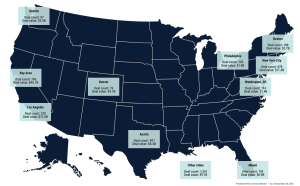
That focus on physical-world technology is exactly what made this quarter different from the rest of the country. Nationally, U.S. venture funding fell 40% from the prior quarter, down to $98.4 billion, as the massive rounds for frontier artificial intelligence labs that had fueled the first half of the year began to taper off. In other words, while the rest of the country was catching its breath after an AI spending spree, Seattle was quietly doing something else. The money here went into companies building rockets, satellites, and fusion power plants—businesses that take years, sometimes decades, to mature, but that create deep, defensible value once they do. Seattle ranked seventh among U.S. metro areas for venture dollars, with $3.5 billion, and eighth by deal count with 94 deals. That’s a strong showing for a metro of its size, especially when you consider that the top spots—the Bay Area’s massive $40.7 billion, followed by Los Angeles, New York, Austin, and Boston—are all much larger markets with deeper pools of capital. Even more telling: Denver’s $4.2 billion, which came in just ahead of Seattle, was almost entirely the result of a single $3.9 billion round for Crusoe, an AI data center developer. Strip that one outlier away, and Seattle’s quarter looks even stronger relative to the pack, because the $3.5 billion raised here was spread across a broader mix of companies and sectors rather than resting on one giant deal.
That’s not to say the quarter was without its marquee mega-rounds. Three space companies alone—Stoke Space, Redmond-based Starcloud, and Seattle’s Hubble Network—pulled in a combined $1.6 billion. That’s a remarkable concentration of capital in one sector, and it underscores just how deeply the Seattle area has embraced the business of building things that leave the planet. Stoke, with its ambitious plans for fully reusable rockets, has become a symbol of the region’s aerospace heritage colliding with a new generation of commercial spaceflight. Starcloud is working on satellite technology, and Hubble Network is focused on connectivity and data services from orbit. Together, they form a powerful constellation of hard-tech startups, and the money flowing into them suggests investors see a future in which the Pacific Northwest is as important to space as it already is to cloud computing. That’s a notable shift for a region historically known for software and e-commerce giants like Microsoft and Amazon. The old guard is still there, of course, but the new money is increasingly going into the physical sciences—materials, energy, propulsion, and orbital infrastructure.
All that hardware takes serious capital, and the quarter’s numbers bear that out. The three space-focused companies alone—Stoke, Redmond-based Starcloud, and Seattle’s Hubble Network—pulled in a combined $1.6 billion. That’s nearly half the entire region’s total. Stoke Space is trying to make launch vehicles that land like a rocket but take off like a plane, a concept that could dramatically cut the cost of getting to orbit. Starcloud, based in Redmond, is working on satellite technology, while Hubble Network is building a space-based connectivity layer for the internet of things—basically, making sure that anything with a sensor can talk to anything else, no matter where it is on Earth. The fact that these three companies alone raised $1.6 billion says something profound about investor confidence in the region’s ability to commercialize space. It’s a long way from the consumer internet startups that defined Seattle’s early tech boom. The region still has plenty of software companies, obviously, but the biggest checks are increasingly going to founders who are willing to get their hands dirty—who are as comfortable talking about propulsion systems and fusion reactions as they are about user acquisition and churn.
And here’s the thing: the national venture capital market was heading in the opposite direction. Across the United States, venture funding fell by 40% compared to the second quarter of 2026, landing at $98.4 billion. That decline wasn’t a sign of panic or a crash; rather, it was a natural reset after the first half of the year saw enormous, nine-figure and even multi-billion-dollar rounds pour into a small handful of frontier AI labs. Those mega-rounds—the kind that can skew an entire quarter by themselves—tapered off, and without them, the national numbers looked much softer. The Seattle area, meanwhile, was doing something different. It wasn’t riding the AI wave; it was riding a wave of industrial ambition. The biggest rounds went to companies that are tackling hard problems in the physical world, and that’s a stark contrast to a venture ecosystem that has been increasingly dominated by software and artificial intelligence. While the Bay Area remains the undisputed king of venture capital—pulling in $40.7 billion in the third quarter, more than ten times Seattle’s total—the Pacific Northwest is carving out its own identity. It’s not trying to out-Silicon-Valley Silicon Valley. It’s building rockets in Kent, fusion reactors in Everett, and satellite networks in Redmond, and investors are paying a premium for that kind of tangible, high-risk, high-reward ambition.
The space angle deserves special attention, because it’s where the numbers get really loud. Three space companies in the region alone raised a combined $1.6 billion in the quarter: Stoke Space, Redmond-based Starcloud, and Seattle’s Hubble Network. That’s nearly half the entire regional total, and it’s a sign that the Seattle area isn’t just participating in the new space race—it’s helping define it. Stoke is working on fully reusable rockets, Starcloud is building satellite technology, and Hubble Network is working on space-based connectivity and data services. These aren’t small bets on incremental improvements; they’re massive, capital-intensive bets on infrastructure that could take years to pay off. But that’s exactly what makes the quarter so significant. For a long time, the startup world was obsessed with software that could scale instantly and cheaply, with minimal physical assets and maximum recurring revenue. Hardware was seen as risky, capital-hungry, and slow. And yet here, in one quarter, the Seattle area raised more than half of its entire annual average from a decade ago, and most of it went to companies that are trying to launch things into orbit or generate power from the same process that fuels the sun. It’s a bet on physics, on manufacturing, and on the long game—and at least for now, investors are clearly willing to write big checks for it.
That space and fusion tilt wasn’t just a subplot; it was the whole story. Three local space companies alone—Stoke, Redmond-based Starcloud, and Seattle’s Hubble Network—pulled in a combined $1.6 billion. That’s nearly half the entire regional total, and it points to a deepening cluster of space-related expertise in the Puget Sound area. Stoke is working on a fully reusable rocket, Starcloud is building satellite infrastructure, and Hubble Network is trying to create a global network for tracking satellites and other objects in low Earth orbit. These aren’t just theoretical research projects; they are commercial ventures with real customers, real launch schedules, and real technical risk. Investors are clearly willing to write large checks for that kind of ambition, especially when it’s backed by the deep talent pool that exists here. The region has long been associated with software, cloud computing, and the tech giants of Amazon and Microsoft, but this quarter’s numbers suggest a second identity has been forming: a place where the next generation of physical infrastructure—the stuff that goes to space, the stuff that could one day power your home—is being built. And that identity is attracting capital at a record pace.
What makes this quarter particularly interesting is how much it diverged from the national picture. Across the United States, venture funding actually fell 40% from the previous quarter, landing at $98.4 billion, as the enormous rounds for frontier AI labs that had dominated the first half of the year began to taper off. In other words, the same forces that made Seattle’s quarter feel like a party were actually causing a hangover elsewhere. The giant checks that went to a few mega-labs building cutting-edge artificial intelligence models—the kind of rounds that can make or break an entire funding season—simply weren’t as abundant in the third quarter. So while the rest of the country was cooling off, Seattle was heating up, and the reason is pretty clear: the region’s startups are building things that require patient capital, deep engineering talent, and a tolerance for long timelines. Rockets don’t launch overnight. Fusion power plants take years of development. But that kind of work tends to attract investors who are looking for moats, not just growth curves. And in a quarter when the national venture market pulled back sharply—U.S. funding fell 40% from the prior quarter to $98.4 billion—the Seattle area bucked the trend in a way that felt almost defiant. It’s a sign that while the rest of the country was catching its breath after a frothy first half of the year, the Northwest’s deep-tech and aerospace community was just getting started.
The sector that really stole the show, though, was space. Three regional space companies alone raised a combined $1.6 billion—nearly half of the entire quarter’s haul. Stoke Space, based in Kent, was the marquee name, but it wasn’t alone. Redmond’s Starcloud and Seattle’s Hubble Network also pulled in major funding. Each has a different focus, but together they underscore something important: the Seattle area has become one of the most credible places on Earth to start a company that needs to survive the harsh realities of orbit. Stoke is working on fully reusable rockets, a goal that sounds almost mundane in an era when SpaceX has normalized vertical landings, but it remains one of the hardest engineering challenges ever attempted. Starcloud is building satellite infrastructure, while Hubble Network is working on space-based connectivity and networking. These aren’t vanity projects or moonshot side bets. They are serious, capital-intensive businesses with real customers, real technical milestones, and real revenue potential. And they’re not alone. The fact that the region produced $1.6 billion in space-related funding in a single quarter says a lot about how far the local aerospace ecosystem has come since the days when it was mostly just Boeing and a few scrappy startups. Now it’s a full-fledged cluster, one that investors clearly believe can compete with the traditional defense and aerospace giants. Add Helion’s fusion work, and you have a regional portfolio that reads less like a typical tech hub and more like a bet on the physical future.
What makes this even more striking is that this record quarter happened while the national venture market was heading in the opposite direction. Across the United States, venture funding fell 40% from the second quarter to $98.4 billion in the third quarter. That might sound like a disaster, but it’s more of a correction—the first half of 2026 was absolutely dominated by enormous rounds for a small number of frontier AI labs, and when those mega-deals started to slow, the national numbers naturally dropped. In other words, the decline wasn’t because investors suddenly lost faith in innovation. It was because the AI funding frenzy had reached a pause, and the giant checks that had been going to a handful of labs in San Francisco and New York simply weren’t being written at the same pace. Against that backdrop, Seattle’s record quarter stands out even more. It shows that capital is not monolithic—it flows in waves, and while the rest of the country was licking its wounds from a slower quarter, the Pacific Northwest was quietly cashing in on a different kind of boom. The contrast is striking: U.S. venture funding fell 40% quarter-over-quarter to $98.4 billion, while Seattle’s number went the other way. That’s not just a blip; it’s a signal that investors are rotating their attention toward physical industries, manufacturing-adjacent tech, and companies with hard technological moats. And Seattle, with its deep aerospace history and emerging fusion and space cluster, is one of the clearest places where that rotation is showing up.
The quarter’s biggest story might be the space and clean-energy concentration. Stoke, Starcloud, and Hubble Network together raised $1.6 billion—nearly half of the region’s total. Stoke is developing a fully reusable rocket, Starcloud is working on satellite technology from Redmond, and Hubble Network, based in Seattle, is building space-based connectivity infrastructure. This isn’t just a coincidence. The Seattle region has become one of the few places on Earth where you can find investors willing to write nine- and ten-figure checks for aerospace and fusion bets, and that’s because the talent pool is genuinely deep. The region has been building rockets and satellites for decades, going back to the aerospace legacy of Boeing and the engineering culture it spawned. What’s new is that venture money is now flowing into this hard-tech ecosystem in a serious way. When you see Stoke, Helion, Starcloud, and Hubble all raising nine-figure rounds in the same quarter, it signals that investors believe these aren’t just science projects anymore—they’re investable businesses with real paths to commercial scale. That’s a meaningful shift for a region that’s often been seen as a software town, even though it’s always had a deep hardware and aerospace undercurrent.
The space angle is worth dwelling on, because it’s not every day that a single metro area produces three space companies raising $1.6 billion combined in one quarter. Stoke Space, based in Kent, is working on reusable rockets and has become one of the most closely watched companies in the new space economy. Starcloud, out of Redmond, is doing something different but equally ambitious—building infrastructure for space-based cloud computing, essentially data centers in orbit. And Seattle-based Hubble Network is working on connecting satellites in a way that could eventually give nearly any device a space-based link. These three companies alone account for nearly half of the region’s total haul for the quarter, and they represent the hard, messy, expensive work of building for the final frontier. It’s a far cry from the software-only stereotype that has defined so many startup hubs, and it’s a sign that the Seattle area has evolved into something more like a deep-tech powerhouse. Rockets, fusion, satellite connectivity—these aren’t app updates; they’re decade-long engineering bets that require deep capital, patient investors, and a workforce with serious technical chops. The fact that all three companies raised massive rounds in the same quarter suggests investors are making a deliberate bet on the region’s industrial DNA, not just chasing the next mobile app trend.
What makes this record even more impressive is how broad the momentum actually is. The $3.5 billion figure isn’t just a one-company story. Yes, the headline numbers are anchored by big rounds—Stoke, Temporal, and Helion all raised nine-figure sums—but the breadth of activity matters just as much. The region’s space sector alone pulled in $1.6 billion across three companies: Stoke, Redmond-based Starcloud, and Seattle’s Hubble Network. That’s not a fluke or a single lucky bet. It’s a signal that the Pacific Northwest has become one of the most important places in the world for what people in the industry like to call “hard tech”—the kind of engineering-intensive, capital-hungry work that takes years and hundreds of millions of dollars to go from concept to orbit. And even the accounting of Helion’s $500 million round, which was announced in June but counted in the third quarter by PitchBook, doesn’t change the bigger picture. Strip that one deal away and the quarter still would have been the strongest on record. That’s the kind of breadth and depth that suggests this isn’t a fluke or a single-investor bet gone right; it’s a fundamental reallocation of capital into companies that are comfortable getting their hands dirty.
What’s especially striking is where the money is going. For over a decade, the Seattle area’s startup narrative has been dominated by software, cloud, and internet services—think Amazon, Microsoft, and a steady stream of SaaS companies. This quarter tells a different story, one anchored in the physical world. The most obvious example is space. Three space companies in the region raised a combined $1.6 billion: Stoke Space, the Kent-based rocket maker; Redmond-based Starcloud; and Seattle’s Hubble Network. That’s nearly half the quarter’s entire haul going to companies that are literally trying to put things into orbit and beyond. There’s something almost poetic about that, especially for a region best known for airplanes and coffee. Stoke is working on fully reusable rockets, a deeply hard engineering problem that requires huge amounts of capital, patience, and nerve. Starcloud and Hubble are pushing on different frontiers—satellite constellations, space-based data, and the infrastructure that will make low-Earth orbit a real working environment rather than a novelty. These aren’t the kind of startups that can spin up in a garage and figure things out in a few months. They need factories, test stands, specialized talent, and, crucially, enormous amounts of money. The fact that investors are willing to write those checks in the Seattle area says a lot about the region’s evolution from a software-and-cloud town into a legitimate deep-tech hub.
The national picture, however, tells a very different story, and that’s part of what makes Seattle’s quarter so striking. Across the United States, venture funding fell a staggering 40% from the previous quarter, landing at $98.4 billion. The main culprit was a slowdown in the giant rounds that had been propping up frontier AI labs earlier in the year. Those enormous financings—hundreds of millions, sometimes billions, of dollars at a time—had been a defining feature of the first half of 2026, and when they started to taper off, the national totals took a nosedive. But while the rest of the country was pulling back, Seattle was surging in the opposite direction. The local numbers are a reminder that not all venture capital is created equal, and not all tech economies move to the same rhythm. The national numbers tell you a story about frothy AI investments cooling off; the Seattle numbers tell you a story about deep tech, manufacturing-adjacent startups, and energy infrastructure finally getting their moment. It’s almost as if the money that had been chasing the same handful of AI labs in the Bay Area suddenly looked around and noticed there are people in Washington state building fusion reactors and reusable rockets—and decided to place a very different bet.
The space sector, in particular, was on fire. Three space companies in the region raised a combined $1.6 billion in the third quarter alone. That’s nearly half of the entire regional total, and it’s a remarkable sign of how far the local aerospace ecosystem has come since the days when the region’s reputation rested almost entirely on software and cloud computing. The three companies are Stoke Space, Redmond-based Starcloud, and Seattle’s Hubble Network. Each is attacking a different piece of the space puzzle. Stoke is focused on building a fully reusable rocket, which sounds like something out of science fiction until you remember that the Seattle area has one of the deepest pools of rocket engineers anywhere, thanks to years of hiring by Amazon, Blue Origin, and a steady stream of startups. Starcloud is working on satellite technology, part of a new generation of smaller, more capable spacecraft that are making low-Earth orbit more accessible. And Hubble Network is trying to solve one of the most annoying problems in the space age: connectivity. Its goal is to connect satellites to ground-based devices in ways that bypass traditional cellular networks, which could be huge for the Internet of Things and remote sensing. These three companies alone raised a combined $1.6 billion, which is more than most regional ecosystems see in a year, and they’re all working on the kind of hard problems that require patience, engineering talent, and deep capital.
What makes this quarter even more striking is how it happened against a national backdrop that was heading in the opposite direction. Across the United States, venture funding actually fell by 40% from the previous quarter, landing at $98.4 billion. The main reason? The massive, eye-popping rounds that had been flowing into frontier AI labs during the first half of 2026 began to taper off. Those deals—hundreds of millions, sometimes billions, of dollars into a small number of high-profile AI companies—had supercharged the national totals, and when they slowed, the overall numbers sank. But the Seattle area didn’t get the memo. Instead of following the national trend, it went sideways, up, and through the roof. That’s not a fluke. It reflects a different kind of company mix. While the Bay Area and other hubs were riding the wave of generative AI and software platforms, the Pacific Northwest was busy betting on the physical world—rockets that can launch and land vertically, satellites that beam internet to remote places, spacecraft that maneuver in orbit, and fusion reactors designed to produce clean energy. These are not fast-twitch software bets where you can ship an app and see hockey-stick growth in months. They’re patient-capital plays, and the fact that they dominated the region’s funding picture says a lot about how far the ecosystem has matured.
If there was a single theme within this record quarter, it was space. Three space companies in the region—Stoke, Redmond-based Starcloud, and Seattle’s Hubble Network—raised a combined $1.6 billion. That’s nearly half of the entire region’s total, and it’s a reminder that the Pacific Northwest has become one of the most important hubs for the new space economy outside of the traditional aerospace capitals. Stoke, with its focus on fully reusable rockets, is essentially trying to do for space what SpaceX did for launch economics, but with a faster, more iterative approach to testing and manufacturing. Starcloud, meanwhile, is working on satellite communications and related infrastructure, while Hubble Network is building a satellite-based network that could eventually provide connectivity and IoT services from space. These aren’t just companies with “space” in the pitch deck; they’re making real hardware, launching real satellites, and signing real customers. The fact that three space companies in the region raised a combined $1.6 billion in a single quarter says something profound about the depth of the local talent pool and the confidence investors have in this cluster. Seattle has been called a lot of things over the years—a software town, a cloud-computing town, a biotech town—but this quarter it looked more like the launchpad for the next industrial revolution.
Now, here’s where the story gets even more interesting: while Seattle was shattering records, the national venture market was pulling back. Across the United States, startup funding fell a sharp 40% from the prior quarter, landing at $98.4 billion. The reason, according to the PitchBook-NVCA Venture Monitor, is that the massive rounds for “frontier AI” labs that dominated the first half of the year slowed dramatically. Those megadeals—the kind of nine-figure and even billion-dollar checks that went to companies like OpenAI, Anthropic, and xAI—had propped up the national numbers, and when they tapered, the whole country felt it. Seattle, by contrast, was moving in the opposite direction, and that’s not a coincidence. The startups driving the region’s record quarter aren’t dependent on the latest large-language-model hype cycle. They’re building hardware, energy infrastructure, and developer tools—sectors with longer development timelines, more technical risk, but also a different kind of investor patience. While the rest of the country was watching AI giants gobble up enormous rounds and then seeing that faucet slow to a trickle, the Seattle area was quietly collecting checks for companies solving hard physics and manufacturing problems. It’s a different bet, and one that looks increasingly prescient.
The space sector alone tells the story. Three space companies in the region raised a combined $1.6 billion: Stoke, Redmond-based Starcloud, and Seattle’s Hubble Network. That’s nearly half the entire regional total, and it shows how deep the local aerospace talent pool has become. Stoke is working on fully reusable rockets, which would be a game-changer if they pull it off. Starcloud is building satellite infrastructure that aims to make space more accessible, and Hubble Network is trying to connect the Internet of Things from orbit. These aren’t just theoretical research projects; they’re serious engineering companies with serious investors. The fact that they collectively raised over a billion dollars in a single quarter signals that the market believes in them—and that Seattle has become a genuine hub for the new space economy. It’s not just about rockets either; it’s about the entire ecosystem of suppliers, software engineers, and logistics that make these companies possible. The region has spent decades building aerospace expertise, and now that expertise is being repurposed for a commercial space age. When you see Stoke, Starcloud, and Hubble Network raising $1.6 billion combined, you’re not just seeing money flow into three companies; you’re seeing the maturation of an industrial cluster that can compete with anywhere in the world.
But here’s the twist: while Seattle was celebrating its best quarter in a decade, the national venture capital market was actually contracting. Across the United States, venture funding fell by 40% from the previous quarter, landing at $98.4 billion. That sounds like a catastrophic drop, but it’s really a story of timing and concentration. The first half of 2026 was dominated by enormous, industry-defining rounds for frontier artificial intelligence labs—the kinds of mega-deals that pour billions into a handful of companies building the next generation of foundation models. When those deals slowed in the third quarter, the national numbers naturally took a dip. Seattle, by contrast, wasn’t leaning on the same frothy AI craze. Its big rounds were spread across rockets, fusion, and developer tools—not the sort of thing that grabs as many headlines as a flashy chatbot release, but exactly the kind of patient, capital-intensive work that builds long-term value. That’s a meaningful difference, and it explains why Seattle went up while the country went down. The national venture market was still digesting the aftermath of an AI-investment frenzy, but the Pacific Northwest was doing something older and more durable: betting on the messy, expensive, glorious business of making real things.
Nowhere was that bet more visible than in the region’s space sector, which had a quarter for the ages. Three space companies alone raised $1.6 billion combined. There was Stoke Space, the Kent rocket maker with a $500 million round that anchors the region’s push to make launch vehicles as recoverable as commercial jets. There was Redmond-based Starcloud, a relative newcomer that’s part of a growing wave of satellite and space infrastructure startups drawn to the region’s deep engineering talent. And there was Seattle’s Hubble Network, which is working on connectivity infrastructure that could eventually make it possible for thousands of satellites to talk to each other and to the ground in far more efficient ways. Together, these three companies alone accounted for nearly half of the region’s entire quarterly haul. That’s a striking concentration, but it’s also a reflection of how specialized the local ecosystem has become. The old story of Seattle tech was all about software—Microsoft, Amazon, and the startups they spawned—but the new story is increasingly about the intersection of software and physical hardware, of code and carbon fiber. This is a place where you can build a rocket in the morning, test a fusion magnet in the afternoon, and still have time to argue about Kubernetes over beers.
That last point is worth dwelling on, because the space sector alone basically carried the quarter. Three space companies based in the region raised a combined $1.6 billion: Stoke Space, Redmond-based Starcloud, and Seattle’s own Hubble Network. Stoke is building reusable rockets from the ground up in Kent, which is about as heavy-metal as venture capital gets. Starcloud is working on satellite and space infrastructure, and Hubble Network is doing something that sounds like science fiction—using low Earth orbit satellites to create a global network for Internet of Things devices. Combined, these three companies pulled in more than the entire Seattle-area venture total for many recent quarters. What’s happening here is a kind of industrial renaissance, and it’s not just about the money. It’s about the region’s deep, decades-old aerospace roots, its engineering talent, and a growing willingness among investors to back companies that take years—not weeks—to build. The investors writing these checks are often the same ones who made fortunes on software and cloud computing, and now they’re parking that money into things that go to space or produce clean energy. That’s a big cultural shift for a region sometimes pigeonholed as the home of cloud computing and online retail.
This shift becomes even more striking when you look at what happened nationally during the same period. U.S. venture funding fell by 40% from the previous quarter, down to $98.4 billion, and the reason is largely tied to the artificial intelligence boom cooling off. For the first half of 2026, a handful of frontier AI labs were swallowing up enormous rounds of capital, and when those started to fade, the national numbers naturally deflated. But the Seattle area went in the opposite direction, and that’s not a coincidence. The money flowing into the region wasn’t chasing the same kind of speculative software growth that dominates the broader VC landscape. It was going into companies with long development timelines, massive technical risk, and huge physical infrastructure needs—the kinds of ventures that make conventional venture investors nervous but that, when they work, can create almost insurmountable moats. The fact that investors poured $3.5 billion into this region while national funding dropped 40% says less about “sectors” and more about a geographic and philosophical rotation. Venture capital has been looking for the next big thing beyond the AI software layer, and the Pacific Northwest is increasingly looking like the answer, especially for investors who believe the next decade belongs to energy, space, and advanced manufacturing.
Digging into the numbers, it’s striking how much of this quarter’s haul was concentrated in a few massive rounds. Three space companies alone—Stoke Space, Redmond-based Starcloud, and Seattle’s Hubble Network—combined to raise $1.6 billion. That’s nearly half the region’s entire total, and it points to a genuine industrial renaissance in the Puget Sound area. Stoke, of course, is the headline act: a rocket company trying to build a fully reusable launch vehicle, and it’s doing so from Kent, Washington, of all places. The presence of Starcloud and Hubble Network only reinforces the point: the Seattle area is no longer just a software town. It’s becoming a serious hub for space technology, with a cluster of companies working on everything from satellite communications to Earth-observation data. This isn’t a coincidence. The region has deep roots in aerospace, a highly skilled workforce from companies like Boeing and Amazon, and a culture that increasingly rewards long-term bets on hard science. When VCs look for companies that could be worth billions in a decade, these are the ones they’re willing to fund with massive checks. And because they’re building physical infrastructure rather than code, the rounds are naturally larger, but so are the barriers to entry. That’s exactly what makes this moment feel less like a bubble and more like a genuine industrial renaissance taking root.
The national numbers tell a different story, and that’s what makes Seattle’s quarter so interesting. Across the U.S., venture funding fell about 40% from the second quarter, down to $98.4 billion. The reason isn’t a broad retrenchment; it’s that the enormous rounds for a handful of frontier AI labs that defined the first half of the year started to taper off. The AI investment frenzy isn’t over, but the period of massive, concentration-heavy funding rounds to a few mega-labs has cooled, and that’s enough to skew the national total. Seattle, meanwhile, was swimming against that tide. The region ranked seventh among U.S. metro areas for venture dollars, with $3.5 billion. The Bay Area, unsurprisingly, led the way with $40.7 billion, followed by Los Angeles, New York, Austin, Boston, and Denver. But that Denver number comes with a big asterisk: $4.2 billion of it was almost entirely one single round for Crusoe, an AI data center developer that raised $3.9 billion. That’s not a sign of a diversified ecosystem; that’s one giant check landing in one place. Seattle, by contrast, got its $3.5 billion across 94 deals, which means the money was spread across a wider set of companies, sectors, and risk profiles. It wasn’t just one massive outlier carrying the region—it was a genuine, broad-based surge in investment activity.
That distinction matters because it points to a different kind of strength. Seattle’s quarter was not about a single AI moonshot or one company monopolizing the narrative, though the concentration in deep tech and space was definitely a theme. The region’s top rounds went to Stoke Space, Starcloud, and Hubble Network—three space companies that together raised $1.6 billion—plus Helion’s $500 million fusion round, which was announced in June but counted by PitchBook in Q3. Even if you set Helion aside, the quarter would still have been the strongest on record, which says a lot about the underlying momentum. There’s a certain romance to this, too. For years, Seattle was known as a software town, the kind of place where the biggest companies built operating systems, cloud platforms, and online retail empires. But the numbers from this quarter suggest the region has quietly reinvented itself as a hard-tech hub, a place where engineers are just as likely to be testing rocket engines in the high desert or tweaking fusion magnets as they are to be shipping code updates. It’s a shift that’s been building for a while, but the third quarter of 2026 made it impossible to ignore.
That’s not to say the whole country was celebrating. The national venture capital picture was nearly the opposite of Seattle’s. U.S. venture funding fell 40% from the second quarter, to $98.4 billion, as the massive rounds for frontier AI labs that had dominated the first half of the year began to taper off. In other words, the same AI boom that supercharged the coasts was also responsible for the national slowdown, because those enormous, nine-figure and even billion-dollar rounds for a handful of AI companies didn’t repeat at the same pace in Q3. Seattle, meanwhile, was busy doing its own thing. The region’s strength wasn’t in software platforms that might disrupt the next industry or in AI models trying to out-argue each other. It was in the much slower, harder, and arguably more durable work of building advanced physical technologies—fusion reactors, orbital rockets, satellite networks, and the kind of infrastructure software that makes complex systems feel simple. That difference in focus is exactly why Seattle bucked the national trend. While the rest of the country saw venture funding drop by 40% from the previous quarter to $98.4 billion, largely because the massive rounds for frontier AI labs cooled off, the Seattle area went the other direction. The AI boom isn’t irrelevant here—far from it—but the region’s startup ecosystem has a different personality. It’s more willing to bet on hard tech, on things that take years to build, require regulatory approval, and involve actual hardware, physical infrastructure, and long development timelines.
The space cluster alone tells a compelling story. Three local space companies—Stoke Space, Redmond-based Starcloud, and Seattle’s Hubble Network—raised a combined $1.6 billion in the quarter. That’s nearly half of the region’s total haul, and it underscores how deeply the Seattle area has invested in what you might call the new space race. Stoke, with its base in Kent, is working on reusable rockets, a notoriously difficult, capital-intensive business that would have been unthinkable for a startup just a decade ago. Starcloud is building satellite infrastructure, and Hubble Network is focused on connecting space-based sensors and devices, part of the rapidly growing low-Earth-orbit economy. Together, these three companies alone accounted for nearly half of the region’s entire quarterly fundraising, and they represent a broader industrial revival that is reshaping the area’s identity. For years, Seattle was known as the home of cloud computing, e-commerce, and software unicorns. But this quarter’s numbers are a reminder that the region’s DNA also runs deep in engineering and manufacturing—the kind of talent that used to build the 747s and, before that, the kind of expertise that drove the original aerospace boom. That old Boeing-era skill base, combined with a newer generation of engineers trained in software and machine learning, has turned the greater Seattle area into one of the most credible places in the world to raise money for hard-tech ventures.
That shift shows up clearly in the sector mix. The three biggest space companies alone—Stoke Space, Redmond-based Starcloud, and Seattle-based Hubble Network—pulled in a combined $1.6 billion during the quarter. That’s nearly half of the entire regional total, and it’s a striking number for an industry that many people still associate with government agencies and a handful of billionaires. But the Pacific Northwest has become a legitimate space hub, not just a place where rockets are dreamed up in PowerPoint. The region’s aerospace history, coupled with a deep pool of engineering talent from companies like Boeing, Amazon, and a growing list of space startups, has created a dense ecosystem of suppliers, machinists, software developers, and test facilities. Stoke Space, for example, is not just building a rocket; it’s trying to build a fully reusable one, with landing technology that could one day make space travel as routine as commercial aviation. Starcloud and Hubble Network are attacking different pieces of the puzzle—satellites, connectivity, and the data infrastructure that will make low-Earth orbit actually useful. Together, these three companies alone brought in $1.6 billion, which is more than the total raised by Seattle startups in many entire years. That kind of capital concentration says the investment community sees the region as a serious place for deep technology, not just a place for cloud software and mobile apps.
Now, here’s where the national picture gets interesting. Across the United States, venture funding actually fell off a cliff in the third quarter, dropping 40% from the previous quarter to $98.4 billion. The reason? The gigantic, economy-sized rounds for frontier AI labs that had dominated the first half of the year finally slowed down. In other words, the same quarter that Seattle was posting record numbers happened to be a quarter when the national market took a breather. That’s not a coincidence so much as a rotation. Investors have been pouring money into a few massive AI infrastructure plays, and when those deals started to shrink, the national totals shrank with them. But while the broader market cooled off, Seattle’s startups were busy raising money for something different. The big rounds here weren’t chasing the next large language model or trying to out-AGI each other. They were building hardware, launching rockets, and trying to harness nuclear fusion. That’s a different bet than the one the rest of the venture world has been making, and it’s a bet that’s increasingly paying off. In fact, the regional numbers were so strong that even if you removed Helion’s $500 million round—which was announced in June but counted in the third quarter by PitchBook—the Seattle area still would have posted its best quarter ever. That’s a crucial detail. It means the record isn’t a fluke or an accounting quirk; it’s a pattern.
The space industry deserves special attention here, because it was the clearest driver of the region’s boom. Three space companies alone raised $1.6 billion combined: Stoke Space, Redmond-based Starcloud, and Seattle’s Hubble Network. That’s nearly half of the entire regional total in one category, and it speaks to a growing specialization that wasn’t nearly as visible a few years ago. Stoke is working on fully reusable rockets, Starcloud is focused on satellite technology, and Hubble Network is building satellite connectivity for the Internet of Things—different businesses, but together they represent a deep and expanding space cluster in the Puget Sound area. These companies aren’t just riding on hype; they’re selling real hardware, real launches, and real infrastructure. And investors are clearly willing to bet billions on them. The fact that three space companies alone raised $1.6 billion combined is a striking sign that the region has become a legitimate counterweight to the Bay Area and Southern California when it comes to aerospace innovation. It’s not just about software anymore—it’s about manufacturing, engineering, and the messy, difficult, capital-intensive work of actually launching things into orbit.
What makes this record quarter even more interesting is that it happened while the national venture market was heading in the opposite direction. Across the United States, venture funding fell 40% from the previous quarter, down to $98.4 billion. The main culprit was the tapering off of the giant rounds for frontier AI labs that had fueled the first half of the year. So while the national market was catching its breath, the Seattle area was sprinting ahead. That’s not a coincidence; it’s a reflection of what the region has become known for: deep technology, hardware, and scientific ambition. The money flooding into Seattle didn’t go to copycat apps or quick-hit software. It went to companies attempting to solve some of the hardest problems in the physical world—building rockets that can land themselves, networks that can talk to space, and fusion plants that could one day generate unlimited clean energy. That’s a fundamentally different playbook than the one that has dominated much of the last decade of venture investing, and it’s one that seems to resonate with investors who are looking for assets that feel grounded in tangible progress rather than user acquisition curves.
Seattle’s showing is even more striking when you zoom out and look at the national picture. Across the United States, venture funding actually fell hard in the third quarter, dropping about 40% from the previous three months to $98.4 billion. The reason? The enormous, market-shifting rounds for frontier artificial intelligence labs that had powered the first half of the year simply ran out of gas for the quarter. Those mega-deals, often in the billions of dollars and concentrated in San Francisco and the Bay Area, had inflated the national numbers. When they stopped, the entire country’s total took a hit. But the Seattle area bucked that trend, largely because its boom wasn’t built on AI software or the latest chatbot. It was built on hardware, energy, and aerospace—industries that require long horizons, patient capital, and real engineering chops. That’s a different kind of momentum, and it doesn’t depend on the latest hype cycle to sustain itself. While the Bay Area still dominates overall with $40.7 billion in the quarter—more than ten times Seattle’s total—the relative strength of the Puget Sound region stands out in a quarter when most places were pulling back. Seattle ranked seventh nationally for VC dollars, sandwiched between Boston and Denver, but the mix of companies attracting capital here feels different from the pure software and AI focus of other hubs. And the deal count, 94 in the quarter, shows it wasn’t just a few giant rounds distorting the picture; there’s genuine breadth to the activity.
That said, the sheer size of a few individual rounds is still a major part of the story. Three space companies alone raised a combined $1.6 billion: Stoke, Redmond-based Starcloud, and Seattle’s Hubble Network. These are not small bets or speculative side projects. Stoke is building reusable rockets with a vertically integrated approach that has attracted serious investor confidence. Starcloud is working on satellite technology, and Hubble Network is tackling satellite connectivity and space-based data communications. Taken together, they represent a regional aerospace and space-technology cluster that has matured from a niche into a major engine of deal flow. The presence of three companies in the same sector raising that kind of money in a single quarter is a clear signal that investors see the Seattle area not just as a software town, but as a legitimate base for building the infrastructure of the next economy—the kind that operates in orbit, beyond the atmosphere, and in the far harder physics of energy generation. Add Helion’s $500 million round into that mix—announced in June but counted by PitchBook in the third quarter—and you get a picture of a regional economy that is increasingly betting on industries that are difficult, expensive, and profoundly important.
What’s most striking about the national picture is how differently the rest of the country performed in the same period. Across the U.S., venture funding dropped 40% from the previous quarter, settling at $98.4 billion. That decline was driven largely by the absence of the massive mega-rounds that had been flowing into frontier artificial intelligence labs earlier in the year. So while the rest of the country was catching its breath after an AI-fueled spending spree, the Seattle area was quietly posting its best quarter ever. That’s a remarkable divergence, and it suggests something important: the region’s mix of industries is fundamentally different from the Bay Area’s. The Bay Area still leads the nation by a mile with $40.7 billion in the quarter, but that money tends to follow a familiar playbook—software, AI, platforms. Seattle’s big numbers, by contrast, were powered by what you might call “deep tech” or “hard tech”: companies wrestling with the laws of physics, not just the limits of software. When investors decided to pull back from the AI frenzy that had dominated the first half of the year, they didn’t stop looking for opportunities; they just started looking in different places. And a lot of that attention turned to the Pacific Northwest, where the aerospace and energy infrastructure talent is thick and where the next wave of breakthroughs are things you can touch, launch, or plug into the grid.
There’s a certain poetry to the fact that most of the money went to companies building physical things. In an economy that has been obsessed with software and artificial intelligence for years, the Seattle area’s third quarter was a reminder that some of the most exciting ventures are the ones that weld, bolt, and ignite. The region’s space sector alone accounted for $1.6 billion across three companies: Stoke Space, the Kent-based rocket maker that is trying to crack the code on fully reusable launch vehicles; Starcloud, based in Redmond, which is working on satellite technology; and Hubble Network, a Seattle startup focused on satellite connectivity. That’s not even counting Helion’s $500 million round for fusion energy, a figure that PitchBook included in the quarterly total even though the company announced it in June. The fact that the quarter would have been a record even without Helion’s contribution tells you how broad and deep this surge really is. It wasn’t one lucky bet or a single mega-deal; it was a wave of investor confidence in companies that are trying to do the hard, messy, expensive work of pushing human capability beyond the planet and, in Helion’s case, closer to a future of clean, limitless power. These are not the kinds of startups that fit neatly into a software dashboard, and that’s exactly the point.
Let’s pause on that shift, because it’s the most important detail in the entire report. For years, the Pacific Northwest has been known as a software town—Microsoft, Amazon, and a steady stream of cloud, AI, and SaaS startups. And while that legacy remains, the record-setting quarter shows that the region is now also a serious destination for what people call “hard tech” or “deep tech.” The biggest rounds in Q3 2026 went to companies that are comfortable getting their hands dirty: Stoke Space is building and testing rockets in Kent, which is about as far from a typical software startup as you can get. Helion is chasing practical fusion power in Everett, betting that it can one day deliver clean, limitless energy to the grid. And Redmond-based Starcloud and Seattle’s own Hubble Network are both building space-related infrastructure, from satellites to communications systems, that require serious engineering chops and years of patient capital. Even Temporal, the Bellevue company with a software bent, is aimed at developers solving deeply technical, high-stakes problems. This isn’t the kind of startup scene that produces a mobile game or a group-chat app; this is the kind of work that requires machine shops, launch pads, and a willingness to take long bets on the physical world. That shift in focus is exactly why the region was able to post a record quarter while much of the national venture market was pulling back.
The fact that so much of the money went to space and fusion companies isn’t just a coincidence—it’s a signal that the Seattle area has quietly become one of the most important hubs in the world for “deep tech” and hard-science startups. The numbers tell that story clearly. Three space companies alone raised a combined $1.6 billion: Stoke Space, Redmond-based Starcloud, and Seattle’s Hubble Network. That’s nearly half the region’s total haul, and it reflects a broader trend that has been building for years. The traditional tech industry was built on software eating the world—bits, not atoms. But this quarter was all about atoms. Rockets, satellites, spacecraft, and fusion reactors are about as physical as it gets, and they come with long development timelines, serious regulatory hurdles, and enormous capital needs. That they’re attracting this kind of money in the Pacific Northwest says a lot about the region’s engineering talent, its history with aerospace and manufacturing, and the patient-capital mindset that has matured here over the past decade. It’s also a sign that investors are looking for the next breakthrough beyond the digital world—things that can generate clean power, connect satellites, or move payloads into orbit.
This isn’t just a regional feel-good story; it stands in stark contrast to what happened nationally. U.S. venture funding fell 40% from the previous quarter, to $98.4 billion, as the giant rounds for frontier AI labs that fueled the first half of the year started to dry up. In other words, the rest of the country’s startup market was taking a breather, especially at the top end of the artificial-intelligence boom. But Seattle didn’t get that memo. Instead, the area’s numbers went up, way up, because the money here is chasing a different kind of opportunity. The biggest rounds went to companies building physical infrastructure for the next era of energy and space exploration—businesses that take years to mature and require patient capital, not quick software growth hacks. That’s a meaningful difference. It suggests investors are looking at the Puget Sound region not just as a place for a quick return, but as a center for long-term, capital-intensive innovation. And while the national numbers took a hit—U.S. venture funding fell 40% from the prior quarter to $98.4 billion, largely because the massive rounds fueling frontier AI labs finally started to slow—Seattle bucked the trend. That’s a sign that the region’s mix of aerospace, fusion, and deep-tech engineering is starting to feel like a safe harbor for investors who want to back companies with real, physical products and decades-long moats, rather than just another app that could be disrupted next quarter.
The record quarter also highlights just how much the space industry has become a defining piece of the Seattle-area economy. Three local space companies alone raised $1.6 billion combined: Kent-based Stoke, Redmond-based Starcloud, and Seattle’s Hubble Network. Stoke is building next-generation rockets out of Kent, with an eye toward fully reusable launch vehicles that can lower the cost of getting to orbit. Starcloud, based in Redmond, is working on satellite technology, while Hubble Network, in Seattle, is building space-based infrastructure for connectivity. The fact that these three companies pulled in nearly half the region’s total venture money in a single quarter is no small thing. It signals that investors are willing to put serious money behind companies with long development timelines and high capital needs, at least when the technical talent and industrial base are there. The Seattle area, of course, has been a home to aerospace innovation since the days of Boeing, and it’s now channeling that legacy into a new generation of space ventures. It’s a distinctly Pacific Northwest kind of boom—less flashy than the Bay Area’s software-driven ecosystem, more grounded in hard engineering, supply chains, and physics. And for a region often stereotyped as a satellite of Silicon Valley, it’s a powerful reminder that some of the most consequential technology in America is being built in warehouses and launch facilities along the I-5 corridor.
At the same time, it’s worth zooming out and looking at what this quarter did not represent nationally. Across the United States, venture funding actually fell by 40% from the previous quarter, to $98.4 billion. That sounds like a lot, and it is, but the direction matters: the enormous AI rounds that had fueled the first half of the year—particularly in frontier labs building increasingly large models—began to taper off. So while the national market was catching its breath, Seattle was off doing something different. That’s partly because the region’s recent momentum isn’t tied to the kind of pure software AI boom that has dominated Silicon Valley. Instead, the money flowed to what you might call “deep tech” or “hard tech”—companies whose timelines are longer, whose barriers to entry are higher, and whose products are measured in engineering specs rather than monthly active users. The sheer size of the rounds makes that clear. Stoke Space, the Kent rocket company, raised a massive round. Redmond-based Starcloud and Seattle’s Hubble Network also pulled in substantial funding, with the three space companies alone accounting for $1.6 billion of the region’s total. Add in Bellevue’s Temporal and Everett’s Helion, and you have a portfolio that looks less like the usual software-heavy startup ecosystem and more like a blueprint for a space-industrial complex with fusion energy on the side. This is the kind of work that takes years, sometimes decades, to pay off—but when it does, the moats are deep.
This is also a story about how the national mood and the Seattle mood diverged in the third quarter. Across the United States, venture funding dropped by 40% from the previous quarter, landing at $98.4 billion. That sounds like a catastrophe until you realize that the first half of 2026 was inflated by enormous, jumbo-sized rounds into a handful of frontier AI labs—the kind of mega-deals that make a whole quarter look frothy. When those big-ticket AI rounds slowed, the national total naturally deflated. Seattle, meanwhile, was busy doing its own thing. Its $3.5 billion quarter put it in seventh place among U.S. metros, behind the Bay Area’s staggering $40.7 billion and other large hubs like Los Angeles, New York, Austin, and Boston. But the fact that Seattle bucked the national downward trend is remarkable. It suggests that the region’s venture scene has found a niche that isn’t entirely tethered to the boom-and-bust cycles of software and social media. It’s a more durable identity built on engineering, manufacturing, and energy—sectors that take longer to mature but also create enormous barriers to entry.
The space sector was particularly bright. Three local space companies alone raised a combined $1.6 billion in the quarter: Stoke, Redmond’s Starcloud, and Seattle’s Hubble Network. Stoke, which is developing a fully reusable rocket, has become a flagship for a new kind of aerospace company that wants to lower the cost of access to orbit. Starcloud and Hubble are working on satellite and connectivity technologies that aim to make the final frontier more accessible and useful. This isn’t the same old defense-contractor aerospace either; these are agile, venture-backed startups moving at software speed but with hardware-grade ambition. Combined with Helion’s fusion work, the region is becoming a global hub for deep tech—the kind of science-heavy, capital-intensive innovation that many other metros struggle to support. That’s a huge shift for an area that has long been associated with software, cloud computing, and the internet giants. While Seattle still has plenty of that, the money in Q3 2026 tells a different story: the region’s investors are betting on industrial innovation, energy breakthroughs, and the physical frontier.
Nationally, however, the venture capital landscape told a very different story. U.S. funding fell a dramatic 40% from the previous quarter, landing at $98.4 billion. That sounds like a disaster, but it’s mostly a correction. The first half of 2026 was fueled by enormous, eye-popping rounds for frontier artificial intelligence labs—the kinds of raises that make even a $500 million round look small—and those big checks simply tapered off by late summer. So while the national market was catching its breath, the Seattle region was sprinting in the other direction, largely because its strength wasn’t tied to the frothy AI software cycle. The companies driving this quarter’s numbers are building things that require patient capital: physical infrastructure, fusion energy, space launch systems, satellite networks. That’s a completely different risk profile than funding another chatbot or ad-tech startup, and it suggests that investors are looking for durable, long-term opportunities in sectors where the Seattle area has genuinely deep roots. The national plunge of 40% to $98.4 billion was real, but it was also lopsided; it reflected a pullback from the giant, eye-popping rounds that went to frontier AI labs in the first half of the year, not a broad loss of confidence in innovation. Seattle, meanwhile, was moving in the opposite direction, and it wasn’t just catching up—it was setting its own pace.
Let’s talk about the actual deals, because the names behind these numbers really tell the story. Stoke Space, the Kent-based rocket company, raised a monster round, and that alone would have made the quarter notable. But alongside Stoke, there was Bellevue-based Temporal, a developer platform that helps companies build and manage complex workflows, and Everett’s Helion, which is working on commercial fusion power. Together, these three companies alone represent the spectrum of what the Seattle area does best: aerospace, software infrastructure, and clean energy. Helion’s $500 million round was announced back in June but was officially counted in the third quarter by PitchBook, which nudged the total even higher. But here’s the thing that makes the number feel like more than just an accounting quirk: even if you stripped Helion out entirely, the region still would have posted its best quarter ever. That’s the kind of resilience and momentum that separates a lucky quarter from a real signal. It means the record isn’t a fluke, or the result of one giant deal inflating the numbers. It’s a sign that investors see the Seattle area as a place where long-term, high-risk, high-reward ventures can actually get off the ground.
Dig a little deeper into the numbers, and it becomes clear that this wasn’t just a broad wave of funding washing over everything in sight. It was a deliberate, concentrated bet on a specific kind of company—the kind that builds hard things. Most of the money went to a handful of startups working on rockets, satellites, spacecraft, and fusion power plants. Three space companies alone—Stoke Space, Redmond-based Starcloud, and Seattle’s Hubble Network—pulled in a combined $1.6 billion. That’s nearly half the entire regional total, and it signals a fundamental shift in how investors are thinking about the Pacific Northwest. For years, the region was best known for cloud computing and software, the legacy of Microsoft and the DNA of Amazon. But this quarter suggests a pivot toward a different identity: a place where cutting-edge hardware and deep science can get serious funding. Fusion power, orbital launch, satellite communications—these are hard, expensive, long-horizon bets, and the fact that venture investors are willing to pour billions into them here says a lot about how the ecosystem has matured. Helion’s $500 million round, for example, was announced in June but counted by PitchBook in the third quarter; even setting that aside, the quarter still set a record. That’s not a fluke. That’s a signal.
The space sector alone was a huge driver. Three space companies in the region raised a combined $1.6 billion: Stoke, Redmond-based Starcloud, and Seattle’s Hubble Network. These aren’t just companies dabbling in aerospace; they’re building the foundational pieces of a new space economy. Stoke is working on reusable rockets, Starcloud is involved in satellite technology, and Hubble Network is working on connectivity infrastructure that could tie space assets together. The concentration of this kind of investment in the Seattle area is significant because it shows how far the region has moved beyond its software-driven reputation. For years, the Seattle startup scene was known for cloud computing, e-commerce, and software-as-a-service—think Amazon, Microsoft, and a thousand SaaS startups riding on their coattails. But this quarter’s numbers tell a different story, one where the region is increasingly a center for what people like to call “deep tech” or “hard tech”: companies that need large amounts of capital, long development timelines, and serious engineering talent to succeed. It’s not a pivot away from software, exactly, but it is a widening of the lens. The same ecosystem that produced Excel and Azure now has a real shot at producing the next generation of launch vehicles and clean-energy systems.
The national picture makes Seattle’s achievement look even more striking. Across the U.S., venture funding fell 40% from the previous quarter, landing at $98.4 billion. That sounds like a massive number, and it is, but the direction matters: the first half of 2026 had been dominated by massive rounds for frontier AI labs, and as those deals tapered off, the national totals naturally took a hit. That’s the context that makes Seattle’s record quarter so notable. While the rest of the country was digesting the slowdown after an AI-fueled spending spree, the Pacific Northwest was going the other way, powered by a very different set of technologies. The money that flowed into the region wasn’t following the usual pattern of software eating the world; it was going into physical infrastructure, advanced manufacturing, and energy breakthroughs. This is a sign that investors are diversifying away from the crowded AI software space and looking for opportunities in deep tech, industrial innovation, and the kind of long-horizon research that used to be considered too risky or too capital-intensive for the venture model. And the Seattle area is one of the few places in the country with the talent, the research institutions, and the industry base to support it.
Digging into the specifics, the sector that dominated the region’s record quarter was space. Three local space companies—Stoke Space, Redmond-based Starcloud, and Seattle’s Hubble Network—together pulled in $1.6 billion. That’s nearly half of the entire regional total, and it underscores just how central aerospace and space technology have become to the Puget Sound economy. Stoke Space, based in Kent, is working on next-generation rockets and has become a magnet for investors who believe the cost of access to space is about to drop dramatically. Starcloud, from Redmond, is building satellite technology that aims to make space-based data transmission faster and more reliable. Hubble Network, headquartered in Seattle, is trying to solve a different problem: connecting billions of devices through satellite networks, essentially building the backbone for the Internet of Things from orbit. These are not abstract software plays or quick flips; they’re long-haul, capital-intensive bets on infrastructure that takes years to build and test. The fact that investors poured $1.6 billion into just these three space companies in a single quarter says a lot about how confident they are in the region’s ability to deliver on that promise. It also says something about the character of the Pacific Northwest tech scene, which has always had a bit of a frontier mentality—whether it’s aerospace, clean energy, or deep engineering, the region seems to attract founders who want to solve problems that actually require building something.
All of this happened while the national venture market was doing the opposite. Across the United States, funding fell 40% from the second quarter to $98.4 billion, a drop driven mostly by the absence of the gigantic mega-rounds for frontier artificial intelligence labs that had dominated the first half of the year. So while the broader market was catching its breath, Seattle was quietly having a party. That counter-cyclical strength is worth pausing on. It suggests that the region’s startup ecosystem isn’t just riding a wave—it’s diversifying into areas that are less sensitive to the boom-and-bust cycles of speculative software investment. Hardware, aerospace, energy, and deep tech move more slowly, require more capital, and involve more risk, but they also tend to be less frothy than consumer internet or pure AI plays. The fact that Seattle-area companies pulled in this much money while national venture funding dropped 40% from the prior quarter—falling to $98.4 billion as the giant frontier-AI mega-rounds that had dominated the first half of the year cooled off—is a sign that investors are looking for something more durable than the latest chatbot wrapper. They’re putting money into atoms, not just bits, and the Seattle region happens to be one of the best places on Earth to build hard things.
The space sector was a particularly bright spot, with three companies alone raising a combined $1.6 billion in the quarter: Stoke, Redmond’s Starcloud, and Seattle’s Hubble Network. These aren’t speculative side bets; they’re real companies working on real infrastructure for a growing orbital economy. Stoke is focused on making rockets that can land and fly again, which is the kind of rapid-reuse technology that could dramatically lower the cost of getting to space. Starcloud is building satellite technology, and Hubble Network is working on space-based connectivity and data systems. Together, they represent a remarkable concentration of space-related talent and capital in the Puget Sound region, which has been building toward this for years. The $1.6 billion they raised combined is a clear signal that investors see the area as one of the most credible places outside of California for space and hard-tech ventures. That’s not a small thing, especially when you remember that just a few years ago, most venture money in Seattle was flowing to cloud software, e-commerce, and biotech. Now the region’s identity is expanding to include the kind of industrial ambition that used to be the domain of government contractors and a few giant aerospace incumbents. The shift is visible in the numbers, but it’s also visible in the culture: founders here are increasingly willing to take on physics, not just Python.
The national picture, meanwhile, tells a very different story—and that’s exactly why this regional spike is so striking. Across the United States, venture funding fell 40% from the previous quarter to $98.4 billion, as the giant mega-rounds for frontier AI labs that had dominated the first half of the year started to dry up. That’s a big deal because it shows how much of the national market had become concentrated in a few massive, AI-focused companies in the Bay Area. When those deals slowed, the overall numbers dropped hard. Seattle, by contrast, went the other way, and that’s the point: the money that did flow was going into physical infrastructure and hard tech—things like rockets and fusion energy—rather than the latest large-language model. The national pullback wasn’t really a sign of a weak market; it was a sign of rotation. Investors are still willing to write enormous checks, but they’re increasingly looking for startups with tangible, difficult-to-replicate assets, deep engineering moats, and long-term revenue potential. And the Seattle area has those in spades. That’s why a region that has historically played second fiddle to Silicon Valley in the venture capital pecking order suddenly found itself swimming in cash, even while national numbers took a dip.
Seattle ranked seventh among U.S. metro areas for venture dollars in the quarter, which is solid but not headline-grabbing. The Bay Area, unsurprisingly, dominated with $40.7 billion, followed by Los Angeles, New York, Austin, Boston, and Denver. But there’s a fascinating wrinkle in that ranking: Denver’s $4.2 billion total was almost entirely the result of a single massive $3.9 billion round for Crusoe, an AI data center developer. That’s not a sign of a diversified ecosystem; it’s an outlier, a one-company spike that skews the whole comparison. Seattle, by contrast, got its $3.5 billion from a broader mix of companies and sectors, which suggests a healthier, more sustainable kind of momentum. By deal count, the region ranked eighth with 94 transactions, which further underscores that this wasn’t a fluke or a one-off mega-round masquerading as a trend. Plenty of individual companies at different stages were raising money, across hardware, infrastructure software, and clean energy. And that mix is what makes the number feel real—it’s not a single unicorn inflating the whole picture; it’s a diverse ecosystem firing on multiple cylinders.
Now, it’s worth zooming out to the national picture, because the contrast between Seattle and the rest of the country is stark and telling. Across the U.S., venture funding actually fell hard in the third quarter—down 40% from the previous quarter to $98.4 billion. That drop was largely attributed to the tapering off of enormous funding rounds for frontier AI labs, the kind of megadeals that had defined the first half of the year and sucked up billions of dollars in San Francisco and a few other hubs. So while the rest of the country was cooling off, Seattle was heating up, and the reason isn’t hard to figure out. The investors who had been writing nine-figure checks into AI model developers were suddenly looking for the next thing, and many of them found it in the Pacific Northwest, where the region has spent decades building deep expertise in aerospace, advanced manufacturing, and energy technology. The biggest rounds went to companies that don’t fit the classic Silicon Valley startup mold of software and apps. They’re building rockets out of Kent, fusion reactors in Everett, and satellite networks in Redmond and Seattle. These are long-horizon, capital-intensive bets, and the fact that they’re being funded at this scale says a lot about how much the investment landscape has changed. It’s no longer just about a faster way to share photos; it’s about literally reaching orbit or powering the planet with clean energy.
The space angle, in particular, deserves a little extra attention because it was a huge part of what made this quarter sing. Three space companies in the region raised a combined $1.6 billion: Stoke, Redmond-based Starcloud, and Seattle’s Hubble Network. That’s nearly half the entire regional total in one corner of the economy. Stoke is trying to build a fully reusable rocket, which is the kind of engineering challenge that used to be the domain of nation-states, not startups. Starcloud is working on satellite technology, and Hubble Network is focused on connecting space-based devices through advanced networking—essentially building the infrastructure for the next generation of the internet of things from orbit. Together, they show that the Seattle area isn’t just a software town anymore. It has become a legitimate player in the new space race, leveraging its aerospace heritage and a deep bench of engineers who know how to build things that have to survive the harsh reality of launch and orbit. That’s a very different bet than funding another photo-sharing app, and it’s one that investors seem increasingly willing to make.
This regional surge stands in stark contrast to what happened across the rest of the country. Nationally, U.S. venture funding fell 40% from the previous quarter, to $98.4 billion, as the massive rounds for frontier AI labs that had dominated the first half of the year began to slow down. That’s a big deal because it shows just how much of the national market’s momentum was tied to a narrow set of mega-deals in artificial intelligence, not broad-based enthusiasm. When those giant checks stopped flowing at the same pace, the overall numbers took a hit. But the Seattle area didn’t get that memo. It was swimming against the tide, and the reason has a lot to do with what local companies are actually building. While the Bay Area remains the undisputed king of venture capital—it pulled in $40.7 billion in the quarter—Seattle’s strength was in a different kind of innovation. The region ranked seventh among U.S. metro areas for total venture dollars, with $3.5 billion, and eighth in deal count with 94. That’s still well behind the Bay Area, which seems to exist in its own financial universe, but it’s a striking showing for a metro area often overshadowed by the usual coastal powers. More importantly, the nature of the deals points to a geographic realignment in tech investing: the money isn’t just chasing whatever’s hot in Silicon Valley anymore. It’s following hard problems, patient engineering, and physical infrastructure—and the Seattle area is becoming one of the country’s most important hubs for that kind of work.
Digging into the details, it becomes clear this wasn’t just a broad wave of liquidity lifting every boat. The biggest driver was a concentrated burst of investment in a small number of high-capital, high-risk ventures. Three space companies alone raised a combined $1.6 billion: Stoke Space, Redmond-based Starcloud, and Seattle’s Hubble Network. That’s nearly half the region’s entire quarterly haul, and it speaks to how deep the local aerospace talent pool has become. Stoke is working on fully reusable rockets, an incredibly hard engineering challenge that only a handful of companies in the world are even attempting. Starcloud is operating in the satellite and space infrastructure space, and Hubble Network is building a space-based network that could eventually connect billions of devices—think Internet of Things from orbit. These aren’t companies that can spin up a product in a weekend and raise a seed round based on a demo video. They require huge amounts of capital, long development timelines, and a tolerance for serious technical risk. And yet investors are pouring hundreds of millions into them. That’s a signal that the Pacific Northwest has carved out a niche that’s distinct from Silicon Valley’s software-and-AI dominance. It’s a region that makes things that go to space, that produce energy, that move physical objects—and increasingly, the money is following.
What makes this quarter even more striking is that the national venture capital picture went in the opposite direction. U.S. venture funding fell by 40% from the previous quarter, down to $98.4 billion, as the giant financing rounds for frontier AI labs that had driven the first half of the year began to taper off. The froth around a handful of AI foundation-model companies, which had sucked up billions in the spring, simply wasn’t there in the third quarter. But Seattle’s numbers tell a different story. While the broader market was cooling off, this region was heating up—and it wasn’t because of an AI bubble or a rush of copycat startups. It was because a critical mass of investors decided to bet on a different kind of future: one built around the physical world. Rocket engines, fusion reactors, orbital satellites, and the software to run complex distributed systems—that’s where the money went. This is a notable shift for a region often lumped in with the broader tech industry’s boom-and-bust cycles. The Seattle area still has plenty of software and cloud companies, of course, but this quarter’s numbers show that the region’s identity is increasingly tied to deep tech and hard science. It’s one thing to raise money for another app; it’s another to raise half a billion dollars to build a fusion reactor or a reusable rocket. That’s the kind of ambition that transforms an economy.
Let’s take a closer look at the space piece, because it’s genuinely remarkable how much of the region’s recent momentum is tied to the final frontier. Three space companies alone raised $1.6 billion combined: Stoke, Redmond-based Starcloud, and Seattle’s Hubble Network. That’s nearly half the region’s total, and it reflects a broader shift in investor appetite toward “hard tech” and deep tech. After more than a decade of favoring software that could scale quickly with low overhead, venture investors are increasingly willing to write big checks for companies that require enormous upfront capital, long development timelines, and real manufacturing expertise. The Pacific Northwest is perfectly positioned for this moment because it has all the ingredients: a deep talent pool from the region’s aerospace history, the engineering culture of Microsoft and Amazon, and an infrastructure that supports hardware and scientific research. Stoke is building reusable rockets in Kent. Starcloud is working on space-based solar or satellite technology—whatever the case, it’s hardware. Hubble Network is building a satellite-powered connectivity network. These aren’t software plays with a pivot deck; they’re complex, capital-intensive ventures that require patient money and real engineering chops. And in Q3, the market rewarded them.
The contrast with the national picture couldn’t be starker. Across the United States, venture funding actually fell 40% from the previous quarter, landing at $98.4 billion. The reason? The enormous, headline-grabbing rounds for frontier AI labs that had dominated the first half of the year cooled down. That’s the kind of trend that tends to drag down the whole market’s mood, even if the underlying fundamentals are still strong. But Seattle didn’t get that memo—or rather, Seattle’s startup ecosystem is built on a different kind of momentum. While the national numbers were dragged down by a slowdown in a few mega AI deals, the Pacific Northwest was quietly writing checks for companies that make hardware, fly spacecraft, and generate clean energy. It’s a reminder that not all venture capital is chasing the same trend. The money flowing into Seattle was patient, capital-intensive, and deeply technical. It went to companies with long development timelines, hard engineering problems, and physical products that are hard to copy overnight. That’s a very different animal from the consumer software or enterprise SaaS bets that have dominated so much of the last decade’s venture ecosystem, and it suggests that the region has carved out a niche that’s far more durable than any single hype cycle.
The space sector alone accounted for a massive chunk of the regional total. Three companies—Stoke Space, Redmond-based Starcloud, and Seattle’s Hubble Network—pulled in a combined $1.6 billion. That’s nearly half of the entire quarterly total, and it underscores how deeply the Seattle area has become embedded in the new space economy. Stoke is working on reusable rockets, a notoriously capital-intensive business that rewards companies with serious engineering chops and patient investors. Starcloud is focused on satellite technology, likely building the kind of small, capable spacecraft that are becoming the workhorses of the new orbital economy. And Hubble Network is doing something that sounds like science fiction: building a satellite-based network that can connect to devices on the ground in ways that traditional GPS and communication satellites can’t easily manage. These aren’t copycat startups chasing a trend; they’re deep-tech companies tackling some of the hardest engineering problems in the world, and investors are clearly willing to bet billions on them. The fact that all three are in the Seattle region underscores a broader shift in the area’s identity—from the land of software and cloud computing to a place where cutting-edge hardware and foundational science are just as important as the next app.
But here’s where the story gets even more interesting: Seattle’s boom happened while the national venture capital market was actually cooling off. U.S. venture funding fell a dramatic 40% from the second quarter to $98.4 billion in Q3, largely because the mega-rounds that had been fueling frontier AI labs in the first half of the year began to taper off. In other words, the same quarter that saw Seattle hit a record high saw the national market stumble. That divergence is a powerful reminder that venture capital isn’t a single monolith; it flows in waves, and right now it’s flowing toward companies that make things—particularly things that fly, launch, orbit, or generate clean energy. Seattle ranked seventh among U.S. metros for venture dollars, which is solid, but the more telling detail is what the money was for. The Bay Area unsurprisingly led with $40.7 billion, but much of that is tied up in the massive artificial intelligence model-building efforts that have dominated headlines for two years. Los Angeles, New York, Austin, and Boston followed, and Denver’s $4.2 billion was almost entirely explained by a single $3.9 billion round for Crusoe, an AI data center developer. Those numbers show how the national market is still largely fixated on software and AI infrastructure, whereas Seattle’s strength is increasingly in deep tech and the physical world.
That’s not to say the rest of the country wasn’t having a moment. The national picture in Q3 was actually a bit of a gut punch: U.S. venture funding fell 40% from the previous quarter, landing at $98.4 billion. The reason? The mega-rounds for frontier AI labs that had dominated the first half of the year started to dry up, and without those massive $5 billion and $10 billion rounds, the overall numbers sank. That creates a striking contrast with Seattle, where the money went to companies building rockets, satellites, and fusion reactors. While Silicon Valley and other hubs were licking their wounds from a slower AI funding cycle, the Seattle area was quietly putting together one of its best quarters ever, and it did so by leaning into what the region does best: deep tech, hardware, and advanced manufacturing. Even the ranking tells the story—Seattle came in seventh among U.S. metro areas with $3.5 billion, trailing the Bay Area’s stunning $40.7 billion, but also sitting ahead of many larger markets. The Bay Area is still the undisputed king of venture capital, and Los Angeles, New York, Austin, and Boston all finished above Seattle as well. But here’s the kicker: a lot of those other metros were riding high on the frothy AI wave, while Seattle’s boom was grounded in rockets, satellites, and fusion energy. Denver, for example, took the sixth spot with $4.2 billion, but $3.9 billion of that came from a single deal—an AI data center developer called Crusoe. That’s a reminder that rankings can be skewed by one huge round, and it makes Seattle’s performance, which was spread across multiple companies and sectors, look even more durable.
Digging into the space angle makes the story even clearer. Three space companies in the region alone raised a combined $1.6 billion in the quarter: Stoke, Redmond-based Starcloud, and Seattle’s own Hubble Network. That’s nearly half the entire regional total flowing into just three startups working on rocketry, satellites, and satellite communications. And it wasn’t just a blip—these are serious investments in companies trying to build infrastructure for an economy that will increasingly operate in orbit. Stoke is working on reusable launch vehicles, which could drastically lower the cost of getting payloads into space. Starcloud is building satellite technology, and Hubble Network is focused on connecting space-based sensors to the internet, a kind of “internet of things” from above. Together, they raised $1.6 billion in the quarter, and they represent something bigger than a few hot startups: they signal that the Seattle area has become one of the most important hubs for the new space economy, right alongside the defense, aviation, and manufacturing know-how that has defined the region for decades. The Puget Sound has always been good at metal and machines, and this quarter’s numbers suggest that DNA is very much alive in the startup world.
But here’s where the story gets even more interesting: this local boom happened at the exact same time the national venture capital market was cooling off dramatically. According to the PitchBook-NVCA Venture Monitor, U.S. venture funding fell by 40% from the previous quarter, landing at $98.4 billion. The reason? The huge, history-making rounds that had poured into frontier artificial intelligence labs during the first half of the year simply tapered off. Those mega-deals—the kind that skew national totals and make headlines—weren’t repeated in the third quarter, so the overall market looked weaker even as places like Seattle were setting records. That’s the flip side of the AI story: while software and model labs were absorbing billions earlier in the year, the money eventually started moving toward physical industries and infrastructure. Seattle, with its deep roots in aerospace, manufacturing, and energy research, was perfectly positioned to catch that rotation. The national numbers actually fell 40% from the previous quarter to $98.4 billion, but that decline was concentrated in the kind of huge late-stage AI rounds that had dominated earlier. Meanwhile, the Seattle area was quietly doing what it does best: building hard things.
That’s why the regional numbers matter beyond just the bragging rights. Seattle ranked seventh among U.S. metro areas for venture dollars in the quarter, with the Bay Area far ahead at $40.7 billion, followed by Los Angeles, New York, Austin, Boston, and Denver. But rankings like that can be misleading. Denver’s $4.2 billion, for example, came largely from a single $3.9 billion round for Crusoe, an AI data center developer. Strip that one massive deal out, and Denver’s ecosystem looks very different. Seattle’s $3.5 billion, by contrast, was spread across a mix of companies—though heavily weighted toward deep tech. It also ranked eighth by number of deals, with 94, which shows a healthy level of activity beyond just one or two mega-rounds. Even the Helion number is a little deceptive: that $500 million was announced in June but counted in the quarter, and even if you took it out, the region still would have set a record. That’s the kind of depth that signals a lasting shift, not a lucky break.
The story of this quarter is really a story about the return of hard tech. For years, the Pacific Northwest was known for software, cloud computing, and the kind of companies that produce nothing you can drop on your foot. That’s still true—Temporal’s round is proof that enterprise software remains a vital part of the ecosystem. But the biggest checks went to companies wrestling with gravity, heat, orbital mechanics, and the promise of clean, limitless energy. Stoke Space is building rockets in Kent, and it raised a massive round alongside Redmond’s Starcloud and Seattle’s Hubble Network; together, those three space-focused companies brought in $1.6 billion. That’s nearly half of the region’s entire quarterly haul, and it shows how deep the aerospace and space talent pool runs in the Puget Sound area. It’s not just about software anymore, and it hasn’t been for a while—but this quarter made it unmistakable. The investors who poured money into these companies are betting on a future where the Pacific Northwest is a critical node in the new space economy, not just a branch office of the tech industry. And Helion’s $500 million round—which was announced in June but counted in the third quarter by PitchBook—reinforces the same theme: this is a region that builds hard things.
The contrast with the national picture makes Seattle’s quarter even more striking. Across the U.S., venture funding actually fell hard in Q3, dropping 40% from the previous quarter to $98.4 billion, as the enormous rounds for frontier AI labs that had dominated the first half of the year began to dry up. That national pullback makes Seattle’s strength look less like a rising-tide story and more like a sectoral shift. The money that once flowed overwhelmingly into a few San Francisco Bay Area AI behemoths is now moving toward companies building physical infrastructure, energy systems, and space hardware—precisely the kinds of businesses that have deep roots in the Pacific Northwest. Seattle ranked seventh among U.S. metros for venture dollars, with $3.5 billion, behind the Bay Area at $40.7 billion, then Los Angeles, New York, Austin, Boston, and Denver. By deal count, the region placed eighth with 94 completed rounds. That’s a healthy number, but the real signal is the mix: this wasn’t a flood of seed checks or consumer apps. It was large, concentrated, late-stage investments in companies that require patient capital and serious engineering chops. Even Denver’s number—$4.2 billion, good for sixth place—was inflated by a single massive $3.