






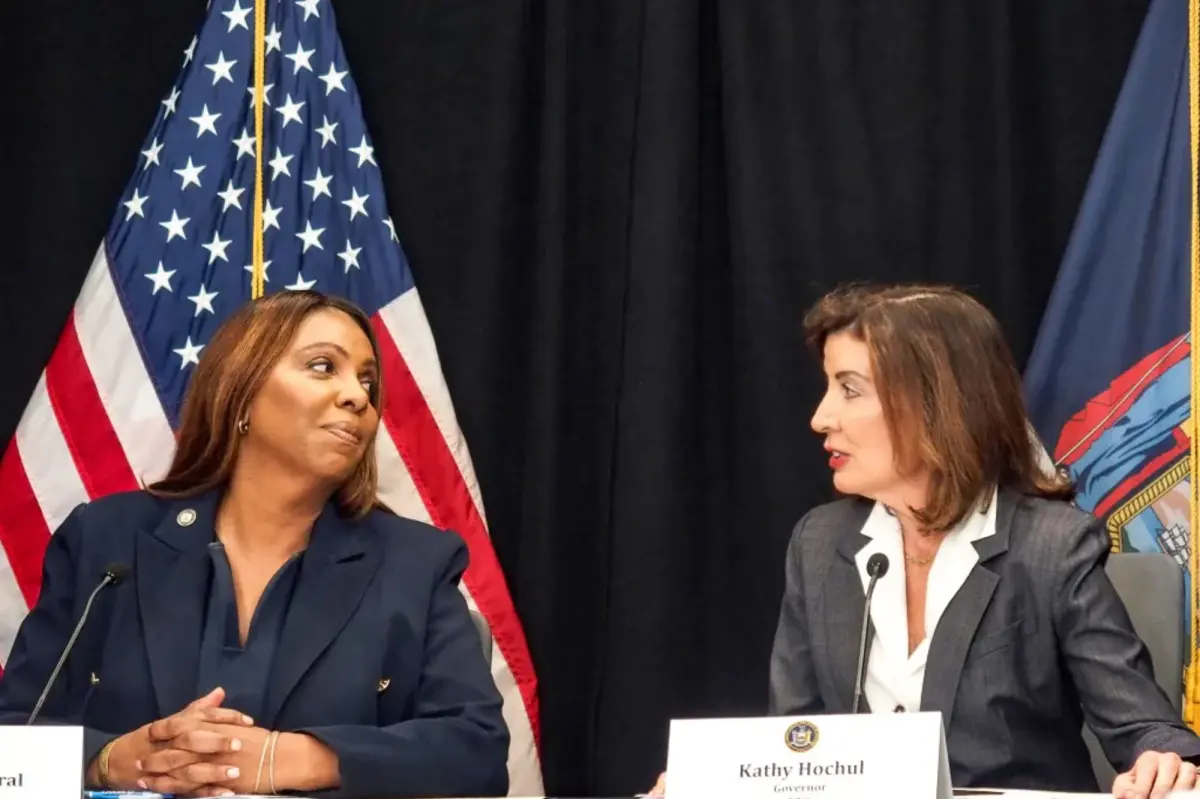
Every parent of a modern teenager knows the quiet anxiety of the midnight hallway walk, watching for that telltale slice of blue light glowing from underneath a bedroom door. In our hyper-connected era, the battle for our children’s sleep, attention, and mental well-being is fought not on playgrounds, but on the silent, infinite-scroll battlefields of smartphone screens. Recognizing this exhausting struggle, New York State has stepped onto the battlefield with a bold legislative shield, finalizing the “Stop Addictive Feeds Exploitation” (SAFE) for Kids Act. Announced by Governor Kathy Hochul and Attorney General Letitia James, this sweeping law is scheduled to take official effect on January 25, 2027, with the explicit goal of dismantling the predatory design loops that keep young minds hooked late into the night. At its core, the legislation takes aim at the two primary engines of modern digital addiction: algorithmically personalized feeds and late-night push notifications. Under the new rules, social media platforms will be legally prohibited from serving automatically curated, personalized content to minors by default, nor will they be allowed to send disruptive notifications between the hours of midnight and 6:00 a.m. unless a parent explicitly overrides these obstacles. For parents who have spent years pleading with their children to put their phones away, this sounds like a dream come true—a digital curfew enforced by the power of the state. However, while the SAFE for Kids Act represents an admirable and highly publicized effort to reclaim our children’s peace of mind, history and human nature suggest that relying on the government to act as a digital chaperone is a deeply flawed strategy. Far from being a silver bullet, this law may ultimately offer little more than a false sense of security for families who are hoping for an easy shortcut to solve an incredibly complex socioeconomic and psychological crisis.
To make these ambitious restrictions stick, New York is venturing into highly controversial technological territory by necessitating robust age-verification mechanisms. Social media platforms operating within the state will be forced to implement verification systems, such as checking government-issued IDs, scanning faces using facial age-estimation software, or cross-referencing user data against official government databases. Instantly, this raises a massive red flag for digital privacy advocates, civil libertarians, and everyday internet users who worry about the inevitable erosion of online anonymity. Critics argue that requiring every single user to prove their age and identity to access daily communication channels essentially transforms the free, anonymous internet into a digital police state where adults must ask permission from big tech corporations to speak and read freely. In an attempt to ease these valid fears, New York lawmakers have wisely included provisions for “zero-knowledge” age-verification cryptography. This sophisticated, privacy-preserving technology allows a program to verify that an individual is indeed an adult or a minor without actually recording, sharing, or storing their personal identity details with third parties. Yet, despite these elegant mathematical assurances, the fundamental anxiety remains: any system built to verify identity is a prime target for hackers, data leaks, and corporate overreach. By forcing platforms to build digital borders, the state is creating a precarious paradox where the safety of our children’s minds is bought at the direct expense of our collective digital privacy. For many adults, the prospect of uploading a driver’s license or submitting to a facial scan just to browse their favorite social networks feels like an unacceptable compromise, highlighting how quickly protective legislation can spiral into a broader surveillance apparatus.
Even if New York manages to navigate the perilous waters of public outrage over privacy, the SAFE for Kids Act faces an incredibly steep climb through America’s judicial system before it can ever be truly implemented. History shows that whenever state governments attempt to impose digital curfews or restriction boundaries on social media platforms, they run headfirst into a legal brick wall. In states like California and Arkansas, ambitious legislative attempts to curb notification habits and force parental consent for minor accounts were swiftly blocked by federal courts. These judges ruled that such heavy-handed regulations violate the First Amendment, asserting that algorithmic recommendations and user-generated content feeds constitute a form of protected speech. Tech lobbies, armed with virtually unlimited financial resources and elite legal teams, have repeatedly successfully argued that the government cannot dictate how private companies organize and present information to the public, even when that audience consists of children. Thus, New York’s new law is born into a highly hostile legal environment, and it is highly likely that a barrage of lawsuits will tie up the SAFE for Kids Act in litigation long before its January 2027 start date. For parents anxiously counting down the months until the law takes effect, this judicial reality is a sobering reminder that legislative promises can evaporate under the warmth of constitutional scrutiny. Relying on the state to protect your child from the digital wild west is a highly risky gamble when the court system can dismantle those vital protections with a single stroke of a pen, leaving families right back where they started.
But let us imagine, for a moment, that the law survives every court challenge and goes into effect exactly as planned; we still have to contend with the remarkable resourcefulness of the teenagers themselves. Children are digital natives who have grown up breathing the air of the internet, and they possess an innate ability to bypass digital barriers far faster than bureaucratic institutions can build them. We do not have to guess how this will play out, because we have already witnessed the exact same scenario unfold on the global stage. When Australia boldly banned minors from social media platforms in late 2025, the government’s subsequent inquiries revealed a hilarious, if deeply frustrating, game of digital cat-and-mouse. Enterprising teenagers simply created alternative accounts, used makeup and strategic lighting to fool facial age-estimation cameras, borrowed their older siblings’ physical identification cards, or downloaded Virtual Private Networks (VPNs) to spoof their geographical locations. In the United Kingdom, when strict age checks were enforced for mature online content, downloads of privacy-focused VPN services like Proton skyrocketed by an astonishing 1,200 percent overnight, with official reports showing that 40 percent of British kids aged eleven to seventeen easily bypassed the restrictions. More alarming still, a survey of Australian parents revealed that 27 percent of their children simply migrated away from mainstream platforms like Instagram toward highly unregulated, dark, and dangerous corners of the internet. By erecting legal walls around the standard, monitored apps, well-meaning governments may unintentionally be driving their children directly into unchecked, sketchy digital wildernesses where true predators and radicalizers operate entirely in the shadows.
This global reality exposes a fundamental truth that lawmakers in Albany often seem to ignore: the state can never truly replace the family unit as an online safety guide. No matter how many bills are passed, civil penalties threatened, or algorithms banned, the government does not sit at your kitchen table, and it cannot tuck your children into bed at night. The digital world is a reflection of human curiosity and the search for connection, and trying to regulate a child’s desire to socialize is like trying to hold back the ocean tide with a plastic bucket. Legislation inherently struggles to keep pace with the mercurial speed of technological evolution; by the time a law is drafted, debated, amended, and finally enacted, the platforms it sought to regulate are often obsolete, replaced by new apps and decentralized protocols that operate completely outside traditional legal boundaries. When we expect the government to act as our savior, we inadvertently encourage a culture of parental abdication, where mothers and fathers falsely believe they no longer need to monitor their children’s devices because the state has allegedly handled it. This false sense of security is incredibly dangerous because the most insidious threats online—from cyberbullying to grooming—do not rely on sophisticated algorithms; they rely on direct, human-to-human communication. No notification ban or feed filter can detect a toxic peer group or prevent a vulnerable teenager from seeking validation from online strangers, meaning that top-down intervention will always be a clumsy, inadequate substitute for real-world parental involvement and open family conversations.
Ultimately, the true front line of defense in the battle for our children’s mental health is not located in the halls of legislature, but within our local communities, schools, and living rooms. Thankfully, across the country, a powerful, human-centered grassroots revolution is already quietly taking root without waiting for permission from politicians. School districts nationwide are successfully implementing strict, bell-to-bell cell phone bans, restoring classrooms to sanctuaries of focused learning and physical social interaction. Parents are joining forces to form pacts, collectively agreeing to delay giving their children smartphones until high school, relieving kids of the crushing peer pressure to be online. There is even a beautiful, growing counter-cultural movement among teenagers themselves, many of whom are voluntarily trading in their high-tech smartphones for “dumb phones” or flip phones, expressing a deep, mature desire to unplug from the exhausting demands of constant digital performativity. Exposure to highly destructive material—such as pornography, gambling, self-harm communities, and ideological radicalization—is a terrifying reality of the modern era, but the cure is personal connection, not a government filter. We must build robust support systems, foster open dialogues at home, and teach our children the lifelong skills of digital literacy, self-regulation, and mental resilience. Lawmakers like Kathy Hochul and Letitia James deserve credit for spotlighting this crisis, but parents must remain the ultimate protectors, keeping vigilant watch over their children’s digital lives, because no law can ever love a child, understand their unique vulnerabilities, or guide them safely into adulthood the way a family can.