





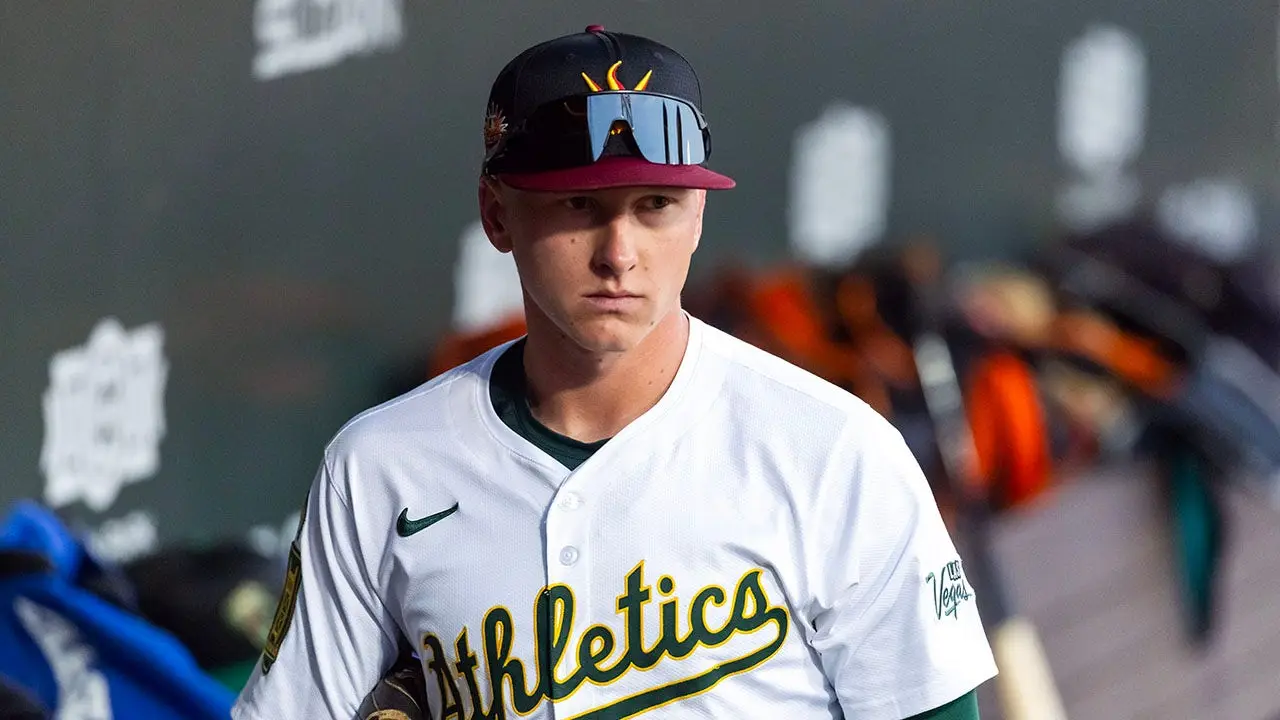
On a sun-drenched afternoon in Midland, Texas, the trajectory of a young man’s life changed in a fraction of a second, demonstrating the fragile tightrope that professional athletes walk every single day. Ryan Lasko, a vibrant 24-year-old rising star and the Oakland Athletics’ prized No. 18 prospect, was doing what he loved most: patrolling center field with the fearless, high-octane intensity that had defined his rapid climb through the minor leagues. As a high fly ball sliced through the warm Texas air into the right-center field gap, instinct took over, overriding any sense of self-preservation. Lasko sprinted toward the ball, locked in on its flight path, while right fielder Devin Taylor did the exact same from his position. Under normal circumstances, a verbal cue or a last-second adjustment prevents disaster, but on this day, the baseball gods were unforgiving. The two outfielders collided with a sickening, high-velocity impact that instantly silenced the stadium, leaving both men crumpled on the grass and transforming a routine afternoon game into a scene of absolute, heartbreaking desperation that shook everyone present to their core.
For ten excruciating minutes, time crawled to a standstill as Lasko lay motionless on the outfield turf, surrounded by medical staff, coaching personnel, and deeply shaken teammates who knelt in hushed, tearful prayer. The horrifying quiet that enveloped the ballpark was a stark reminder of the physical vulnerability inherent in the games we cheer for, as the young athlete was slowly and meticulously stabilized, loaded onto a medical cart, and evacuated from the field to be rushed to Texas Health Presbyterian Hospital in Plano. It was there that doctors delivered a sobering and terrifying diagnosis: Lasko had suffered fractured C6 and C7 cervical vertebrae, a catastrophic neck injury that threatens the very core of sensory and motor function. In the immediate, agonizing hours following emergency spinal surgery, the worst fears of Lasko, his family, and the baseball community seemed to materialize as he woke up to a world where he had absolutely no sensation or movement in his legs. For an elite young athlete whose entire identity, livelihood, and joy had been built upon physical grace, explosive speed, and absolute bodily autonomy, the sudden onset of paralysis was a psychological and physical chasm almost too vast to comprehend.
To truly understand the gravity of this tragedy, one must look at the immense promise and dedication that Ryan Lasko brought to the field long before that fateful collision. Selected in the second round of the 2023 Major League Baseball Draft out of Rutgers University, Lasko was not merely a name on a roster; he represents the hopes of a franchise and the culmination of a lifetime of grueling work, early mornings, and unyielding discipline. His exceptional talent and work ethic allowed him to bypass the lower rungs of the minor leagues quickly, earning a late-season promotion to Triple-A Las Vegas last year before anchoring the outfield for Double-A Midland this season. Despite the challenging adjustments that young hitters face—reflected in his seasonal slash line of .209/.275/.360 with six home runs, five triples, and 34 runs batted in—Lasko’s value was defined by his sparkling defensive instincts, his infectious energy, and a relentless blue-collar attitude that endeared him to coaches and fans alike. He played the game with an admirable, leaving-it-all-on-the-field passion, a quality that made him a cornerstone of the Athletics’ future rebuild but ultimately put him directly in harm’s way during that fateful defensive pursuit.
Yet, out of the darkness of the hospital room and the initial terror of paralysis, a narrative of profound hope and human resilience has begun to emerge, showing that Lasko’s spirit remains entirely unbroken. In a heartening update shared on his social media accounts, the young outfielder revealed that he is finally “feeling much better” and is beginning to reclaim his body, millimeter by hard-fought millimeter. In the language of spinal recovery, progress is measured in quiet victories, and Lasko’s current milestones are nothing short of miraculous. He documented that sensation has begun returning to his lower extremities, creeping upward from the soles of his feet up to his knees, accompanied by involuntary leg movements—a clinical sign that, while physically jarring, indicates his damaged central nervous system is fighting to rebuild its pathways. Furthermore, he has begun to register sensations along the sides of his thighs, his hamstrings, and his back. Hand mobility, which is so crucial for daily life and self-sufficiency, is also steadily returning, with Lasko proudly reporting that he has regained roughly 75 percent usage of his left hand and 50 percent of his right hand, bringing a wave of relief to everyone following his recovery.
Rebuilding a shattered spine is a monumental task that requires a different kind of strength than hitting a fastball; it is a grueling mental and emotional marathon that tests the absolute limits of the human will. The transition from an elite, hyper-mobile athlete to a patient fighting to simply wiggle a toe or grip a cup is a psychologically devastating journey, yet Lasko has navigated this dark terrain by leaning heavily on the community that has rallied around him. In his public statements, he has expressed deep, heartfelt gratitude for the avalanche of love, prayers, and support that have poured in from teammates, opponents, the Oakland Athletics organization, and baseball fans nationwide. This emotional scaffolding has become his daily lifeline, providing the mental fuel he needs to face the pain, frustration, and exhaustion of intensive physical therapy sessions. Every message of encouragement serves as a vital reminder that he is not fighting this battle in isolation, giving him the strength to wake up each morning, look his physical limitations in the eye, and vow to work his hardest to overcome them.
As Ryan Lasko continues his long, uncertain road to recovery, his story transcends the boundaries of sports, offering a beautiful and moving testament to the resilience of the human spirit when faced with sudden adversity. While the ultimate dream of seeing him return to an MLB outfield remains a distant, secondary goal, the current focus is on the far grander, more intimate triumphs of walking, healing, and reclaiming a vibrant, pain-free life. What Lasko is demonstrating in that Texas hospital room is that while a split-second collision can damage bones and disrupt nerve pathways, it cannot touch the heart, courage, or resolve of a person who refuses to define himself by his worst day. As he fights to regain every single percentage of his mobility, he does so with a grace, determination, and optimism that serves as an inspiring light to anyone battling their own seemingly insurmountable challenges, proving that a true champion is measured not by how fast they run the bases, but by how courageously they stand up after the fall.