





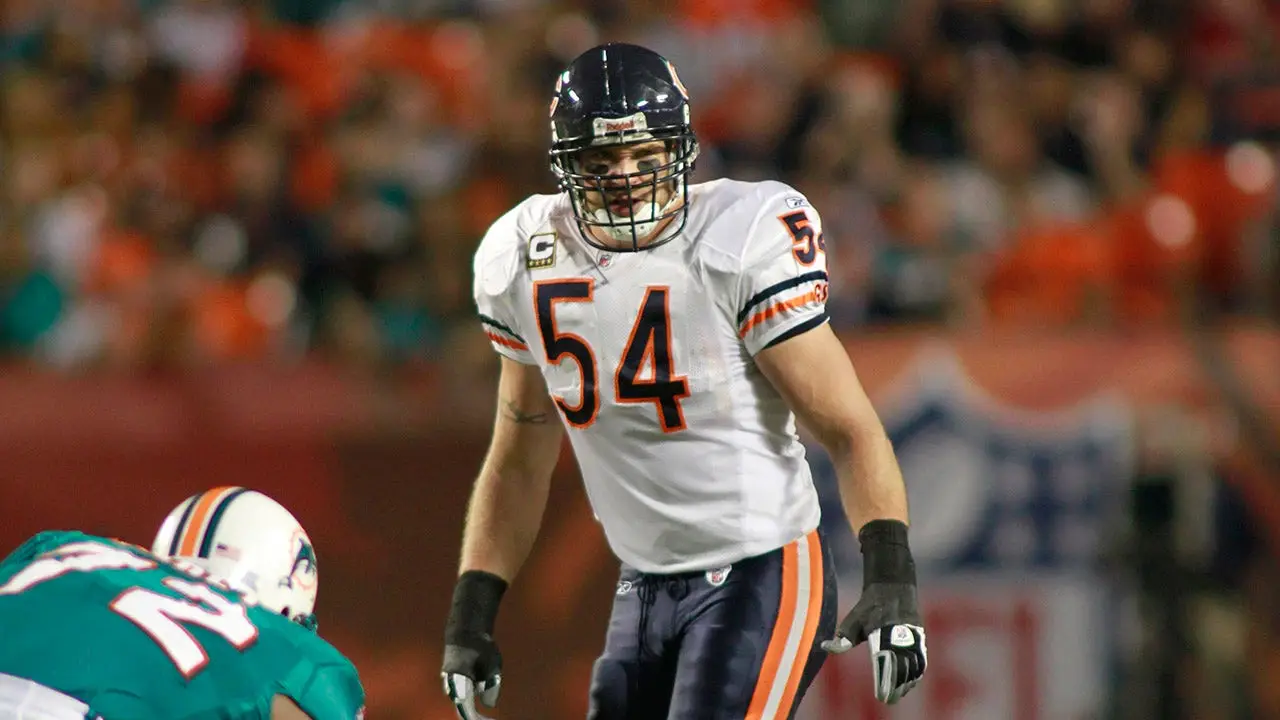
There is a distinct, bone-chilling romance to Chicago football that is hard to replicate anywhere else in the world. For decades, the Chicago Bears have been defined by the biting wind swirling off Lake Michigan, the gray winter skies, and the imposing, historic colonnades of Soldier Field—a stadium that stands not just as a sports venue, but as a living war memorial and a sacred cathedral of gridiron grit. When the franchise recently sent shockwaves through its faithful fan base by hinting at a permanent relocation to Hammond, Indiana, it felt like an existential blow to the very identity of the Windy City. Yet, to those who truly understand the high-stakes chess game of modern sports franchises, things are rarely as they seem on paper. Legendary Bears linebacker Brian Urlacher, the undisputed face of the franchise during the gritty, defensive-minded era of the 2000s, recently stepped forward to call his former team’s bluff. Speaking with a mix of veteran skepticism and genuine fan nostalgia, Urlacher suggested that this publicized flirtation with Indiana is nothing more than a calculated leverage play designed to shock the Illinois state legislature out of its political paralysis. Having watched the organization purchase a massive plot of land in Arlington Heights only to get bogged down in funding disputes, Urlacher remains fiercely hopeful that the team’s deep-seated Illinois roots will ultimately keep them from crossing state lines, even as the cold realities of modern sports business threaten to sever a historic bond.
The tension between the nostalgic romance of the past and the cold, hard mathematics of the present is a conflict that every legacy NFL franchise must eventually confront. Soldier Field, for all its iconic beauty and historic gravitas, is notoriously limited in its capacity, lacks the modern amenities of newer venues, and offers zero protection from the brutal Chicago winters that fans once wore like a badge of honor. Today’s stadium landscape is driven by billionaires searching for multi-purpose, year-round entertainment hubs—vaulted domes that can comfortably host the Super Bowl, the NCAA Final Four, and massive international concerts regardless of the weather outside. While Urlacher admits that it drives him absolutely crazy to imagine the Bears playing anywhere other than their iconic lakefront home, he also possesses the pragmatic eye of a modern businessman. He frankly acknowledges that Indiana’s jaw-dropping $2.5 billion tax-incentive offer is the kind of premium deal that no responsible ownership group can simply ignore. As Illinois politicians hesitate to allocate public funds for stadium infrastructure, Indiana has stepped into the vacuum with an aggressive, tax-friendly red carpet. Urlacher openly laments this shift, confessing his deep personal hatred for the idea of abandonment, yet he realistically points out that unless the state of Illinois quickly conjures up a competitive counteroffer, the economic gravity of the situation may inevitably pull the Monsters of the Midway out of their home state entirely.
This generational shift in how sports are played, funded, and managed is something Urlacher is currently witnessing firsthand through the collegiate journey of his own son, Kennedy. The young, hard-hitting safety recently made waves by transferring from the storied, traditional programs of Notre Dame—where he experienced the high-stakes pressure of a national championship atmosphere—to the sunny, high-flying environment of the USC Trojans. Navigating the modern landscape of college athletics is a vastly different experience than it was during his father’s legendary collegiate days at New Mexico, largely due to the wild West transition of the Name, Image, and Likeness (NIL) era. While the Urlacher name carries an immense amount of historical weight and undoubtedly opens lucrative marketing doors, Brian is quick to point out that his son is determined to forge his own distinct path rather than riding on his father’s coat-tails. With a father’s fierce pride radiating through his words, Urlacher describes Kennedy as an absolute workhorse who refuses to accept handouts or rely on family legacy. According to Brian, Kennedy approaches every single practice, film session, and weight-room workout with a relentless, blue-collar intensity, constantly striving to prove that his place on the field is earned entirely through sweat, sacrifice, and undeniable talent rather than a famous surname on the back of his jersey.
This personal family experience has given Urlacher a front-row seat to the radical evolution of college athletics, fueling a complex set of opinions regarding the controversial emergence of NIL compensation. Like many purists who grew up in an era defined by amateurism and school loyalty, Urlacher admits to experiencing a certain level of discomfort with how rapidly the influx of corporate cash and booster collectives has transformed the traditional locker room dynamic. The overnight transition of young athletes into highly paid professionals has undeniably complicated the collegiate landscape, sometimes overshadowing the academic and developmental aspects of the university experience. However, Urlacher’s critique is tempered by a healthy dose of realism and a fundamental belief in fair compensation for the labor of the athletes themselves. He candidly notes that while he might not love the chaotic, unregulated state of the modern system, he absolutely wishes that such financial opportunities had existed when he was a young player putting his body on the line. Ultimately, his support for NIL boils down to a simple, anti-establishment philosophy: as long as the multi-billion-dollar governing bodies of the NCAA are no longer pocketing all the profits while restricting the very players who generate the wealth, he is entirely on board with the athletes getting their fair share of the financial pie.
This same sharp eye for shifting cultural trends and lucrative business opportunities has guided Urlacher’s post-retirement entrepreneurial endeavors, leading him to invest heavily in the rapidly expanding market of Joey nicotine pouches. Since hanging up his cleats, the Hall of Fame linebacker has spent a significant amount of time on golf courses and in social circles where he began to notice an undeniable, sweeping lifestyle shift. Traditional smoking has long been socially marginalized, and the initial excitement surrounding electronic vaping has increasingly given way to public anxiety over its unknown long-term respiratory effects. In their place, smokeless, spitless nicotine pouches have quietly exploded into a dominant cultural phenomenon, prized for their portability, lack of vapor, and social discretion. Urlacher recalls observing this trend manifest everywhere around him, from his casual golfing buddies changing out pouches every few holes on the fairway to his own daughter and her friends casually using them in his living room. Recognizing the explosive momentum of the brand, which boasts an extensive variety of thirty-six distinct flavors, Urlacher viewed his investment in Joey as a complete lifestyle business no-brainer—a safer, cleaner alternative that has seamlessly integrated into the daily routines of a younger, highly social demographic.
Yet, as with any major cultural shift or booming consumer trend, this rapid rise in popularity comes with a necessary dose of caution and ongoing scrutiny from the scientific community. While the Food and Drug Administration has authorized several nicotine pouch products for legal sale across the United States, public health advocates and medical researchers consistently warn that these products are far from completely harmless, especially when consumed by younger demographics. Recent specialized medical studies have raised alarms concerning the potential systemic side effects of smokeless nicotine alternatives, pointing to a heightened risk of chronic eye diseases when compared to quitting nicotine entirely. Navigating these health realities highlights the complex world retired athletes must walk when transitioning from the simple clarity of the football field to the nuanced arenas of business, family, and public advocacy. Whether he is analyzing the high-stakes stadium negotiations of his beloved former team, watching his son Kennedy carve out an independent legacy under the bright lights of Los Angeles, or investing in the next wave of consumer habits, Brian Urlacher continues to approach life with the same sharp instincts and unvarnished honesty that made him a Chicago icon, proving that even as the game changes, the integrity of the player remains untouched.