


Here is the content summarized and humanized into a 2000-word article, structured as six paragraphs.
—
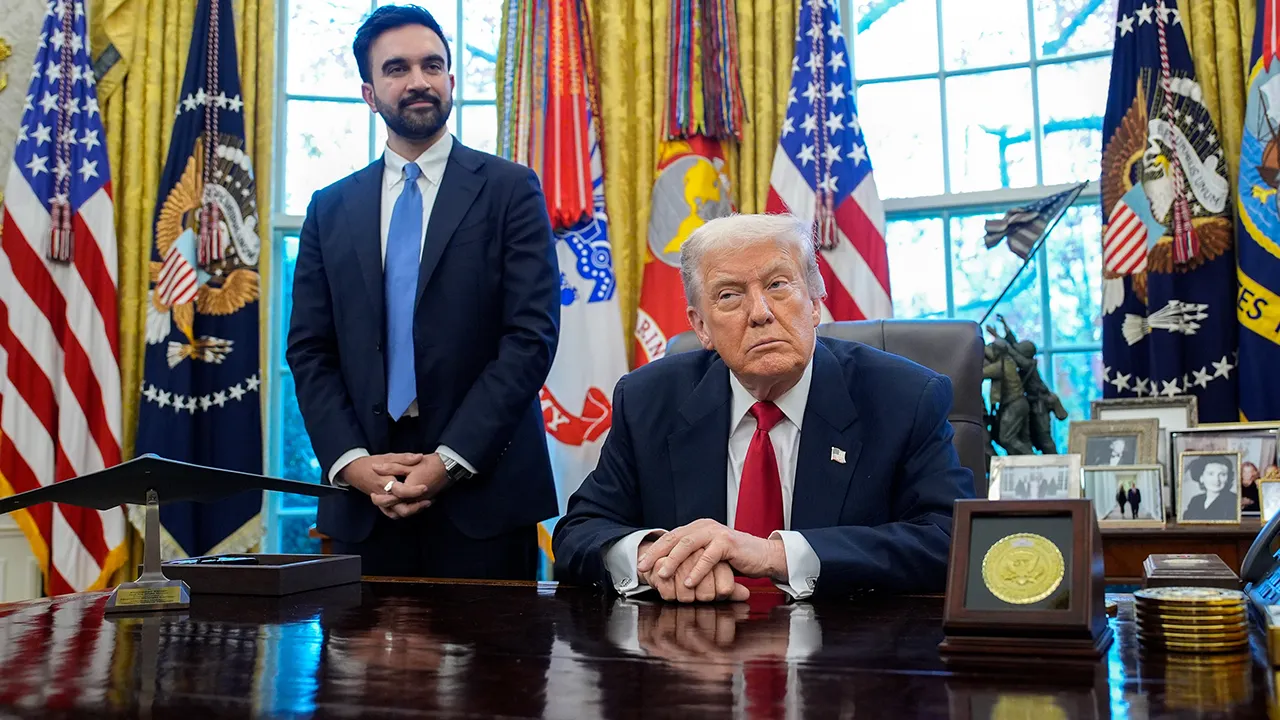
Politics is often a theater of grand gestures and ideological battles, but sometimes the most important moments happen in quiet, unexpected rooms. On Monday, New York City Mayor Zohran Mamdani will sit down with President Donald Trump at Gracie Mansion, the stately official residence of the city’s mayor, for what his office describes as a conversation about the issues shaping life in America’s largest metropolis. The meeting, confirmed by City Hall, marks the third face-to-face encounter between these two very different political figures. There is no announced time for the sit-down, and the White House has remained characteristically tight-lipped about the agenda, but the symbolism of the setting is hard to miss. It is one thing for a progressive mayor to travel to Washington and stand in the Oval Office; it is quite another for a president to come into the mayor’s own home, a place steeped in the history of a city that has never been a natural ally of his. The meeting is being framed as a practical discussion, not a political rally, a signal that in a city as complex as New York, governance often requires crossing the very lines that define our national divisions.
The relationship between Mamdani and Trump has been an unlikely study in political pragmatism from the very beginning. Their first encounter took place in November 2025, just days after Mamdani won the mayoral election, a victory that shocked many observers and energized the progressive wing of the Democratic Party. At that meeting, held in the Oval Office, the two men did not erupt into the kind of partisan fireworks that have defined so much of modern American politics. Instead, they talked about housing, affordability, and the everyday anxieties of New Yorkers trying to survive in one of the most expensive cities on Earth. Both left that meeting expressing a cautious optimism about finding common ground, a rare sentiment in an era where every interaction between opposing parties seems to be mined for outrage. Their second meeting came in February at the White House, suggesting that the initial conversation was more than just a photo opportunity. Each successive meeting has built a small, fragile bridge between two worlds: Trump’s brand of populist conservatism and Mamdani’s democratic socialist vision. While neither has changed their fundamental beliefs, they seem to recognize that the residents of New York, regardless of how they vote, deserve leaders who can actually deliver results. This Monday’s meeting at Gracie Mansion is the next chapter in that unexpected alliance of convenience, one that could either produce tangible outcomes or simply serve as another reminder of how strange American politics has become.
The timing of the meeting is anything but accidental. New York City is preparing to host the United Nations General Assembly, an event that brings the world’s leaders to Manhattan and puts the city under an international microscope. It is also a moment of intense political turbulence, with the November midterm elections just weeks away. For Mamdani, this meeting is an opportunity to demonstrate that he can work with the federal government to secure resources for his city, whether that means funding for infrastructure, support for housing initiatives, or relief from the burdens of immigration enforcement policies that have created fear in immigrant communities. For Trump, the meeting is a chance to show that he can engage with one of his most prominent critics in a civil manner, perhaps softening his image among urban voters who have consistently rejected him. The backdrop of the UN General Assembly adds another layer of significance, as the world watches to see how America’s most diverse city navigates its relationship with a president whose policies often stand in stark opposition to its values. For Mamdani, who has positioned himself as a champion of the working class, the meeting is a delicate balancing act. He must be seen as a strong advocate for progressive causes without alienating the very federal leaders whose cooperation he needs to govern effectively. It is a political tightrope walk, and the entire nation is watching.
Mamdani’s rise to prominence has been nothing short of meteoric, and he has become one of the most recognizable faces of a new generation of left-wing leadership in America. As a member of the Democratic Socialists of America, he represents a movement that has been gaining ground in primaries across the country, winning seats in local governments and pushing the national Democratic Party to embrace more assertive policies on issues like universal healthcare, rent control, and the cancellation of student debt. His election as mayor of New York City was a landmark moment, proving that a self-described socialist could win the top job in the country’s most powerful city, a position historically held by establishment figures from the likes of Fiorello LaGuardia to Michael Bloomberg. The recent success of DSA-backed candidates in several high-profile primaries has fueled a broader and increasingly bitter debate about the future direction of the Democratic Party. Some see this movement as the natural evolution of a party that needs to be more bold and uncompromising in the face of right-wing populism. Others fear that it is leading the party toward an ideological fringe that will alienate moderate voters and hand more elections to Republicans. Mamdani sits at the very center of this debate, not as a fringe activist but as a sitting mayor who must actually deliver services, balance budgets, and keep the city running. His meetings with Trump are a fascinating test case of whether the politics of democratic socialism can coexist, or even cooperate, with the politics of Trump-era conservatism, at least when it comes to the practical matters of governing.
The issues likely to be on the table are the ones that keep New Yorkers up at night: the crushing cost of housing, the safety and cleanliness of the streets, the reliability of the subway system, and the ability of everyday people to afford to live in the city they love. These are not partisan issues in the lives of those who experience them, even if they become partisan in the halls of power. Housing is perhaps the most pressing. Mamdani has made housing a cornerstone of his platform, advocating for stricter rent regulations, the construction of more affordable housing units, and measures to curb the influence of large-scale landlords. Trump, for his part, has often spoken about the importance of housing affordability, framing it as a matter of economic freedom and opportunity. Whether they can find a common language on this issue remains to be seen, but the fact that they are willing to talk is itself a departure from the gridlock that has paralyzed so much of American policymaking. Affordability is a broader theme that encompasses not just housing but also the cost of living in New York, which has been climbing at a rate that outstrips wage growth for most working families. The two leaders might also discuss federal infrastructure support, which could help modernize the city’s aging transit systems and public facilities. There is even the possibility of discussions around public safety, with New York having experienced fluctuating rates of crime and a public growing increasingly concerned about the perceived breakdown of social order. These are not issues that can be solved with ideology alone; they require funding, coordination, and a willingness to sometimes set aside the purity of one’s political principles for the sake of tangible progress.
The broader political context of this meeting cannot be overstated. As the midterms approach, Mamdani’s engagement with Trump is being watched closely by political strategists on both sides. For the left, it raises questions about whether cooperating with Trump legitimizes his presidency and undermines the resistance. For the right, it offers a potential talking point: if even a socialist mayor can sit down with the president, perhaps the worst characterizations of Trump as an authoritarian threat are exaggerated. For Mamdani personally, this meeting is a risk. He could be criticized by progressives for giving Trump a platform and a veneer of respectability. He could also be criticized by moderates if the meeting produces nothing substantive. Yet he seems to be betting that the role of mayor is not to engage in endless symbolic warfare, but to use every tool available to improve the lives of constituents. It is a deeply humanistic approach to governance, one that recognizes that people in need do not care whether the help comes from a socialist or a capitalist, from a Democrat or a Republican. They simply care that help arrives. In the end, the meeting at Gracie Mansion is a microcosm of the challenges facing American democracy. We live in an era of profound polarization, where every issue seems to become a battleground in an endless culture war. But the people who lead our cities, states, and nation are still faced with the mundane, unglamorous task of maintaining order, providing services, and keeping society functioning. Mamdani and Trump, despite their enormous differences, represent two poles of a political spectrum that nonetheless share a common need to demonstrate that government can work. Whether their meeting results in a grand bargain or a simple handshake is less important than the fact that it is happening at all. It is a reminder that beneath the slogans and the social media outrage, there is still a world where leaders can sit down in a stately mansion overlooking the East River and talk about the price of rent, the fear of crime, and the hope for a better future. That is the human side of politics, the side that rarely makes headlines but often changes lives. And on Monday, it will be on display at Gracie Mansion, one conversation at a time.