



Paragraph 1
There is a peculiar, almost theatrical kind of tension that comes when two political opponents who readily mock one another in public are forced to sit face-to-face in a room meant for diplomacy. That is exactly the image that unfolds Monday at Gracie Mansion, the official residence of New York City’s mayor, when President Donald Trump and Mayor Zohran Mamdani meet once again. This is not a meeting of friends. It is not a meeting of ideological allies. It is a meeting of two men who represent two Americas—one who holds federal power and believes in strict enforcement of immigration law, and one who leads a deeply diverse, immigrant-heavy city and believes the federal government is waging a campaign of fear against his constituents. And yet, they have found a way to sit down, talk, and, at least occasionally, search for common ground. The meeting at Gracie Mansion is a test, not just of their personal relationship, but of whether the machinery of political cooperation can survive the weight of constant conflict. Both men have something to gain from showing the public they can be civil. Trump, who loves the spotlight, New York, and the image of the dealmaker, can use a cooperative mayor to project a sense of mastery. Mamdani, a democratic socialist from Queens who has built his career challenging the establishment, can demonstrate that he is willing to work with even the most powerful and unpopular figure in his opposition to secure tangible benefits for the city he serves. The result is a delicate dance, part performance, part genuine negotiation, with the fate of policy initiatives—and public perception—hanging in the balance.
Paragraph 2
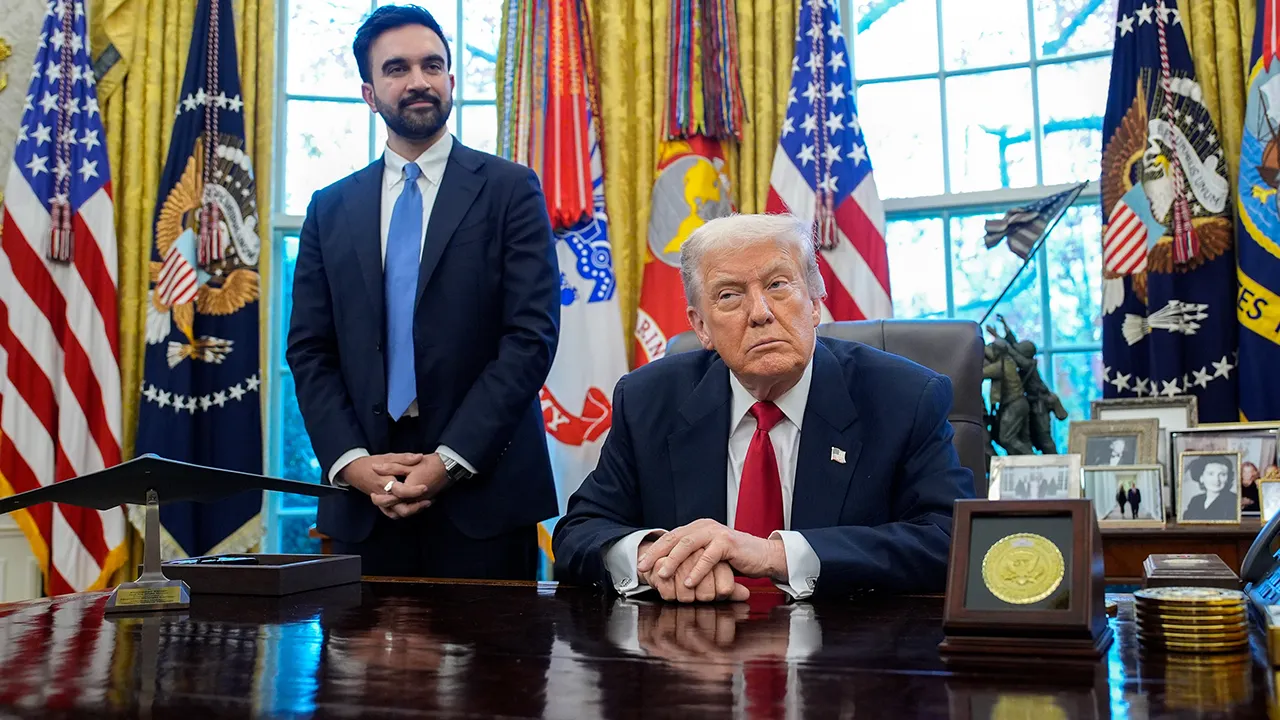
The road to this moment has been anything but smooth, though their relationship began with surprising warmth. Trump first met Mamdani in November, shortly after the mayor took office, and the president offered remarks that raised eyebrows across the political spectrum. Trump suggested that Mamdani, a self-identified socialist, could “surprise some conservative people” and added, with a hint of optimism, “The better he does, the happier I am.” It was a curious thing to say about a man whose policies Trump would later bury under a pile of criticism, but it was also revealing. Trump, who has a long and complicated history with New York, may see Mamdani as something more than just a political enemy: a reflection of the city itself—loud, brash, difficult, and impossible to ignore. Their next encounter, on February 26 in the Oval Office, was even more cordial. Mamdani came bearing an ambitious proposal: more than $21 billion in federal grants to construct 12,000 affordable homes in New York City, along with parks, schools, health clinics, and thousands of union jobs. He called the meeting “productive,” and Trump seemed to enjoy the role of the receptive listeneressed. The image of the socialist mayor from Queens sitting across from the Republican president in the Oval Office, talking about housing and jobs, was so unusual that it became one of those rare political moments that feel almost human. But the warmth was not meant to last. Even in his State of the Union address in February, Trump could not help himself. He referred to Mamdani as “the new communist mayor of New York City,” called him a “nice guy,” and added a sharp jab: “Bad policy, but nice guy.” It is a strange kind of compliment, one that acknowledges the person while dismissing the politics, but perhaps that is the only way these two can coexist.
Paragraph 3
Beneath the pleasantries and the occasional handshake, the policy disagreements are deep, raw, and unresolved—especially on immigration. The tension reached a fever pitch when federal officials announced that U.S. Immigration and Customs Enforcement, or ICE, had arrested more than 2,100 people across New York during a monthlong operation bluntly named “Operation Rotten Apple.” For the mayor, the name itself was an insult to a city he loves; for federal authorities, it was simply a law enforcement operation. Mamdani did not hesitate to challenge the federal government. He blasted the operation, claiming that federal agents were waging a “campaign of violence and terror” against immigrant New Yorkers Benton. His administration also joined a coalition lawsuit against a new Trump administration public-charge rule, which rescinded Biden-era regulations that guided how immigration officials assess whether an applicant might become dependent on public benefits. At a news conference, Mamdani argued that the new rule sweeps aside more than a century of established law and is intentionally vague, creating uncertainty and fear that isolates immigrant communities. “If you are a citizen, or an individual seeking humanitarian relief like asylum, these changes will not affect you,” he said, trying to calm the public, but the tone of his broader message was unmistakable: this administration’s policies are designed to scare people, and he will not accept it quietly. Trump, for his part, has repeatedly characterized the mayor’s policies as destructive to the future of New York. He famously wrote in April, after New York Governor Kathy Hochul backed a Mamdani proposal to tax second homes valued at more than $5 million, “Sadly, Mayor Mamdani is DESTROYING New York! It has no chance!” The message was unequivocal, and yet, even in that attack, there is an underlying weird intimacy—Trump watching the mayor’s every move, responding to him as if he were a rival who matters.
Paragraph 4
Now they meet again, but this time under the shadow of a global spotlight. Trump is traveling to New York City for the United Nations General Assembly, a summit that draws world leaders from every corner of the planet, and he is scheduled to meet with Mamdani before the summit commences. Afterward, he will return to Washington, where Chinese President Xi Jinping is set to arrive for a state visit. It is a busy and significant few days for the president, who will be juggling international diplomacy, photographs with heads of state, and the delicate task of maintaining order on a global stage. And still, he has carved out time for a meeting with the socialist mayor of New York. That in itself is telling. For Mamdani, this is an opportunity to step into a global spotlight and demonstrate that he can engage with power, even when that power is wielded by an opponent he routinely criticizes. The mayor is expected to speak to reporters after the meeting, and one can only imagine the careful tightrope he will have to walk. How does one say “I asked the president for money to build housing” while also saying “I believe the president is terrorizing our immigrant communities”? It is a question of political survival. Mamdani, after all, represents a city that needs federal help for everything from infrastructure funding to disaster relief, and yet he has built his reputation on refusing to compromise with forces he sees as harmful. The meeting, therefore, is not just about policy; it is about signal. It tells New Yorkers that their mayor is willing to fight but also willing to talk. It tells Washington that New York is not simply an adversary but a partner when possible. And it tells the world that even in an era of sharp division, two men with almost nothing in common will sit down at a mahogany table, under the chandeliers of Gracie Mansion, and attempt to find a path forward.
Paragraph 5
To really understand this moment, it helps to humanize both men, to strip away the titles and the ideology and see what drives them. Trump is a creature of New York. He was raised in Queens, built towers in Manhattan, dominated the tabloids, and became a global icon from the same city that now seems to reject him politically. There is something deeply personal in his relationship with New York—it is the place that made him, and the place that he often feels has turned away from him. When he attacks Mamdani’s policies, he is not just attacking a political opponent; he is attacking a vision of the city that he sees as being led astray. And yet, he cannot quite turn his back on it. He comes back to New York, meets with its mayor, and offers half-compliments because the city is still a stage he loves to occupy. Mamdani, by contrast, is a different kind of New Yorker. He is the son of immigrants, a former housing counselor, an activist-legislator who rose to power on a wave of progressive energy and a promise to fight for renters, workers, and the marginalized. He is young, articulate, and not easily intimidated. When he is invited to the White House or when he welcomes the president to his city, he does not approach the meeting as a supplicant. He approaches it as a man who has a mandate from 8 million people who deserve better housing, safer streets, and a government that treats them with respect. His anti-ICE rhetoric is not abstract; it comes from hearing the stories of families torn apart, from meeting constituents who are terrified every time they see an unmarked van driving down the street. For Mamdani, every meeting with Trump is an opportunity to make the case that New York’s needs are not just liberal wish lists—they are the material, practical requirements of a functioning city. He knows he cannot get everything he wants, but he believes he can get something. And in this political environment, even “something” can feel like a victory. The challenge is to stand firm without being unreasonable, to criticize without being cruel, and to cooperate without appearing to sell out his principles.
Paragraph 6
So what does this meeting actually mean for the people of New York, for the country, and for the two men themselves? In one sense, it is a small event—a half hour or so of conversation in an elegant room, followed by photographs and carefully chosen words at a podium. But in another sense, it is a reminder of how much of governance depends on relationships. The president and the mayor may never agree on the fundamental questions of immigration, of public benefits, of who belongs in America and who must be kept out. But they have discovered, perhaps to their own surprise, that they can speak to each other, argue with each other, and occasionally help each other. That is something. In a fractured nation, where leaders often refuse to acknowledge each other’s existence, the sight of an unpredictable president and a socialist mayor sitting down to talk is almost hopeful. It suggests that politics is still, at its core, a human profession, full of egos, contradictions, and the occasional unexpected gesture. It also suggests that New York City, which has often been at the center of American conflict and triumph, remains an arena where national battles are fought, but also where small moments of compromise can happen. Whether this meeting ends in a grand announcement, a testy shouting match, or simply a polite exchange that changes nothing, it will be watched carefully—not just because it is dramatic, but because it offers a glimpse into how power actually works when no one is watching and when everyone is watching. In the end, Trump and Mamdani both know that they need each other more than they would like to admit. The president needs a cooperative New York as he welcomes the world to American soil. The mayor needs a willing federal partner if he wants to build homes, protect families, and move his city forward. They are adversaries, yes. But they are also two New Yorkers, shaped by the same restless, relentless city, now forced to sit in the same room and figure out what comes next. And for a few moments, at least, that may be enough.