





Here’s a humanized summary of the Fox News Digital report, expanded into six full paragraphs:
—
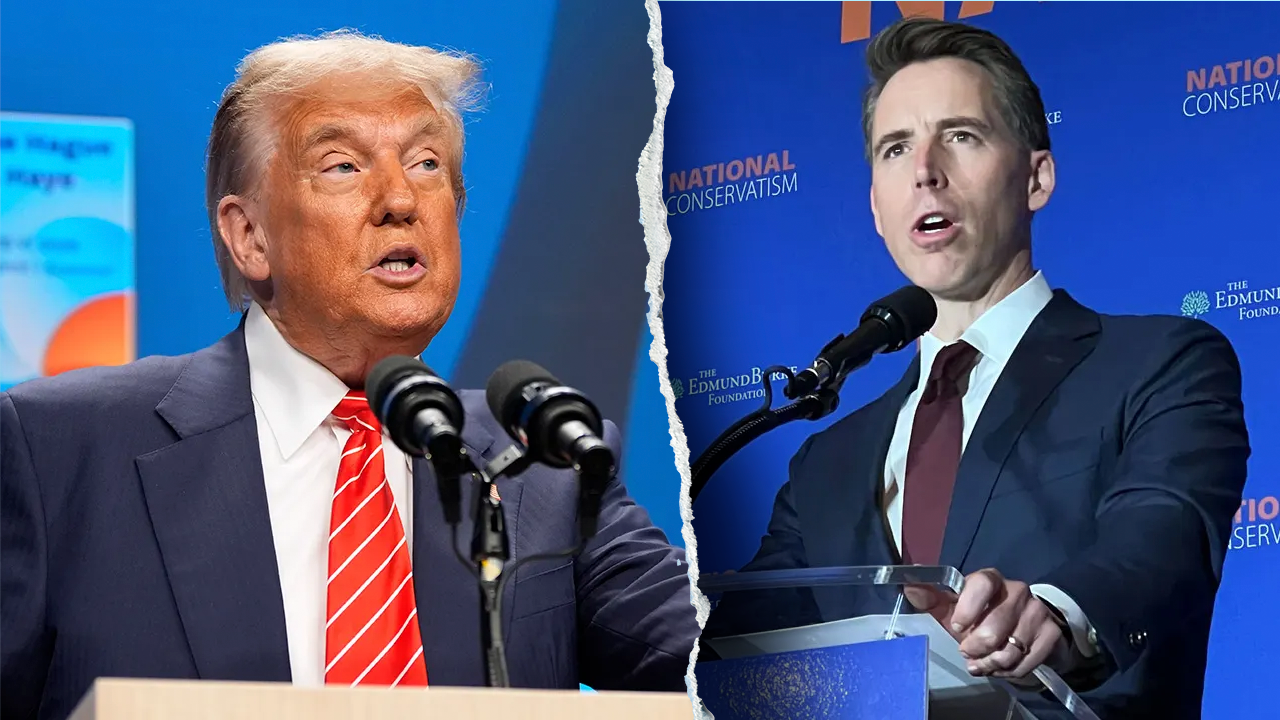
It’s no secret that data centers have become one of the most contentious issues in American politics. They’re everywhere these days — massive, windowless buildings humming with servers, sucking up electricity and water, and springing up in rural towns and suburbs that often never asked for them. And now, a Senate Republican is stepping into the fray with a legislative grenade. Senator Josh Hawley of Missouri says he’s going to introduce a bill that would close a tax loophole he believes tech giants are exploiting to build these sprawling facilities. Hawley isn’t mincing words: he calls the loophole “corporate welfare” and says companies like the ones behind the data-center boom don’t need a handout. The loophole in question comes from the Opportunity Zone program, which was created as part of the 2017 Republican tax cuts and was designed to encourage investment in low-income and historically forgotten communities. But Hawley argues that data centers have figured out how to game the system, claiming the tax breaks meant to help struggling neighborhoods are now subsidizing some of the richest corporations on the planet.
The backdrop to all of this is a Republican Party that’s deeply divided over how to handle the intersection of tech, data centers, and artificial intelligence. On the campaign trail, data centers have become a genuine political wedge issue. Local communities are angry about noise, strain on power grids, environmental harm, and the feeling that outside billionaires are showing up to take advantage of their land without giving much back. President Donald Trump has called the data center and AI frenzy a “hoax,” which only adds to the confusion within the GOP about whether to embrace this booming industry or rein it in. Hawley’s bill is a clear signal that at least one senator thinks the federal government should be stepping in — not necessarily to stop AI, but to stop what he sees as an abuse of a program with good intentions. The Opportunity Zone tax break was tucked into Trump’s signature Tax Cuts and Jobs Act in 2017. The idea was to designate specific tracts of land in low-income areas as “Opportunity Zones,” giving investors a break if they put money into businesses or housing there. It wasn’t explicitly written for data centers, but that hasn’t stopped tech companies from using it that way.
The numbers paint a pretty striking picture. Since the program began, nearly 8,750 Opportunity Zones have been designated across the United States, according to the Department of Housing and Urban Development. Almost half of them are in rural areas, which just so happen to be exactly where data center developers are looking for cheap land and easy access to power. A report from the National Community Reinvestment Coalition found that about 14% of all data centers sit inside Opportunity Zones, and more than 17% of all permitted, approved, or under-construction data-center projects are located in them. That suggests the tax break isn’t just an occasional benefit for data centers — it’s become a structural part of how the industry finances its expansion. Hawley’s bill would explicitly cut data centers out of the Opportunity Zone program entirely, making them ineligible for those tax deferrals and reductions. In other words, if a company wants to build a data center, it would have to do so without the federal tax incentive that was meant to lift up struggling communities. Hawley says these companies can afford it. “They don’t need any welfare,” he told Fox News Digital. “These people are rich, they can pay their own way.”
The bill is also a direct response to the mounting anxiety in Washington over artificial intelligence and the staggering amount of infrastructure it requires. Data centers are the physical engines of AI — every time someone asks a chatbot a question, every time an algorithm learns something new, there’s a data center somewhere burning massive amounts of energy to make it happen. And as AI has ramped up, so have concerns about what happens if it develops too quickly and without oversight. Those fears were reignited recently when engineers at the AI company Anthropic posted on X that there was roughly a 10% chance AI could wipe out humanity within a decade. That kind of statement would have sounded like science fiction not long ago, but it’s now part of the conversation happening inside Congress. Lawmakers returned to Washington this week to confront that reality, scrambling for answers on how to regulate an industry that is moving faster than the government can keep up with. But the truth is, this moment has been building for years. Three years ago, Senate Majority Leader Chuck Schumer convened high-profile gatherings with some of the biggest names in tech — including Tesla CEO Elon Musk and Meta CEO Mark Zuckerberg — to talk about what AI legislation might look like. And then, according to Hawley, not much happened.
Hawley has a theory about why Congress has been so slow to act: money. He says the tech CEOs who showed up to those summits “promptly gave Schumer and the Democrats gobs and gobs of money,” and all of a sudden the urgency evaporated. “They decided that, you know what, maybe this industry is going fine,” Hawley said. Now, he argues, the same CEOs are circling back with a different request. They want an antitrust exemption so they can all get in a room together, talk openly, and shape whatever regulations are coming down the pike. Hawley is deeply skeptical. He says the tech industry is trying to write its own rules while telling everyone the sky is falling. “They’re out there saying, ‘The sky is falling, the sky is falling. You need to let us get together, write the regulations and figure out what we’re going to do,’” he said. “I’m pretty skeptical of that, I have to say.” For Hawley, the answer isn’t letting the industry police itself. He wants actual guardrails — and he wants people to have the right to sue tech companies if their personal data has been used without consent. That would give everyday Americans a real legal tool to hold powerful corporations accountable, rather than leaving it up to regulators who might be too cozy with the industry.
At its core, Hawley’s push is about who gets to benefit from the AI and data-center boom. Opportunity Zones were supposed to be a lifeline for struggling communities, a way to direct investment into places that had been left behind. Instead, Hawley argues, they’ve become a subsidy for the richest companies in the world to build giant server farms that often bring few local jobs and a lot of local headaches. The political implications are significant, especially as the GOP tries to navigate the tension between its pro-business instincts and its increasingly populist, working-class base. Data centers have become a flashpoint in races across the country, including a high-stakes Senate race in Texas over the industry’s massive appetite for power and water. Trump’s dismissal of the issue as a “hoax” only complicates things further. But Hawley’s bill sends a message that not every Republican is willing to let the tech industry call the shots. Whether the bill goes anywhere remains to be seen — it faces an uphill battle in a Congress where tech lobbying runs deep. But by attaching the data-center question to the original intent of the Opportunity Zone program, Hawley has found a way to frame the debate in terms that are hard to argue with: tax breaks meant to help the poor shouldn’t be bankrolling billionaires. It’s a message that could resonate far beyond Missouri, and it’s one that speaks directly to the growing unease many Americans feel about the unchecked power of big tech. As the AI era accelerates, the fight over who pays for it — and who gets left behind — is only just beginning.