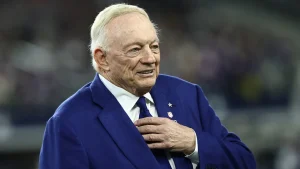





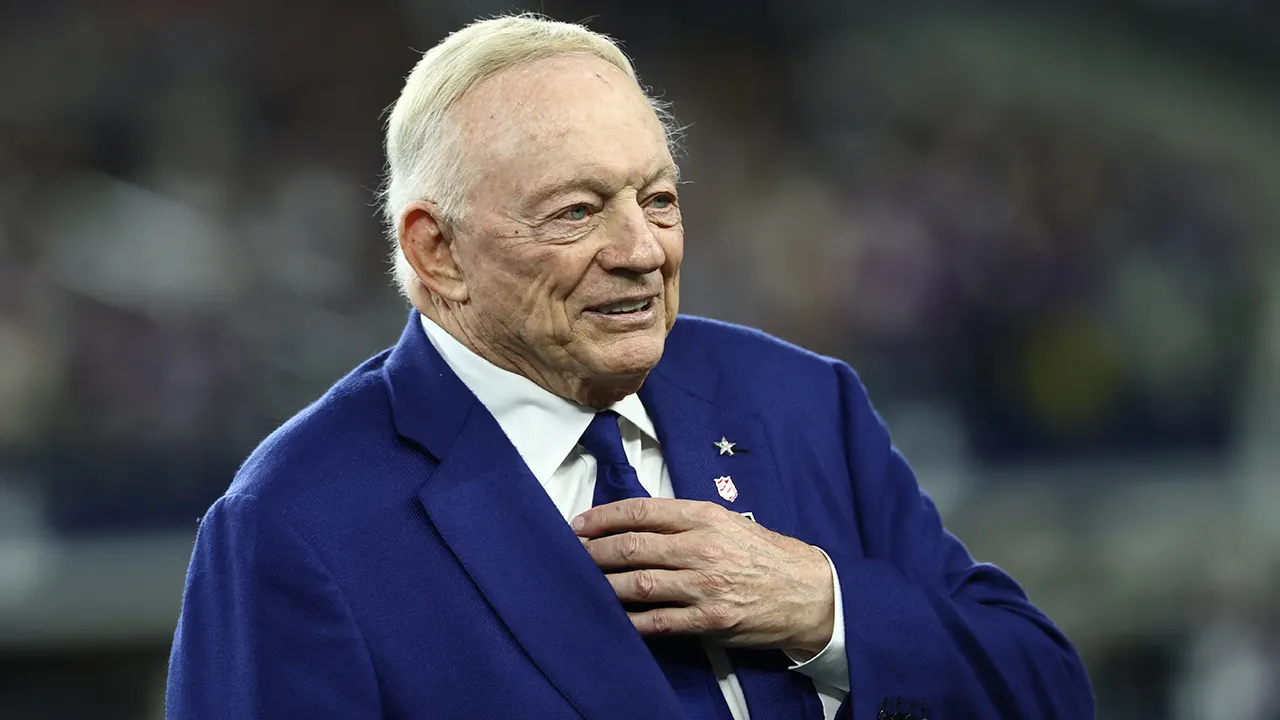
Somewhere between the final whistle at MetLife Stadium and the first wave of angry sports radio phone calls, Terrell Owens found exactly the opening he needed. The Dallas Cowboys had just opened the 2026 NFL season with a loss to the New York Giants, and for millions of people who wake up every September convinced that this will finally be the year, the defeat felt like more than one game. It felt like a familiar pattern. It felt like proof. It felt like the same old story that has repeated itself for more than two decades. And for Owens, a Pro Football Hall of Fame receiver who spent two of his 15 NFL seasons in Dallas, the moment was not just an opportunity to complain about a bad Sunday. It was a chance to talk about the man he believes is responsible for the franchise’s unfulfilled promise: Jerry Jones. Taking a seat behind the microphone on his newly launched “Get To The Point” podcast, Owens did what he has always done on and off the field. He went straight at the biggest target. He did not blame the quarterback, the offensive line, or the defensive coordinator. He aimed his frustration at the 83-year-old owner and accused him of caring more about attention and money than about winning the Super Bowl that fans desperately want. In Owens’s view, the loss to the Giants was not an accident. It was the natural result of a team run by a man who believes he is the star of the show, and whose greatest skill is not building football teams but selling hopes. The Cowboys remain “America’s Team” in name and tradition, but that label now feels like a burden to fans who see the brand being protected while the roster struggles. Every offseason, the franchise becomes a reality show. Every press conference is an event. And every year, the fans are left holding a football that somehow never makes it to February. Owens is not the first person to say this, and he will not be the last. But hearing it from a former player who actually wore the star and stood in the huddle gives it a sharper edge.
Owens did not soften his message to be diplomatic, and he did not offer the kind of measured analysis that usually fills sports television. He said Jones, at 83, has one priority, and it is not the scoreboard. “At the end of the day, he’s not worried about wins and losses,” Owens said. “Fans out there, it’s not about wins and losses for him. It’s about the bottom line and the bottom dollar. As long as you guys keep buying Dallas Cowboy merch, he’s raking in dollars. As long as he’s putting a decent product on the field and giving you guys hope that every year is the year, you guys keep buying it.” The “you guys” was aimed at Cowboys fans, the same people who pack AT&T Stadium every fall, invest emotionally in every draft, and spend their money on jerseys, hats, tickets, and the endless merchandise that keeps the Dallas machine running. Owens then made a comparison that was guaranteed to create headlines. He linked Jones’s style to President Donald Trump. “He’s just like Donald Trump—he’ll just say anything, and a lot of people are eating it up and think it’s going to be true. Stop it.” It was a provocative statement, but beneath the shock value was a real point. Jones is a master of public optimism. He can turn a quiet offseason into a season of unlimited possibility with a single press conference. He tells fans what they want to hear. He never publicly admits that the team is far from a championship. And in doing so, he keeps everyone emotionally invested in a product that has not reached the Super Bowl in nearly three decades. Owens’s message was simple: stop believing the performance. The owner is not a football whisperer. He is a promoter who knows how to monetize loyalty. That may feel harsh, but it is hard to argue with the results. The Cowboys still dominate conversations, still lead headlines, and still sell dreams. The question is whether those dreams are rooted in football reality or clever marketing.
But Owens was just getting started. He pressed on, explaining that the gap between Jones’s public promises and the team’s on-field reality has left the franchise in a strange kind of limbo. “Jerry Jones is really selling all these Cowboy fans. He’s selling them a fantasy. He’s selling them a dream,” Owens said. “Jerry, I cannot deny, he is a great salesman. He needs to relinquish some of the control that he has with the team and allow some other people to step in place.” The word “fantasy” matters because it captures the experience of following the modern Cowboys. Every summer, the roster is hyped. Every fall, the expectations are enormous. And when things fall apart, the excuses arrive like clockwork. Injuries. Bad officiating. Bad luck. A blown play here, a missed kick there. But Owens argues the problem is structural. Jones has final say over football operations, and he has made it clear that he does not intend to give that up. He is the public face of the franchise, the chief decision maker, and the man who has hired and fired coaches, traded players, and shaped the organization in his own image. That kind of control, in Owens’s view, is not just a management style. It is an expression of ego. He even went so far as to describe Jones as showing signs of “narcissism,” citing the owner’s repeated insistence that he will never relinquish power. The label is harsh, but it speaks to a frustration shared by many fans: watching a leader trust his own instincts while ignoring the evidence around him. There is a human element here too. Nobody likes to feel used, and fans who have given decades of loyalty deserve a return they can actually touch. Instead, all they get is another slogan, another announcement, another reason to wait until next year. For a franchise that was once the gold standard, that is not enough. And for a former player like Owens, who knows exactly how much talent has passed through the building, it is almost painful to watch.
The irony is that Jerry Jones knows how to win. He proved it soon after buying the Cowboys for $140 million in February 1989, back when the franchise was still finding its footing after a rough period. Jones arrived with a Texas-sized ego and a willingness to make bold decisions. He hired Jimmy Johnson, drafted Troy Aikman, made the controversial trade for Herschel Walker, and assembled a roster that produced three Super Bowl titles in four seasons: 1993, 1994, and 1996. Those victories restored the “America’s Team” mystique and made Jones look like a genius. But then came the uncomfortable part. Since that 1996 win, the Cowboys have never made it back to the Super Bowl. Not once. They have had great teams, star quarterbacks, division crowns, and playoff runs that briefly felt magical. They have had seasons that ended on miraculous catches and seasons that ended in embarrassing blowouts. Yet the final destination has always been the same: another early exit, another empty trophy case, another press conference about lessons learned. For a franchise that once made winning look routine, the drought is almost impossible to understand. Jones has tried to replicate his early success. He has cycled through coaches, invested heavily in talent, and remained publicly optimistic through every setback. But something has not translated. Owens’s critique carries weight because he has seen the franchise from the inside. He knows the kind of talent that walks through the locker room, and he also knows who has final authority over every important decision. In his mind, winning in Dallas requires more than good players. It requires a leader willing to get out of his own way, and so far Jones has never been willing to do that. The glory days have become both a memory and a measuring stick, and every year the Cowboys are measured against a standard they helped create but can no longer reach.
The most frustrating part for fans might be that none of this has hurt the bottom line. If anything, the Cowboys have become more valuable than ever. According to Sportico, the franchise is worth an estimated $15.5 billion if Jones sold it today. Forbes recently placed the value even higher, at $17 billion. Either number makes the Cowboys the most valuable team in the NFL and one of the most valuable sports properties on earth. That is not an accident. It is the result of a carefully built brand that extends far beyond the field. Jerry Jones understood long ago that football is not just a game; it is entertainment, identity, and marketing. He gave the Cowboys an aura of importance. He turned a star logo into a globally recognized symbol. He built a palace in Arlington, filled it with premium seats and expensive concessions, and made every home game a happening. And every year, the merchandise moves, the ratings come, and the money flows. Owens’s point is that this success may be exactly why Jones is not desperate to change. If the team wins, the value grows. If the team loses, the value stays strong. So why risk a formula that has made him one of the wealthiest owners in sports? It is a cynical reading, but it is grounded in the reality of modern professional sports. The fans see the Cowboys as a source of passion and community pride. The owner also sees the Cowboys as an asset, an investment, a piece of his legacy. That disconnect is not unique to Dallas, but the spotlight makes it impossible to ignore. Jones has said again and again that he wants another Super Bowl. But as Owens would say, wanting something and actually changing your behavior to get it are two different things. He might even be sincere, but sincerity can coexist with stubbornness. The challenge is not to find someone who wants to win. The challenge is to find someone willing to admit that his way is not working.
Jerry Jones, for his part, did what he always does after a bad start. He admitted disappointment. He said the team remains optimistic about its playoff chances and its Super Bowl potential in 2026. In his mind, one loss does not ruin a season. And that is true. The Cowboys could still rally. They could still go on a run. They could still make February feel like a real possibility. But Owens’s critique cuts to a deeper fear that will not be resolved by one victory or one winning streak. It is the fear that the Dallas Cowboys are run like a business and not a football team, the fear that the owner’s ego is too large to admit he needs help, and the fear that hope itself has become a sales tool. That fear has been building for years, and it is not going away just because Jerry Jones says he wants to win. What would change the conversation? Winning. The ultimate goal. A Super Bowl would silence a lot of critics, at least for a while. It would validate Jones’s approach and remind everyone why he is in the Hall of Fame. But until that happens, voices like Terrell Owens are going to keep speaking up. They are going to keep pointing at the owner and saying out loud what fans have said in barber shops, living rooms, and tailgate lots for years: enough is enough. Owens may not be the most diplomatic messenger, and comparing Jones to President Trump is guaranteed to irritate a lot of people. But his central point deserves to be taken seriously. Jerry Jones is selling a dream, and the price of that dream is high. The fans are paying with their money, their time, and their hearts. In return, they are getting a team that remains just close enough to keep them hooked. That is not a football recipe. It is a marketing strategy. The only way to break the cycle is for the Cowboys to actually deliver. The 2026 season is young, and the door is far from closed. But as Terrell Owens would remind you, the owner is still the same man, the control is still in his hands, and the hope is still being sold. The question is whether anyone should keep buying.