




The Conversation Over Turf: Josh Allen’s Pain and the NFL’s Grass Divide
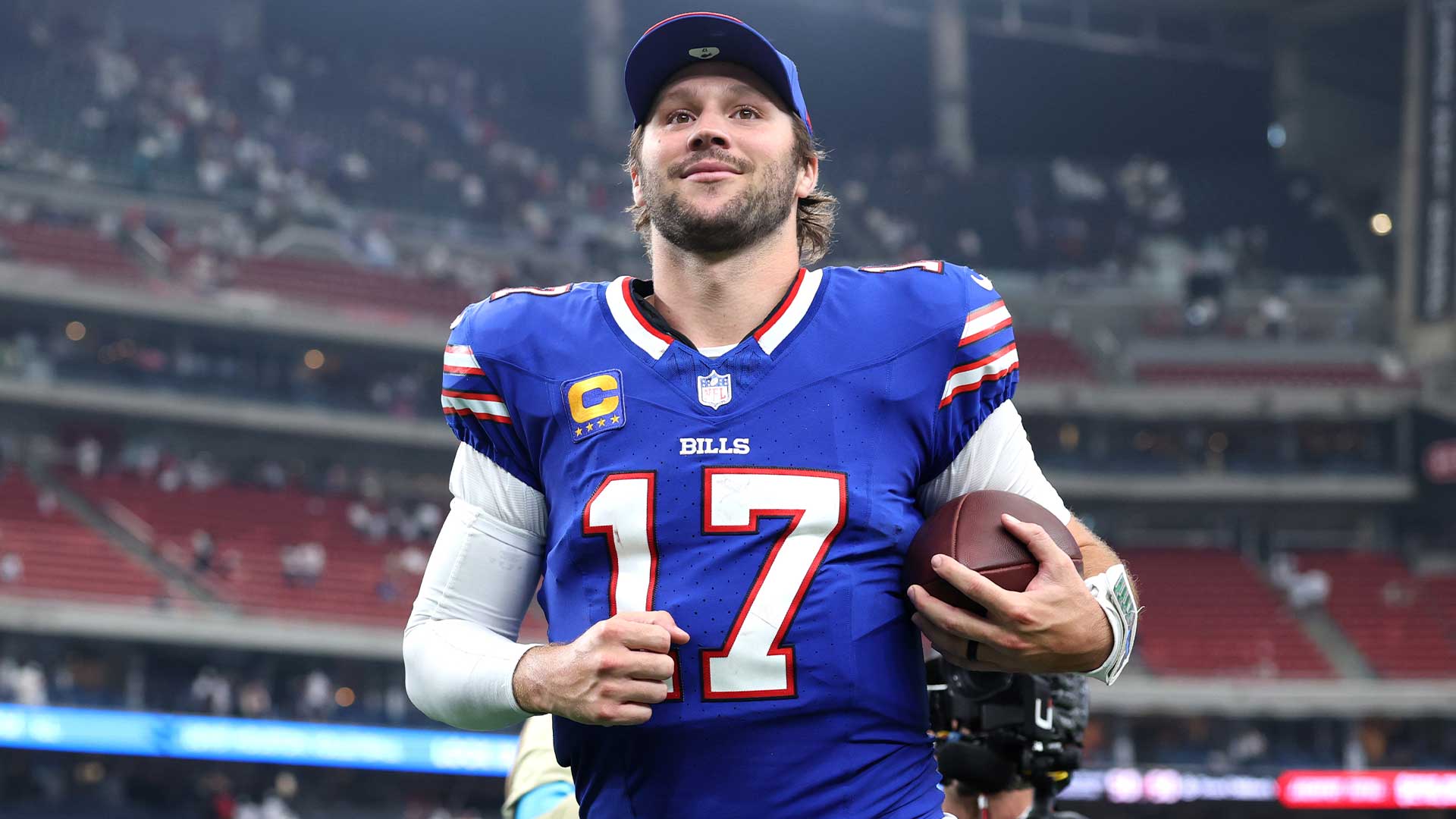
For Josh Allen, the long-awaited move across the street to the new Highmark Stadium isn’t just about a shiny new locker room or better sightlines—it’s about his legs finally getting a break. After years of suffering on the artificial turf of the old facility, the Buffalo Bills quarterback is practically giddy about playing on natural grass this season. Allen doesn’t hide the toll that synthetic surfaces took on his body. He talks about the constant friction burns, the raw, bubbling skin that made it impossible to sleep at night, and the lingering sting even after practicing on the turf inside the team’s indoor fieldhouse. His words are raw and personal: “If I could snap my fingers and make every field grass, that’s what I would do for sure.” It’s a sentiment that resonates far beyond Buffalo, encapsulating a growing frustration among players who question why the wealthiest league in America cannot give them what FIFA managed to pull off during the World Cup—swapping out artificial turf for grass in seven NFL stadiums, even if only temporarily. The contrast between what’s possible and what’s actually done has become a defining point of contention in the league, one that Allen’s very personal struggle has come to symbolize.
Allen’s voice is far from alone. Across the NFL, players overwhelmingly rally behind natural grass, and their union, the NFLPA, has made it a priority. There’s genuine bewilderment among the rank and file that billionaires who own these franchises can’t seem to do what the international soccer governing body did without breaking a sweat. San Francisco 49ers defensive lineman Nick Bosa put it bluntly: “It’s a little bizarre, but what can you expect?” That sense of resignation speaks to a deeper frustration—the feeling that player health is being weighed against profit margins and that the scale usually tips toward money. Players like Indianapolis Colts running back Jonathan Taylor have taken the fight public, posting on social media that “Natural grass isn’t out of reach. Prioritizing players shouldn’t be either!” with the hashtag #WorthTheCost. The math, they argue, simply doesn’t justify the risk of long-term injury. The data, they note, may show no huge gap in injury rates over the last few seasons, but their bodies tell a different story. It’s about the abrasions, the joint soreness, the inexplicable “turf toe” and knee strains that feel more pronounced on synthetic surfaces. For them, the choice is not just about statistics; it’s about how they feel on Monday mornings, and grass consistently feels better.
Of course, the counterargument is as old as the turf debate itself: money. Artificial turf is far cheaper to maintain than natural grass, which requires year-round care, constant watering, mowing, and, crucially, repeated resodding. A typical NFL grass field has a lifespan of about seven events before it needs to be replaced, a costly proposition that owners are loath to accept. Artificial turf, while not entirely maintenance-free, lasts longer—anywhere from three to seven years—and requires only periodic infill replacement. The NFL, for its part, is quick to point out that there’s no proven significant difference in injury rates between the two surfaces over the past three seasons, and that last season’s lower-extremity injury rate was actually half of the average from 2018-22. Yet this battle isn’t purely about numbers. There are compelling examples of owners, like the Raiders’ Mark Davis, who insisted on grass when the team moved into its indoor stadium, citing player safety as a non-negotiable. Similarly, Bills owner Terry Pegula had contemplated grass for the old facility before deciding to wait for the new stadium. These decisions point to a growing realization that player preference, even when not backed by definitive injury data, matters for morale and for the game’s long-term health. For every owner who crunches the cost spreadsheet, there’s another who recognizes that the seams between the synthetic blades are where trust fraying between the league and its athletes grows.
The technological evolution of playing surfaces has been dramatic, moving far beyond the early AstroTurf days of the 1970s when fields were little more than padded rugs over concrete. Nick Pappas, the NFL’s director of field surfaces, insists that today’s artificial turf is a world apart—engineered for shock absorption, traction, and durability. Still, he acknowledges that the league and the NFLPA are working to introduce a new era of transparency and performance standards. By 2028, all 30 facilities will need to meet a joint set of criteria covering everything from impact and traction to when a field needs to be resurfaced. The goal is to prioritize performance over material composition, so that it becomes less about whether a surface is natural or synthetic and more about how it actually feels and functions under an athlete’s cleats. Pappas explains the shift: “We take the emotions out of the material makeup. What the composition of the field is should only be secondary to how the field performs.” In practice, that means turf manufacturers must present their products for certification, undergoing rigorous testing before the league and union sign off. The hope is that this performance-based approach will reduce the inconsistency that exists across the league, making every field safer and more predictable, regardless of its base material.
The reality of making this work is messy, as Buffalo is discovering firsthand. The Bills spared no expense in their new stadium, installing heating coils, grow lights, and ventilation systems to keep the grass healthy. Yet even with all that technology, the field struggled to hold up during the preseason. After just two preseason games and a couple of practices, divots appeared and worn areas became visible, prompting the team to resod the entire field ahead of schedule. They took advantage of a three-week break before their home opener, but the expectation is that they’ll have to resod at least once more before the season ends. Pappas, who visited the facility to inspect the damage, described it as part of a learning curve. “We were seeing a grass that maybe didn’t have the strength everybody had hoped for,” he said, adding that the team will adapt and improve. The NFLPA, meanwhile, applauded the Bills for taking the plunge and sticking with grass despite the extra cost and hassle. Bills President Pete Guelli encapsulated the team’s philosophy: “I understand the economics of why people want an artificial turf field, but if you’re really putting your players first, there’s no other choice but grass.” That sentiment may be the most human and honest part of this entire debate—a recognition that the decision isn’t purely financial, but deeply personal, rooted in the everyday reality of men who put their bodies on the line.
As the season unfolds, the conversation over turf isn’t going to fade. It’s a simmering issue that layers a human cost onto a business decision. For every player like Josh Allen, who can finally sleep through the night without the burn of artificial turf on his legs, there are dozens of others still rubbing their joints after practice, wondering why their employers can’t see the connection between a softer surface and a longer career. The NFL’s new performance standards are a step forward, but they don’t resolve the core tension: the league is a multibillion-dollar enterprise, and grass is a recurring expense that doesn’t directly boost revenue. Yet the players, the ones who make the game what it is, are increasingly vocal about their preference. And when a franchise like the Bills decides to spend the extra money because it’s the right thing to do, it sets an example. The grass on the other side of the street in Buffalo is greener indeed, and not just because it’s a different patch of land. It represents a different approach—one that values the human being over the bottom line. Whether the rest of the league follows that lead, or whether the lure of turf economics remains too strong, is still an open question. But the voices aren’t going to stop, and neither should we as fans forget that behind every tackle and touchdown, there’s a body that has to recover, and a player who knows exactly what he’s running on.