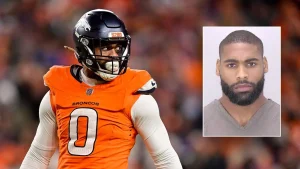







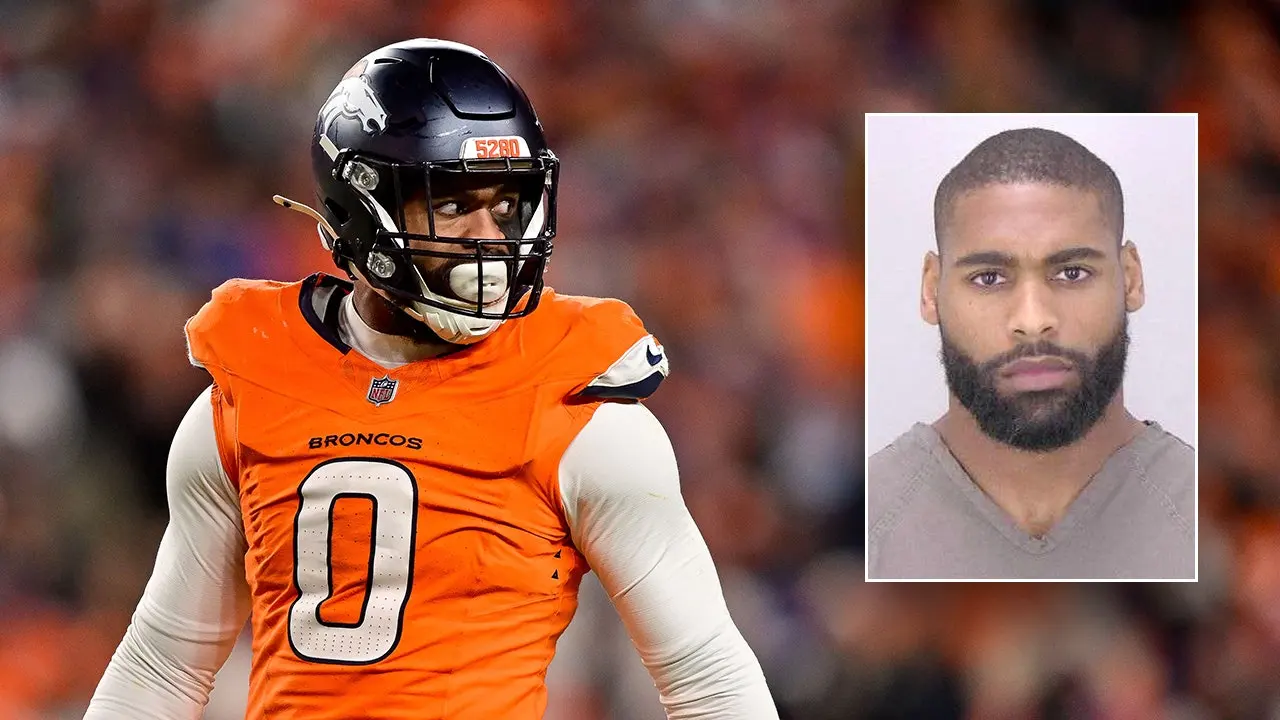
Justin Simmons spent nine seasons as one of the NFL’s most respected safeties, earning second-team All-Pro honors four times and building a reputation as a thoughtful, disciplined leader on and off the field. But retirement has a funny way of changing a person’s perspective. When you spend your entire professional life inside the locker room, surrounded by teammates who become brothers, the line between loyalty and judgment can blur. That’s exactly what happened on a recent Monday night when Simmons, now watching from the outside, found himself in the middle of an online firestorm. As he watched his former team, the Denver Broncos, take on the Kansas City Chiefs, ESPN’s Joe Buck casually mentioned that Broncos linebacker Jonathan Cooper wasn’t in the lineup. Buck explained why: Cooper was suspended on the NFL’s exempt list while awaiting trial on charges that included felony second-degree assault by strangulation of his former girlfriend. For most viewers, that was a simple, factual note. For Simmons, it felt like a betrayal. He didn’t see a broadcaster doing his job. He saw an old teammate being dragged through the mud on national television, and his instinct wasn’t to weigh the facts. It was to defend one of his own.
But Simmons didn’t just defend Cooper quietly. He went to X, the platform formerly known as Twitter, and made a comparison that would quickly backfire. Why, he asked, was ESPN comfortable mentioning Cooper’s legal troubles but completely silent about the situation involving New England Patriots coach Mike Vrabel and former reporter Dianna Russini? The Vrabel-Russini story had been a major topic during the NFL offseason, with NBC even airing an illustrated timeline of the scandal during a Patriots broadcast. Simmons seemed to believe there was a double standard: one coach gets a pass while his former teammate gets called out. On the surface, that might sound like a fair question. But the problem with comparing the two situations is that they are nowhere near the same. Vrabel’s relationship with Russini, whatever it may have been, was not illegal. There were no charges, no accusations of violence, no court dates. It was a personal scandal that generated gossip and public opinion, but it was not a criminal matter. Cooper’s case, on the other hand, involved allegations of strangulation, a crime that is treated with extreme seriousness in domestic violence cases. Simmons had taken a flawed analogy and thrown it into the internet’s most unforgiving space, and the internet, predictably, did not let it slide.
The pushback came quickly and from all directions. Fans, reporters, and even neutral observers pointed out the obvious: an alleged affair, even one that breaks professional boundaries, is not the same as being charged with choking a former girlfriend. The legal system treats them differently, and so should the public. Simmons, seemingly caught off guard by the criticism, tried to clarify his position. He wrote that an affair is not the same as an alleged conviction, acknowledging that the two situations differ in severity. But then he doubled down on his real argument: that Monday Night Football should stick to the game itself. He insisted that the broadcast crew was paid to cover the players who were actually playing, not those sitting at home or facing legal trouble. He wrote, with visible frustration, that it was “absolute bs” that Cooper’s name was brought up at all. For Simmons, the issue wasn’t whether Cooper was guilty or innocent. It was about what he saw as the proper role of a sports broadcast. In his view, the game is the game, and everything else is noise. That might sound like a reasonable principle, but it falls apart the moment you think about how sports media actually works. Broadcasters talk about injuries, contract disputes, personal milestones, and yes, off-field controversies all the time. The context around a game is part of the story. And when a player is missing because he’s accused of a violent crime, that context is not just relevant. It’s essential.
What makes this entire episode so fascinating is how a good man ended up on the wrong side of an argument without ever realizing how he got there. Simmons was clearly motivated by loyalty, one of the most admirable traits a teammate can have. He spent years in the NFL, and in that world, you protect the people next to you. When you hear their names spoken in a negative light, your first instinct is to push back, to ask why the world is being unfair to them. But that instinct, so valuable in a locker room, becomes dangerous in the wider world. Simmons wasn’t just defending a friend. He was implicitly suggesting that Cooper’s situation should be ignored because it made him uncomfortable. He was also suggesting that Vrabel, whose scandal had already been covered extensively by the media, should have been treated the same way. But here’s the part that undermines his entire argument: Vrabel’s situation was discussed on national television. NBC didn’t shy away from it. They put it in a timeline, they showed it to millions of viewers, and they moved on. So the premise that Simmons was operating from was factually wrong. And once you strip away that premise, all that’s left is a retired player who couldn’t accept that his former teammate’s legal troubles were newsworthy.
There is something deeply human about what Simmons did, even if the execution was poor. It’s the same thing that happens in families, in friendships, and in workplaces every single day. When someone you care about is accused of something terrible, your first reaction is rarely to examine the evidence. Your first reaction is to stand beside them, to question the motives of the people bringing the news, to look for a way to make the story go away. Simmons did what a lot of people would do, except he did it on a public platform where his words would be scrutinized and shared. He also did it without acknowledging the seriousness of the charges against Cooper. Strangulation is not a minor offense. It is a violent act that law enforcement and domestic violence advocates treat as a predictor of more severe violence. To compare that to a coach’s romantic relationship, even an unethical one, is to misunderstand the gravity of both situations. That doesn’t make Simmons a bad person. It makes him a loyal friend who let his emotions get the best of him. But in the age of social media, a momentary lapse in judgment can quickly become a permanent part of your public record. And when you’re a beloved former player, people pay attention to what you say, especially when what you say seems to minimize violence against women.
In the end, the lesson here is not that Justin Simmons is a villain. He’s not. He was a brilliant player, a respected leader, and by all accounts, a person of strong character. But character doesn’t make you immune to mistakes. It just means you’re expected to learn from them. The Monday Night Football crew did nothing wrong by mentioning Cooper’s absence and explaining why. That’s journalism. That’s context. That’s the responsibility of a broadcaster, and skipping it would have been a disservice to viewers. Similarly, NBC did the right thing by covering the Vrabel story, because it was a legitimate part of the Patriots’ offseason narrative. The two situations were different in kind and degree, and treating them as equals was the core flaw in Simmons’s reasoning. If he takes a step back, he might see that his energy would be better spent supporting domestic violence awareness or advocating for due process for the accused, rather than attacking production crews for doing their jobs. But that’s the tricky thing about loyalty. It can make you blind, and it can make you dig deeper when you should stop. Simmons jumped into a hole on Monday night, and then he kept digging. The good news is that he can climb out. He’s smart enough to understand why people were upset, and he’s honest enough to recognize that his analogy was flawed. Whether he does that privately or publicly remains to be seen. But if he does, he might find that the same fans who pushed back are willing to forgive him. Because that’s the other thing about social media: it has a short memory, especially when you’re willing to own your mistakes. And for a man who spent his career earning respect, that might be the most important play of his post-NFL life.