






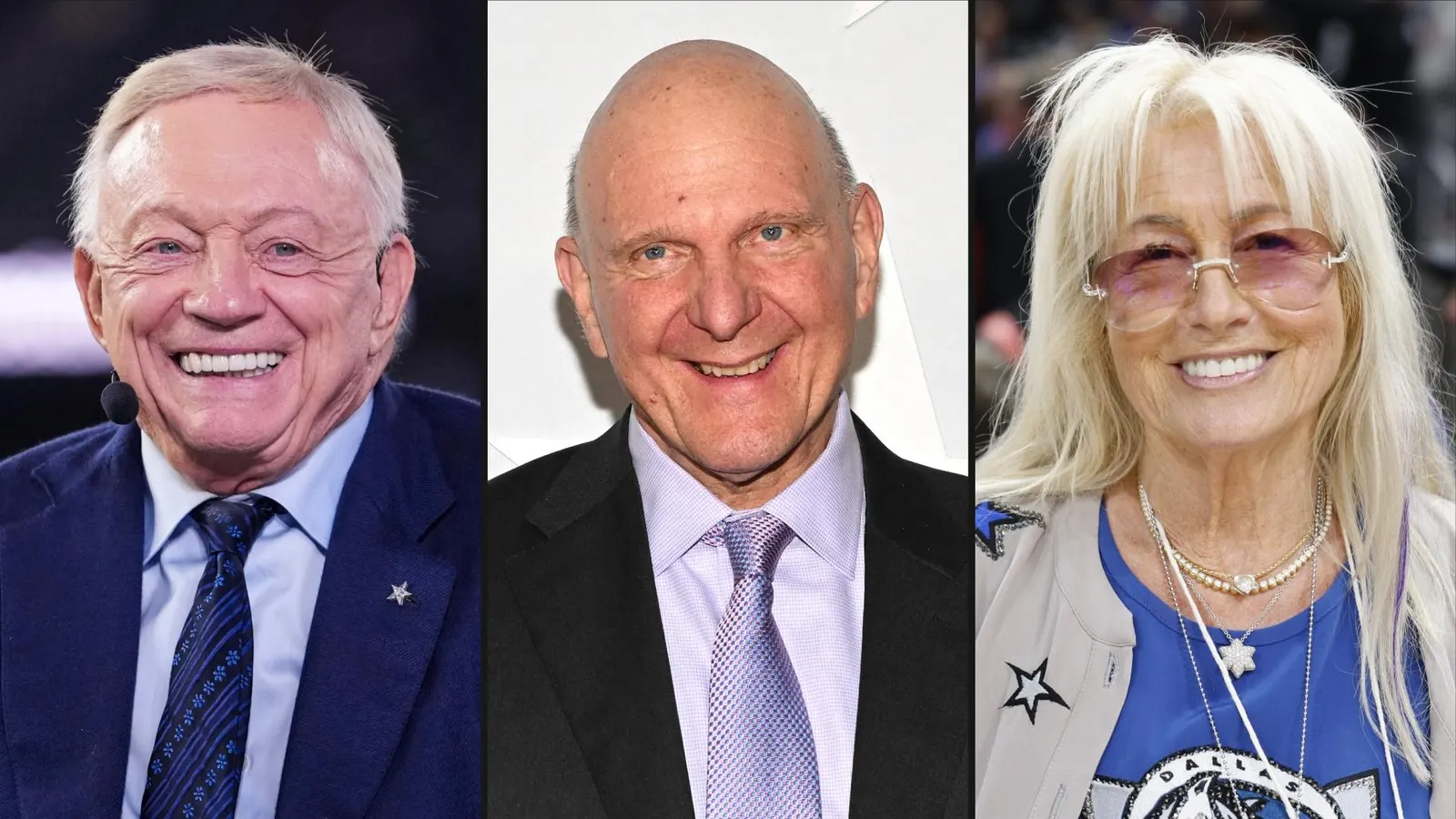
Imagine being worth $156 billion—ninth-richest person on Earth—and owning one of the NBA’s most exciting teams, only to spend the season watching from home. That’s the strange reality for Steve Ballmer, the former Microsoft CEO who bought the Los Angeles Clippers in 2014 and has become famous for his sideline explosions, fist pumps, and genuine, almost childlike love for basketball. But this year, the league told him to stay away. The NBA suspended Ballmer for one season, fined the Clippers $30 million, and stripped the team of five future first-round draft picks after an investigation concluded the franchise had secretly worked around the salary cap by arranging endorsement deals for star forward Kawhi Leonard. Federal prosecutors in New York have reportedly opened their own investigation into those contracts, which only adds to the mess. At first, the Clippers said they would fight the punishment “through every avenue available,” but Ballmer seemed to realize that a war with the league would only make things worse. “We have communicated to the NBA that we are complying with the penalties assessed by the league, have paid the fine and are moving forward,” he wrote in a Sunday night statement. He added that while he still disagrees with the findings, he doesn’t want to focus on them. For a man who spent $2 billion building the Intuit Dome, his gleaming new arena in Inglewood, being barred from practices and games there for a year is probably a harsher punishment than the fine itself. After all, $30 million is less than 0.02 percent of his fortune. But you can’t put a price on watching your team from the owner’s box—and Ballmer clearly feels that loss deeply.
Ballmer isn’t the only sports owner dealing with embarrassing headlines. Billionaire investor Mark Walter, who controls a sprawling sports empire that includes MLB’s Los Angeles Dodgers, is under scrutiny by federal prosecutors over his failure to disclose financial ties between insurers he controls and his other firms. In August, he agreed to sell the NBA’s Los Angeles Lakers, a surprising move for someone who seemed to be building a dynasty across multiple leagues. Meanwhile, Jed York, the 49ers owner and son of co-chairwoman Denise DeBartolo York, was arrested in November on suspicion of engaging in prostitution. He pleaded no contest to misdemeanor charges of disorderly conduct and possessing criminal tools. It’s a sharp fall for a family that has long been one of the NFL’s most prominent. Forbes estimates Walter’s net worth at $7.3 billion and the York family’s at $10 billion, which puts both on the Forbes 400 list of the wealthiest Americans, published this Tuesday. But when it comes to the even more exclusive ranking of the richest American sports team owners, they don’t make the cut. That list’s $12.2 billion threshold—up 21 percent from last year’s $10.1 billion—shows just how much money has flooded into professional sports. Together, the top 20 owners are worth an estimated $666 billion, a 10 percent increase from last year. Their investments span 37 major franchises: ten NFL teams, eight NBA teams, seven MLS teams, four NHL teams, three Premier League clubs, two Women’s Super League clubs, and one each in MLB, the WNBA, and Italy’s Serie A. The numbers are almost absurd, but they reflect a simple truth: being a sports owner is now less about owning a team and more about being a gatekeeper to one of the most valuable real estate markets in the world.
Ballmer tops the list for the twelfth straight year, and his wealth is so tied to Microsoft stock that it moves with the tech giant’s quarterly earnings. His Clippers, now valued at $7.5 billion, have nearly quadrupled in value since he bought them for $2 billion in 2014. The move to the Intuit Dome in 2024 helped, giving the team its own identity after decades of sharing Crypto.com Arena with the Lakers and Kings. But Ballmer’s suspension means he’ll be a spectator from his couch for a full season, which might be the most painful part of a punishment that otherwise barely dents his bank account. The runner-up on the list is Rob Walton, the 81-year-old eldest son of Walmart cofounder Sam Walton, worth an estimated $132 billion. Walton handed day-to-day control of the Denver Broncos to his son-in-law Greg Penner, but his deep pockets are still crucial. The team bought 58 acres in Denver in May and plans to build a new retractable-roof stadium by 2031, with a price tag expected to exceed $4 billion. Then there’s Henry Samueli, the 72-year-old cofounder of chipmaker Broadcom, who owns the Anaheim Ducks. Broadcom’s stock has been on a wild ride—peaking at $495 in June before drifting down to around $362—but the company’s projection that revenue will more than triple to $230 billion by 2028, driven by AI semiconductors, keeps Samueli’s fortune strong. Miriam Adelson, widow of casino magnate Sheldon Adelson, sits at No. 4 with $33.5 billion, though her net worth dropped 11.6 percent. She bought a majority stake in the Dallas Mavericks from Mark Cuban in 2023, and Cuban—who still owns a minority share and regrets the deal—has been publicly feuding with Adelson’s son-in-law, Patrick Dumont, in legal filings over plans for a new arena. Robert Pera, the founder of wireless networking company Ubiquiti, owns the Memphis Grizzlies, the NBA’s least valuable team at $3.5 billion. But Pera, 48, has seen the franchise appreciate more than 800 percent since buying it for $377 million in 2012. NBA commissioner Adam Silver has suggested the Grizzlies play a few games a year in Nashville, but Pera has made it clear he has no interest in moving the team out of Memphis. David Tepper, the hedge fund billionaire behind Appaloosa Management, owns the Carolina Panthers and Charlotte FC. He’s spending $1.3 billion to renovate Bank of America Stadium, hoping to attract events like the Super Bowl and the 2031 Women’s World Cup. The project includes a 4,400-seat music venue, inspired by fans who wanted more to do when they traveled to Charlotte from places like Raleigh and Charleston.
If anyone can claim to be a true sports empire builder, it’s Stan Kroenke, the 79-year-old owner of the Los Angeles Rams, Denver Nuggets, Colorado Avalanche, Colorado Rapids, Arsenal FC, and Arsenal Women. Kroenke’s net worth is an estimated $27.6 billion, up nearly 30 percent from last year, and his team stakes alone are worth around $22 billion net of debt. That’s remarkable because he acquired his entire sports portfolio for roughly $2.4 billion, or about $3.8 billion adjusted for inflation. The Rams alone are now valued at $13.5 billion. Kroenke is about to get even bigger: this month, he agreed to buy a majority stake in the Los Angeles Angels from Arte Moreno. His wife, Walmart heir Ann Walton Kroenke, is separately worth $14 billion, making the family one of the wealthiest in sports. But wealth doesn’t always bring happiness, as Steve Cohen, the New York Mets owner, can attest. Cohen, the 70-year-old founder of Point72 Asset Management, is worth $26.7 billion, but his team is scuffling through a second straight disappointing season. Last year, the Mets had a cash payroll over $400 million, the highest in MLB, and still lost $213 million after taxes and revenue sharing. This year, they’re again leading the majors with a payroll of nearly $344 million—and still under .500. It’s a reminder that in sports, you can’t always buy a winner. Jerry Jones, the 83-year-old owner of the Dallas Cowboys, has been more successful. Jones bought the team for $140 million in 1989, and today it’s worth an estimated $17 billion, producing nearly $1.28 billion in revenue last season—the largest figure Forbes has ever measured for a sports team. Dan Gilbert, the founder of Rocket Mortgage, owns the Cleveland Cavaliers and is worth $22.9 billion, though his fortune dipped 14 percent. He sold a minority stake to private equity firm Blue Owl this summer, with the Cavaliers and a forthcoming WNBA team valued together at $5.5 billion. Stephen Ross, the 86-year-old real estate magnate behind Related Companies, owns the Miami Dolphins. He recently turned down an offer of nearly $15 billion for the team, settling instead for a $12.5 billion valuation when he sold a 1 percent stake in a holding company that includes Hard Rock Stadium, the Miami Grand Prix, and the Miami Open. Philip Anschutz, worth $19.3 billion, owns the Los Angeles Kings and LA Galaxy, and his Anschutz Entertainment Group operates more than 70 arenas worldwide, including Crypto.com Arena. He’s even branched into college basketball with the College Basketball Crown, a postseason tournament designed to challenge the NIT.
Further down the list, ownership feels more personal, and the stories get even stranger. Shahid Khan, the 76-year-old auto parts magnate, owns the Jacksonville Jaguars and Fulham FC. He’s spending $1.4 billion to renovate EverBank Stadium, with $775 million from the city, but the construction means the Jaguars will temporarily play in Orlando for the 2027 season. Fulham fans are also feeling the pain after the club opened the Premier League season with three straight losses. Peter Mallouk, who grew up in the Kansas City area, bought a majority stake in Sporting Kansas City at a roughly $700 million valuation earlier this year. The 56-year-old CEO of Creative Planning also owns a piece of MLB’s Kansas City Royals, but he told Forbes he “didn’t really look at it from an economic perspective.” He warns other wealthy clients to be careful about sports ownership, noting that unlike stocks or private equity, where everyone wants wealth maximization, sports teams are a different asset class where owners often have emotional attachments that override financial logic. Robert Kraft, the 85-year-old owner of the New England Patriots, sold an 8 percent stake to Sixth Street and Dean Metropoulos at a $9 billion valuation last fall; now the team is worth $10.6 billion. Kraft, who made his early fortune in paper and packaging, says the NFL’s decision to allow private equity firms to buy into teams has been “very positive,” since it expands the pool of potential buyers and lets pension funds—and by extension “blue-collar people”—participate in ownership. Arthur Blank, the Home Depot cofounder, owns the Atlanta Falcons and Atlanta United. He’s selling a 10 percent stake to Arctos at a blended valuation of $10.6 billion, and he’s also expanding: the NWSL awarded his group an expansion franchise in Atlanta for $165 million, with the team expected to start playing at Mercedes-Benz Stadium in 2028. Dan Friedkin, the 61-year-old owner of Gulf States Toyota, recently bought Everton FC and AS Roma, and he’s pushing to bring an NHL expansion team to Houston. But his Premier League club is reportedly seeking investors after a frustrating transfer window, and manager David Moyes admitted he had never spoken to Friedkin in his 20 months on the job—a strange situation for a club that needs direction. Tilman Fertitta, the 69-year-old owner of Landry’s restaurants and Golden Nugget casinos, owns the Houston Rockets and just bought the Connecticut Sun for $300 million, with plans to relocate the WNBA franchise to Houston for the 2027 season. The Rockets have climbed from a $2.2 billion purchase price in 2017 to an estimated $5.9 billion. Josh Harris, the 61-year-old cofounder of Apollo Global Management, owns the Washington Commanders, Philadelphia 76ers, and New Jersey Devils. He’s working on a $3.8 billion stadium at the RFK site, with $1 billion from the district, and adjusting to the reality of employing LeBron James on the 76ers. And Jimmy Haslam, the 72-year-old former chairman of Pilot Flying J, owns the Cleveland Browns, Milwaukee Bucks, and Columbus Crew. He’s had a busy year: landing an NWSL club for Columbus, breaking ground on a new $2.6 billion Browns stadium, selling a minority share of the Crew to Nationwide Mutual at a $900 million valuation, and seeing Arctos buy about 3 percent of the Browns at a $9 billion valuation. Haslam’s net worth jumped 40 percent to $12.2 billion, the biggest gain on this year’s list.
The rankings also come with a few footnotes. Forbes considered control owners from seven North American leagues—MLB, MLS, the NBA, the NFL, the NHL, the NWSL, and the WNBA—plus several international competitions, including England’s Premier League, Spain’s La Liga, Italy’s Serie A, Germany’s Bundesliga, France’s Ligue 1, and even cricket’s Indian Premier League. Owners who control teams through holding companies were included, but limited partners were excluded unless they held a controlling stake in a different franchise. One interesting quirk: the Milwaukee Bucks are listed for Jimmy Haslam even though he co-owns the team with billionaires Wes Edens and Jamie Dinan, because the governorship rotates among them every five years. Net worths were calculated as of September 4, 2026, and for three members—Rob Walton, Miriam Adelson, and Jerry Jones—the calculations include family assets. The list also lost a few familiar names this year. Antony Ressler of the Atlanta Hawks, Micky Arison of the Miami Heat, and Tom Gores of the Detroit Pistons all fell off, despite being worth at least $10.6 billion. Their spots were filled by Friedkin, Haslam, and Mallouk, three newcomers who managed to crack the top 20. Vinod Khosla, the venture capitalist who bought the Seattle Seahawks for an NFL-record $9.6 billion, didn’t make the list either, despite a net worth estimated at $11.4 billion—just $800 million short of the cutoff. The list is a reminder that in the upper echelons of American wealth, sports teams have become the ultimate status symbol, a way for billionaires to buy a place in the public imagination. But it’s also a cautionary tale: owning a team doesn’t guarantee happiness, as Ballmer can attest. You can have all the money in the world, build a $2 billion arena, and still be forced to watch your team from home, powerless and frustrated, like any other fan. In that sense, Steve Ballmer might be the most relatable billionaire in sports—because no matter how much money you have, you can’t always control the game.