






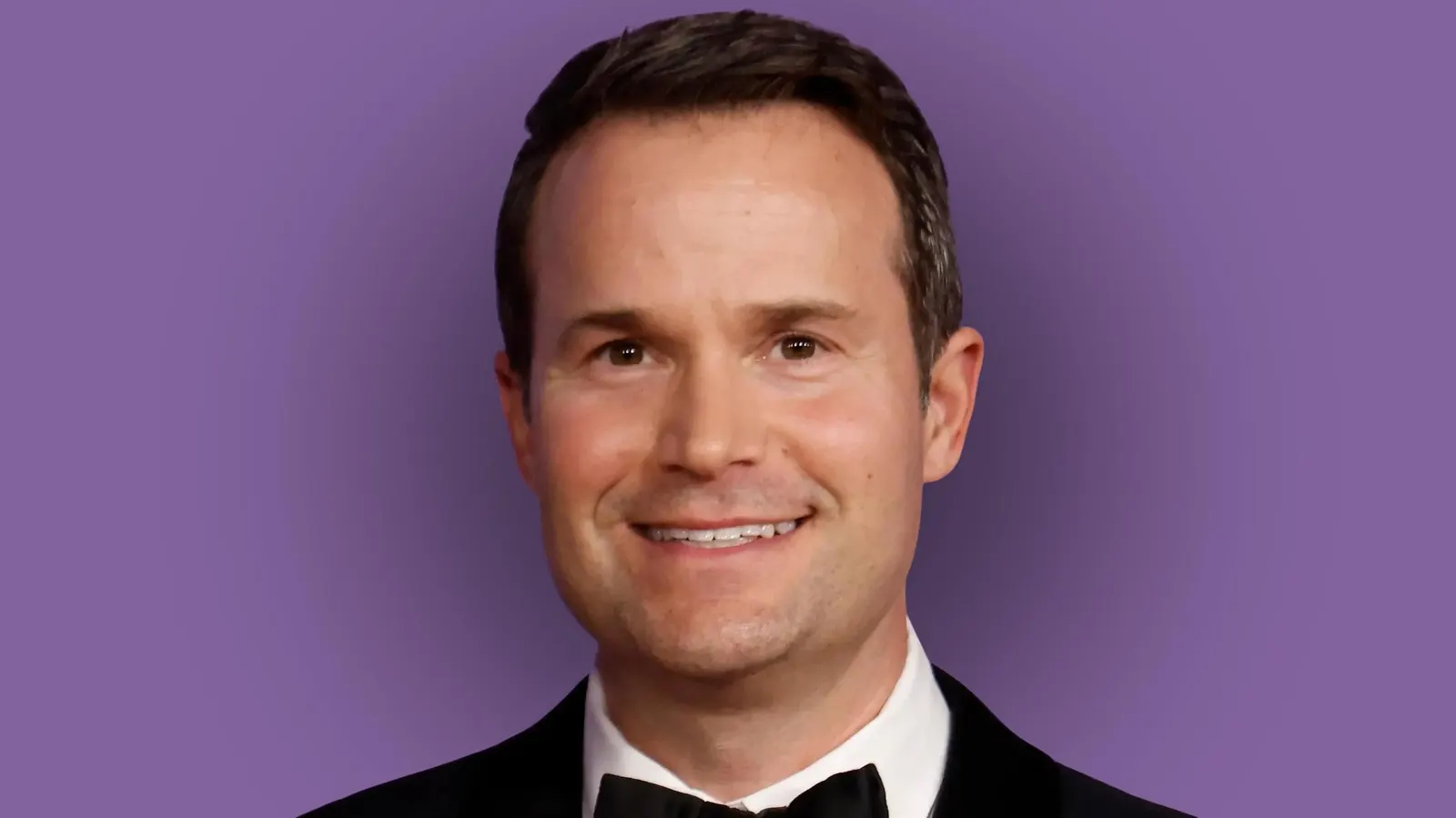
The Ascension of an Unlikely Sports Mogul
The worlds of high finance and professional sports rarely collide with such discreet precision, yet the unfolding narrative of Marc Stad offers a masterclass in the orchestration of a monumental, and until recently, deeply private success. For the better part of the last decade, Stad has been a formidable but largely unseen force within the echelons of venture capital, a master puppeteer pulling the strings of digital-age leviathans like Uber and OpenAI. His name was academic, a footnote reserved for industry insiders and tech enthusiasts who track the flow of private money through the arteries of innovation. Now, all that is about to change with a seismic announcement that reverberates far beyond the high-stakes confines of Silicon Valley. In a move that finally drags him under the unyielding glare of the national spotlight, Stad, at only forty-six years old, has just secured a deal to become the primary controlling owner of the Minnesota Timberwolves and the Minnesota Lynx, a monumental transaction that places a colossal combined valuation of $4.5 billion on these two formidable professional basketball franchises.
The stunning acquisition is more than a headline for the business pages; it is the most explicit and public signal yet that a new species of club owner has entered the sports arena, a generation of deal-makers and former strategists for whom basketball is not a lifelong obsession but, potentially, in a complex ecosystem of prestige, entertainment, and financial leverage. Forbes, the arbiter of clarity for private fortunes, estimates that this former Harvard and Stanford man holds a net worth that comfortably surpasses the $5 billion marker. Yet this is not the wealth of old money or a resource-extraction fortune built over a century; it is the gleaming, digitally-savvy product of venture capital’s modern era, where immense fortunes are minted not from tangible assets, but from astute, forward-thinking bets on future innovation. Much of his staggering wealth is inextricably tied to his sheer ownership of his firm, Dragoneer Investment Group, a unique creature in the venture landscape currently managing a staggering $37 billion in assets under management. The sum is also supplemented lucratively by his personal share of the firm’s funds, alongside a personal portfolio that includes a panoply of private investments and what is likely a prime slice of prime Californian coastline real estate. True to his form, if reached, he would say little, the master of financial and technical reticence staying where he is most comfortable – in the shadows.
To grasp the sheer gravity of this takeover, one must journey back to the winter of 2021, when another pair of luminaries from different worlds, retiring baseball legend Alex Rodriguez and e-commerce visionary Marc Lore, engaged in a long and arduous, gritty blockbuster dance for the franchises. They purchased them in a tiered arrangement locked at a tangible and forward-looking valuation of $1.5 billion. Behind the scenes, however, the acquisition was a tangled legal web. The final mile of that deal, held hostage by a circuitous legal dispute with the previous owner, the formidable Minnesota media magnate Glen Taylor, was a complicated, winding path that did not fully close until 2025, leaving a cloud of uncertainty over the franchises. Now, in a stunning twist of fate that saw the narrative dangling in the balance for years, the finances, and tooth-and-nail battles over who had the true final say, it’s the dynamic of power that sits at the heart of this new chapter. In a move that repositions the entire power structure of the team, Rodriguez will ascend to the role of co-chairman in addition to being governor of the WNBA’s Lynx, with a role in operational hierarchy. Mrs. Elisa Stad, Marc’s wife, will assume the governor’s post for the NBA’s Timberwolves, while Marc Lore, a testament to the evolving nature of modern sports partnerships, retains a minority stake, choosing to stay within the ecosystem. While the exact, micrometric size of Stad’s stake remains undisclosed, the institution of basketball demands a controller to hold at absolute minimum a stake of 15% to even qualify for the official title. The sporting landscape was also jarred by a related, worlds-shifting deal – last week a shockwave hit the news cycle when financier and billionaire Josh Kushner, alongside former mastermind and Disney CEO Bob Iger, became the new custodian of the legendary Los Angeles Lakers in a record $12.5 billion purchase from beleaguered owner Mark Walter.
While the headlines now, loud and pulsating, follow him onto the hardwood, the trail that led Mark to his kind is one forged in the unglamorous landscape of Southern California. He is a man who carries the story of ascent carved out of both personal ambition and family heritage, growing up in Montebello, a city that predates a region he describes with a sense of practicality, part of a family with only five children, where all financial constraints felt very real. He was the first in his family to break the confines of the socio-economic bubble and attend college, graduating from Harvard in 2001 with a degree in government, before headed west to earn his MBA at Stanford. This is a story not of a man who had it handed to him, but of someone who used the foundational affordances of the American educational system as a lever. His career trajectory was equally impeccable: a rigorous, rigorous training ground in the portals of business strategy at McKinsey & Co., financial craftsmanship at TPG, and the California capital, I’m practically glued at the hip to… ultimately setting out where he began to plow his own distinctive furrow in 2012. But unlike many in his field, he didn’t, immediately, start with several huge checks. He founded Dragoneer from the ground up operating, initially, with a modest sum of only $1 million in assets, building a culture at the firm that was laser-focused on growth and on the kind of high-yield investment opportunities that emerge from careful data-driven evaluations, drawing institutional capital and sophistication into his orbit from endowments, foundations, sovereign funds, and multi-generational family offices. Over the course of a little more than a decade, that gritty seed money has bloomed into a towering technological institution, and he has been guided, by his own admission on multiple occasions, by the tactical acumen of private equity baron and pioneer, David Bonderman, a man whom Stad credits not only as a business mentor, but as the true gravitational force behind several of his career-defining moves. It’s even the reason he relocated to Hong Kong in 2010, a strategic deployment that brought him face to face with Alibaba’s co-founder and leader Joseph Tsai, creating a relationship that would later be laced through the fabric of his career.
Behind Dragoneer’s walls, Stad has elaborated a methodology that is as deliberate and intelligent as the man himself, crafting a pattern that identifies only the tectonic shifts in the marketplace. Since its small quiet 2012 inception, the firm has orchestrated capital for seven distinct funds, with the most recent one a $4.3 billion behemoth beneath closed doors for late-stage venture opportunities. This ambition was preceded by a $3.8 billion raise for the sixth fund in 2022, indicating not just the confidence of his investors but also the relentless tempo at which he moves capital into the market. To see the winners within his portfolio is to see the architecture of the modern internet: the firm had a step inside two of the most significant IPOs of that post-pandemic year 2020, being a critical part of the IPOs of DoorDash and Airbnb, betting on changing consumer behavior during a global crisis. In 2025, he was a major backer in the historic, massive $8.3 billion funding round for OpenAI, with Dragoneer alone contributing a jaw-dropping $2.8 billion, the largest check ever written for a startup and doubling down on what some had deemed an overly crowded AI space. But such astronomical heights are par for the course for this financial champion, also with a portfolio that includes Anthropic, Datadog, Alibaba, and the hailing giant Uber. Dokk Drag’s influence has also reached into the public marketplace through a maze of corporate vehicles and restructuring. In an interesting pivot, he used special-purpose acquisition companies, retiring that cheesy “blank check” term, to take companies public: in 2021, guided through a merger with Dragoneer Growth Opportunities Corporation the holdings of CCC Information Services to the market, amassing a war chest of $968 million in IPO proceeds. That same year, in a similar financial pivot, his vehicle brought Cvent –event management software –public, raising $240 million and giving him the financial fluidity to navigate the full spectrum of American corporate life.
Beyond the high-stakes floors of Silicon Valley boardrooms and the back corridors of California’s investment committee, Marc Stad casts a silhouette for a more domestic, anchored citizen. A resident of the serene, ocean-clad suburbs of Santa Barbara, he shares his life with his wife Elisa, a cinematic story in itself since their meeting occurred amid the chaotic roar of a USC Trojans football game—a moment of unexpected romance that has now entered the annals of their family folklore. The Stad household is the lavish, yet private, home to their three children; a dynamic that keeps the venture billionaire’s feet firmly planted in a reality far removed from the fading conference rooms and candid fundraising calls. Their approach to wealth extends into their philanthropic landscape. Marc Stad had the uncommon step that his public service is not a bill of the campaign button – a period President and Commissioner of the City and County of San Francisco Finance Corporation, an entity overseen by the municipal public dollars, and a background profound in the public sphere. In addition, he was on record as an political contributor who donated to the abortive 2020 presidential run of Kamala Harris in her early months, a gesture of belief in the political realm. Yet, his most moving gesture lies in the medical world, where he and his wife Elisa pledged a generous $3 million in 2022 to The University of California, San Francisco’s Benioff network of children’s hospitals, funding the Stad Center for Pediatric Pain. This impact is both personal and structural; the dedicated subspecialized centers at the San Francisco and Oakland campuses treat children for the difficult, complex realities of acute and chronic pain, extending a human form beyond numbers, exposing a dimension of a man that goes deeper than business acquisitions.
The acquisition-a-for sports franchise is a statement of where power and influence quietly consolidate in an era that actively seeks out contemporary technologies that will reshape our future lives. Marc Stad’s exit from the quiet duo of the unknown to the large spectacle of a luxury entertainment complex does not represent the transition that many have thought. Rather, it’s a calculated understanding of the massive business of basketball. This isn’t a man who’s about to meddle in the athletic fine-tuning or micromanaging the pick-and-roll; the arena is where the numbers, the narrative, and the strategy of the club will ultimately decide in this, just the initial portion. After nearly 15 years of watching his chosen particles and bets yield in ways that reshape industries, his new sports enterprise will be a complex puzzle of revenue streams, media rights, and franchise valuations that he is primed to piece together. This transition into professional sports ushers in a new era for a team that’s on the rise, an owner who can see data where others see a ball game. He is the new generation of owners, one that takes a continuation of the vision that a athletic team is both investment and identity, both an emotional bond and a strategic piece on a chessboard of common finance. The future of the Timberwolves now belongs not simply to a wealthy savior, but to a rare pragmatist who has spent a lifetime calculating the speed and the dimensions of the future.