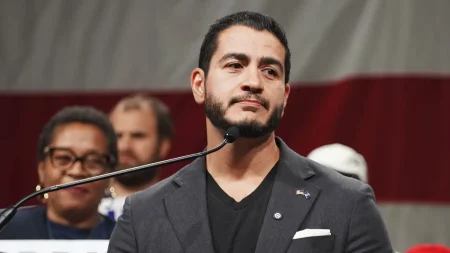






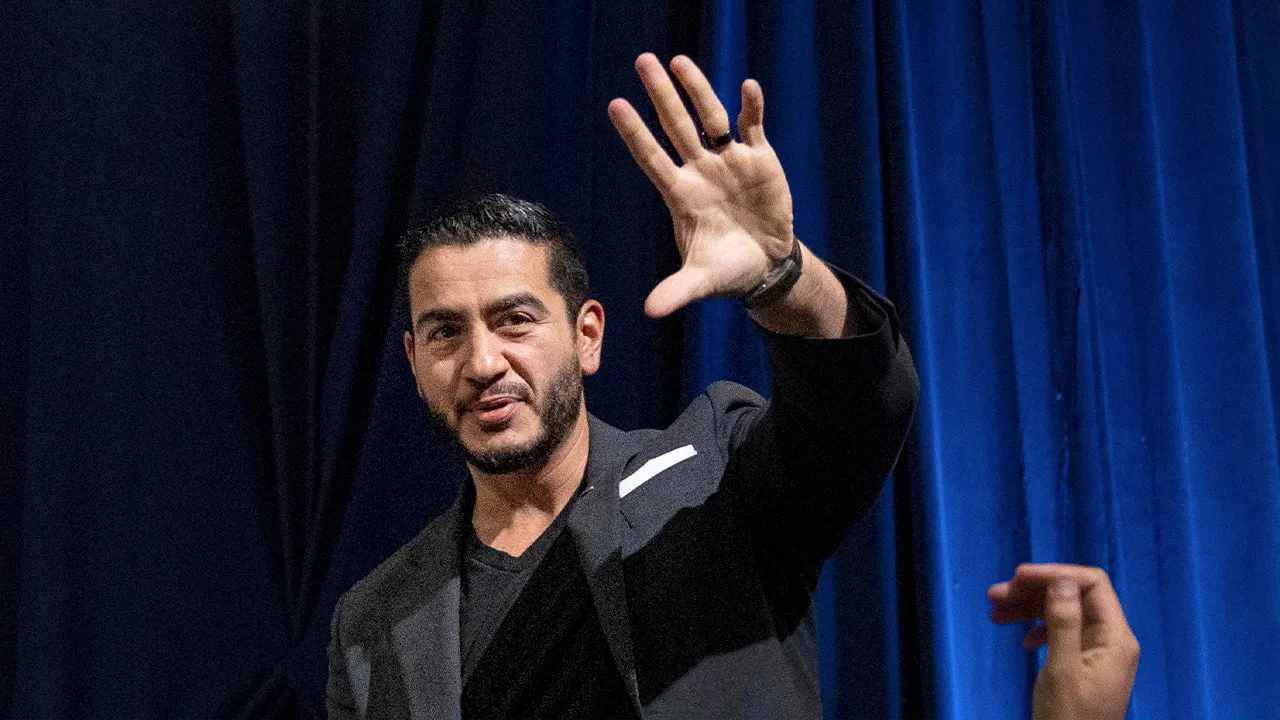
It was a Detroit morning that felt less like a campaign stop and more like a truth-telling with coffee and commitment. The room was filled with women faith leaders, the kind of people who spend their lives tending to sickness and loss, watching children struggle to breathe, burying mothers who didn’t survive birth, and wondering why the same zip codes keep losing. Abdul El-Sayed, the Democratic candidate for the open U.S. Senate seat in Michigan, had been asked a simple but heavy question: how do you plan to energize the voters who did not choose you in the primary? He could have answered with pollster math or turnout mechanics. Instead, he let the moment stretch. “When it comes to Black communities in Michigan — when it comes to Black communities in America — there are unpaid debts that have long since come due that we are unwilling to acknowledge, let alone pay down,” he said. The words seemed to land on furniture long overdue. “And I understand that we need leaders who are going to understand those debts and address them.” He didn’t rush. He didn’t reduce the response to a talking point. A woman sitting in the room nodded, not the way people nod to be polite, but the way people nod when they have been waiting for a very long time for a candidate to say the thing out loud. In that room, located in the middle of Detroit, where so many of those enormous debts live, the statement wasn’t a campaign weapon. It was a whisper that a public official finally caught up to what the community never forgot.
The phrase “unpaid debts” did not come with a ledger, but no one in Ms. City needed a numbered list. Those debts are the gap between a promised America and an actual one. We are looking at adults and children breathing in asthma from old housing, our youngest citizens poisoned by lead, illnesses that should not exist, and the curtain of hope closed just for reason. Add to that the difficulty of a small business owner with a good idea and no inheritance, no trust fund, no map to the bank. The mortgage is a school system that ought to be a ladder but is sometimes falling apart in the pockets. The debt is the history of redlining that made Black communities the overdraft fees of American prosperity. It’s in the same city where maternal mortality is still a constant and where families go through the grief of a baby dying because the system didn’t respect them. When El-Sayed answered the question about Black voters, he didn’t ask them for a favor. He didn’t say that they owed him a vote. He announced that the nation owes them a debt that has “long since come due.” That’s a moral, not a talking point. It is the difference between saying, “I’ll create an economic opportunity program” and saying, “I understand there is an old debt, and we will begin to pay it down.” The first is an advocate. The second is a witness.
El-Sayed did not stop at grand statements. He was asked, really, “why should we trust you?” And he answered with his own challenge: “Examine my history,” he seemed to say. “In what I have done, have I done my best?” He acted out his faith in what his hands had already done. He worked at Wayne County, an official in public health, and he carried that experience into the room. He talked about infant and maternal mortality, about the children and the asthma and the lead in the water. Not as a discussion group assignment but as tangible scars he had handled. He pushed for a health system to move closer to the people who need it and argued that tackling the health of a community means treating the water, the apartment, the street, not simply the patient in the exam room. When he pivoted to small business capital, housing, schools, he wasn’t listing a wish list. He was describing the down payment on that enormous debt. He wants easier access to money for Black and brown-owned businesses. He wants more money on housing. He wants more money on schools that actually serve the people. The same voters who didn’t support him in the primary have no reason to become enthusiastic for another promise. He recognized that clearly when he said, “I with my power have I done my best?” He probably asked it as a genuinely uncomfortable question. He might even have invited people to inspect the records with a critical eye, saying, “I will challenge people to look at my history and say, ‘That man hasn’t done everything He could have done around the problems he says he cares about’.” It wasn’t a victory speech; it was that the candidate with a textbook in his hand offered pen and open pages.
The Detroit event was never just a healthcare forum. The women in the room talked about the public health record, yes. They also talked about diversity: a presidential election, military aid to Israel, a recent barrage of attack ads from his Republican rival waiting for him. They talked about criminal justice. These are the kind of heavy topics that usually make a candidate look toward the door. El-Sayed remained with them. He is in one of the most tightly watched Senate races in the country, fighting Republican nominee and former Congressman Mike Rogers for the right to succeed Debbie Stabenow. The entire direction of the country could turn on a vote in a race like this. What made El-Sayed’s appearance in Detroit so telling is how little he seemed to vibe-check it all. He’s an Egyptian American left-hander from Dearborn, a former city health officer, the guy who called himself a different kind of Democrat in 2018. He finds everything no one thought could fit in one room: a smart gas government, a sense of humor, a Detroit city. The session is full of listening and prayer. He didn’t dodge Israel. He didn’t duck the Harris endorsement. He didn’t reject the attacks that Rogers has waged against him. He offered some honesty, and then asked people to trust his record, not just his rhetoric.
But his comment at that meeting also stands as a direct challenge to the nation’s comfortable, hospital room calm about race and political history. “Unpaid debts” are not the usual phrase in a rollout; rollot, they are likely too honest for the space. Some listeners will label him radical, or whisper that he’s a member of the GOP. In Detroit, however, Black faith leaders don’t see such words as radical. They see them as descriptions of everyday life. They see them in the classrooms of missing books, hospital hallways shortages, discriminatory loan letters, and the outdated way to tell a Black mother to drink more water while her child’s death rate is greater than three times the level of a race. El-Sayed did not say “reparations,” and perhaps he did not need to. “Debt” itself carries a more powerful accounting imagery, an obligation sparked over generations, once funded, once used, still owed. He called on America to “acknowledge” and “address” those who owe, two acts more needed than a one-time price. Acknowledging means telling the truth; addressing means doing the hard work of changing the ledger. And he framed it as not a Black community’s problem, but a politician’s responsibility. He said leaders need to understand those debts and address them. That is a different kind of leadership, one where the representative is not merely a manager of conditions but a redeemer of promises. It’s a demanding, perhaps a secondary case, but it’s the best way to engage with voters who have had enough of being treated as a politeness target.
At his speech’s end, El-Sayed offered no cheap resolution. A candidate could not solve systemic debt in one general election. But his words remained important because they refused to coat an old injury. In a state where every vote counts, in a year where the usual conversation often flightiness, he went to a little stage in a city full of old memories and used the phrase “unpaid debts” as a starting point, not a finishing line. The group’s response suggested that some people there are open to waiting for him, open to holding him accountable not just for what he says next but for what he has already said. The request wasn’t for claim: it was for a receipt. His campaign did not move quickly in response to a Fox News Digital question about the event, almost as if it wanted to let the message stay raw and uninterrupted. Whether El-Sayed wins or loses, the phrase “long since past due” will echo beyond a race in Michigan. It’s the kind of language that haunts the conscience. We can still see the path if we want: a leader willing to stare at a debt, name its name, and begin to carry down. El-Sayed said he will not ask for a rescue, but he will be judged by what he has done and what he will do. In the same room, with prayer, Black women look at a bottle still waiting, perhaps wondering whether America will finally begin to fulfill the gentle debt that has been overdue for far too long.