






Paragraph 1
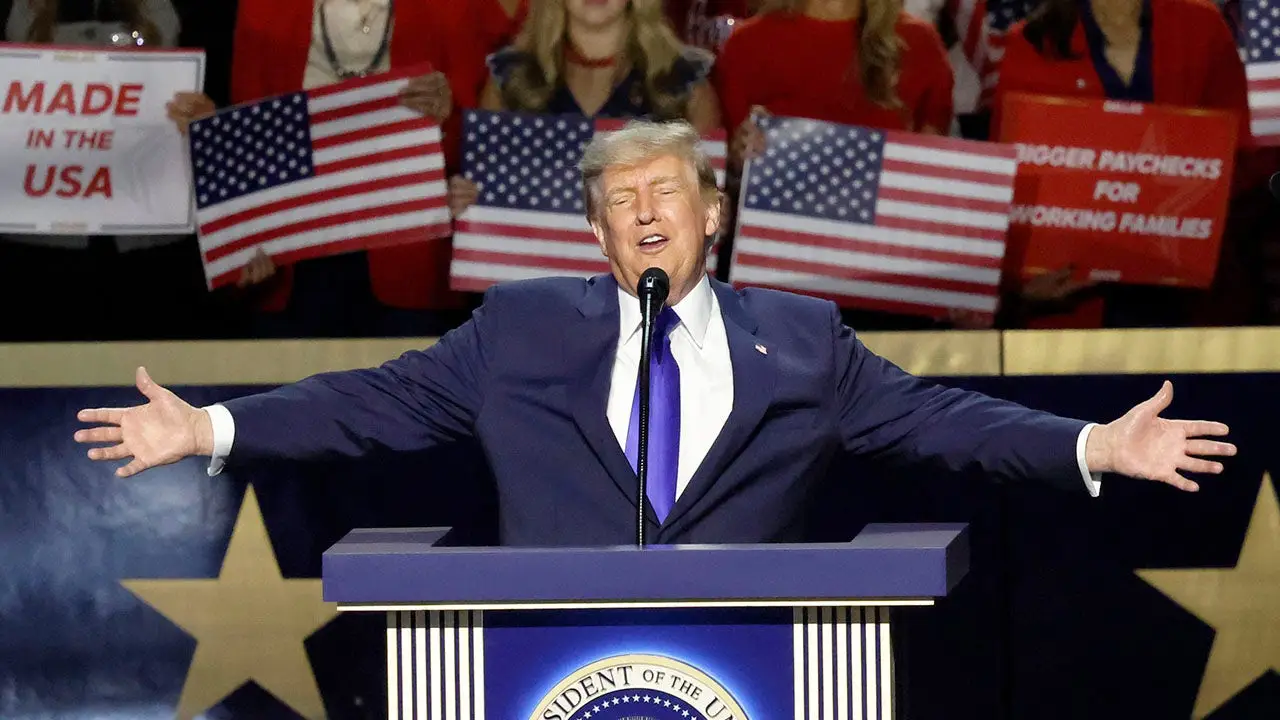
Imagine a stage bathed in convention lights, not during the heat of a presidential campaign, but in the middle of a midterm year when political gravity usually pulls against the party that holds the White House. That was the scene in Dallas, where President Donald Trump stepped before fellow Republicans and received an embrace that felt almost defiant. It was the first-ever GOP midterm convention, and the mood was not defensive or apologetic. It was loud, optimistic, and rooted in a bet that history can be broken. Traditionally, midterms punish the president’s party. The out-of-power side gets fired up, while voters who put the president there sometimes stay home. The conventional wisdom says the majority in Congress slips. But Republicans this cycle are trying to flip that script. Speaker after speaker told activists that this year is different, that their coalition is angry, engaged, and ready to prove pundits wrong. Trump himself leaned into that energy with a simple, visceral request: “I’m asking you to pretend that I’m on the ballot.” It was a way of saying that every vote cast for a Republican House member or senator is a vote for him, his agenda, and the movement he leads. The convention was designed to project confidence, despite polls showing Trump’s approval underwater. Cabinet officials, allies, and lawmakers took the podium to tell stories of border security, tax cuts, and a country being rebuilt. The message was not “we might lose.” It was “the other side is so extreme that voters will break the historical pattern and keep us in power.” And the contrast with two years earlier was hard to ignore. When Joe Biden was in the White House, Democratic leaders often kept their distance, avoiding joint appearances and treating vulnerable incumbents as if they needed to run away from the president. Here, Republicans were running toward Trump, letting his image and his voice anchor their campaign strategy. Whether that gamble pays off remains to be seen, but in Dallas, at least, there was no trace of doubt — only the sound of a party convinced that the usual rules no longer apply, and that the voters who put Trump in office are exactly the people who will show up again in November.
Paragraph 2
What explains this confidence? It comes down to a simple belief: that the Democratic Party has moved so far to the left that ordinary Americans, even those who might not love every headline about Trump, will choose Republican leadership as the safer, saner option. Republicans are leaning hard into the idea that their party is the party of results, not just promises. They point to the border, to tax policy, and to what they call the “One Big, Beautiful Bill” — Trump’s signature tax-cut package — as evidence that they have actually delivered real change. Sitting in the convention hall, listening to the speeches, you would have heard a very specific story: Republicans took control, secured the border, cut taxes, and made life better for working families. Democrats, in this telling, are a socialist insurgency obsessed with impeachment, identity politics, and open borders. That framing was repeated so often that it began to feel like the party’s core prayer. One of the people who carried that message was Rep. Ryan Mackenzie, a Pennsylvania Republican who is also one of the Democrats’ top targets this cycle. He stood on the sidelines of the convention and talked about the partnership between Trump, his Senate colleague Dave McCormick, and himself. “We ran together in 2024 on a ticket with President Trump, Dave McCormick and myself — voters elected all of us to deliver real change and results, and we’ve actually been able to do that with securing the border and delivering historic tax relief,” Mackenzie said. Then he made the bold claim that Republicans will “defy the historic trends” in the midterms. Why? Because, in his words, “the Democrats are so far left they are totally out of touch.” That is the central Republican assumption this year: the midterm penalty that normally hits the president’s party will be overwhelmed by the penalty voters want to impose on the left. It is a strange inversion of political gravity, but the GOP is betting that fear of Democratic extremism will outweigh any frustration with inflation, tariffs, or the general weariness that comes with living through a second Trump term.
Paragraph 3
The convention also put a human face on the stakes. It was not just Republican insiders and senators who took the stage; it was the vulnerable incumbents, the ones whose races could decide control of the House. Among them were Rep. Mike Lawler of New York, representing the suburbs outside New York City, and Rep. Rob Bresnahan of Pennsylvania. These are the kind of districts where national waves are made, and Republicans are treating them as living proof that Trump can help, not hurt. Lawler offered a different kind of message than the typical midterm speech. He talked about showing up. “He’s the President of the United States, and whether it was Joe Biden or Donald Trump, I’ve always shown up,” Lawler said. “You have to be able to engage with the president, and, frankly, this is where I think the Democrats have made a very big mistake. They could get a lot more in terms of what it is that they want if they would actually engage constructively.” It was a subtle jab at Democrats who refused to campaign with Biden, but it was also an invitation — an argument that respectful engagement with a president is not a weakness, but a political skill. Lawler did not just talk about politics in the abstract. He brought two residents from his district whose daughter had been killed by an illegal immigrant in Chicago. Their presence was a deliberate, emotional challenge: Republicans wanted the audience to imagine what could happen more often if Democrats won and border enforcement weakened. It is a powerful appeal, and it is one that Trump has been making all over the country. He has gone to these specific battleground districts, standing beside incumbents in their own backyards, selling tax cuts and warning about the dangers of Democratic governance. The image of Trump appearing with vulnerable lawmakers is a message in itself: I am not weighing you down; I am lifting you up. Whether that image will translate into votes remains a question, but the strategy is clear. Republicans are not hiding from Trump. They are making him the centerpiece of every race.
Paragraph 4
It was not only incumbent members of Congress who came to Dallas. The convention also drew candidates trying to flip seats, and their stories were just as revealing. One of the most striking was Eric Flores, a Republican running in South Texas — a district currently held by Rep. Vicente Gonzalez, a Democrat. For Flores, the decision to embrace Trump is not a calculation; it is a matter of conviction. “When people say that folks are running away from President Trump, I’ll tell you I’m certainly not doing that. And let me tell you why: because he has made promises to South Texas, and he has kept them, especially when we look at border security,” Flores said. His background makes the issue personal. He served on Operation Guardian Support and worked as a federal prosecutor on the border. He has seen the crisis with his own eyes. In his telling, the Biden administration and Vice President Kamala Harris — who he called the “no-show border czar” — were on the wrong track, and the border under Trump has been fundamentally different. “Let me tell you firsthand, I was on Operation Guardian Support, was a federal prosecutor on the border. It was a humanitarian crisis. President Trump, on day one, secured our border,” Flores said. For him, the border is not abstract policy; it is the ground where he lived and worked. That is the kind of testimony Republicans want to amplify. They believe that candidates who speak from lived experience, especially in places like South Texas, can reach voters who might otherwise vote Democratic. The convention was filled with similar stories — candidates from across the country, some in tight races, some in safer seats, all repeating the same theme: Trump kept his promises, and the country is safer because of it. The atmosphere was almost testimonial, less like a political strategy session and more like a revival meeting. Every speaker seemed to be saying the same thing: we are on the right side, and the voters know it.
Paragraph 5
Democratic leaders, unsurprisingly, saw something entirely different in the Dallas festivities. To them, the convention was not a display of strength; it was an invitation for voters to remember everything they dislike about Trump and the Republican agenda. The Pennsylvania Democratic Party chair, Eugene DePasquale, fired off a statement that summed up the frustration. “Ryan Mackenzie, Rob Bresnahan and Scott Perry made their priorities clear tonight: they care more about Donald Trump’s cost-raising agenda than what’s best for the people of Pennsylvania,” he said. He accused them of traveling all the way to Texas to “champion an agenda of higher gas prices, cost-raising tariffs, and healthcare cuts.” His closing line was blunt: “Pennsylvanians are ready to send them packing this November.” The Democratic argument is that Republicans, by tying themselves so tightly to Trump, are repeating the mistake of 2018, when the blue wave swept the House on the strength of anti-Trump energy. Democrats see the GOP’s decision to hold a Trump-themed convention as a gift. They believe that the more Republicans talk about Trump, the more they remind suburban voters about chaos, impeachment, legal drama, and the kinds of tariffs that raise prices at the grocery store and the gas pump. And they are targeting more than just the obvious names. Reports indicate Democrats are pushing to retake the House by focusing on additional red districts, trying to expand the map and catch Republicans off guard. The fact that Rep. Scott Perry, another Pennsylvania Republican expected to face a close race, did not appear at the convention was itself a talking point — though Fox News Digital did not see him there, and his campaign was reached out to for comment. The contrast between the two parties could not be sharper. Republicans see Trump as a magnet who will draw voters to the polls; Democrats see him as a weight that will drag GOP candidates down. Both sides cannot be right, and the midterms will be the judge.
Paragraph 6
So what are we to make of this strange moment in American politics? It is a test of whether the old rules still apply. For more than a century, the party holding the White House has almost always lost seats in the first midterm after a presidential election. The rare exceptions are usually tied to extraordinary events — war, crisis, or a president who defies all expectations. Republicans are trying to make this year an exception. They are holding a convention for a president who is not on the ballot, making him the centerpiece of every speech, every ad, and every campaign stop. They are betting that the same voters who showed up for Trump in 2024 will show up again in 2025’s midterm, even though his name is not on the ballot. The vulnerable incumbents who took the stage in Dallas, like Lawler and Mackenzie, are not running away from Trump; they are running with him. They are telling voters that a vote for them is a vote for Trump’s agenda, and that a vote for their opponents is a vote for a socialist future. Democrats are watching all of this with a kind of patient glee, convinced that the GOP is making a fatal miscalculation. They point to Trump’s approval numbers, the economic anxiety caused by tariffs, and the historical pattern. They remember 2018, when Trump’s presence on the campaign trail seemed to energize Democrats more than Republicans. But in Dallas, none of that mattered. The music was loud, the crowd was enthusiastic, and the message was relentless. Maybe history will repeat itself, and the Republicans will lose their majorities. Or maybe something has shifted, and the old rules are no longer reliable. The only honest answer is that we do not know yet. What we do know is that the political landscape looks very different from the one we saw two years ago. Democrats may have wanted nothing to do with Joe Biden, but Republicans cannot get enough of Donald Trump. And in the end, that may be the most human thing of all: when you believe someone is your champion, you want everyone to know it. The voters will have the final word, and until then, both parties will keep telling themselves the story they need to hear.