





For a long time, the global story of artificial intelligence seemed to be written almost entirely in a few familiar places: the corporate campuses of Silicon Valley, the data centers of northern Virginia, and the cloud regions of Europe and Asia. But a quiet shift is underway, and a growing number of technology experts, business leaders and diplomats believe the next great chapter of the AI revolution could be written in Africa. The idea sounds surprising at first, especially because the continent still struggles with power shortages, limited connectivity and infrastructure gaps. Yet those very challenges may turn out to be advantages. In mature markets like the United States and much of Europe, building new data centers has become increasingly difficult due to scarce electricity, crowded power grids, lengthy permitting processes and strong opposition driven by environmental concerns. Africa, by contrast, offers vast open land, abundant natural resources and a rapidly growing digital economy with relatively little existing infrastructure to hold it back. As Abhishek Goyal, a consultant at the research group Arizton Advisory & Intelligence, put it, “Africa is emerging as a significant potential location for building AI infrastructure, especially as many mature markets face increasing environmental and power constraints.” He added that the continent could become “the next major frontier for AI infrastructure development,” precisely because the obstacles now slowing down Western projects—grid congestion, regulatory bottlenecks, environmental rules—are much less entrenched in Africa. The Biden-era may have started some early conversations on African technology, but the Trump administration has made a deliberate push to promote American companies as the preferred partners for African governments and businesses seeking to build this new digital foundation. A State Department spokesperson made that ambition clear, saying, “We are committed to ensuring that American AI – including enabling infrastructure like data centers – continues to be the gold standard worldwide, and that we remain the partner of choice for foreign governments and businesses who are seeking to upgrade their telecommunications networks and AI capabilities.” In other words, the future of computing is no longer only about algorithms and chips; it is also about where those machines physically live, who builds them, and which country gets to set the standards.
The race for Africa’s data center future is not just a commercial story; it is a geopolitical one. Washington is increasingly competing head-to-head with Beijing for influence on the continent, and the prize is a share of one of the fastest-growing digital markets on Earth. This year, with U.S. support, an American company won a massive $6.2 billion deal in Lesotho, the small mountainous kingdom in Southern Africa, to build a data center and a hydropower plant. That single project shows the new shape of global investment: not just a building with servers, but an entire energy-and-computing ecosystem designed from the ground up. In another example, the U.S. Embassy in Gabon helped secure $600 million in business for American companies in 2025, and then in a separate push helped win a $100 million contract to supply two data centers and a gas-to-power plant in the central African country—all while facing strong competition from China. These may not be the kind of flashy announcements that dominate tech headlines, but they are foundational. Assistant Secretary of State for African Affairs Frank Garcia previously told Fox News Digital, “Under President Trump’s leadership, the United States is assisting U.S. companies to find new markets and flourish in Africa.” The underlying message is that American involvement in Africa is not simply charity or aid; it is a strategic investment in both commercial markets and geopolitical leverage. For African nations, the benefit is equally clear. They want access to world-class technology, secure data infrastructure and the jobs and skills that come with it. But they also want to avoid becoming a digital colony, dependent on foreign powers for everything from cables to data storage. By bringing American companies into the picture—with their reputation for security, transparency and innovation—Washington offers an alternative that many African governments find more trustworthy than Chinese-backed projects. The deals are still relatively small compared with the enormous data centers being built in the United States, but they represent a meaningful beginning, and they signal that Africa is no longer being ignored.
What exactly is driving this boom? To understand it, it helps to hear from Arthur Goldstuck, the CEO of the South African technology research group World Wide Worx and author of “The Hitchhiker’s Guide to AI – The African Edge.” Goldstuck is careful not to overstate the situation. “Africa is experiencing a data center boom, but it begins from a very small base,” he said. That is an important nuance. Africa will not suddenly become the new global center of computing. The continent does not have anywhere near the installed capacity of the United States or Europe, and its weak electricity grids make building and operating data centers genuinely difficult. But Goldstuck argues that Africa’s appeal lies not in replacing the West, but in serving a rapidly growing African cloud market and processing African data closer to the people and businesses that generate it. Governments, banks, hospitals, retailers and telecom companies across the continent are all generating enormous amounts of digital information, and increasingly they want that information stored within their own countries rather than sent abroad. Data sovereignty has become a major concern, as leaders realize that relying on foreign servers can create legal and security vulnerabilities. For American businesses, this opens up a wide range of opportunities that go far beyond simply owning a building. U.S. companies can supply the AI chips, the cooling systems, the cybersecurity software, the power infrastructure and the ongoing technical expertise. Goldstuck also pointed to a fascinating dynamic: in some countries, a data center can become the guaranteed customer that makes a new renewable-energy project financially viable. That is a powerful idea. A solar farm or a hydroelectric plant might struggle to find enough buyers for its electricity, but a data center running 24 hours a day, seven days a week, provides a steady demand that banks and investors like to see. American companies can therefore develop computing capacity and electricity generation together, in partnership with African companies and governments. It is the kind of deal that helps everyone: the data center gets power, the energy project gets a customer, and the local economy gets jobs and infrastructure.
The momentum behind Africa’s data center expansion is not being imposed from outside; it is being pulled by local demand. As Goldstuck explained, governments, banks and other large organizations are increasingly seeking local cloud and AI services. They want sensitive information—citizen records, financial data, health information—stored within their own borders, and they want to reduce their dependence on distant, foreign data centers. The COVID-19 pandemic accelerated this trend by pushing more services online, and the rapid adoption of mobile money in countries like Kenya and Nigeria has created a generation of users who expect fast, reliable digital services. According to Arizton’s Goyal, certain countries are emerging as early leaders: South Africa, Kenya, Nigeria, Morocco and Egypt are all attracting large-scale AI and data center projects. These nations have relatively stronger infrastructure, more stable governments, and larger pools of technical talent than many of their neighbors, making them natural entry points for global investors. The U.S. government is also trying to support this growth through high-level diplomatic and economic engagement. A State Department spokesperson emphasized that Washington aims “to offer credible solutions that leverage public and private financing in priority areas, such as emerging technology, which demand that global telecoms networks remain secure for U.S. citizens and business.” One of the most tangible examples of this is undersea cable construction. “Undersea cables networks are being constructed across the Atlantic, providing more opportunity and connectivity to Africa than ever before,” the spokesperson said. These cables are the literal backbone of the internet age, and their expansion is opening up Africa’s connection to the rest of the world in ways that were unimaginable a decade ago. Still, Goldstuck cautioned that geography creates real limits on how much the United States can benefit from African data centers directly. “Distance creates a slight delay, so African facilities would be less attractive for U.S. services requiring an instant response from American users,” he said. However, he added that African data centers could work well for backups, disaster recovery and some intensive AI processing, provided the costs, security protections and legal jurisdictions make sense. In short, Africa is not being built simply as an outsourced brain for America; it is being built to serve Africa’s own digital future, with American help.
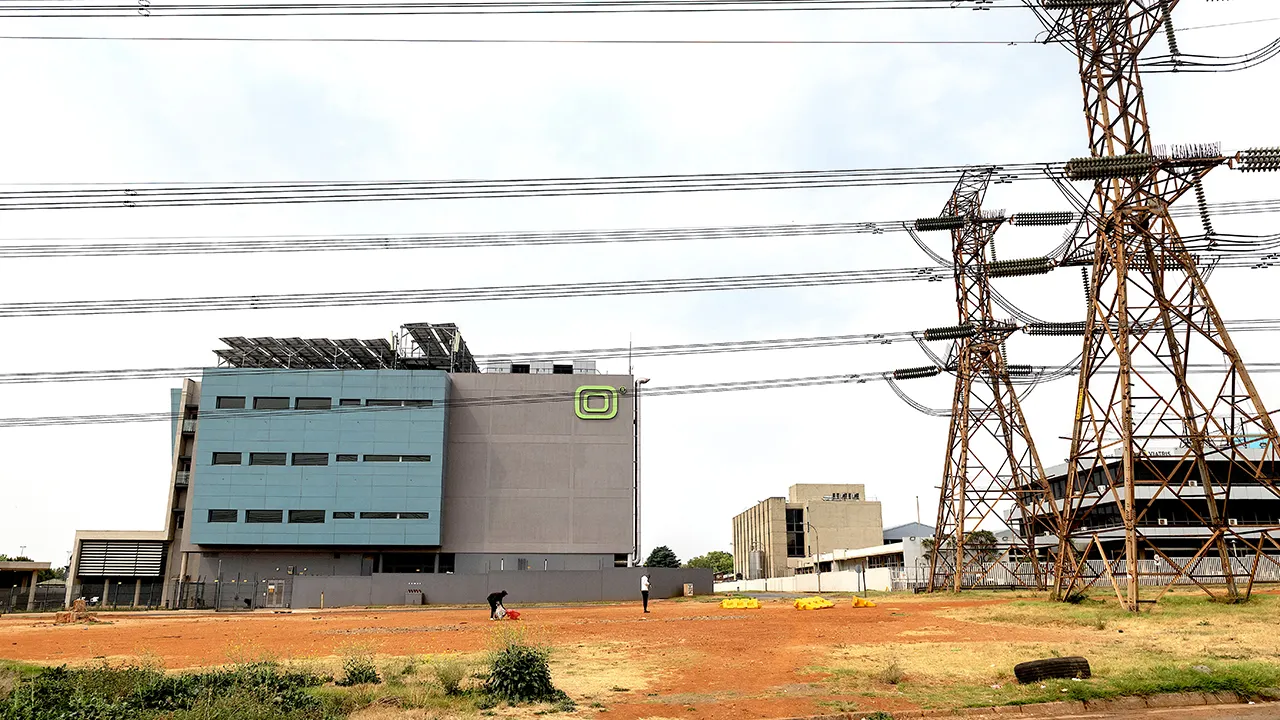
For all the excitement, there are also serious risks that need to be addressed before Africa can truly realize its potential as a data center frontier. One of the biggest concerns is the lack of clear regulation and transparency. Analysts say that much of Africa currently operates like a “Wild West” when it comes to digital infrastructure, with few enforceable rules and little public oversight. That is a troubling thought when you consider that data centers consume enormous amounts of electricity, water and land—all of which are precious resources in many African countries. The South African government has claimed that the country hosts about 70% of the continent’s total data center capacity, which would make it the most important market on the continent. But even there, the rules are murky. Pitso Tsibolane, a senior lecturer in information systems at the University of Cape Town, told Fox News Digital that in South Africa “there is currently no public register of data center facilities, no requirement that operators disclose how much water, electricity and land they will use and no binding commitments against which performance can be measured.” This lack of information creates problems for everyone involved. “That gap serves nobody,” Tsibolane said. For local communities, it means they cannot see what is being offered or traded on their behalf, or what the environmental and social costs will be. For responsible data center operators, it means they cannot distinguish themselves from less careful competitors, because nobody’s numbers are on the table. Tsibolane believes that South Africa has a real opportunity to set a new standard. “South Africa hosts the majority of Africa’s data center capacity and has a real opportunity to become the jurisdiction that gets this right early: transparent disclosure, an independent factual baseline and predictable approvals,” he said. He argued that this combination would be good for households, good for the electric grid and good for every investor who plans to stay for the long term. Without transparency, the boom could become a source of conflict rather than progress, as communities grow resentful of projects that take their land and water without offering clear benefits. The lesson from other parts of the world is that trust is essential. If African countries want to attract sustainable investment, they need to create a regulatory environment that is predictable, fair and open.
Looking ahead, the future of Africa’s data center industry looks promising, but it will require careful stewardship and genuine partnership. Goyal points out that “several African countries present a unique opportunity due to their abundant renewable energy potential—such as solar, wind, hydro and geothermal sources—as well as available land, lower development costs and fast-growing digital economies.” That combination of factors is rare in the modern world, where most attractive spots for data centers are crowded, expensive and stretched for power. Africa, by contrast, has the chance to leapfrog some of the mistakes made by the West. Instead of building huge, power-hungry data centers first and worrying about sustainability later, African countries and their foreign partners can design AI infrastructure around clean energy from the very beginning. The growing interest from American companies in providing AI chips, cooling systems, cybersecurity and renewable power suggests that this is not a distant dream but an emerging reality. It is also worth remembering that Africa is not a single country or a single market; it is a continent of enormous diversity, with different economies, political systems, cultural contexts and infrastructure challenges. The countries that succeed in attracting data center investment will likely be those that invest in education, workforce training, regulatory clarity and reliable energy, as well as those that create genuine opportunities for local businesses and communities to participate in the digital economy. As Goldstuck emphasized, Africa will not replace the United States or Europe as the center of global computing. But it does not need to. Its role lies in serving its own growing cloud market, processing African data closer to home, and offering American companies a new frontier for investment and innovation at a time when traditional markets are becoming harder to build in. The next few years will be critical. If African leaders and their international partners can combine ambitious vision with transparent governance and local engagement, Africa could indeed become the next major frontier for data centers and artificial intelligence—not as a low-cost outpost for the rich world, but as a true partner in the global digital future. The pieces are falling into place, and the race is already underway.