





In the strange new world of American geography, it seems no body of water is safe from a rebrand. From the Gulf of America to Lake America, the current administration has made it clear that names carry power, and President Trump is willing to pick up a pen and change them. Now, a Pennsylvania state lawmaker wants to get in on the action, and he has set his sights on Lake Erie. State Rep. David Maloney, a Republican, is asking President Trump to rename Lake Erie to “Lake Pennsylvania.” It sounds like the kind of playful provocation that might get discussed around a dinner table in Harrisburg, but in today’s political climate, it’s also a serious piece of legislative attention. Maloney is preparing a formal resolution that would call on Trump, Interior Secretary Doug Burgum, and lawmakers on Capitol Hill to take the necessary steps to give Lake Erie a new identity. His argument is simple: Pennsylvania has the smallest piece of the Great Lakes pie, but that doesn’t mean its connection to Lake Erie is any less important. In fact, Maloney argues, the lake is central to the state’s modern economy and cultural identity, and the name should reflect that reality. He also makes a pointed case about fairness among the states and Canadian provinces, noting that Ohio has plenty of shoreline, New York already has two Great Lakes, and Canada has four others. Pennsylvania, by contrast, has just one. So why not name it after the state that treasures it the most?
Maloney’s appeal is built around the idea that Lake Erie deserves more recognition for what it means to Pennsylvania. In his statement, he made the case with a blend of civic pride and populist energy. “This is Pennsylvania’s only Great Lake. Its modern economy and identity are increasingly tied to the boaters, anglers, families and tourists who come to enjoy it,” he said. That’s a far cry from the cold, technical language of federal maps. It’s about the people who spend their summer weekends on the water, the small businesses that line the shoreline, and the families who have made the lake a backdrop for generations of memories. Maloney also pointed out the imbalance in how the Great Lakes are represented in the region. “Ohio has plenty of shoreline. New York already has two Great Lakes. Canada has four others,” he said. “Pennsylvania has one. Let’s call it Lake Pennsylvania!” It’s the kind of phrasing that turns a bureaucratic name change into a rallying cry. He isn’t trying to claim sovereignty over the water, take control of the fish, or redraw the map. He simply wants the state’s name in the title, a permanent reminder that Pennsylvania is part of the Great Lakes community and deserves a seat at the naming table. Whether the president will take him up on it remains to be seen, but Maloney has already planted a flag in the conversation about American place names.
To understand what’s at stake, it helps to know a little more about Lake Erie itself. It is the smallest of the Great Lakes by volume and also the shallowest, which makes it distinct among its enormous neighbors. According to the Environmental Protection Agency, the lake’s watershed is home to about 12 million people, with roughly 10.5 million living in the United States and about 1.9 million in Canada. This is not some remote, uninhabited stretch of water. Lake Erie is a working, living landscape that has shaped the communities around it for centuries. It’s a major source of drinking water, a hub for shipping and industry, and a destination for recreation. The lake has had its struggles, from algal blooms to environmental concerns, but it has also enjoyed a renaissance in recent years as tourism and fishing have become increasingly important to the local economy. For Pennsylvania, the lake is particularly meaningful because the state’s coastline along it is relatively short. But that short shoreline packs an enormous punch. The city of Erie, Presque Isle State Park, the beaches, the marinas, the annual festivals—all of it is tied to the identity of the region. Maloney’s proposal taps into a genuine sense of pride among Pennsylvanians who feel that their state is often overlooked in the larger Great Lakes story. And in his view, the name is part of that story. Changing it to Lake Pennsylvania would be a way of putting the state on the map, literally and figuratively.
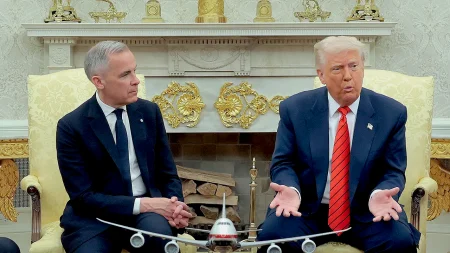
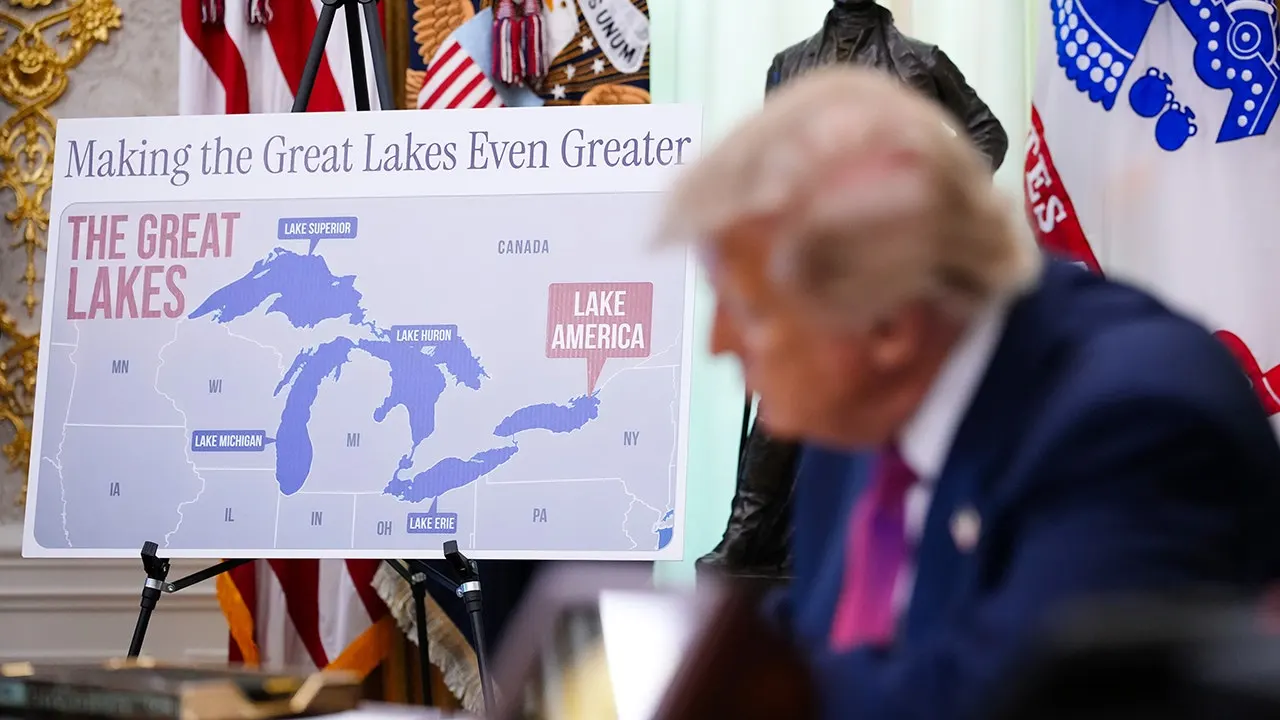
The broader context behind this move is President Trump’s recent decision to rename Lake Ontario to “Lake America.” That executive order was signed last month and immediately generated international attention, mostly because Canada was not at all amused. The Canadian government made it clear that it does not recognize the new name, and Prime Minister Mark Carney responded with a statement that was equal parts diplomatic and pointed. “We know that America is changing. Their trading relationships, their foreign policies, their national monuments, their hydronyms. Canadians also know that naming reality means calling it Lake Ontario — then, now and always,” he said. It was a firm rejection wrapped in a broader commentary about the nature of American policy under the current administration. New York Gov. Kathy Hochul also rejected the renaming, and even the creators of “South Park” got in on the joke, mocking the change in a cheeky statement. The renaming of Lake Ontario only applies to the U.S. federal government, which means Canada, other international bodies, and U.S. states are not required to accept it. But that hasn’t stopped some digital platforms from going along with the change. Both Apple Maps and Google Maps updated the name to “Lake America” for users in the United States, creating a situation where a person’s phone might tell them one thing while a Canadian friend’s phone tells them another. It’s a strange new world where maps are no longer fixed facts, but personalized reflections of national policy.
This is not just about lakes, however. President Trump has also floated the idea of renaming New Mexico to “New America,” a suggestion that prompted several of the state’s Democratic lawmakers to call on Apple and Google to publicly commit to keeping the state’s current name on their map applications. He has also talked about renaming the Pacific and Atlantic Oceans, though no formal proposal has moved forward on that front. And on his first day back in office in January 2025, Trump signed an executive order to rename the Gulf of Mexico to the “Gulf of America.” That change, like the Lake Ontario rebranding, only applies to the U.S. federal government. It does not bind Mexico, other international bodies, or private entities. Yet once again, Apple Maps and Google Maps adopted the change for users in the United States, implementing the update with a region-based approach tailored to the location of the user’s device. That means someone in Texas might see “Gulf of America” on their screen, while someone in Mexico still sees “Golfo de México.” The pattern is clear: the administration is using the power of federal naming to make a statement, and the digital map companies are largely playing along for users in the United States. It’s a fascinating, and in some ways unsettling, demonstration of how much control governments retain over geography, even in the age of GPS and real-time navigation.
So what should we make of Maloney’s push for Lake Pennsylvania? On one level, it’s a clever bit of political theater, a way to highlight Pennsylvania’s place in the Great Lakes region while also tapping into the cultural momentum created by Trump’s renaming efforts. On another level, it’s a genuine expression of identity. Names matter to people. They connect us to place, history, and memory. If Pennsylvania can claim a lake that has shaped its communities and supported its economy, why shouldn’t the state have a name to show for it? Of course, the reality is more complicated. Even if President Trump were to sign an executive order renaming Lake Erie to Lake Pennsylvania, the change wouldn’t automatically apply to Ohio, New York, Michigan, or Canada. International bodies and private companies would have to decide whether to follow along, and there’s very little chance that Canada would accept a name that reduces its connection to the lake. But in the current political environment, the point may not be about practicality. It’s about attention, pride, and the power to shape how we see the world. Maloney’s resolution may not turn into reality, but it has already succeeded in starting a conversation. And in an era where the names of oceans, gulfs, and lakes are changing at the stroke of a pen, the question of who gets to name the places we love is more relevant than ever. Maybe Lake Pennsylvania will never appear on a map. But the idea itself has found a home in the growing list of American naming controversies, and it isn’t going away quietly.