





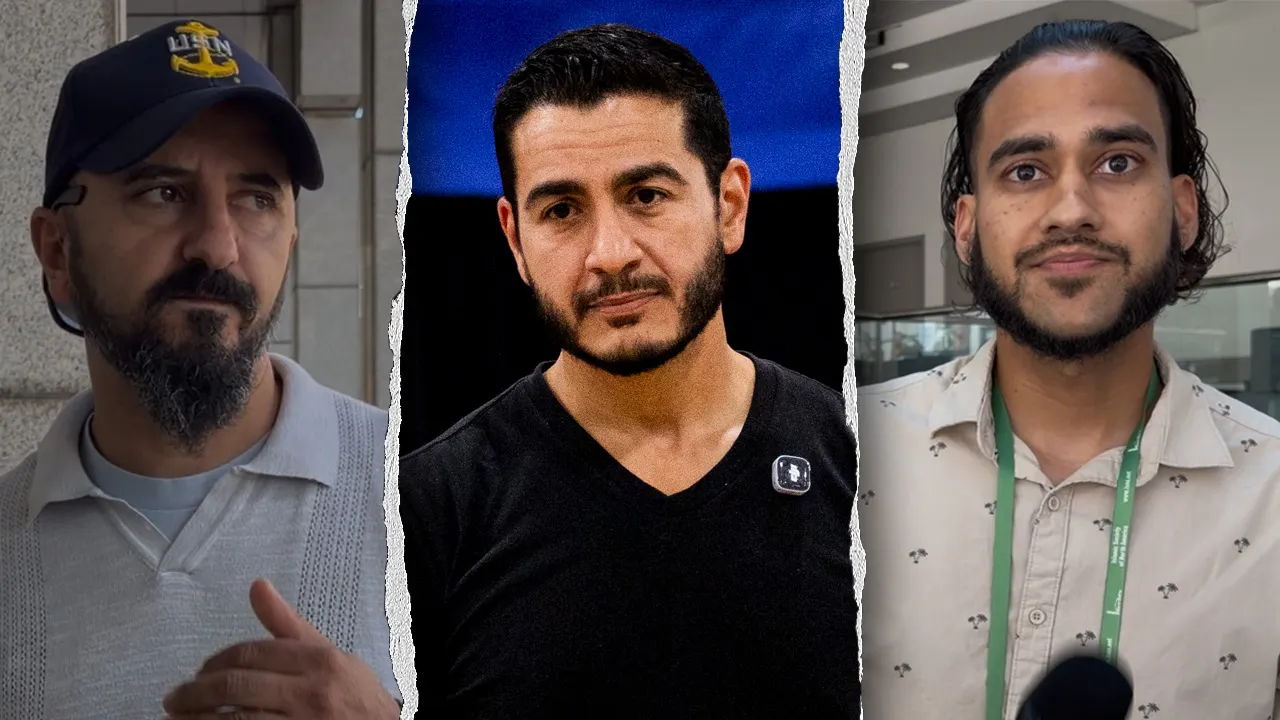
DETROIT — On the last weekend of summer, in the vast halls of Detroit’s convention center, the Islamic Society of North America’s annual conference was in full motion. Families, vendors, scholars, and political operatives mingled in long lines, carrying tote bags and cups of chai, while a familiar kind of political energy hummed beneath the surface. The marquee speaker was Abdul El-Sayed, the Democratic nominee for U.S. Senate in Michigan, a physician and progressive activist whose name has become one of the most watched in the state’s upcoming midterm election. But the energy around him was not uncomplicated. As Fox News Digital found at the conference, El-Sayed is a candidate facing a striking disconnect among some of the very voters who might seem most naturally aligned with him. Many Muslim voters in attendance oppose his positions on abortion and LGBTQ rights—sometimes vocally, sometimes with deep sighs of discomfort—and yet, when asked how they plan to vote, they say the same thing: they will back El-Sayed anyway. “He is a Democrat with a Muslim mask,” one attendee who requested anonymity said, a phrase both cynical and tender in its ambivalence. The man went on to say he objects to El-Sayed’s views, but “want[s] him to get elected” because representation matters more than any single policy disagreement. It was the first of many conversations over the weekend that revealed a complicated political calculus unfolding within one of Michigan’s most important voting blocs.
The conference, hosted by the Islamic Society of North America over Labor Day weekend, offered an unusual window into the private tensions of a community often cast as monolithically Democratic. In total, Fox News Digital spoke to about ten attendees, several of whom spoke only on background, worried about social reprisals or public backlash. What emerged was a portrait not of easy loyalty but of difficult, negotiated choice. One after another, attendees described the same dissonance: El-Sayed, with his polished liberal platform and prominent public profile, sits in tension with the conservative social teachings that many Muslim Americans hold dear. Islamic theology generally takes a more restrictive view of abortion, gender, and sexuality than El-Sayed’s platform, although interpretations vary widely among scholars and believers. For some, learning the fine print of his positions felt like a shock. “Wait, he’s supporting LGBTQ?” another attendee asked in genuine surprise, before carefully choosing his words. “I don’t really think that’s good, especially because this is Islam and it prohibits LGBTQ and I do really think that people should abandon … abortion since they’re taking a life away.” For that man, the revelation was not hypothetical—it threatened to test the boundaries of loyalty. Yet even he acknowledged the pull of a candidate who shares a faith, a community, and a history of marginalization, especially in a political landscape that has often made Muslims feel invisible. There was no neat answer, and no one pretended otherwise. Instead, there was a collective, almost weary process of weighing sins: the sin of supporting policies that contradict one’s faith against the sin of staying silent while one’s community is excluded. The balancing act felt less like political strategy and more like a family conversation being held in public.
At the center of the tension is a policy platform that many in the room found hard to defend. El-Sayed has called for codifying Roe v. Wade into law, funding Planned Parenthood, establishing LGBTQ-inclusive sex education, and allowing doctors to perform sex-change operations on children. For attendees whose faith traditions teach that life begins at conception and that gender is a matter of divine order, these positions were not merely political disagreements. They were moral wounds. And yet, in nearly every conversation, the candidate’s more familiar strengths—his work in public health, his background as a physician, his promises around education and economic fairness—pulled the conversation back to what he might do for Michigan broadly. Fauzi, a conference attendee, put it plainly: “He’s gonna be great for education, and he’s gonna be great for medical. 5-10% of the issues, people may differ. But we have to look at the big picture [and] how he can be impactful for the state of Michigan, the country at large, and all of us here.” The phrase “big picture” was almost a mantra. Those who have known El-Sayed for years described him as a doctor who cares about public health, a public servant who sees poverty and inequality in ways that transcend the culture wars, a candidate who could be a real beacon for communities that rarely hold a seat at the table. Others admitted that issues like abortion and gender would remain “talking points within the Muslim community,” as Zubin, a longtime El-Sayed supporter, said. But he insisted that generational change was inevitable. “So yes, Abdul El-Sayed, maybe his views when it comes to these things, maybe more similar to mine as compared to our parents, our grandparents, yes, with those generations. There may be a little bit of friction, but this is natural.” In other words, the debate was not just between El-Sayed and his voters. It was also between older and younger Muslims, between traditionalist and modernizing readings of faith, between ideological purity and the messy demands of life in twenty-first-century America.
The political marketplace that El-Sayed is navigating has never been simple, and the 2024 election made it even less so. Among the attendees who spoke with Fox News Digital, several admitted that they voted for Donald Trump in the last presidential election, and they intended to vote for El-Sayed in the midterms. It was a strange but telling confession, and it came with a sense of betrayal rather than celebration. A Navy veteran in the crowd said he was a Republican by values, but “unfortunately they have betrayed us.” He ticked off his grievances: the Trump administration’s involvement in foreign wars, the soaring cost of living, the sense that tax dollars were being sent overseas instead of helping American communities. Zubin, who described himself as a long-time El-Sayed supporter, echoed the concern: “We’re concerned about where our tax dollars are going to. A lot of these tax dollars are going to support foreign wars, support countries that aren’t the United States. So I think these are the main issues that resonate not just with the Muslim voters but the everyday voter in all of Michigan.” Trump, after all, did uncharacteristically well among Michigan’s Arab American voters in 2024, and his support for Israel and his military operations in Iran have become growing points of concern. For many voters at the convention, foreign policy has supplanted domestic social issues as the deciding factor. They might wince at El-Sayed’s stance on abortion, but they are more worried about whether a vote for a Republican will be a vote for what they see as reckless war and corporate greed. It is a trade-off—more than one attendee called it choosing the lesser of two evils—but it is a trade-off they are prepared to make. The Republican Party, in this telling, had a chance to earn their loyalty, and some said they would gladly support a Muslim Republican who shared their values. But they felt the party had let them down, leaving them with a candidate who may not be exactly what they would have chosen, but who at least seems to speak their language.
At the heart of the matter, perhaps, is representation. The phrase “Muslim mask” used by one attendee was harsh, but it revealed a deeper truth: many voters see El-Sayed’s identity as both an asset and a strategy. They suspect his politics don’t fully mirror his faith or their own, but they still want him in the Senate because there is a powerful symbolic meaning to having a Muslim name in the halls of power. That desire for visibility often overrides policy objections. “Yes, if you’re a good person, a good politician and running for the Republican party and you believe in your values and that you can do good, go ahead and run and I’m sure you can win a lot of support from this community as well,” Zubin offered, imagining a future in which conservative Muslim voters could find a home in a party that truly wanted them. But he wasn’t holding his breath. Another attendee, unnamed, said bluntly: “I think it’s very difficult for a Muslim to run as a Republican because frankly a lot of Republican voters do tend to have a strong bias against us.” This sense of being caught between two camps—too conservative for Democrats, too Muslim for Republicans—was most poignant among those who had voted for Trump. They felt rejected by the party they had tried to embrace, pushed away by policies that seemed to favor Israel over Palestine, profit over people, and a cold nationalism over a genuine welcome. So they return, ambivalently, to El-Sayed. They will cast their ballots for him not because he is their perfect champion, but because he exists. For many in the community, having a voice at the table is a threshold, not a luxury; once you have a voice, you can begin to ask for more. It is a painful way to vote, born less out of enthusiasm than out of a desire to be noticed, to matter, to be counted in a system that has often treated them as outsiders. One attendee speculated that if more people in the Islamic community knew El-Sayed’s social views, his support might drop. But others countered that the community’s younger voters, less bound by orthodox readings, would carry him through. In that sense, El-Sayed is not just a candidate trying to win an election; he is a mirror reflecting a community’s changing hopes.
All of it unfolds in a Senate race already marked by razor-thin margins and dizzying political realignments. Republicans hope to pick off disaffected Jewish Democrats who have raised concerns about antisemitism and El-Sayed’s ties to controversial figures and organizations. The El-Sayed campaign did not respond to Fox News Digital’s request for comment, but the weekend’s scenes suggested a campaign trying to moderate an image that sits uneasily at the intersection of identity politics, social justice, and faith. The controversy over past remarks by some ISNA speakers only deepened the scrutiny on El-Sayed’s associations. For a candidate whose appeal has always been framed in terms of progressive unity, the reality is far more fragmented. The Muslim voters in Detroit that weekend did not speak with one voice, nor did they fall neatly into familiar partisan boxes. They held conservative views on the sanctity of life and the boundaries of gender, yet they were willing to sacrifice those views for education, healthcare, and a quieter turning away from foreign wars. They voted for a Republican president who promised peace and prosperity, only to feel betrayed by war and inflation. They distrust conservative politics because they feel mistrusted, and they distrust progressive politics because they feel misunderstood. And then there is Abdul El-Sayed, a doctor and a dreamer, a Muslim with a “mask,” a candidate who is not their perfect mirror but is perhaps the first mirror that reflects enough of them to make them pause. In the end, the moment at the ISNA convention was less about one man’s ideas and more about the strange, enduring human arithmetic of political loyalty. We choose, and in choosing we reveal what we cannot give up, what we are willing to tolerate, and what we hope a vote might one day build. For these voters, that hope was big enough to cover the distance between a mosque’s teachings and a Senate campaign’s platform—not without pain, not without doubt, but in the end, with a decision to show up.