




For voters in Missouri, the last few weeks have felt less like the run-up to an election and more like the opening scene of a political thriller—full of sudden twists, legal maneuvering, and a nagging sense that the ground beneath their feet might shift at any moment. The latest shock came when the Missouri Supreme Court blocked a Republican-backed congressional map that had been championed by President Donald Trump and state GOP leaders. The ruling, delivered without a detailed explanation, means the state will now revert to its 2022 congressional boundaries for the November midterms, scrapping the new map that Republicans had hoped would give them a decisive edge. For the GOP, it was a fresh and painful blow. For Democrats, it was a welcome reprieve. But for ordinary Missourians, it was yet another confusing chapter in a redistricting saga that has already dragged on for over a year, leaving candidates, election officials, and voters scrambling to figure out which district they actually belong to—and why the rules seem to keep changing.
At its core, redistricting is supposed to be a routine, almost bureaucratic exercise. Every ten years, after the national census, states redraw their congressional and state legislative districts to reflect population shifts, ensuring that each district contains roughly the same number of residents. It’s a foundational part of representative democracy—the idea being that every person’s vote should carry equal weight, whether they live in a crowded city or a sprawling rural county. But in Missouri, that process turned into a political battlefield. The new map, signed into law by the Republican governor and backed by the Trump wing of the party, was designed to tilt the playing field further to the right. The most significant change involved the Kansas City-based district represented by Democrat Emanuel Cleaver. Under the proposed boundaries, portions of Cleaver’s district would have been shifted into more Republican-leaning suburbs and exurbs, making what had been a safely Democratic seat suddenly competitive. Republicans calculated that with this new configuration, they could flip enough voters to win seven of Missouri’s eight House seats in November, a gain that would pad their narrow majority in Washington and send a powerful message heading into the next presidential cycle.
But the road from political ambition to actual election-day reality turned out to be anything but smooth. The legal battle over Missouri’s congressional map began more than a year ago, with dueling lawsuits, contradictory lower-court rulings, and appeals that bounced from state courts to federal courts and back again. At various points, the map was upheld, struck down, reinstated, and then blocked again, leaving a trail of confusion in its wake. The Missouri Supreme Court’s final intervention—issued in a brief order without explaining its reasoning—put an end to the new map’s journey, at least for now. The state will use the 2022 boundaries for the November general election, meaning the map that was in place before the latest round of litigation will govern how votes are cast and counted. That decision effectively preserves Cleaver’s district as a Democratic-leaning seat, dashing Republican hopes of expanding their delegation. It also means that the August primary election, which was held under the new map, now feels almost like a practice run—candidates won their party nominations in one set of districts, only to face voters in a different set of districts just a few weeks later.
For more than one million Missourians—nearly a quarter of the state’s electorate—the change is not just an abstract legal detail. It could mean being assigned to a completely different congressional district in November than the one in which they voted during the primary. Imagine casting your ballot in August for a candidate you believed would represent you in Congress, only to learn that, come November, you will be voting in a different district altogether, for a different slate of candidates, with different issues at stake. For voters in the affected areas, the confusion is personal. Their neighborhoods might be split, their polling places changed, and their sense of political identity challenged. Election officials, already stretched thin by the pressures of administering an election during a highly charged political season, now have to reprogram voting machines, update precinct boundaries, notify voters of new assignments, and make sure poll workers understand the last-minute adjustments. It’s a logistical nightmare, compounded by the fact that the conflicting court orders have created an atmosphere of uncertainty and distrust. Some voters may not even realize their district has changed until they arrive at the polls, while others may simply stay home, frustrated by a system that seems unable to make up its mind.
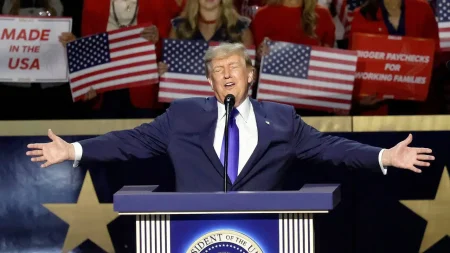
Beyond the practical chaos, the ruling carries significant political weight. For Republicans, the Missouri Supreme Court’s decision was a gut punch, especially coming at a moment when the national party is fighting to hold onto its slim House majority. The party’s strategy in Missouri was part of a broader, multi-state effort to use redistricting to offset losses elsewhere, and losing this particular battle narrows their path. President Trump, who had personally endorsed the new map and urged state officials to fight for it, reacted with characteristic fury, blasting the ruling as “ridiculous” and suggesting that the court had overstepped its bounds. Democrats, meanwhile, breathed a sigh of relief. They had argued that the new map was an unconstitutional partisan gerrymander, designed to dilute the voting power of minority communities and entrenched Democratic constituencies. For them, the ruling was a validation of their claim that elections should be decided by voters, not by cleverly drawn lines. The Missouri Supreme Court did not explain its reasoning, leaving observers to speculate about whether the decision was based on procedural grounds, constitutional concerns, or simply the recognition that changing the rules so close to an election would create unacceptable chaos. The White House, for its part, declined to comment, perhaps wary of wading into a state-level political fight that had already generated more than enough controversy.
In the end, what happened in Missouri is a reminder of just how fragile and messy the machinery of democracy can be. Redistricting is never purely neutral; it is a struggle over power, influence, and the very meaning of representation. But when that struggle becomes so contentious that it leaves voters uncertain about where they will cast their ballots, something has gone deeply wrong. The people of Missouri are not political pawns, and they deserve better than a system that treats their neighborhoods like bargaining chips in a high-stakes game of partisan chess. As the November election approaches, candidates on both sides will have to adapt quickly, shifting their messaging and campaign strategies to fit the old boundaries. Some will find themselves running in unfamiliar territory, while others will be forced to defend turf they thought they had left behind. The voters, meanwhile, will have to navigate a confusing and ever-changing landscape, hoping that their voices are still heard amid the noise. But perhaps that is the enduring lesson of this episode: even when the maps are drawn, redrawn, blocked, and revived, the ultimate power still rests with the people. They are the ones who show up, stand in line, and cast their ballots—and in a democracy, that is a force no court ruling can ever permanently suppress.