





Paragraph 1
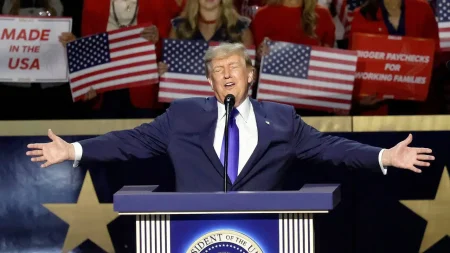
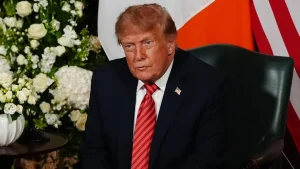
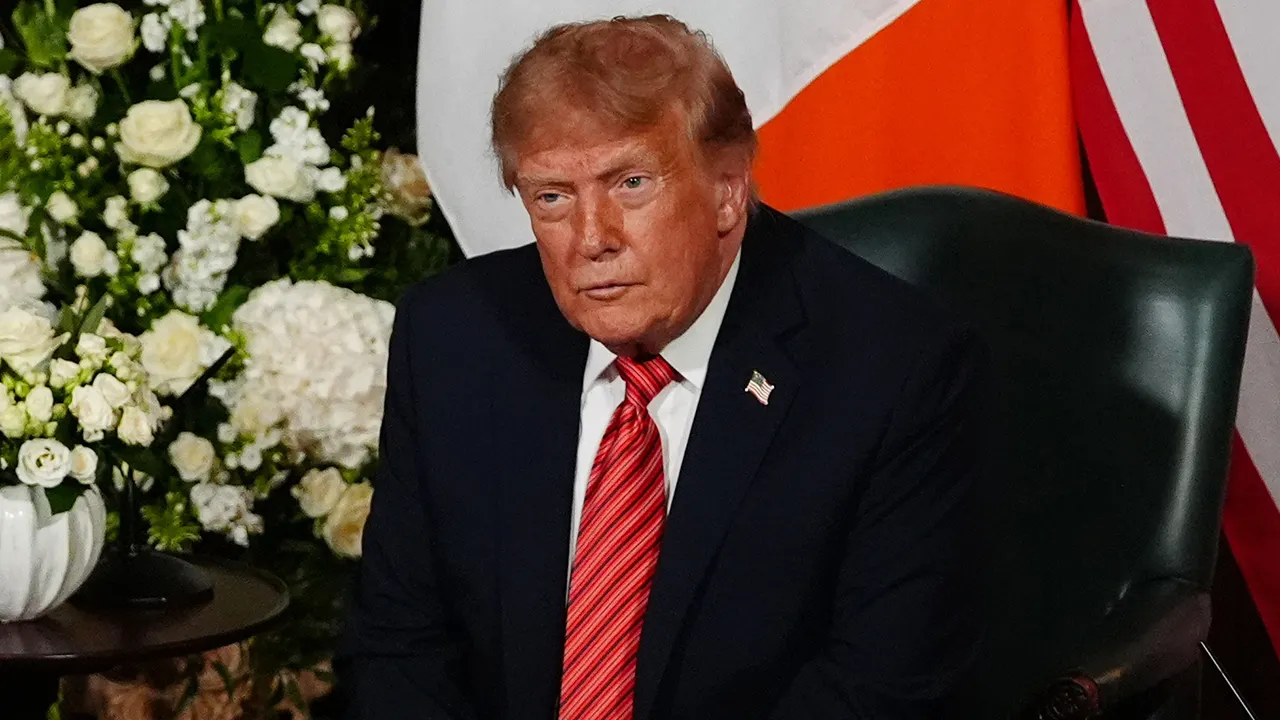
There are moments in geopolitics when the carefully choreographed language of diplomacy gives way to something far more human—a shrug, a blunt aside, a moment of unscripted honesty. That was the scene aboard Air Force One this past Sunday, as President Donald Trump fielded questions from reporters and found himself confronting a thorny and deeply personal question about espionage, foreign alliances, and the costs of modern warfare. The exchange centered on a Wall Street Journal report alleging that Chinese entities had provided Iran with high-resolution satellite imagery of a U.S. military base in Jordan, imagery that reportedly helped enable a missile strike that killed three American troops. The President’s response, by Washington standards, was strikingly candid. Rather than offering a measured denial or a carefully weighted diplomatic statement, Trump essentially acknowledged the practice as par for the course in international relations. “They basically do what we do,” he said, according to reporters traveling with him. It was a remark that seemed to normalize the shadowy world of intelligence gathering, reducing a potentially explosive accusation to a simple case of mutually assured espionage. The comment was classic Trump: direct, unvarnished, and strangely human in its refusal to pretend that great powers are above such behavior. In that single sentence, he lifted the veil on the unspoken rule of global power—that trust is rare, secrets are currency, and every nation with the capability to spy probably does. The reporters on board pressed further, asking whether he would raise the issue with Chinese President Xi Jinping during the upcoming visit to Washington. Trump did not flinch. He praised Xi as having “behaved reasonably well” and suggested the United States had done the same, then added, almost as an afterthought: “You know what they say? That China spies on us. I say you’re right, and we spy on them, too.” It was the kind of remark that would normally be buried in diplomatic cables, but here it was, delivered in the open air, over the hum of jet engines, a reminder that even the most powerful leaders on Earth are simply people trying to make sense of a complicated world.
Paragraph 2
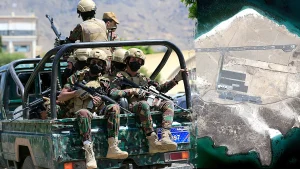
To understand the weight of Trump’s words, one has to go back to the incident that prompted them. According to the Wall Street Journal, U.S. officials have linked Chinese-origin satellite imagery to Iran’s missile attack on Muwaffaq Salti Air Base, a military installation in Jordan that hosts American forces. The attack was devastating: three U.S. troops lost their lives, and many more were wounded. For Americans, the names of those soldiers may not be familiar, but for their families, the loss is an open wound that will never fully close. There are parents who will never hear their child’s voice again, spouses who now navigate life alone, children who will grow up with only photographs and memories. The base itself, located near the tense border region, was a symbol of American military presence in the Middle East—a place where young men and women served far from home, doing jobs they believed in, under conditions most civilians cannot imagine. The allegation that Chinese entities supplied Iran with high-resolution imagery of this specific base adds a disturbing new dimension to the tragedy. U.S. officials, according to the report, described this as the clearest evidence to date that Chinese support for Iran during the ongoing conflict has had deadly consequences for American forces. Yet it is important to note what the officials did not say: they did not identify the Chinese entities by name, and they did not accuse the Chinese government of direct involvement in the attack. This distinction matters. It leaves room for a range of possibilities—from privately owned companies seeking profit in a global marketplace, to rogue actors within a complex system, to something more deliberate and coordinated. The ambiguity is part of what makes the situation so fraught. In an era of satellite technology and open-source intelligence, imagery that was once reserved for the most advanced national security agencies can be obtained by commercial entities, transferred, and weaponized. The line between civilian business and military aid becomes blurry, and the consequences are measured in human lives. For the families of the fallen, the question is not about legal liability or diplomatic nuance. They want to know who helped the people who killed their loved ones, and they want to know why no one stopped it. That raw, human need for answers stands in stark contrast to the quiet corridors of power, where the response is often a statement, a pause, and an eventual shift to the next crisis.
Paragraph 3
Trump’s response to the report was less about the specifics of the attack and more about his broader worldview—a view that sees international relations as a competitive arena where every country looks out for its own interests. By saying “they basically do what we do,” he was not excusing the loss of American lives; he was acknowledging a truth that many in Washington would prefer to keep behind closed doors. The United States has a long history of intelligence gathering around the world, including against its own allies, and it would be naive to think that China, Russia, or any other major power does not engage in similar activities. In framing the issue this way, Trump shifted the conversation from an accusation against China to a broader reflection on the nature of power. He seemed to suggest that espionage is not a moral failing but an institutional reality—a tool of statecraft that every nation uses to protect its interests. “We behave reasonably well,” he said, a phrase that could be interpreted in many ways. It could be seen as a defense of American intelligence operations, which are typically subject to oversight and legal constraints. Or it could be seen as a cynical acknowledgement that “reasonable” is in the eye of the beholder. From the perspective of a Chinese analyst, U.S. surveillance drones, satellite networks, and cyber operations might look just as threatening as anything China has done. Trump’s comments also reveal something about his approach to personal diplomacy. He has often spoken warmly of Xi Jinping, praising his leadership and describing their relationship as one of mutual respect. By declining to criticize Xi directly, Trump left the door open for a productive summit on September 24, when Xi is scheduled to visit Washington. The President’s instinct to avoid public confrontation with a powerful adversary is not new. It reflects a belief that personal relationships matter, that public criticism can poison negotiations, and that there is always room for pragmatic compromise. But this approach has its risks. For Americans who lost loved ones in the Jordan attack, a dismissive reflection on the universality of spying may feel like an insufficient answer. They may wonder whether the pursuit of a good relationship with Beijing is worth more than the search for justice for their soldiers. That tension—between diplomatic pragmatism and human grief—lies at the heart of this story, and it is not easily resolved.
Paragraph 4
The practice of espionage between great powers is as old as the state system itself. From ancient empires sending spies along trade routes to Cold War operatives trading secrets in neutral cities, the idea that one nation should know what another is thinking, planning, and doing has always been central to survival. In that sense, Trump’s remark was historically grounded. The United States and China have been conducting intelligence operations against each other for decades, sometimes with remarkable sophistication. Satellite imagery, signals interception, cyber penetration, and human sources all form part of a vast ecosystem of surveillance that operates around the clock. The novelty of the recent report lies not in the fact that such activity occurs, but in its alleged direct line to an attack that killed American soldiers. If Chinese entities truly provided the satellite imagery that enabled Iran to target a U.S. base, it would mark a troubling escalation in the intersection of commercial technology and military conflict. The global availability of high-resolution satellite images has exploded in recent years, with private companies selling imagery that would have been classified a generation ago. Governments can purchase pictures of military installations, infrastructure, and troop movements, all without launching a single satellite of their own. This democratization of surveillance makes it easier for non-state actors and adversarial governments to plan attacks with precision, while making it harder for the United States to control who has access to sensitive information about its own deployments. It also creates a challenging legal landscape. A company in China that sells satellite imagery to Iran may not be violating Chinese law, and the Chinese government may have no legal obligation to prevent the sale. But from the perspective of U.S. officials, the effect is the same: foreign assistance in the planning of a deadly strike. The report suggests that U.S. intelligence and military officials are increasingly worried about this gray area, where commerce and conflict overlap. They must determine whether to treat such commercial transactions as hostile acts, whether to impose sanctions on the entities involved, and whether to confront Beijing directly. These are weighty decisions, made more difficult by the fact that the evidence, while clear to U.S. officials, has not been made public in detail. In the absence of a smoking gun, the story remains a matter of interpretation—one country’s legitimate intelligence work is another country’s act of aggression.
Paragraph 5
The political and diplomatic dimensions of this episode are just as complex as the intelligence questions. President Trump’s suggestion that the United States and China are engaged in mutual espionage could be read as an attempt to defuse the situation before the summit with Xi. By framing the issue as a normal part of great-power relations, he avoids having to take a hard line that might jeopardize the meeting. The scheduled visit on September 24 would be a major diplomatic moment, with trade, technology, regional security, and military tensions all on the agenda. Raising the satellite imagery issue aggressively could derail the summit before it begins. Trump’s allies might argue that his comments reflect a mature understanding of international politics—that there are no angels, only interests. His critics, however, might see them as a missed opportunity to hold China accountable for its actions. If Chinese entities did provide intelligence that led to the deaths of U.S. soldiers, should there not be consequences? The White House, for its part, declined to provide an immediate comment to Fox News Digital, leaving the story to linger in the air without official clarification. That silence is itself a form of communication. It suggests that the administration is still weighing its options, still deciding how to handle a sensitive issue that touches on both national security and high-level diplomacy. It also leaves room for the President’s words to stand alone, unrevised and unreconstructed, as a statement of policy. For the soldiers who serve at bases like Muwaffaq Salti Air Base, the notion that their positions are known to adversaries is not new. They are told that their work is dangerous, that they are targets, and that the military will do everything possible to protect them. But learning that a commercial satellite image, sold by a foreign company, may have played a role in an attack on their comrades is a sobering reminder of the modern battlefield. It is no longer just about soldiers on the ground or missiles in the air; it is also about who sees what, from where, and how that information flows across borders to shape the course of conflict.
Paragraph 6
In the end, this is a story about the intersection of human nature and global affairs. President Trump’s offhand remarks aboard Air Force One reveal a man who accepts the world as it is—messy, duplicitous, and full of competing ambitions. He spoke of spying the way a farmer speaks of weather or a sailor speaks of wind: as a fact of life, something to be managed rather than eliminated. There is a certain honesty in that perspective, a refusal to pretend that nations are bound by the same moral rules that govern individual behavior. But there is also a danger in becoming too comfortable with the idea that espionage is simply what countries do. When intelligence sharing becomes connected to the deaths of American troops, the moral calculus changes. The abstract game of spies and satellites becomes tangible, scarred by grief and loss. The names of the three soldiers killed in the Jordan attack may fade from headlines, but for their families, the pain remains a living presence. They will hear these stories about foreign imagery and international politics, and they will wonder whether their sons, daughters, husbands, wives, or friends could have been saved if someone had acted differently. No presidential remark, no summit meeting, and no diplomatic solution can bring back what was lost. Yet the business of government goes on. The September 24 summit will happen. Diplomats will speak of cooperation, and intelligence officials will continue to watch each other from the shadows. The great powers will keep spying on each other, because that is what great powers do. But perhaps, somewhere in the quiet moments after the cameras have left, there is a chance for reflection—for remembering that behind every report, every satellite image, and every military base, there are people. People who serve. People who sacrifice. People who grieve. And in that reflection, there is an opportunity to humanize the choices we make, to remember that the decisions of presidents and generals are not made in a vacuum. They are made in the real world, where a single image can change the course of events, and where a few words from a leader can either acknowledge a hard truth or dismiss a pain that is all too human. Trump’s comments may not have provided closure or justice, but they gave us a glimpse into the unvarnished calculation of power—a reminder that no nation is innocent, and no nation is perfect, and that the search for safety is a never-ending struggle in a fragile world.