






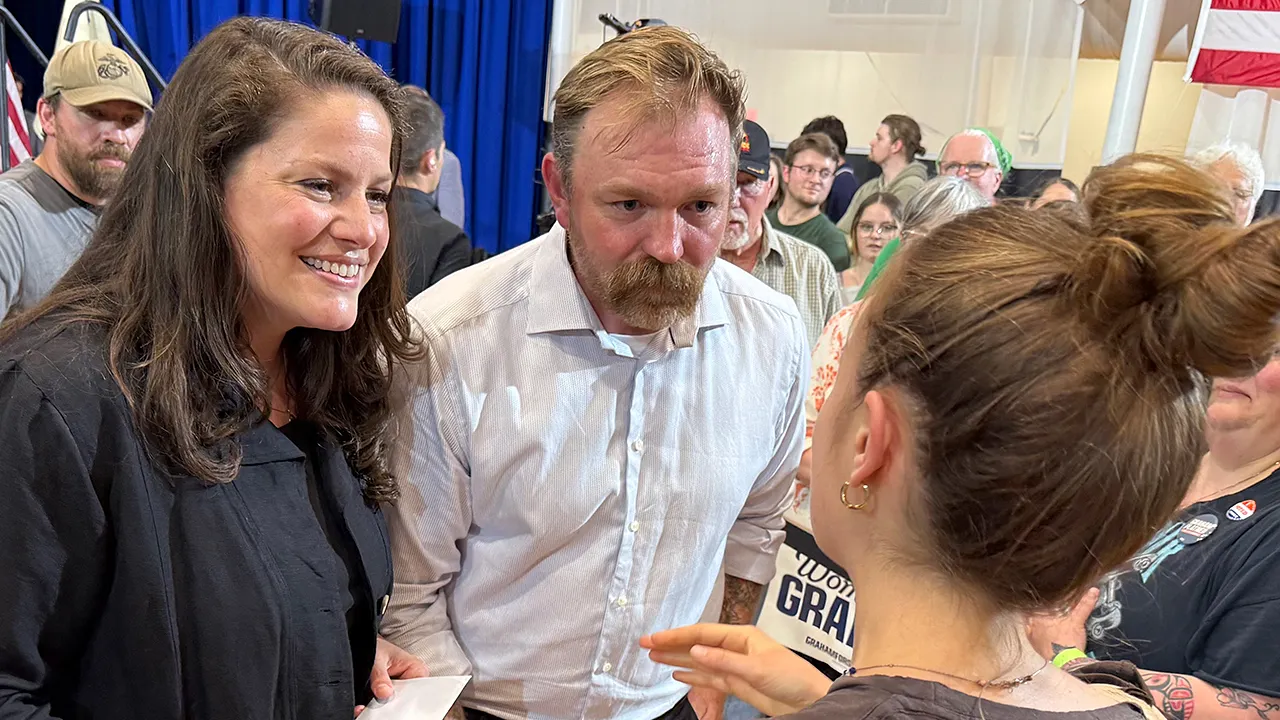
The chilly saltwater wind whipping through the coastal community of Blue Hill, Maine, has long fostered a hardy breed of independent thinkers, but few could have predicted that a local oyster farmer with a turbulent past would become the epicenter of a national political earthquake. Graham Platner, a military combat veteran who carries both the physical and emotional scars of war, secured a stunning victory in Tuesday’s Democratic primary, setting the grand stage for an explosive, high stakes midterm electoral showdown against the long serving moderate Republican Senator Susan Collins. Platner’s triumph is not merely a localized political upset; it is a vivid manifestation of a deeper cultural shift where the electorate, exhausted by conventional political scripts, increasingly favors raw, unvarnished outsiders over the polished products of party establishments. The upcoming Senate race in Maine is now positioned as one of the most critical battlegrounds in the country, a contest that will ultimately decide which party commands the upper chamber of Congress. For Platner, who transitioned from quiet mornings tending oyster cages to the blinding glare of national media scrutiny, the victory is a surreal testament to the power of populist anger and the changing expectations of modern voters. Beneath the political math of delegates and turnout lies a deeply human story of a man whose personal battles became public property, dissected by political strategists and ordinary citizens alike. As Maine voters cast their ballots, they chose to embrace a very deeply flawed champion who spoke their language of economic desperation rather than a safe, politically safe alternative. This choice reflects a broader, restless yearning across the American landscape, where working class communities feel increasingly abandoned by the institutions meant to protect them. In rising to meet Collins, a monumental figure of Maine politics, Platner carries the heavy, fragile hopes of a progressive movement eager to prove that an unapologetic focus on the struggles of everyday people can dismantle even the most entrenched political dynasties that have controlled the state for generations.
To truly understand Platner’s shocking victory is to directly confront a dizzying paradox of modern campaign politics, where personal ruin can somehow be transmuted into a powerful bond of shared human vulnerability. Over the frantic final weeks leading up to the actual vote, Platner’s campaign resembled a ship navigating a relentless hurricane of self-inflicted crises, with painful revelations of ancient offensive Reddit posts, a covered-up chest tattoo resembling a hate symbol, explicit extramarital messaging, and very dark allegations of historical relationship violence threatening to capsize his political ambitions. To the political class in Washington, these mounting scandals were a death sentence, prompting severe anxiety, closed-door huddles, and quiet pleas for the candidate to step aside for the good of the party. Yet, standing before his supporters in Down East Maine, Platner chose not to hide behind sterile public relations denials, but rather to frame his deeply buried past mistakes as part of an agonizing, transparent journey through the darkness of post-traumatic stress disorder and subsequent recovery. This raw, uncomfortable honesty struck a powerful chord with voters who recognized in his brokenness a reflection of their own struggles with addiction, mental health, and the difficult road of personal accountability. By courageously leaning into his painful scars rather than denying them, Platner transformed what should have been political kryptonite into an authentic narrative of redemption that resonated deeply with a community weary of hyper-sanitized leaders. This was a uniquely messy and modern deep redemptive journey that captured the entire public imagination. When a disgruntled former campaign staffer published a scathing essay declaring Platner unfit for public office, the voters of Maine responded not with condemnation, but with a fierce, protective embrace of their local son. The final primary results made it abundantly clear that ordinary working people were fully willing to shrug off these personal controversies in exchange for a raw representative who promised to aggressively fight the massive corporate interests, wealthy lobbyists, and corrupt economic systems that have hollowed out their proud coastal towns.
This highly dramatic, emotionally charged clash between the ideological wings of the American Democratic Party is not isolated to the rocky shores of Maine, but is playing out in communities across the nation, illustrating a profound struggle for the enduring soul of the modern political left. Only a week prior, in the heartland of Iowa, the party establishment celebrated a victory when John Turek, a decorated Paralympic gold medalist and wheelchair basketball champion, secured the Democratic Senate nomination after receiving significant backing from powerful Senate leaders like Chuck Schumer, the powerful Senate Democratic Leader. Turek’s triumph over a more progressive opponent was hailed by moderates as a sensible, carefully calculated triumph of mainstream electability, showcasing a compelling personal story of triumph over physical adversity that could appeal to broad swaths of middle America. However, the contrast between Turek’s carefully managed, establishment-backed success in Iowa and Platner’s chaotic, progressive victory in Maine highlights the deep, seemingly unbridgeable ideological schism dividing Democratic voters. Progressive standard-bearers like Senators Bernie Sanders and Elizabeth Warren, alongside Representative Ro Khanna of California, rallied behind Platner, recognizing that his populist economic platform possessed a rare ability to mobilize voters who feel entirely left behind by corporate-friendly policies. For the passionate grassroots leaders of the modern progressive movement, Platner’s success is a stern warning to party insiders who consistently underestimate the electoral potency of outsider populism and working class anger. This ongoing, bitter intra-party ideological friction reveals a fundamental disagreement over how to win back the American working class: through moderate, broad-appeal candidates who deeply respect traditional political norms and established governing methods, or through fiercely unconventional, populist fighters who promise to radically disrupt the entire existing corporate system. As the critical November general election rapidly approaches, both of these competing electoral strategies will inevitably be put to the absolute ultimate test in crucial battleground swing states across the entire country, fundamentally determining whether the path to reclaiming power lies in safe, predictable moderation or fierce, deeply populist, high stakes rebellion.
Meanwhile, hundreds of miles to the humid south, a very different but equally fierce battle for political dominance was unfolding in the sweltering heat of South Carolina, where the deeply imposing political shadow of Donald Trump continues to loom larger than life over the Republican landscape. While the former president was not personally on the ballot, his powerful personal endorsement remained the most defining currency of the entire primary season, acting as both a golden ticket for hopeful candidates and a target for those who feel the party has lost its way. The stakes were incredibly high for Trump, whose reputation as a Republican kingmaker had recently suffered some highly publicized setbacks in other states, making the South Carolina results a vital test of his ongoing grip on the conservative base. The Palmetto State has always favored powerful, highly charismatic leaders. In the Palmetto State’s Republican gubernatorial race, the power of his endorsement was fully realized as Lieutenant Governor Pamela Evette surged ahead of a crowded field of ambitious contenders, leveraging Trump’s public praise to capture the top spot. Evette’s campaign was a masterclass in modern conservative alignment, as she consistently positioned herself as an unwavering champion of the “America First” agenda and a warrior ready to battle the progressive establishment. By securing this crucial first place finish in a crowded and highly competitive environment, she demonstrated that for a significant portion of the Republican electorate, an explicit connection to Trump remains the single most persuasive credential a candidate can possess. Yet, the victory was not absolute, as she fell short of the fifty percent threshold required to avoid a runoff, setting up a grueling two-week sprint against the state’s formidable Attorney General, Alan Wilson, who came in second place. This looming runoff will not only test Evette’s endurance but will also serve as a barometer for how deeply Trump’s influence has permeated the local political infrastructure, as two exceptionally powerful conservative heavyweights now prepare to vie for the ultimate prize of the governorship.
For long-serving Senator Lindsey Graham, who has long established himself as a seasoned survivor of the shifting political tides, the primary was a high-stakes test of his ability to navigate the complex, often volatile relationship between traditional conservatism and the populist MAGA movement. Once a highly vocal and fierce critic of Trump during the twenty-sixteen campaign, Graham has famously transformed himself into one of the former president’s closest allies, a strategic evolution that has earned him both the trust of the Mar-a-Lago inner circle and the deep suspicion of anti-establishment conservatives on his right flank. Facing five primary challengers who accused him of being a creature of the entrenched Washington federal swamp and too eager to support foreign interventions, Graham knew that survival required a massive, expensive demonstration of strength and absolute loyalty. His campaign, along with closely allied political action committees, launched a staggering twenty million dollar advertising blitz designed to remind voters of Trump’s explicit endorsement, culminating in a powerful primary eve electronic tele rally where the former president urged his followers to stand firmly by the long serving incumbent. This overwhelming display of political and financial force proved insurmountable for his opponents, such as the staunchly conservative businessman Mark Lynch, allowing Graham to secure a clear majority of the vote and comfortably avoid a potentially dangerous runoff. This extremely massive and decisive victory highlights the unique gravity of Trump’s endorsement in the South, proving beyond doubt that even controversial, long-serving incumbents can insulate themselves from grassroots rebellions if they possess the blessing of the party’s undisputed leader. It also illustrates the immense pragmatism of modern political survival, where decades of carefully calculated ideological positioning can be successfully recalibrated to fit the demands of a highly polarized and fiercely loyal electorate. Through sheer political willpower, raw campaign power, capital strength, financial dominance, and the protective shield of Trump’s endorsement, Graham has once once more proven his internal resilience, reinforcing the reality that in today’s Republican Party, all paths to power must cross Trump’s threshold.
The primary results across these diverse states ultimately paint a vivid, complex portrait of an American electorate that is deeply restless, divided, and searching for authentic connection amid a sea of political noise. In the South Carolina gubernatorial race, Evette’s campaign continues to bask in the glow of the president’s public endorsement, using her platform to frame herself as a political outsider and a successful businesswoman uniquely equipped to dismantle the status quo. Her upcoming runoff against Alan Wilson will be a defining moment for the state’s political future, as voters must choose between two distinct visions of conservative leadership that both claim allegiance to the same underlying populist movement. Simultaneously, the broader national landscape reveals a fascinating divergence in how both major parties are navigating their internal divisions, with Democrats wrestling between the structured electability of candidates like Iowa’s John Turek and the raw, unpredictable populist energy of Maine’s Graham Platner. This ideological friction is mirrored on the Republican side, where the immense power of Trump’s endorsement has successfully shielded allies like Lindsey Graham but has occasionally faltered against localized highly populist movements, such as the rise of Zach Lahn in Iowa’s congressional races. These shifting dynamics show that voters are no longer satisfied with static, predictable political identities; instead, they are drawn to figures who represent a break from the perceived failures of the past, whether that means a combat veteran overcoming personal darkness or a conservative outsider promising to fight local corruption. As the country moves closer to the general elections, the lessons of June ninth will reverberate through every campaign trail, reminding strategists that the human element of politics, the desire for survival, the yearning for redemption, and the search for protective champions, will always triumph over dry policy debates. Ultimately, the victories of Graham Platner and Trump’s handpicked candidates in South Carolina demonstrate that in this era of intense cultural anxiety, the most successful politicians are those who can tap into the deep, emotional currents of the human experience.