





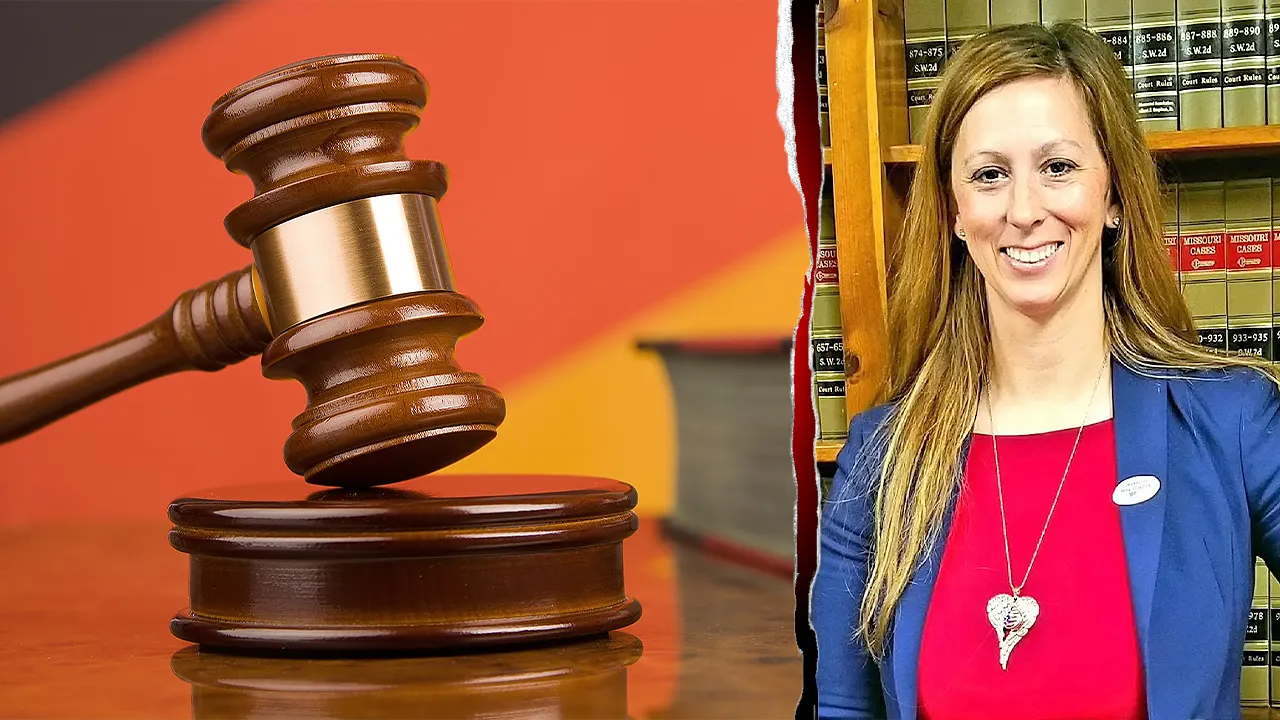
When the residents of Ray County, Missouri, cast their ballots to elect Camille Johnston as their prosecuting attorney, they did so with the fundamental expectation that she would serve as the guardian of their community’s safety and the arbiter of its laws. However, the trust inherent in that sacred democratic transaction has been utterly shattered. In a dramatic fall from grace that has sent shockwaves through the state’s legal community, Johnston has been stripped of her prosecutorial authority following a devastating petition for quo warranto filed by the Missouri Attorney General’s office. This ancient and rarely invoked legal mechanism—which literally demands an official to prove “by what authority” they hold office—was deployed after a pattern of alleged misconduct came to light, painting a troubling picture of an elected official who treated her position not as a public trust, but as a personal shield. The preliminary order issued by a judge effectively silences Johnston’s voice in the courtroom, barring her from taking any official actions while the state seeks her permanent removal. For the citizens of Ray County, this is not merely a political scandal; it is a profound failure of the local justice system, exposing how easily the machinery of state power can be bent to serve the personal whims of the person sworn to uphold it.
At the dark heart of these allegations is Johnston’s intimate relationship with Juan David Gutierrez, a Mexican national residing illegally in the United States, who faces serious charges of felony sexual assault. The timeline of their connection is deeply troubling: the two had allegedly been involved in a romantic and intimate relationship, even living together, prior to Johnston taking office on January 1, 2023. Despite being formally notified as early as September 2020 that Gutierrez was the primary suspect in a devastating local sexual assault case, Johnston did not distance herself from him or step aside when she assumed control of the prosecutor’s office. Instead, the petition alleges a breathtaking betrayal of her duties. Not only did she fail to recuse herself from the ongoing investigation into the man sharing her bed, but she actively worked to shield him from the reach of the law. The state accuses Johnston of hiding Gutierrez’s whereabouts from investigators, traveling to visit him in Mississippi, vacationing with him in Florida, and even signing over the title of her personal vehicle to him to facilitate his escape from justice. This was not a passive conflict of interest; it was an active, deliberate campaign to harbor a fugitive accused of sexual violence, leaving the victim of that assault to watch in horror as the county’s chief law enforcement officer aligned herself with the accused.
The rot, however, did not stop with Gutierrez, as the petition outlines a sprawling web of conflicts that turned the Ray County Prosecutor’s Office into a playground of ethical compromises. Johnston is also accused of maintaining a secret romantic relationship with a prominent local defense attorney who regularly appeared before her office to represent clients accused of crimes. In any legitimate legal system, such a relationship must be immediately disclosed, and a special prosecutor must be appointed to ensure that cases are negotiated on their merits rather than pillow talk; yet Johnston allegedly kept the affair hidden, prosecuting cases against her romantic partner under a veil of normalcy. Even more egregious is the allegation that she engaged in a romantic relationship with a man actively charged with domestic violence within Ray County. It was only after local police officers discovered the relationship and demanded a special prosecutor that Johnston was finally disqualified from the case. For victims of domestic violence in the community, this revelation is a terrifying reminder of how vulnerable they are when the legal system is compromised from within. When a prosecutor sleeps with the abuser, the very concept of state protection becomes a cruel illusion, leaving victims isolated and defenseless against those who harmed them.
Within the walls of the prosecutor’s office, Johnston’s alleged misconduct created a hostile, toxic environment designed to protect her secrets at any cost. Those who entered public service to help their community found themselves trapped in a workplace defined by verbal abuse, intimidation, and an overarching culture of fear. When a manager or elected leader operates with a guilty conscience, transparency becomes the enemy, and Johnston allegedly ruled her office with an iron fist to keep her staff silent. This toxic dynamic culminated in a ruthless act of retaliation when a dedicated employee discovered one of Johnston’s compromising relationships. Rather than addressing the ethical violation, Johnston reportedly fired the whistleblower in an attempt to bury the truth and intimidate the remaining staff into submission. This retaliation highlights the human cost paid by ordinary civil servants who simply tried to do their jobs with integrity, only to have their careers derailed by an employer who valued her personal illicit affairs over the professional standards of her office.
The intervention of the Missouri Attorney General’s office, under the leadership of Catherine Hanaway, represents a vital, albeit painful, step toward restoring the rule of law in Ray County. Hanaway’s public statements reflect a deep gravity, reminding the public that when an elected official treats their office as a personal playground, their removal is not a matter of political debate, but of public safety. The revival of the cold case against Gutierrez is a testament to the resilience of those who refused to let the truth be buried. It was the relentless dedication of a private investigator doing volunteer work, coupled with the commitment of Ray County Sheriff Scott Childers—who emailed the Attorney General’s office with crucial locating information in 2023—that finally broke the seal of silence Johnston had attempted to maintain. Although the Attorney General’s office had previously closed the case in 2022 due to a lack of leads, the dogged determination of local law enforcement and independent advocates ensured that a suspect in a heinous sexual assault would not evade justice simply because he had a friend in the prosecutor’s chair.
As Ray County takes its first tentative steps toward healing, the community faces the arduous task of rebuilding its shattered trust in the legal system. Johnston’s defense attorney, Chad Gardner, faces the steep challenge of mounting a defense against a mountain of evidence detailing repeated, systemic ethical breaches. In the meantime, the Attorney General’s office has taken full control of the prosecution of Juan David Gutierrez, ensuring that his victim will finally have their day in court without the corrupting influence of a compromised local prosecutor. This unsettling chapter in Missouri’s history serves as an urgent reminder of the fragility of our public institutions and the absolute necessity of rigorous oversight. True justice is blind, and it must never be allowed to look away to accommodate the personal desires of those who hold the keys to the courthouse. Only through relentless accountability, absolute transparency, and a commitment to protecting the vulnerable can Ray County restore the integrity of its prosecutor’s office and prove that no official, regardless of their title, is above the law.