





Paragraph 1: The Fragile Judicial Lifeline and the Ticking Clock
The atmosphere in state capitols across the nation shifted from a sense of grim, quiet dread to palpable relief on Thursday, as a federal judge issued a last-minute judicial lifeline against the Trump administration’s aggressive overhaul of the nation’s mail-in voting system. U.S. District Court Judge Indira Talwani, presiding in Massachusetts, granted a fourteen-day temporary restraining order that effectively halts a newly published United States Postal Service rule—a rule that threatened to upend the administrative mechanics of the upcoming midterm elections. The timing of this ruling is nothing short of apocalyptic for election officials, who are merely days away from the first scheduled mailing of absentee and mail-in ballots across several states. This legal victory, however fragile and contingent, gives state administrations a brief window to breathe, even as the specter of an immediate appeal to the Supreme Court looms large and ominous over the proceedings. The ruling symbolizes a moment of intense friction between the executive branch’s desire to enforce what it perceives as necessary election integrity measures and the constitutional authority traditionally reserved for individual states to manage their own elections. For millions of Americans who prefer to vote by mail for reasons of convenience, physical disability, military service abroad, or simply a preference to avoid crowded polling places, this judicial intervention represents a shield against a sudden, rushed, and logistical alteration of the electoral landscape. However, Judge Talwani’s decision was not a definitive verdict on the legality of the underlying rule; rather, it was a stark acknowledgment that the plaintiffs have raised serious, plausible constitutional questions that warrant immediate and thorough judicial review. She explicitly cited the impossible and crushing burden placed on states that lack the time and financial resources to redesign ballots from scratch, overhaul their entire election management databases, and train thousands of county clerks and local officials to use a new federal portal within a span of mere weeks. It is a chaotic and unsettling prelude to an election cycle, placing the integrity and smooth operation of the voting process under a microscope of legal scrutiny unlike anything seen in recent memory.
Paragraph 2: Navigational Whiplash Through the Courts
This Thursday’s order represents the latest chapter in a bewildering legal saga that has left election administrators across the country in a state of constant whiplash. The saga began in March when President Donald Trump signed an executive order targeting mail-in voting, a move that Democrats and voting rights organizations immediately decried as an unconstitutional attempt to restrict voter access. Following this order, the Postal Service unveiled a proposed rule demanding that states submit their mail ballot recipient information through a specific federal portal, and that all ballot envelopes meet stringent new barcode and processing requirements—rules that would effectively render state-designed mail-in ballots unsendable if they failed to comply. Initially, Judge Talwani had blocked the executive order in its entirety, offering a comprehensive injunction. However, the Trump administration successfully petitioned the Supreme Court, which just days ago handed down a procedural decision that allowed the administration to move forward. Crucially, the Supreme Court did not address the substantive legality of the executive order or the subsequent rule; instead, the high court ruled that Judge Talwani had acted too soon, technically speaking, because the administration had not yet formally codified the final rule at the time of her initial block. Seizing upon this narrow technicality, the administration swiftly published the formal rule, effectively forcing the legal fight back to square one. In response, the plaintiffs—a coalition of two dozen Democrat attorneys general led by New York’s Letitia James, alongside voting rights groups—refiled their lawsuits with a fresh arsenal of arguments, now pointing directly to the newly published Postal Service rule as a concrete, actionable harm. This procedural ping-pong match has created a chaotic environment where states are simultaneously preparing to implement the new federal requirements while also preparing for the possibility that they will be rendered void. The constant reversals and legal pivots mean that county election directors are essentially designing contingency plans for two different realities, stretching their personnel and budgets to the absolute breaking point.
Paragraph 3: The Nightmare of Bureaucratic Compliance
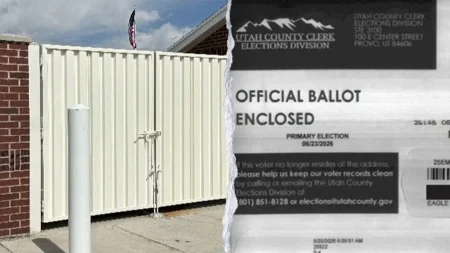
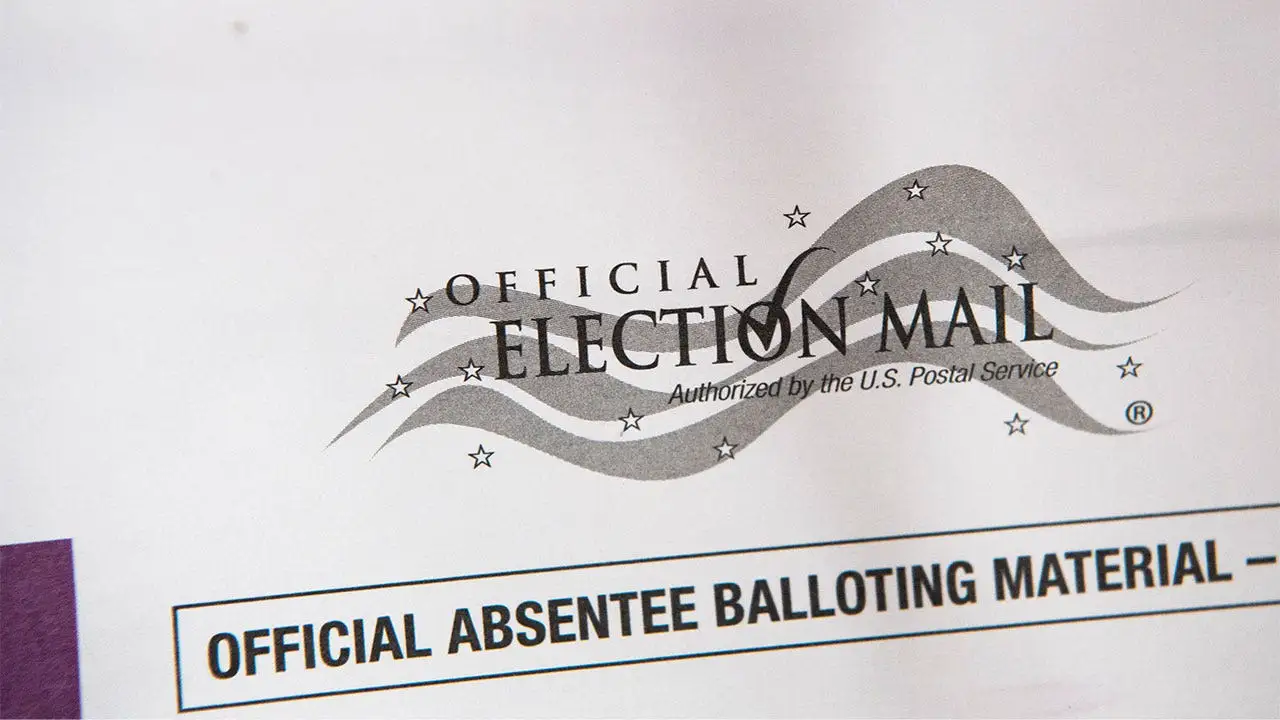
The core of the current dispute lies not just in the philosophical question of who governs elections, but in the brutal, practical logistics of state administration. Judge Talwani’s order specifically highlighted the tangible impossibility of compliance, writing that the plaintiff states “have neither time nor funds to design new mail ballots, seek approval of the new designs, order production of mail ballots, update their own election management systems, train election officials to use the USPS portal and upload citizen data to the portal, all before the midterms.” These are not abstract concerns. Changing a single election document—even just the envelope—involves a chain of bureaucratic steps that typically takes months. State legislatures must approve design changes, which requires drafting and passing new laws or regulations. Once approved, the design goes to state printing contracts, where a domestic printer must retool machinery to produce new envelopes with unique barcodes. Simultaneously, state IT departments must integrate their voter registration databases with the new USPS portal, creating a pipeline where millions of personal data points can be securely transmitted. This process is routinely cited by election officials as requiring at least half a year to complete under normal circumstances. The USPS has stated that it will not accept outbound mail ballots if states do not submit the required recipient information through its portal and meet the envelope and barcode requirements. To comply with this rule, states would have to essentially dismantle their existing election infrastructure overnight. The rule represents a staggering divergence from the historical norm, where the USPS acted as a neutral, passive carrier of mail, simply sorting and delivering envelopes regardless of their technical specifications. The administration argues that this rule is purely administrative—a way to streamline the transit of ballots and ensure traceability. However, the practical effect, as the judge noted, is a de facto mandate for states to completely overhaul their systems in a matter of days, which is functionally impossible without massive disenfranchisement.
Paragraph 4: The Constitutional Battle and the Fight for Authority
Beneath the surface of envelopes and barcodes lies a profound constitutional battle over the very architecture of American democracy. The plaintiffs’ argument is deeply rooted in the Constitution’s design, which they contend grants the power to determine the “Times, Places and Manner” of elections to state legislatures, with Congress holding a secondary oversight role. Nowhere, they argue, is the President or the Postal Service granted the authority to alter state election procedures. This legal doctrine, known as the Elections Clause, was designed by the Founders to ensure that federal authority could not easily override state-level choices regarding how citizens cast their ballots. The Trump administration, for its part, insists that the rule does not determine voter eligibility or compare submissions with state voter rolls, and that states retain ultimate control over who may vote by mail. They argue that the rule merely dictates the mechanics of mail delivery—a federal responsibility—and that states have a choice to either comply with the shipping requirements or find another way to get ballots to voters. However, the practical coercion embedded in this argument is clear: if the USPS refuses to carry ballots, the only alternative for states is to deliver them through private carriers or in person, both of which are expensive, logistically complex, and often legally prohibited for general voting purposes. The Supreme Court’s upcoming involvement is virtually certain, given the expedited nature of election-related litigation. However, the high court’s prior procedural decision signals a potential split among the justices, as evidenced by Justice Ketanji Brown Jackson’s sharp criticism of her colleagues for committing what she called a “serious legal error” in their earlier handling of the case. The match is therefore poised to be decided on a razor-thin margin, with the outcome swinging heavily on how the Court weighs the practical urgency of the midterms against the abstract principles of federalism and executive power.
Paragraph 5: The Human Cost of Election Fraud Claims
Beyond the legal jargon and constitutional debates, this fight has a deeply human dimension that is often lost in the headlines. The justification for these restrictive rules stems from President Trump’s long-standing, and repeatedly debunked, criticisms of mail-in voting, which he has falsely attributed to his 2020 election loss to former President Joe Biden. However, a comprehensive 2025 report by the Brookings Institution studied mail-in voting fraud in general elections from 2016 through 2022 and found that fraud occurred in approximately only four cases out of every 10 million mail ballots cast. This statistic utterly contradicts the narrative that mail-in voting is rife with widespread corruption, laying the groundwork for these sweeping restrictions on shaky empirical ground. The irony of the situation is palpable, as President Trump himself regularly uses mail-in voting to cast his ballot as a registered voter in Florida, taking full advantage of the system he seeks to restrict for others. The human impact is immense. For overseas military personnel, a civilian postal worker stationed abroad, or a disabled senior citizen in a rural county, mail-in voting is not a convenience—it is often their sole accessible pathway to exercising their fundamental right to vote. The uncertainty created by this legal wrangling instills fear in these communities. They are left wondering if their ballots will arrive in time, if the envelopes will be rejected, or if their state’s refusal to comply with a federal portal will result in their votes simply being refused and returned to sender. The psychological impact of telling a citizen that their vote might not count due to a bureaucratic dispute between Washington and their state capitol is corrosive to civic trust. The resounding message from election officials, who are the human beings on the front lines of this fight, is that the system works, absentee fraud is virtually non-existent, and these administrative hurdles are solving a problem that does not exist while creating real problems for real people.
Paragraph 6: The Uncertain Future and Precedent for Coming Elections
Looking forward, the immediate future of this case is a frantic scramble through the judicial system. The administration is expected to swiftly file an emergency appeal to the First Circuit Court of Appeals, and potentially back to the Supreme Court, in a desperate bid to overturn Judge Talwani’s temporary restraining order. The hearing on the merits of the case is scheduled for September 3rd, providing a narrow window for the lower court to issue a more comprehensive ruling on the legality of the rule. If the Supreme Court decides to intervene yet again, they will be forced to make a rapid, substantive decision on the constitutionality of the President’s invasion of state election authority—a decision they notably avoided last week. Regardless of the final legal outcome, this episode has already inflicted severe damage on the perception of election integrity. The constant state of flux forces states to burn through precious overtime budgets, hire crisis communication teams to calm anxious voters, and prepare for potential legal injunctions that could arrive mere hours before ballots are scheduled to be printed. This is a logistical nightmare that does not end with a single court victory. If the TRO expires and the rule is allowed to take effect without a full injunction, states will be left with no choice but to scramble to offer emergency curbside voting or hope their local carriers ignore the new mandates. This legal battle represents a profound test of the nation’s democratic resilience, pitting the executive branch’s aggressive expansion of power against the foundational principle of decentralization in election administration. Ultimately, the coming weeks will not just determine how the midterm ballots are delivered; they will set a crucial precedent for the next four years. Whether this is viewed as an overreach by a frustrated executive or a necessary shield against election fraud, the resolution of this case will dictate whether the power to regulate democracy rests in the hands of local clerks and state legislatures, or in the centralized control of the federal bureaucracy. The judge’s temporary block offers only a breath of reprieve, and the eyes of the nation remain fixed on the courtroom as the clock ticks down to Election Day.