





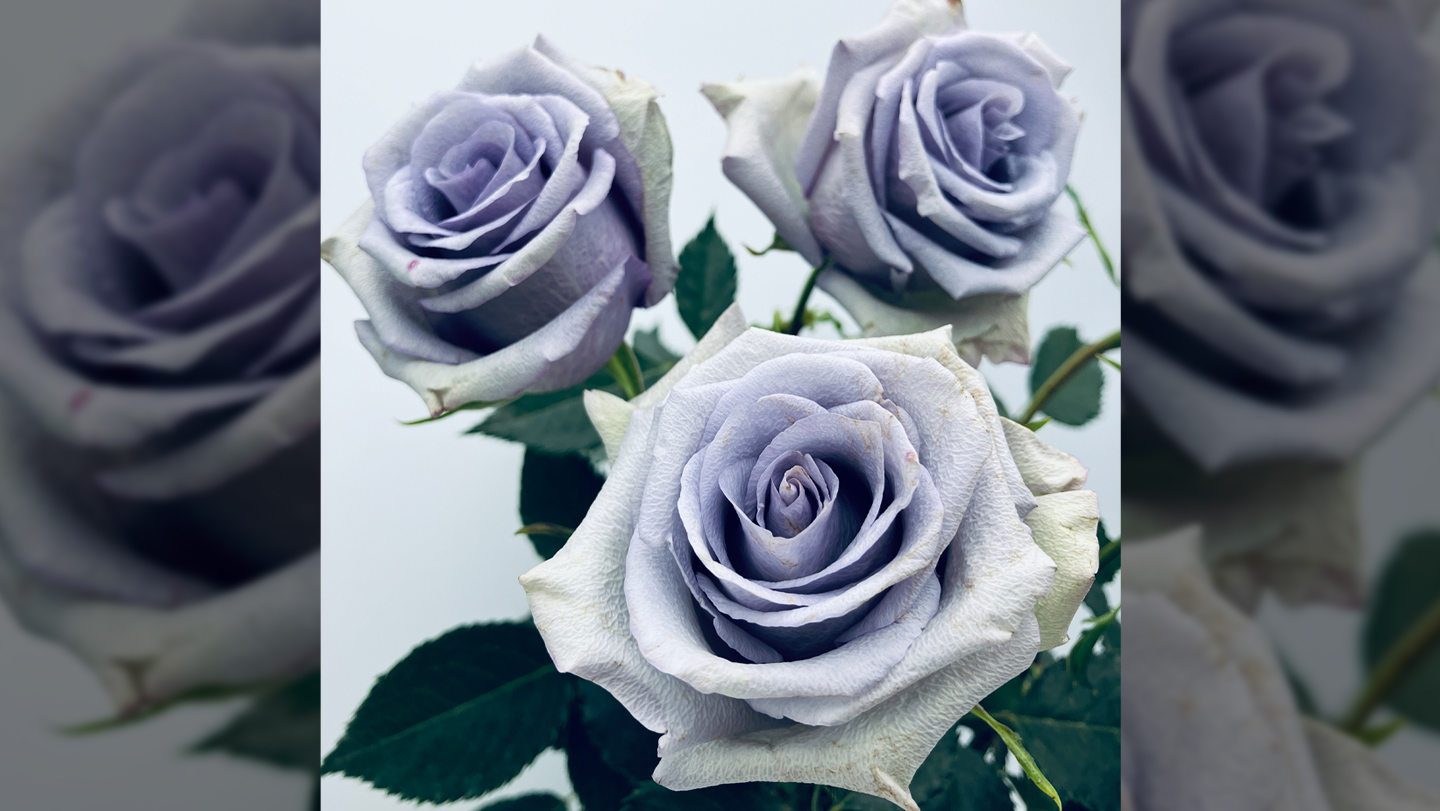
Poets have long told us that roses are red, but the human imagination has always yearned for something more. The blue rose has been a symbol of the impossible, appearing in legends, fairy tales, and love songs while stubbornly refusing to appear in gardens. For centuries, breeders crossed, hybridized, and coaxed roses in search of true blue petals, only to watch their efforts fade into lavender, mauve, or grayish purple. The rose, it seemed, had made up its mind. Now researchers in Japan have brought that dream closer to reality. Scientists at the Suntory Global Innovation Center in Kyoto have engineered roses that bloom with unmistakable blue tones, not just a faint echo of violet, by giving the flowers genes borrowed from other blue-flowered species. The work, presented August 25 at the 32nd International Horticultural Congress in Kyoto, marks a major leap beyond earlier attempts and suggests the old nursery rhyme may need updating: roses are red, and now they can also be blue. But the path to this breakthrough was never simple, and it reveals how complicated color can be in the natural world. A flower’s hue is not a single stroke of paint but a chemical conversation between pigments, helper molecules, and the environment inside the petal. Blue is among the most difficult colors for plants to make, which is why blue roses were long considered the holy grail of horticulture. Nature offers plenty of blue flowers—irises, delphiniums, morning glories—but roses are conspicuously absent from that list. Their genetic toolbox simply lacks the necessary equipment. The new work does not merely insert one missing piece; it installs an entire collaborative system, allowing the rose to manufacture both blue pigment and the colorless helpers needed to make that pigment appear truly blue. The result is a flower that would have seemed magical to earlier generations and is still astonishing to scientists. It is also a reminder that even the most familiar things can be transformed when we understand the hidden grammar of life.
To understand why blue roses were once considered impossible, it helps to look at the chemistry inside a petal. Roses are perfectly capable of producing red and yellow pigments, but they cannot make blue pigments on their own. Blue in flowers usually comes from a class of pigments known as anthocyanins, and one important blue pigment is called delphinidin. To manufacture delphinidin, a plant needs a specific enzyme, and roses simply do not have the gene for it. Without that enzyme, the biochemical pathway stops short, and the rose is left with no way to paint its petals blue. For years, scientists thought the solution might be straightforward: give the rose the missing gene. In 2004, researchers at the Suntory center did exactly that, inserting a gene for an enzyme capable of producing delphinidin into a rose. The experiment was a turning point, but the flowers that grew were not blue. They were purplish. The result was beautiful in its own way, but it was a disappointment to anyone expecting a true blue bloom. The experience taught the researchers an important lesson: making blue pigment is not enough. A flower needs more than the raw pigment to appear blue; it needs the right supporting cast to stabilize that pigment and shift its color. In other words, blue is not simply a matter of having the right paint. It is a matter of how the paint is held, diluted, and framed within the living tissue of the petal. Pigment molecules can interact with other molecules, with acids, and with light in ways that change the final color. Without those interactions, delphinidin may look dull, grayish, or purple. The 2004 roses were proof that the first step—building the pigment—was achievable. But the researchers had to go deeper, into the subtle molecular scaffolding that allows blue to emerge. They had to learn how flowers that are naturally blue achieve their color, and then teach a rose to do the same.
Nature’s naturally blue flowers offered the next clue. Irises, for example, produce delphinidin, but they also produce almost colorless helper molecules known as flavone C-glycosides. These co-pigments do not add color of their own. Instead, they stabilize the blue pigment molecules and encourage them to behave in ways that make the color appear deeper and truer. Without these humble assistants, the blue pigment might remain unstable, fade quickly, or appear washed out and muddy. Roses, as it turned out, lack the genes to make these co-pigments too. That meant solving the blue rose puzzle would require not just one missing gene but a coordinated introduction of several genes from other species. The Suntory team decided to combine the two strategies: equip roses with the ability to make multiple blue pigments, and give them the molecular helpers needed to bring out the blue. For the new attempt, the researchers inserted four genes, each borrowed from a different blue-flowered plant, into a light pink rose. One gene came from Canterbury bells, a cottage-garden plant known botanically as Campanula medium. That gene allowed the engineered roses to produce several different blue pigments, not just delphinidin. Two additional genes came from wishbone flowers, or Torenia x hybrida, and a fourth came from clustered gentian, or Gentiana triflora. The three genes from wishbone flowers and gentian encoded enzymes that build the colorless helper molecules. In a sense, the researchers were not just adding a single paint color to the rose’s palette. They were rewriting the recipe for the entire painting, giving the plant the instructions to mix its own pigments and then add the chemical varnish that makes those pigments glow. It was a painstaking act of biological architecture, and it worked.
The combination produced something striking. The key turned out to be the partnership between a blue pigment called malvidin and a particular helper molecule called isoorientin. Roses that produced malvidin and isoorientin together were significantly bluer than roses that only produced delphinidin. The reason, the researchers believe, is that the helper molecules stabilize the pigments and create the right conditions for the blue color to emerge vividly. The more co-pigments the petals contained, the bluer the flowers became. This direct relationship between helper levels and color intensity gave the team a clear path forward: boost the production of co-pigments, and the blue deepens. Using standard flower color charts, the researchers rated the new roses as violet blue, a shade that sits far closer to true blue than any previous engineered rose. It is not quite the saturated blue of a summer sky or a gentian blossom, but it is a genuine blue, recognizable to the eye and a long way from the purplish disappointments of earlier efforts. The achievement was announced to scientists at the International Horticultural Congress in Kyoto, where the response reflected both the technical difficulty and the romantic appeal of the work. For a plant that seemed biologically barred from this color, the new roses are a declaration that genetic engineering can expand the boundaries of nature. Yet the team is not finished. The researchers hope to continue refining the color, pushing the flowers even closer to an ideal blue. The fact that they can now speak about enhancing the hue rather than simply creating a blue rose is itself a measure of how far the project has come.
Perhaps the most surprising part of the new work is not the color itself but the durability of the trait. Blue roses are often dismissed as laboratory novelties, fragile creations that cannot survive outside carefully controlled conditions. The Suntory team’s results suggest otherwise. In greenhouse tests in Japan, the engineered rose bushes continued to produce blue flowers for seven years, year after year, through multiple growing seasons. In field trials in Colombia, where conditions are different—warmer, sunnier, and less predictable than a greenhouse—the bushes kept blooming blue for three years. That kind of stability matters because it shows the genetic changes are not a fleeting accident or a temporary trick of the lab. The inserted genes are integrated into the plant’s biology in a way that allows the color to persist across time and environments. It also matters for the future of the project. If the blue rose is ever to move from research greenhouses into commercial gardens, florist shops, and wedding bouquets, it must be robust enough to thrive in the real world. The Colombia trials are particularly promising because they demonstrate that the roses can withstand outdoor conditions, not just climate-controlled glasshouses. The researchers described the achievement as sweet, a word that carries both delight and the quiet satisfaction of a long pursuit finally bearing fruit. There is also an aptness to the word given that the company behind the work, Suntory, is known worldwide for beverages. But the sweetness here is more than commercial. It is the pleasure of solving a puzzle that had seemed unsolvable, of coaxing a familiar flower into an entirely new expression. It is the joy of seeing something impossible become ordinary enough to grow, bloom, and endure.
Human beings have never stopped trying to color the world with meaning, and flowers have always been one of our favorite canvases. A blue rose is not merely a biological curiosity; it is a cultural event. It belongs to the same category as a white peacock or a black tulip, things that seem to belong to myth until someone finds a way to make them real. The new blue roses are not the first flowers to be genetically modified, and they will not be the last, but they carry a special emotional weight because of the place roses hold in our poetry, our gardens, and our relationships. Rose petals have long been messengers of things we cannot easily say: love, remembrance, apology, celebration. To change the color of a rose is to update the vocabulary of human feeling. The Suntory researchers have not produced a magic flower or a fairy-tale artifact. They have used science to do what breeders once dreamed of, and they have done it by listening to the language of genes. In doing so, they have also changed the way we think about impossibility. A blue rose was once a poetic shorthand for something that could never exist. Now it exists, even if it is still violet blue and still waiting for that final perfect hue. The researchers hope to make it bluer, deeper, more brilliant, and there is no reason to think they will fail. Eventually, the old rhyme may need to be revised again. But for now, it is enough to know that imagination and biology have finally found each other in a Kyoto greenhouse, and that the world is a little more colorful because of it. Roses are red, and now they are blue too—and the impossible, as it turns out, was only waiting for the right genes.