




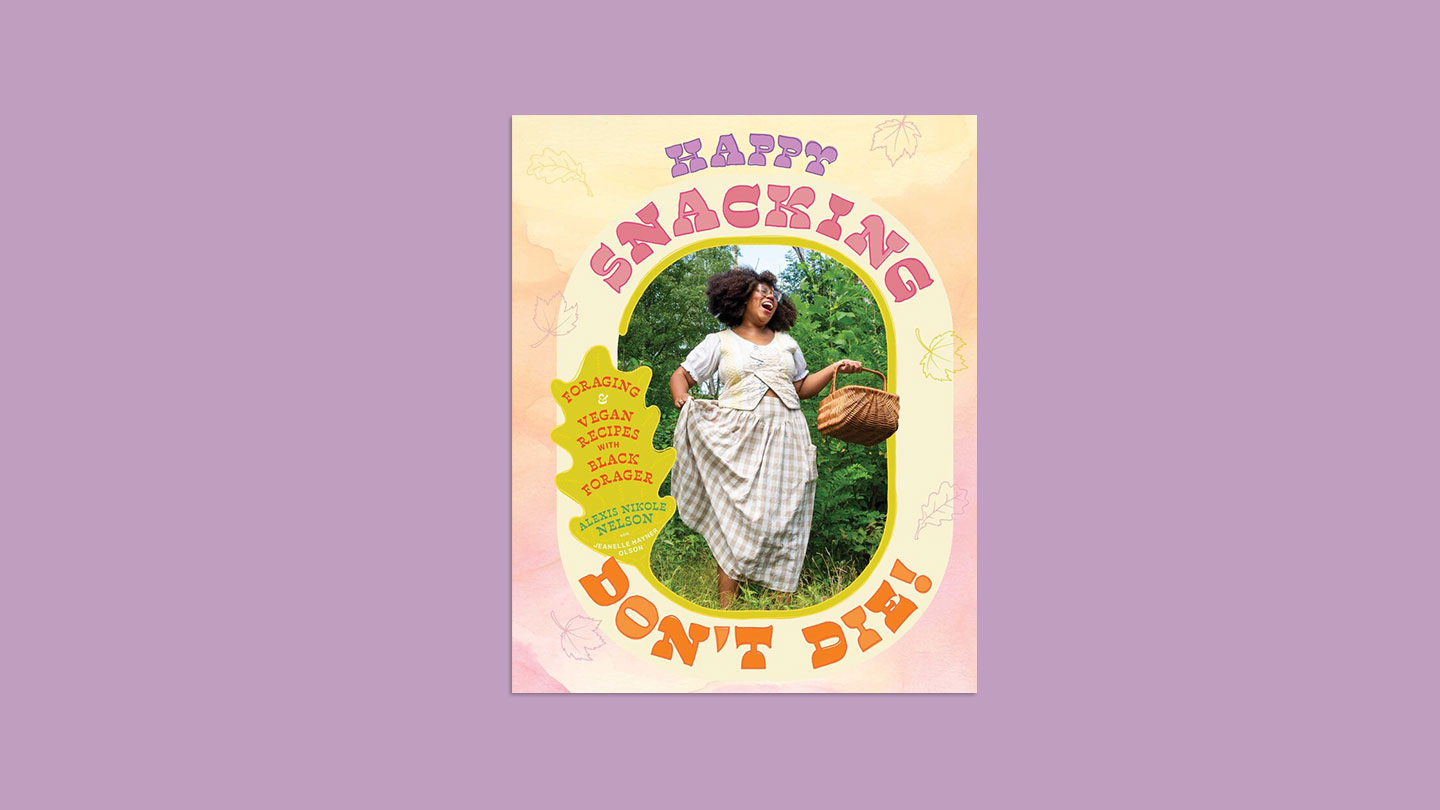
Some cookbooks ask for your attention; this one asks for your other pair of shoes. Alexis Nikole Nelson’s Forage & Feast is the kind of cookbook that makes you want to walk outside with a reusable bag, a pair of scissors, and a sudden, almost childlike curiosity. The most repeated compliment among readers is that the joy Nelson injects into her pages makes foraging approachable, and that is no small thing. Foraging, after all, carries baggage. It sounds like something that should be left to people with botanical credentials, rare field guides, or a wilderness survival instinct. It feels intimidating, a little dirty, and somehow exclusive. Nelson, known to millions as the Black Forager, tears up that stereotype with a grin and a shrug. She does not present herself as a gatekeeper of secret knowledge. She shows up as the friend who crouches on a city sidewalk, points at a crack in the concrete, and says with genuine excitement, “You can eat that.” Her joy is contagious, but it is also a deliberate teaching tool. She knows, intuitively and perhaps from experience, that people learn best when they are not afraid. Fear closes the eyes and hardens the hands. Joy opens them. By the time you finish the introduction, the biggest obstacle—the quiet feeling that this is not for someone like you—has already melted away. That is the real magic of her approach. She does not dumb down foraging. She opens the door and makes room for you. She treats readers as smart, capable people who deserve to know how to feed themselves from the landscape around them. The joy she injects is not a garnish or a marketing trick. It is warmth, and warmth is often the missing ingredient in outdoor education. In a world full of strict warnings and scratchy diagrams, her delight feels like a rebellion. It says: come outside, look closely, and enjoy the dirt.
Nelson’s path to this book began long before her phone. She grew up in the Midwest, learning at the elbows of family members who understood that a full refrigerator was not the only kind of abundance. Her people cooked, canned, pickled, and preserved, and they had a habit of never walking past a wild berry bush without stopping to see what was ripe. She carried those lessons into adulthood, lost them for a while, and then found them again with a wild and public passion. On Instagram and TikTok, she became known for songs, jokes, and the radical idea that you do not need to call yourself a forager to forage. You just need to look. Her videos are not polished. They are lively, a little weird, and full of personality. She will hold up a dandelion and announce that it is not a problem in the yard but a free salad. She will make a pun so bad it makes you smile. None of this is accidental. Her handle, blackforager, is a reclamation. She centers Black and Indigenous traditions of food knowledge that have been erased, ignored, or mocked by mainstream outdoor culture. Foraging is not, to her, a hobby for people with cabins in Vermont. It is an ancestral skill, a survival technology, and a love language. That history does not make the book heavy. It gives the joy a deeper root. Nelson has been called strange, been asked why she eats “starving people food,” and been mocked for picking weeds out of the ground. Instead of shrinking, she turned the joke around. The real joke, the book seems to say, is that you are paying six dollars for spinach in a plastic bag while the sidewalk is serving dinner. Her confidence never feels like ego. It feels like care. Every page whispers: I did the looking for you, but the seeing has to be yours.
The structure of Forage & Feast is built for a beginner and respectful enough for a curious veteran. It opens with the foundation: how to identify a plant with certainty, how to ask permission from both landowners and ecosystems, and how to harvest in a way that leaves the community healthy for the next person. There is no annoying lecture, but there are rules, and Nelson delivers them with the warmth of someone showing you how to drive by pointing out the scenic roads. She suggests starting with one common plant, perhaps dandelion or purslane, and making it your first green friend. Then the book unfolds into landscapes—lawns, parks, woodland edges, riverbanks—and the treasures that grow there. The photographs are bright and close, reassuring rather than clinical. There are side-by-side comparisons of edible plants and their dangerous lookalikes, but the tone remains approachable. She gives little memory tricks and silly names to help the knowledge stick. She also understands that many readers are new to cooking, not just new to foraging. You will not find a dehydrator, a sous-vide wand, or a pH meter on your list of required tools. A sturdy pot, a sharp knife, some clean jars, a little oil, salt, and curiosity are enough. She tells you which equipment can wait, which is worth buying, and what to do when a recipe fails. In her world, a failed jar of pickles is still a lesson, a story, and eventually, good compost. That gentle flexibility is exactly what makes the book rare. It is not a survival manual for an emergency. It is a celebration for a Sunday afternoon. Recipes are not prisons; they are starting points. If you do not have the exact wild green, use another one. If the berries are not ripe this week, check again next week. That permission to adapt is one of the most humanizing gifts a cookbook can give.
And then there are the recipes, where the joy becomes physical. Imagine turning wild garlic mustard into a pesto so bright it makes your basil version feel like a polite handshake. Imagine violet syrup coloring a jar of lemonade a soft shade of evening sky. Imagine acorn flour pancakes that connect you to a way of cooking older than agriculture itself. Nelson includes recipes for snacks, salads, soups, preserves, main dishes, and desserts, and her voice stays as playful in the instructions as it is in the stories. She writes the way she talks: with enthusiasm, sudden astonishment, and the occasional aside about rinsing off a slug or sharing a berry with a bird. A blackberry creeping over a fence is not an invasion; it is a gift wrapping itself in a bramble. A patch of stinging nettle is not a hazard; it is a pot of tea waiting to happen. This attitude reframes the whole experience of cooking. You are not performing a chore. You are having an adventure that ends at the dinner table. Nelson also shares memories that give each plant a face: a sun-warmed blackberry eaten beside a grandmother, a neighbor who taught her how to cook an unfamiliar leaf, a holiday meal where a wild dish disappeared before the turkey was carved. These stories are not decoration. They are the point. When you make a dish from plants you picked yourself, you are not just feeding people calories. You are feeding them a story, a place, and a moment. That is a deeply human act. It is why food brings families together, why we pass down recipes, and why a jar of jam made from curbside fruit tastes richer than anything from the store. Nelson knows this in her bones, and she writes as though she cannot wait for you to taste it.
Of course, the greatest barrier to foraging is fear. It is also the place where a lesser writer might use fear to create distance. Nelson refuses. She handles plant safety with a sharp eye and a bright voice, but she never belittles. There are sections on toxic plants, doppelgängers, contaminated soil, and the hard truth that some plants are fine for birds and not for people. Her golden rule is repeated with love: “If you don’t know, don’t eat it.” But she always adds: “If you don’t know, take a photo, go home, and find out.” That small addition changes everything. She is not telling you to avoid the world. She is telling you to learn it, one plant at a time. She distinguishes between plants that are toxic and plants that are merely bitter or unpleasant, and she explains that many wild foods are edible but require preparation. Acorns are a perfect example. You cannot eat them raw; you must leach out the tannins. That process is time-consuming but simple, and Nelson walks you through it with patience and good humor. She also addresses the unglamorous realities of urban foraging: sidewalks sprayed with chemicals, runoff from parking lots, and places where dogs often visit. She is honest about these hazards, which is exactly why you trust her when she says a certain city park is a treasure house. Because she does not pretend every patch of weeds is pristine, you believe her when she tells you which patches are safe. The result is the opposite of a risky wilderness challenge. It is a practice of attention and care. In an age of over-filtered food media and delicate cooking videos, her directness feels like fresh air. She gives you simple starting points, a clear path, and a voice that treats safety as a form of self-respect, not paranoia. This balance makes foraging approachable not because the information is shallow, but because the voice is kind.
In the end, Forage & Feast is more than a cookbook. It is a relationship. Reading it feels like walking outside with someone who cannot stop pointing at edible things, and slowly, you begin to see the world the way she does. You notice that the weeds in the crack of the sidewalk have names. You notice the berry bushes behind the parking lot. You notice that dinner is not only at the grocery store; it is also under the oak tree and along the fence line. Nelson’s joy is not a stylistic choice. It is the engine of the entire project. When joy is present, the mind softens, the eyes open, and the hands learn. That is why “the joy she injects makes foraging approachable” is not a throwaway compliment. It is the book’s thesis. She has managed to write a manual that teaches real skills while making you feel you are reading a love letter to the planet and to every person who has ever fed another person. The book gives you agency. In a world where food systems feel confusing and expensive, foraging offers a small but real return to something fundamental. You do not need to survive in the wilderness. You just need to know enough to make a salad from a parkway strip. That possibility is thrilling. It transforms scarcity into abundance and strangers into ancestors. After closing this book, the advice is not to go buy a machete. It is to go for a walk. Stop where the dandelions grow. Touch a leaf. Smell it, maybe taste it. Smile at the neighbor who asks what you are doing, and tell them it is dinner. If you are lucky, you will laugh. That laugh is the spirit Alexis Nikole Nelson has hidden in every page. It is why her message has spread, why people who never thought of themselves as outdoorsy are now making wild berry jam, and why foraging no longer feels like a lost and dangerous mystery. It feels, instead, like a joyful return to something human, something old, and something very much alive.