




Four years ago, Taif Sami Mohammed stood at the center of a story that Washington loved to tell. She was the Iraqi official with the steel spine, the woman who had looked into the darkest corners of her country’s money system and refused to blink. Secretary of State Antony Blinken had called her Iraq’s “Iron Woman,” and the State Department had chosen her for one of its highest honors, the International Women of Courage Award. At the March 2022 ceremony, she was celebrated as proof that corruption could be beaten from within, even by an official whose own life was threatened for doing the right thing. The room was filled with applauding dignitaries, the kind of moment that makes a person seem destined for a lifetime of American friendship and respect. Today, that same woman is believed to be outside Iraq, banned from entering the United States, and named to the U.S. terrorist watchlist. This week, according to a State Department official, her visa was revoked. It is a dramatic reversal so complete that it almost defies belief. The same government that once put a medal on her chest now treats her as someone who must be kept out of the country at all costs. The fall from Washington’s favor took more than a year to become public, but it has now landed with unusual force, leaving a former finance minister isolated, distant, and suddenly cast as the kind of threat her old biography once claimed she was fighting.
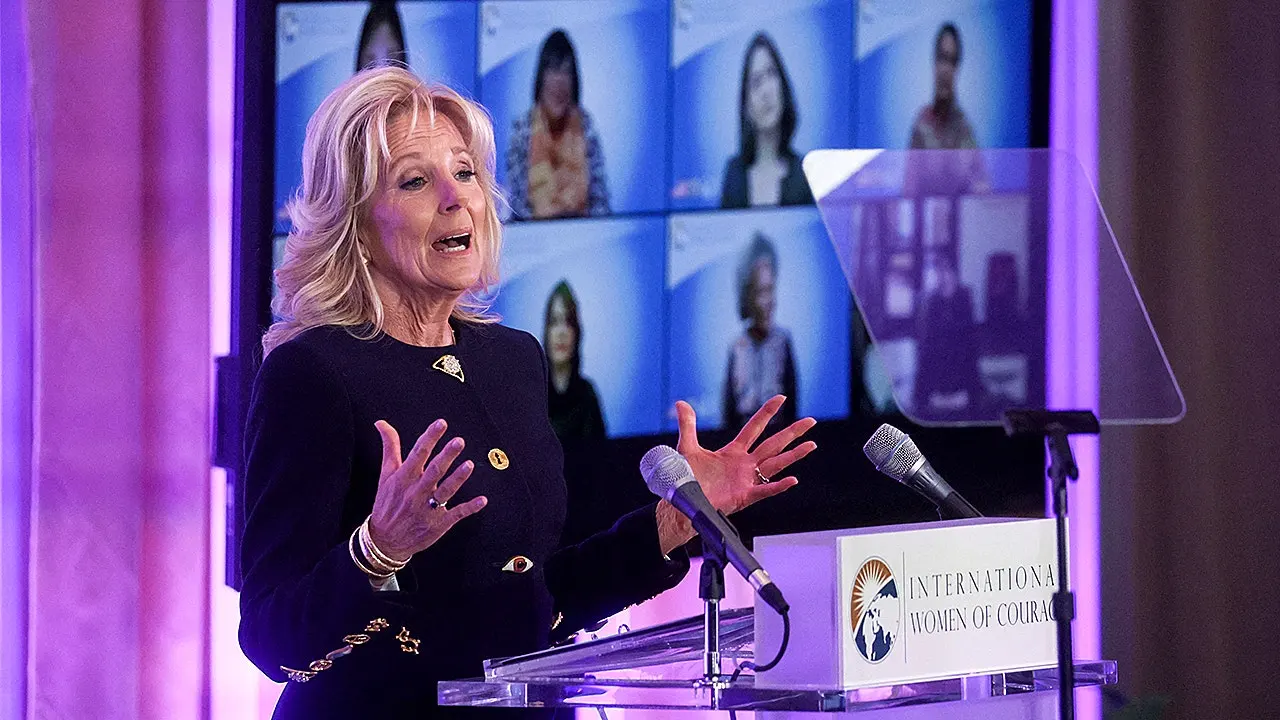
To understand how jarring this reversal is, you have to remember exactly what Mohammed represented to the Biden administration at that moment in 2022. She was not just a bureaucrat attending an awards ceremony. At the time, she was Iraq’s deputy finance minister and director general of its budget department, meaning she sat at the very center of Iraq’s public money. The State Department described her as a “frontline leader against corrupt practices” and said she had been integral to preventing corruption in Iraq’s budget. Blinken went further, crediting her with stopping bribes, uncovering schemes that inflated government payrolls, and exposing efforts by corrupt officials to enrich themselves. He spoke about her with the kind of admiration usually reserved for heroic dissidents or trailblazing activists. The ceremony itself was a powerful political moment, hosted by Blinken and featuring remarks from then-first lady Jill Biden. It honored twelve women from around the world, but Mohammed stood out because she was not a protester or a journalist; she was an insider, a government official who had apparently decided to use her power to clean out the rot around her. That made her story even more compelling. It suggested that even in a country long plagued by graft, one brave person could make a difference. Soon after her award, she rose to become Iraq’s finance minister, overseeing the federal budget, government spending, and the delicate financial relationship between Baghdad and Iraq’s Kurdistan region. She was, by any measure, one of the most important economic officials in the country, and Washington had publicly claimed her as a symbol of what could go right.
But then the story began to shift, slowly at first and then quite suddenly. Republican lawmakers began raising serious allegations against Mohammed, pointing to a very different picture than the one the Biden administration had painted. Reps. Joe Wilson of South Carolina and Greg Steube of Florida accused her of helping facilitate terrorist financing through Iraq’s financial system. They called her a “key enabler of terrorist funding in Iraq” and urged the Trump administration to take action against her, including imposing sanctions. Those words, “key enabler of terrorist funding,” could not be more different from the language Blinken used when he called her the “Iron Woman.” It is hard to imagine the whiplash Mohammed herself must have felt. One day she is being praised by the most powerful country in the world for her courage against corruption. A few years later, she is being branded by members of Congress as someone who used Iraq’s financial system to help sustain America’s enemies. The allegations are still not fully explained in public, and the State Department has not said exactly what intelligence or evidence led to her being placed on the U.S. terrorist watchlist, nor when that placement happened. But the shift in tone was unmistakable. The Biden administration’s celebration of Mohammed came to look, to some critics, like a diplomatic embarrassment. The Trump administration, eager to show a harder line on terrorism and illegal immigration, made her a priority case.
The official explanation for Mohammed’s visa revocation was blunt and politically pointed. Assistant Secretary of State for Global Public Affairs Dylan Johnson did not mince words. He said that while the Biden State Department “shamefully celebrated and awarded foreigners who threaten our nation,” the Trump State Department revokes their visas and ensures those individuals are removed from the country. Johnson added that under President Trump and Secretary of State Marco Rubio, suspected terrorists will never be allowed to remain in the United States. The quote is a stark illustration of how much the politics of this story have changed. The same office that once organized an award ceremony for Mohammed now appears to have overseen her removal from the list of people who may travel freely to America. But what is left unanswered is enormous. The State Department did not say whether Mohammed’s placement on the terrorist watchlist was connected to the congressional allegations about terrorist financing, to the broader corruption investigation unfolding in Iraq, or to separate intelligence gathered by the U.S. government. Without those details, the public is left with a headline that feels both astonishing and incomplete: a woman honored in Washington as a hero is now someone Washington says should be kept out, but the exact reason remains hidden behind national security classifications and diplomatic caution. That kind of silence creates a vacuum, and in that vacuum, both her defenders and her accusers can claim whatever they want.
The legal situation in Iraq makes the story even more complicated. An Iraqi court summoned Mohammed and placed her on a judicial wanted list, according to a report from IraqiNews on August 9, 2025, citing sources familiar with the proceedings. The action came as authorities widened a corruption investigation into former senior government officials. Mohammed is believed to be outside Iraq and has not been detained. The court action is part of an investigation and does not establish that she committed wrongdoing, but it adds another layer of isolation and uncertainty to her situation. The investigation grew out of a broader corruption probe involving government contracts and large sums of public money, and it has reached other former Iraqi officials as well. So Mohammed now faces two parallel storms. On one side, there is the U.S. terrorist watchlist, which suggests that the American government has connected her, at least internally, to something far more serious than financial mismanagement. On the other side, there is the Iraqi judicial system, which is reportedly looking into corruption that may have happened during her time as a senior official. It is possible that the two investigations are related, but it is also possible that one is legitimate and the other is political, or that both have become entangled in the messy, shifting realities of Iraq’s own power struggles. No official source has tied her U.S. watchlist designation to the Iraqi court case, and the State Department has remained silent on whether the congressional terror-financing allegations were a factor.
All of this leaves Taif Sami Mohammed in a strange and lonely place. She is a woman without a country to call upon at the moment, living somewhere outside Iraq, unable to enter the United States, and uncertain of her legal standing at home. She was once presented to the world as an example of courage, and now she is presented, by the same foreign policy establishment, as a suspected terrorist. The truth, as with most human lives, is probably more complicated than either label suggests. She may have done genuinely brave things inside Iraq’s corrupt budget system, even as she also became entangled in the much murkier world of Iraqi finance, where money moves across borders and factions in ways that outsiders cannot always clearly see. She may have been targeted by political enemies in Baghdad who wanted to see her fall, or she may have made choices that she now cannot defend. The story is a reminder of how quickly narratives can change in the world of foreign policy, and how dependent individual reputations are on the political winds in Washington. One administration sees a courageous woman; another sees a suspect. Both descriptions may be true in different contexts, or neither may be. Until the State Department, the Iraqi courts, or Mohammed herself provide a fuller account, her story remains a warning about the fragile nature of public honor. A medal and a standing ovation can vanish into a watchlist and a revoked visa, and the person at the center of it all is left to watch from a distance, her name now burdened by questions she might never have imagined when she stood in that Washington ballroom, being called the Iron Woman of Iraq.