






The sweltering humidity of a late Washington summer always seems to amplify the political tension on Capitol Hill, but this year, the atmosphere inside the Senate is downright explosive. With less than two weeks before lawmakers are scheduled to flee the nation’s capital for their traditional August recess, the legislative calendar is already choked with high-stakes business, ranging from critical judicial confirmations to a complex package of Russian sanctions. Yet, for former President Donald Trump, the entire legislative apparatus should grind to a halt for just one issue: the SAVE America Act. Seeking to codify strict proof-of-citizenship requirements for voting, Trump has made it clear that he expects Senate Republicans to treat this election security measure as an absolute emergency. Through a series of urgent, characteristically fiery posts on Truth Social, the former president has demanded that Senate leadership scrap their vacation plans entirely until the bill is passed. In a direct challenge to the establishment, Trump even took the radical step of calling for the complete termination of the legislative filibuster—a long-standing Senate tradition that requires a 60-vote threshold for most bills—arguing that if Republicans do not seize this moment to rewrite the rules, they risk losing everything to a more ruthless Democratic opposition in the future.
This aggressive push from the top of the ticket comes at a moment of deep vulnerability for rank-and-file Senate Republicans, for whom the August recess is far from a luxury vacation. In an intense election cycle where control of the upper chamber hangs in a delicate balance, these weeks back home represent a critical lifeline to connect with anxious voters. Republican incumbents are eager to hit the campaign trail, planning to highlight economic achievements like past tax cuts while defending against brewing voter anxieties over international volatility and domestic cost-of-living struggles. The human reality of politics means that to win, these lawmakers must show up at county fairs, town halls, and local business roundtables to look their constituents in the eye. This is especially true in battleground states like Maine, Alaska, and Ohio, where Republican prospects are highly sensitive to local dynamics and candidate visibility. Trump’s warning that failing to pass the SAVE America Act will doom them at the ballot box puts these senators in an agonizing bind: if they stay in Washington to fight a battle they structurally cannot win, they lose precious time on the campaign trail, but if they go home, they risk alienating the highly passionate base they need to turn out in November.
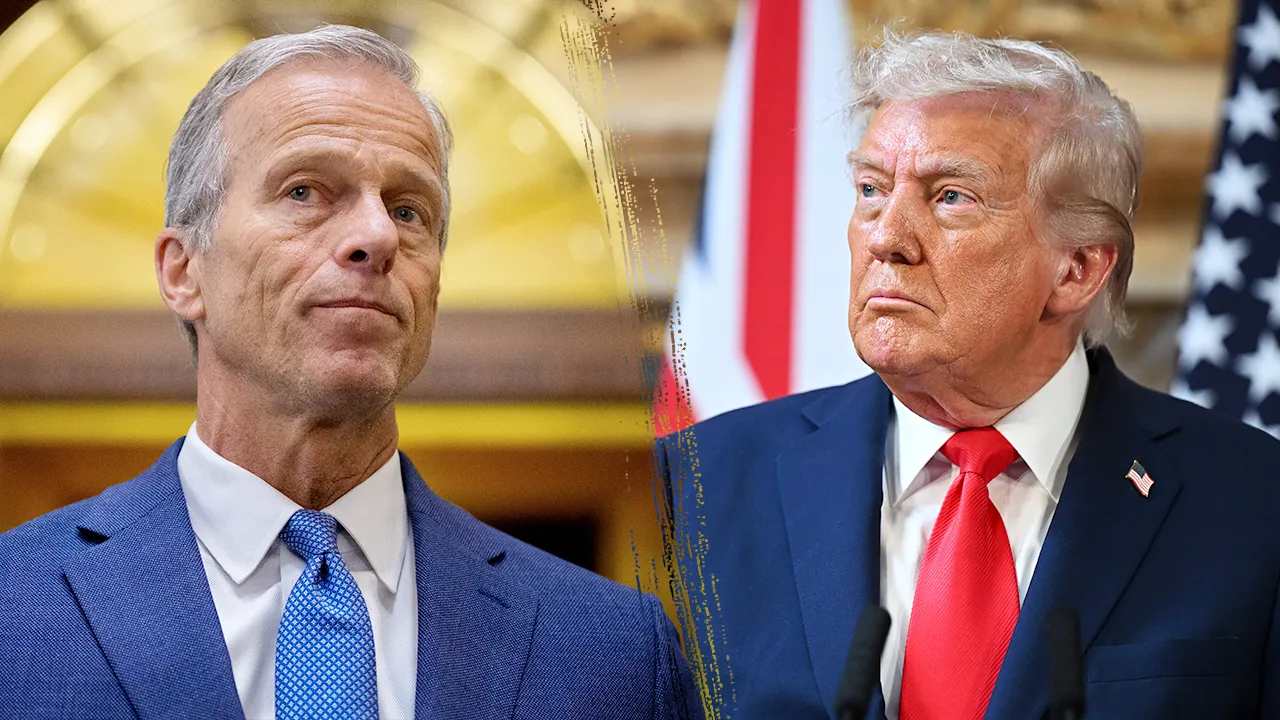
At the heart of this confrontation is a rapidly deteriorating relationship between Donald Trump and the newly minted Senate Republican Leader, John Thune of South Dakota. Stepping into the massive shoes of his predecessor, Thune is attempting to lead a conference that is deeply divided between traditional institutionalists and populist firebrands. Inside the halls of the Capitol, the tension between Thune’s pragmatic governance strategy and the White House’s uncompromising demands has reached a boiling point. After White House Press Secretary Karoline Leavitt publicly warned that Trump’s patience with Senate leadership was rapidly expiring, Thune fired back with uncharacteristic bluntness, suggesting that the administration’s aggressive lobbying efforts would be far better spent pressuring Senate Democrats who are actively blocking the bill, rather than publicly berating the Republicans who are trying to navigate a divided chamber. This friction is emblematic of a broader, structural identity crisis within the modern GOP, pitting the operational realities of a razor-thin legislative minority against the swift, top-down execution style demanded by a populist movement.
Making Thune’s balancing act infinitely more difficult is an internal mutiny led by some of his own colleagues. Senators Mike Lee of Utah and Rick Scott of Florida have broken ranks to lock arms with Trump, openly threatening to paralyze the Senate’s departure plans. In the Senate, the transition into a state work period is typically managed through unanimous consent—an unspoken agreement among all one hundred senators to let the chamber pause its formal business. However, any single senator has the procedural power to stand up, object, and demand a formal roll-call vote, effectively holding the entire body hostage. By publicly declaring their refusal to consent to the August recess, Lee and Scott have signaled a willingness to force their fellow lawmakers to stay at their desks, driving a wedge through their own party. For senators with young families or tight campaign schedules back home, this threat of a forced stay in a hot, gridlocked Washington is a deeply frustrating prospect, turning what is usually a routine procedural transition into a highly personal and political standoff on the Senate floor.
Beyond the raw political theater lies a cold, unyielding procedural reality: the SAVE America Act, in its current form, simply does not have the votes to pass the Senate under normal rules. Recognizing this mathematical dead end, some conservative strategists have floated the idea of utilizing the budget reconciliation process—a unique legislative loophole that allows certain spend-and-tax bills to bypass the 60-vote filibuster with a simple majority. However, this strategy runs headfirst into the Senate’s strict institutional guardrails, specifically the Byrd Rule, which dictates that any provision passed through reconciliation must have a direct, non-incidental impact on the federal budget. Because the SAVE America Act is fundamentally a regulatory policy bill focused on voter identification rather than government spending, attempting to shoehorn it into a budget resolution is a monumental legal hurdle. As Thune flatly noted, unless the legislation is completely rewritten to focus on financial incentives and federal grants to states rather than direct mandates, it is destined to remain a 60-vote exercise, rendering the current high-stakes brinkmanship an exercise in public posturing rather than viable lawmaking.
Ultimately, this fierce struggle over the SAVE America Act reveals a profound truth about the current state of American governance: the gap between the rhetoric of political campaigns and the concrete mechanics of the legislative process has never been wider. While the demand to “stay in town and fight” makes for powerful political theater and rallies a frustrated base on social media, it ignores the fragile compromises and rigid rules that govern the Capitol. As the clock ticks down toward the August deadline, Senate Republicans find themselves caught in the crossfire of a civil war over their own strategy, forced to choose between the institutional norms of the Senate, the logistical demands of their own re-election campaigns, and the unyielding expectations of their party’s most powerful figure. Whether Thune can broker a face-saving deal to avert a shutdown and allow his members to go home, or if the chamber collapses into a historic procedural gridlock, this moment serves as a stark reminder of how difficult it has become to govern a fractured nation when the line between policy-making and political survival becomes completely blurred.