





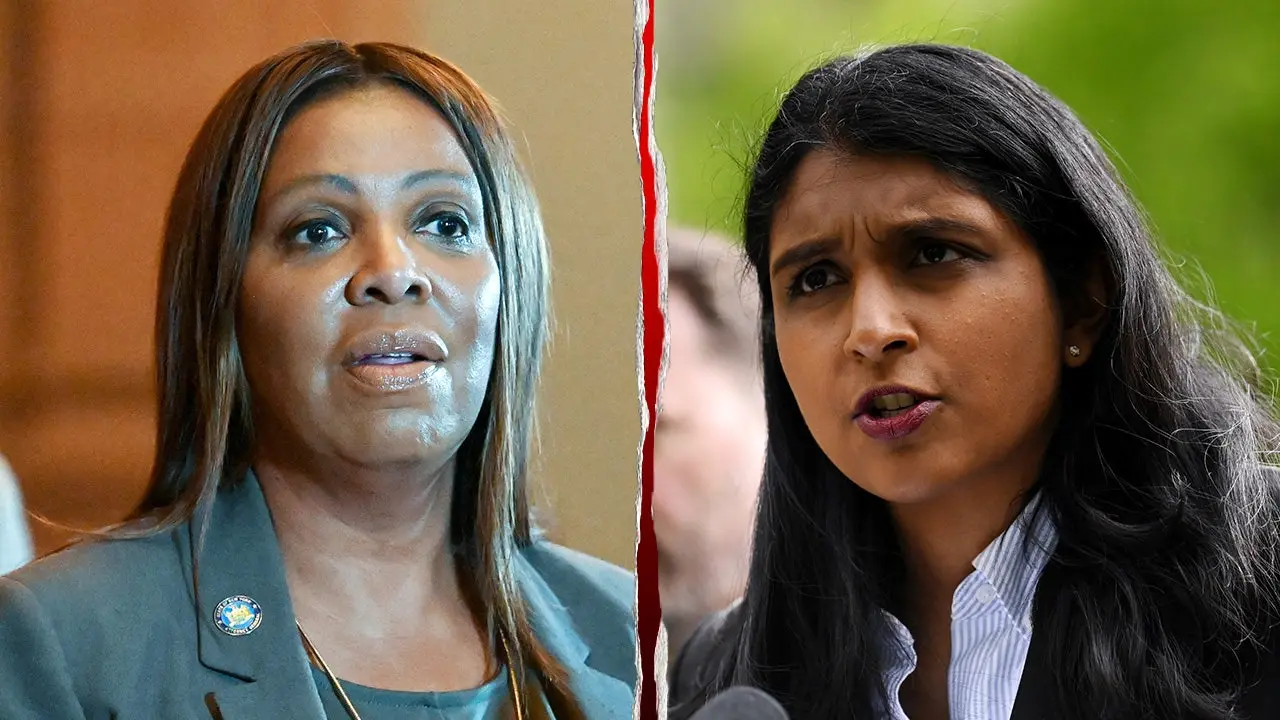
Politics is often described as a blood sport, but in New York, it can also look like a courtroom drama. On Thursday, the Republican challenging Attorney General Letitia James, Saritha Komatireddy, decided to put the incumbent on trial in the court of public opinion. Komatireddy released a mock 52-count indictment accusing James of neglecting her duties as the state’s top law enforcement official. The document, styled like a real charging instrument, was a theatrical and aggressive prelude to the first televised debate of the general election campaign, which was scheduled for that very evening. It was a bold move, the kind of political stunt that can either be dismissed as a gimmick or help a long-shot challenger break through in a deep blue state. For Komatireddy, a former federal prosecutor, the message was clear: if Letitia James can use the law as a weapon against her political enemies, then the same playbook can be used against her. The mock indictment accused James of ignoring a host of pressing issues that affect everyday New Yorkers, including mentally ill people living on the streets, repeat offenders cycling through the justice system, rising hate crimes, and fraud. Instead of addressing those problems, Komatireddy argued, James has been too focused on her high-profile political battles with former President Donald Trump. It was a scathing and personal attack, delivered in the language of legal process, and it immediately shifted the conversation heading into the debate.
The substance of the mock indictment painted a picture of an attorney general who had lost sight of her fundamental responsibilities. According to Komatireddy, James had failed to use her office’s immense power to protect vulnerable New Yorkers, particularly those suffering from mental illness and homelessness. The streets of New York have become a visible symbol of this crisis, with encampments and individuals in distress becoming common sights in every borough. Komatireddy argued that James had done little to address this humanitarian disaster, and that her focus on Trump had allowed the state’s public safety challenges to fester. The document also took aim at James’s handling of repeat offenders, a politically charged issue that has fueled frustration across the state. Critics have long argued that progressive criminal justice reforms have made it too difficult to keep dangerous people off the streets, and Komatireddy seized on that anger. She also accused James of failing to adequately prosecute hate crimes, which have risen sharply in recent years, particularly in New York City. Fraud, too, was a central theme. Komatireddy claimed that the attorney general had been woefully ineffective in pursuing Medicaid fraud, a charge that echoed previous criticism of James’s office. The overall narrative was one of neglect and misplaced priorities. Instead of being the people’s lawyer, James was portrayed as a politician obsessed with national headlines and personal vendettas. The mock indictment was not a legal document, of course, but it was a carefully constructed political argument, designed to frame the debate in stark terms: public safety versus political theater.
Komatireddy’s background gives this attack a degree of credibility that a typical partisan challenger might lack. She is not a career politician or a talk-show-style candidate; she is a former federal prosecutor who spent years building cases against some of the most dangerous criminals in the world. She secured convictions against Islamist terrorists and prosecuted Mexican drug cartel leaders, work that requires patience, precision, and a deep understanding of the law. That résumé allows her to speak about prosecutorial priorities with firsthand knowledge. When she says that James has failed to do her job, she is framing that criticism not as a political opinion but as a professional judgment. The mock indictment also turned James’s own legal tactics against her. James has used the power of the attorney general’s office to launch sweeping investigations into Trump and his business empire, culminating in a civil fraud case that captured national attention. By issuing a mock indictment, Komatireddy was effectively saying, “If this is how you treat your opponents, then here is a taste of your own medicine.” The document even delved into a more obscure legal issue: a New York law that critics say makes it nearly impossible to prosecute rape cases involving intoxicated victims. Komatireddy argued that as the state’s chief law enforcement officer, James had a responsibility to push for a change in that law, but had failed to do so over eight legislative sessions, despite having a Legislature controlled by her own party. Beyond a single social media post, the mock indictment claimed, there was no evidence that James had made the issue a priority. It was a sharp, pointed example of the kind of neglect the challenger was trying to highlight, and it gave the press release a layer of substantive policy critique.
James’s campaign, unsurprisingly, dismissed the entire exercise as a desperate campaign stunt. A spokesperson for the attorney general pointed out that James files real lawsuits in real courts every single day, protecting New Yorkers’ rights and their wallets. The spokesperson contrasted Komatireddy’s press release with James’s actual work, noting that on the same day the mock indictment was released, the attorney general announced the arrest and indictment of a Queens pharmacy owner for defrauding Medicaid to the tune of $31 million. It was a pointed rebuttal, intended to show that James is busy doing the job while her opponent is busy writing press releases. But Komatireddy’s campaign was not about to let that charge go unanswered. Her spokesperson fired back with a blistering counterattack, arguing that if anyone knows about campaign stunts, it is Letitia James. “Her entire tenure as Attorney General has been one long political campaign stunt,” the spokesperson said. The response went on to cite statistics that have become central to Komatireddy’s campaign: crime had risen 26%, homelessness had risen 38%, and New York had become the laughingstock of the nation in prosecuting Medicaid fraud, ranking dead last. These numbers, the campaign argued, are the real consequences of an attorney general more interested in political theater than public safety. The exchange was a perfect illustration of the broader race: a challenger trying to make the case that the incumbent is all talk, and an incumbent trying to remind voters that she actually has a record of tangible, real-world legal victories.
For all the fiery rhetoric, however, the political math remains daunting for Komatireddy. New York is a deep blue state, and Republicans rarely win statewide office there. A Siena University poll released just a month before the debate showed James leading Komatireddy by a comfortable margin, 52% to 39%. That is a commanding lead, the kind that usually suggests an incumbent cruising to reelection. But there was an intriguing detail buried in the poll: James’s advantage had shrunk by five points between August and September. A lead is a lead, and 13 points is hardly a toss-up, but the narrowing trend was enough to give Komatireddy’s campaign a sliver of hope. It suggested that perhaps not all New Yorkers were satisfied with the status quo, and that the message of neglect and misplaced priorities was resonating with at least some voters. Still, the reality is that James has deep institutional support, a well-funded campaign, and a record of high-profile legal actions that have made her a hero to many Democrats across the country. Komatireddy, by contrast, is relatively unknown, and her path to victory would require a dramatic and unlikely shift in the electorate. The mock indictment may have generated headlines, but whether it can actually move voters is another question. In a state where Democratic voters outnumber Republicans by a significant margin, the challenger needs more than a clever press release; she needs a fundamental change in the political landscape, and that is a tall order.
James’s tenure as attorney general has been defined by a series of consequential, and often controversial, legal actions. She pursued a massive civil fraud case against Donald Trump, accusing him and his business of inflating asset values for financial gain. The case resulted in a $450 million judgment, a stunning outcome that made James a central figure in the former president’s legal woes. She also launched a sexual harassment investigation into then-Governor Andrew Cuomo, which led to his resignation after a scathing report detailed allegations from multiple women. These actions have made her a national figure and a hero to many on the left, but they have also exposed her to accusations that she uses her office to pursue political enemies. Komatireddy’s mock indictment was designed to exploit that vulnerability, framing James as a partisan operative rather than a neutral guardian of the law. Whether that framing will stick is uncertain. James’s supporters would argue that her investigations into Trump and Cuomo were entirely justified, and that her willingness to take on powerful men is precisely why she was elected. Komatireddy would counter that there is a difference between pursuing justice and pursuing headlines, and that James has crossed that line. As the two candidates prepared to face off in their first televised debate, the mock indictment hung over the proceedings like a ghost. It was a dramatic, almost cinematic way to begin the general election campaign, and it ensured that the conversation would be about James’s priorities, her record, and her fitness for office. Whether it was a stroke of political genius or a mere footnote in a losing effort, one thing is certain: Saritha Komatireddy came out swinging, determined to make Letitia James defend her tenure in a way she never expected.