





There is a moment in every nation’s life when politics steps aside, if only briefly, to acknowledge the people who actually move the world forward. Thursday promises to be one of those moments at the White House, as President Donald Trump is set to present the National Medal of Science and the National Medal of Technology and Innovation for the first time in either of his administrations. According to Fox News Digital, the honorees include some of the most influential names in American technology: Tesla and SpaceX CEO Elon Musk, Google co-founder Sergey Brin, Nvidia CEO Jensen Huang, and AMD CEO Lisa Su will receive the National Medal of Science, while Dell Technologies CEO Michael Dell and Microsoft CEO Satya Nadella will be awarded the National Medal of Technology and Innovation. The ceremony will take place during the White House’s “Science: A New Golden Age Summit,” a gathering designed to celebrate the minds and companies that are pushing the boundaries of what is possible. White House spokesperson Liz Huston framed the moment in straightforward terms, saying, “The Trump Administration is grateful for the contributions of these incredible leaders in science and technology. These recipients are helping ensure America keeps leading the world in innovation.” There is a certain poetry in the timing: at a moment when public debate is so often dominated by division and distrust, the White House is choosing to turn its spotlight on the builders, dreamers, and risk-takers who remind us that progress is not accidental—it is made by human hands, human curiosity, and relentless effort.
The summit itself is meant to be more than a photo opportunity or a stack of speeches. It is a deliberate statement about where the future of American power lies. By bringing together leading scientists, engineers, and tech executives, the administration is signaling that the next great chapters of human achievement will be written in laboratories, data centers, and startups—not just in legislative chambers. The conversation at the summit will center on how super intelligence and private-sector investment can accelerate scientific breakthroughs and cement American leadership in a world that is changing faster than ever. That focus feels particularly urgent in an age when other nations are racing to match the United States in artificial intelligence, semiconductors, space exploration, and advanced manufacturing. There is something deeply human about the gathering: it acknowledges that behind every great discovery is a person who stayed up late, failed repeatedly, and refused to accept the idea that something was impossible. For Trump, presenting these medals for the first time is also a way of putting a personal stamp on the story of American achievement. The award itself has been given to some of the most transformative figures in modern history, and to preside over that tradition is to hold a small piece of the country’s collective memory. The summit may be about policy and innovation, but it is also about recognition—the simple, powerful human need to be seen and valued for the work that has consumed one’s life.
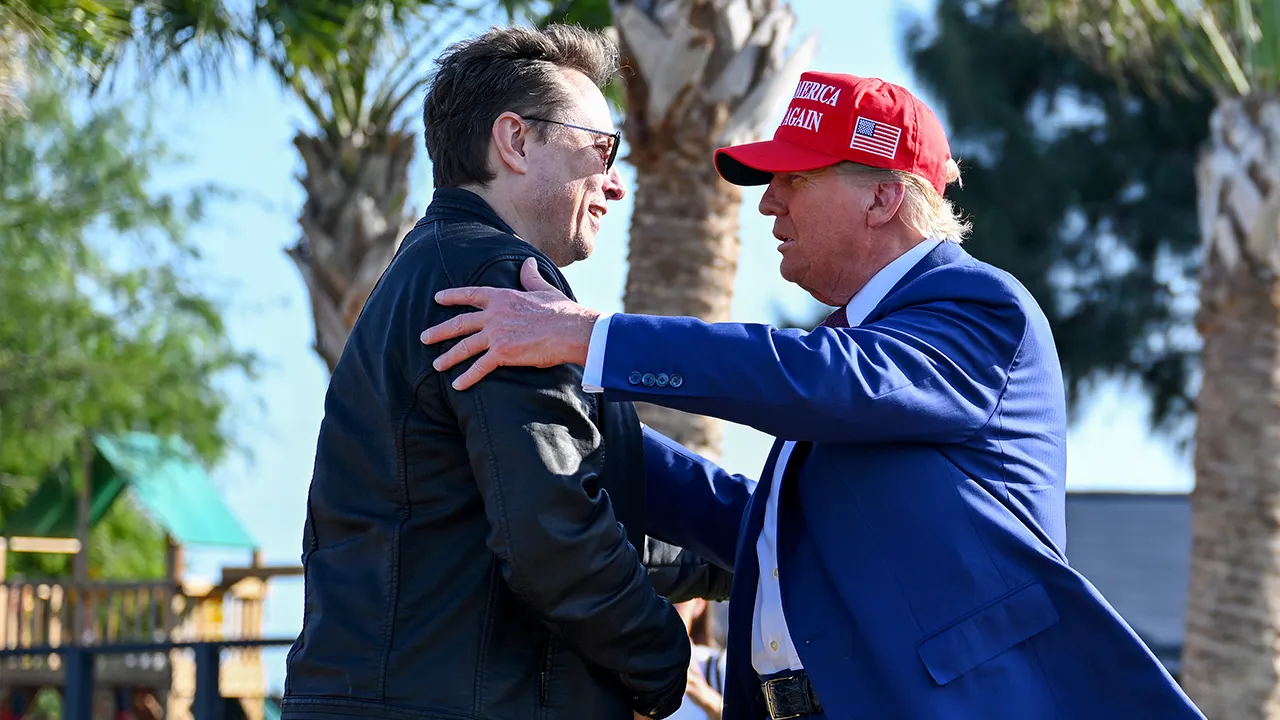
For Elon Musk, the honor represents something far more complicated than a line on a résumé. The Tesla and SpaceX chief has had a famously dramatic relationship with the president, one that has swung from alliance to public rupture and back again. Last year, Musk’s departure from DOGE—the Department of Government Efficiency—set off a highly visible feud after he reportedly blasted Trump’s signature tax-and-spending bill as a “disgusting abomination.” The fallout was personal and public, with Trump threatening Musk’s government contracts and the two men trading barbs through the media. It was the kind of conflict that, in ordinary political circumstances, might have ended their association for good. But the relationship between Trump and Musk has never been ordinary. In recent weeks, the two have visibly renewed their ties. Musk has appeared alongside Trump at a technology leader lunch and was even present during Chinese President Xi Jinping’s visit, a sign of his return to the inner circle. He has also slipped back into an advisory role, co-leading the Pentagon’s Project Meridian, an initiative that studies the future of warfare and the weapons and technologies the U.S. military will need to preserve its edge. The medal, then, is not just a reward for past achievements in spaceflight and electric vehicles. It is also a symbol of reconciliation—proof that even the most bruising public fights can be set aside in the name of a larger mission. For a man who has spent his life building rockets, cars, and tunnels, receiving the nation’s highest scientific honor at the White House is a milestone that once might have seemed unthinkable given the turbulence of the past year.
But Musk is far from the only story worth telling in this group. Sergey Brin, who co-founded Google alongside Larry Page, helped create a company that began as a research project and became the gateway through which billions of people access the world’s information. Jensen Huang, born in Taiwan and raised in America, built Nvidia from a small graphics-chip company into the heart of the artificial intelligence revolution, with its processors powering the large language models and machine learning systems that are reshaping every industry. Lisa Su, also born in Taiwan, took over AMD at a time when it was struggling and transformed it into one of the most important semiconductor firms on the planet, proving that technical brilliance and bold leadership can turn a company’s fortunes around. Michael Dell built his company from his college dorm room, turning a humble idea into one of the largest technology enterprises in the world, and Satya Nadella, born in Hyderabad, India, became the face of Microsoft’s renaissance, steering the company toward cloud computing and AI with a quiet, thoughtful style that has made him one of the most respected executives in the world. What unites all of them is not just wealth or fame, but an almost obsessive belief in the power of technology to solve real problems. Their innovations touch nearly every aspect of modern life, from the computers we use at work to the AI models that help doctors diagnose disease and the chips that make it all possible. In many ways, the list of honorees reads like a map of the modern digital age—each name represents a branch of the technological tree that now shades all of humanity.
For Trump, the ceremony carries a personal weight that many might not expect. His uncle, John G. Trump, was posthumously awarded the National Medal of Science by President Ronald Reagan for his pioneering work involving ionizing radiation and its applications in medicine, industry, and atomic physics. John G. Trump was a distinguished electrical engineer and physicist at MIT, a man whose research helped lay the groundwork for advancements that saved lives and expanded human knowledge. To see his nephew now standing in the same tradition, handing out the same honor that once recognized his own family member, adds a quiet emotional layer to the day’s events. It is a reminder that scientific achievement often runs in families, in institutions, and in the culture of a nation. The elder Trump’s work was not as glamorous as rocket launches or AI breakthroughs, but it was essential—the kind of patient, painstaking research that rarely makes headlines yet changes the world all the same. For the president, Thursday’s ceremony may be an opportunity to honor his uncle’s legacy as much as the living recipients in the room. It is also a reminder that the medals themselves are not just shiny objects for the wealthy and powerful. They represent a chain of discovery that stretches back generations, connecting a quiet lab at MIT to the bustling headquarters of Tesla and Google, from the study of atomic particles to the development of technologies that put the entire world’s knowledge in the palm of a hand.
At its heart, Thursday’s ceremony is about the strange, beautiful marriage of ego and humility that defines the human pursuit of discovery. The men and women receiving these honors have spent decades pushing against the limits of what is known, often failing in private before succeeding in public. They have faced doubters, competitors, and moments of profound uncertainty. And yet they kept going—not always for money or fame, but because they believed that the next breakthrough was just around the corner. There is a lesson in that for all of us, especially at a moment when cynicism feels easier than hope. The White House summit, with its grand title and its gleaming medals, is an invitation to remember that America has always been a nation of makers, not just talkers. It is a place where an immigrant from India can lead Microsoft, where a kid from South Africa can build rockets, where a college dropout from Texas can found Dell, and where a woman born in Taiwan can help design the chips that power the future. That is not just a slogan. It is the lived reality of the people standing in the room on Thursday. After months of conflict, public fights, and political drama, the ceremony offers a chance to step back and see the bigger picture—a picture that includes reconciliation, gratitude, and a shared commitment to keeping America at the forefront of human progress. The medals may be made of bronze and ribbon, but what they symbolize is far more valuable: the enduring belief that the future is not something to fear, but something to build. And on this day, at least, the builders are being honored in the house of the people.