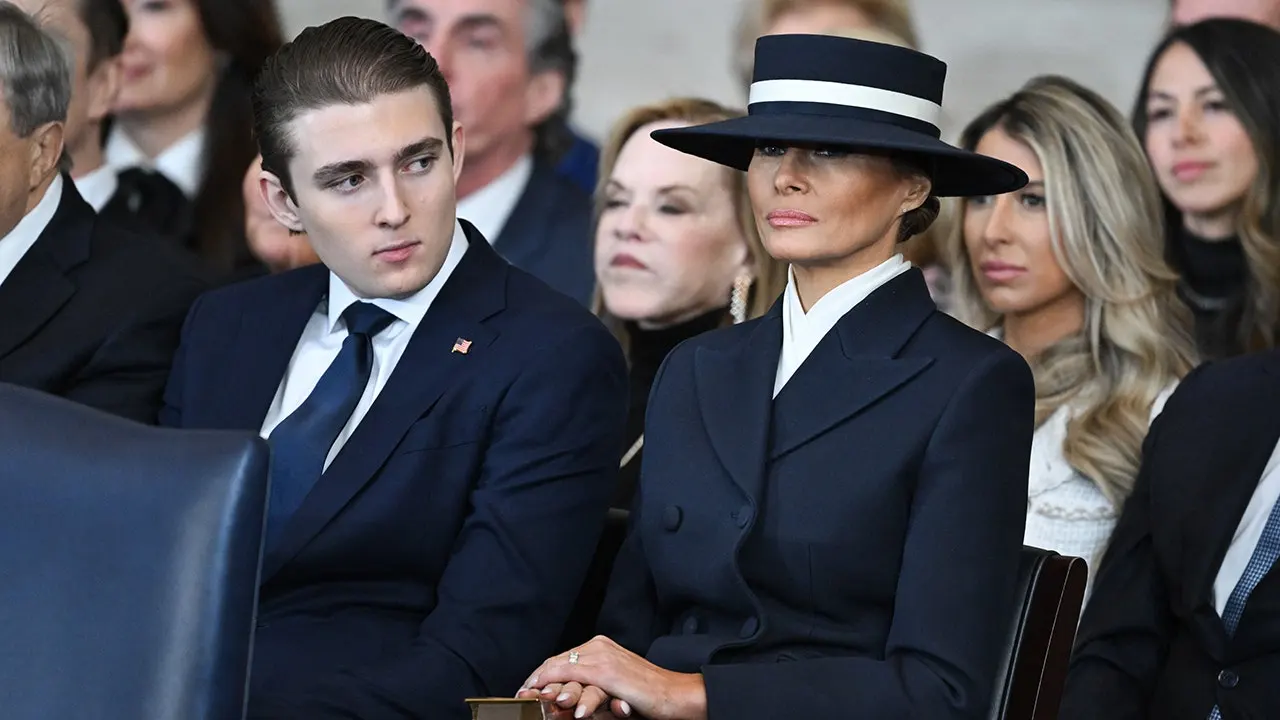
It begins with paper, but it never stays paper. The declassified documents released by the White House this week are not just legal exhibits or bureaucratic logs; they are the quiet, chilling fingerprints of a federal machinery that reached deeply into the private lives of a former president and his family. The records detail an operation called “Plasmic Echo,” a coded name that sounds more like a government weather program than a sprawling criminal investigation. Born out of the Biden-era FBI’s classified documents inquiry and later inherited by Special Counsel Jack Smith, the probe eventually zeroed in on Mar-a-Lago, the palatial Florida estate that served as both Donald Trump’s home and his presidential archive. But the records reveal something far more intimate than the scope of the search warrant. They show a surveillance apparatus that tracked the movements of Melania Trump and her teenage son Barron, and that logged the phone calls of Susie Wiles, a close political ally, turning ordinary human communications into grist for an investigation still enveloped in political fire. To read the records is to understand that in modern legal warfare, the difference between public figure and private citizen collapses, and that the ones caught in the crossfire are often not the headline names but the spouses, children, and trusted aides who never asked for a role in history.
The raw facts, stripped of rhetoric, are stark. The documents released Monday by the White House paint a picture of an FBI that did not merely investigate a former president but mapped his orbit like explorers tracking a coastline. “Plasmic Echo” is described as the code name for the probe that predated Smith’s appointment, and the records indicate agents planned the Mar-a-Lago search with an almost military precision. In doing so, they tracked Melania and Barron Trump’s travel, presumably to avoid potential encounters or security complications, but also to know where the family was at all times. There is no accusation in the documents that either committed wrongdoing; their movements were relevant only because they lived in the same building as boxes of classified records. Yet the surveillance was real. It was methodical. It was approved. And it did not stop with the family. The records further show that the FBI monitored calls involving Susie Wiles, the veteran Florida political operative who later became a top Trump campaign adviser. The call logs included contacts with defense lawyers, campaign advisers, and journalists. To be clear, the documents say the surveillance collected call detail records—numbers, dates, times, durations—not the contents of conversations. That distinction, however, offers little comfort to anyone who has ever considered what metadata reveals: a pattern of connections, a skeleton of relationships, a map of who talks to whom, and when, and for how long. In the digital age, that is often enough to reconstruct a life.
Try, for a moment, to feel what that means from the inside. Imagine being Melania Trump, a former first lady who had spent years guarding her privacy and that of her son. One day, your home is raided by federal agents. Later, you learn that before that raid, the FBI was watching your travel—where you went, when you left, when you returned—because your presence had to be factored into the tactical planning of a search of your own house. You are not a suspect. You are not accused of hiding anything. You are, in the eyes of the state, an obstacle or a variable, a human being reduced to a security consideration. Then consider Barron Trump, still a teenager at the time, whose school schedule and family trips were apparently part of an internal calculation made by federal agents. The psychological weight of such knowledge is impossible to quantify. It is one thing to read about surveillance in a civil liberties textbook; it is another to realize that your family’s movements were being logged by the same government that once protected your household as the First Family. The record does not indicate that any court found wrongdoing by the family. But the records demonstrate how the machinery of investigation can quietly consume the innocent around the target. This is the humanization of the document dump: not a story of legal abstractions, but of a spouse and a child caught in the glare of a federal lens.
Then there is Susie Wiles, a name familiar to close followers of Trump’s political career but virtually unknown to most Americans until recently. Wiles is not a flamboyant personality; she is the behind-the-scenes operator, the strategic mind, the person who makes the trains run on time. The declassified records show her phone contacts were logged over a period during which Trump was entangled in multiple legal battles. She spoke with defense lawyers, campaign advisers, and journalists—hardly suspicious activity for a political operative. But the government captured those interactions as part of “Plasmic Echo.” The data did not include what was said, but it recorded that these calls happened. And in doing so, the FBI was not merely tracking Wiles; it was tracking her network, and by extension, any journalist or attorney who happened to be on the other end of the line. Journalists, after all, speak to sources. Defense lawyers speak to clients and colleagues. A single phone log can expose a source, reveal a strategy, or chill the willingness of anyone to talk to a controversial figure. The records show no warrants for wiretapping conversations, no recordings of intimate strategy sessions. But the call detail records alone are enough to create a chilling effect. When people know that the government is logging their calls merely because they work for or with a certain individual, they begin to think twice. They begin to use burn phones, or meet in person, or simply stop talking. That is precisely the point at which surveillance becomes something more than an investigative tool—it becomes a mechanism of social control, a quiet warning that you are being watched.
The broader legal and political context cannot be ignored, and the documents must be read with both skepticism and seriousness. This was, by all accounts, the Biden-era FBI, under a president who had promised to restore institutional integrity after years of Trump-related controversies. Yet the same institution now stood accused of tracking a former president’s family and allies in connection with classified documents that Trump had allegedly taken from the White House to Mar-a-Lago. The appointment of Jack Smith as special counsel turned the probe into an even more explosive political lightning rod. Supporters of Trump see the surveillance as evidence of a weaponized Justice Department, an administration willing to spy on political opponents under the guise of national security. Critics will argue that the FBI was investigating a legitimate concern—the mishandling of classified materials—and that tracking the movements of residents at Mar-a-Lago was a necessary precaution during planning for a legal search. The truth, as is often the case, may lie somewhere in the murky middle, but the release of these records by the White House itself suggests a deliberate shift in transparency, or, perhaps, an effort to control the narrative before more leaks emerge. What is undeniable is the precedent: a former president’s family and campaign staff were the subjects of federal surveillance, and the records are now public for the world to debate. The fact that only metadata was collected may comfort those who trust the legal limits of government power. But for those who have experienced or studied the history of surveillance, metadata is power. It can reveal patterns no one intended to expose.
In the end, this is a developing story, and one that will continue to unfold through court filings, political reaction, and, likely, more declassified documents. But the human dimension is already clear. The Trumps were not just a legal target; they were a family whose movements were tracked. Susie Wiles was not just a political consultant; she was a woman whose phone records were collected and scrutinized. And the investigators were not malicious caricatures, but men and women following orders and legal protocols, doing what federal agents do when asked to locate classified documents in a presidential residence. The tragedy is that in such investigations, the line between necessary security and personal intrusion blurs. A former president is not an ordinary citizen; he lives in a compound where state secrets may reside. His family, however, did not sign up for that life. Their names appear in government documents as coordinates on a map, as logistical factors in a legal operation. This is the cost of modern politics, paid not only by the powerful but by those nearest to them. As more records emerge and as the story develops, one hopes that the public remembers the human beings behind the code names and call logs. This is not just a story about the FBI, or Jack Smith, or Donald Trump. It is a story about what happens when the immense machinery of the justice system touches ordinary lives—pilgrimages to school, calls to a lawyer, a mother’s travel plans—and turns them into data points. That is why the release of these records matters. It reminds us that in the shadow of the state, everyone is a potential subject, and every human moment may someday be declassified. For now, all we can do is wait for the next update, the next document, and the next chapter of a saga that shows no signs of ending. Please check back for updates as this developing story continues to evolve.