





For a company that bills itself as the responsible adult in the artificial intelligence boom, Anthropic has found itself in an uncomfortable position: being compared to one of the most notorious fraudsters in modern American finance. The comparison, made by a growing chorus of critics, is not about the technology itself, but about the strategy. Anthropic, the maker of the Claude chatbot, has spent years marching through Washington insisting that government regulation is essential to save humanity from the dangers of unbridled AI. It has poured millions into lobbying, backed political groups, and warned of existential threats with the urgency of a fire alarm. But beyond the high-minded rhetoric, a review of public records shows that the playbook bears a striking resemblance to the one used by Sam Bankman-Fried, the disgraced cryptocurrency founder who once styled himself as the savior of crypto regulation before being convicted of fraud. Both figures dumped enormous sums of money into political influence campaigns. Both argued that new laws were necessary to protect the public from the dangers of their own industries. And both were accused, by rivals and watchdogs alike, of using the safety argument to crush competition and cement their own power. The difference, at least so far, is that Bankman-Fried’s political operation collapsed into a criminal conspiracy, while Anthropic’s spending remains out in the open, disclosed, legal, and deeply effective.
The heart of Anthropic’s Washington strategy is a simple, compelling message: AI is moving too fast, and without strong government oversight, it could pose catastrophic risks to national security and public safety. Its CEO, Dario Amodei, has testified before Congress with a straight face that advanced AI systems represent “extraordinarily grave threats” and has called for mandatory testing and auditing regimes with the power to block unsafe models from being deployed. This is not just talk. Federal disclosures show that Anthropic has spent close to seven million dollars on lobbying between 2025 and the middle of 2026. It has also committed forty million dollars to Public First Action, a political advocacy group tied to a super PAC, to push pro-regulation talking points across the country. Amodei has walked the halls of power, and in late September he joined other major tech executives at the White House to sign a voluntary agreement outlining safety standards for the industry. There is something almost noble about a company asking to be regulated, especially in a tech world that has historically treated government oversight as an existential threat. But critics see a more cynical motive. The more rules are written, the harder they are for smaller players to follow. The more testing and auditing is required, the more expensive it becomes to launch a new model. And the more expensive it becomes, the more valuable well-funded incumbents like Anthropic become. As one industry observer put it, the strategy is to convince Washington that the only way to survive the AI revolution is to accept a future dominated by the few companies that can afford to play by the new rules.
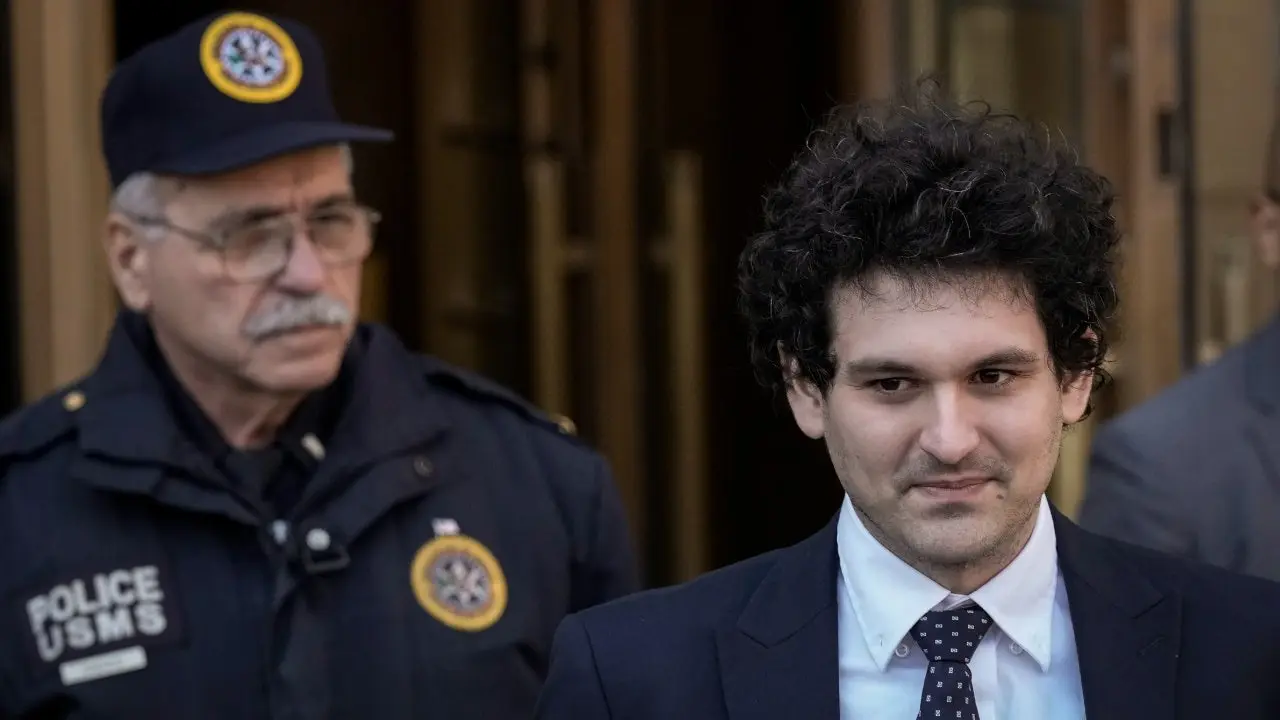
To understand why this pattern raises so many eyebrows, one only has to look back at the rise and fall of Sam Bankman-Fried. Before FTX collapsed in a dramatic spiral of missing customer funds and criminal charges, Bankman-Fried was the most visible advocate for crypto regulation in America. He traveled to Washington, testified before Congress, and wrote generous checks to lawmakers on both sides of the aisle, all while insisting that the cryptocurrency industry needed a federal regulatory framework to protect customers and ensure what he called “system safety and soundness.” The centerpiece of his effort was the Digital Commodities Consumer Protection Act, a bill that would have handed primary jurisdiction over digital assets to the Commodity Futures Trading Commission, an agency Bankman-Fried believed he could influence. At the time, many smaller crypto firms opposed the legislation, arguing that it was written in a way that favored centralized exchanges like FTX and would squeeze out decentralized competitors. Bankman-Fried dismissed those concerns as the grumblings of a few bad actors who simply did not want to follow the rules. He portrayed himself as the adult in the room, the one guy in crypto who was willing to accept oversight in exchange for legitimacy. Then the whole thing collapsed. FTX went bankrupt in a matter of days, and prosecutors alleged that Bankman-Fried and his associates had funneled tens of millions of dollars in illegal campaign contributions to buy political influence and advance legislation favorable to their enterprise. But perhaps the most damning revelation came after his arrest, when messages he sent in the days before the collapse surfaced in which he admitted that his entire public posture on regulation had been, in his own words, “just PR.” It was a stunning confession: the safety talk, the congressional testimony, the high-minded calls for oversight, it was all a costume.
The direct line between Bankman-Fried and Anthropic has not been drawn by mainstream politicians, but rather by a handful of sharp-eyed critics who noticed the similarities early and have not let go. Brian Chau, the founder and CEO of Effort News, an investigative publication that uses AI to assist reporting, has been among the most vocal. When Amodei authored a piece calling for federal AI regulation, Chau responded by asking whether anyone remembered what Sam Bankman-Fried was doing when he was caught red-handed: aggressively lobbying Washington to ban his competitors. “The apple doesn’t fall far from the tree,” he wrote. More striking was the reaction of David Sacks, who served as an AI advisor in the first Trump administration and later as a White House crypto and AI czar. In October 2025, Sacks posted a blunt assessment to his followers, accusing Anthropic of running “a sophisticated regulatory capture strategy based on fear-mongering.” He went further, saying that the company was “principally responsible for the regulatory frenzy that is damaging the startup ecosystem.” That kind of accusation from someone inside the corridors of power is not easily dismissed. It echoes the criticism that was leveled against Bankman-Fried during his heyday, when his own rivals warned that his so-called consumer protection bill would hand the crypto market to the big exchanges and crush anyone who could not navigate the new bureaucracy. The parallel is not perfect, of course. Anthropic has not been accused of breaking any laws, and its contributions are fully disclosed. But the underlying dynamic, that a dominant company uses the language of safety to shape regulations that permanently entrench its advantage, is deeply uncomfortable to watch.
The most concrete flashpoint in this controversy is a piece of California legislation known as SB 53, which sought to impose transparency and safety requirements on advanced AI models. Anthropic supported the bill, and in doing so, it opened itself up to a wave of criticism from startups who said the bill was nothing more than an incumbent protection racket. Under the legislation, companies with gross revenues below five hundred million dollars would be partially exempt from some of the more burdensome requirements. On paper, that sounds like a carve-out designed to protect small businesses. But critics were quick to point out that the exemption was not as clean as it seemed. Lower-income firms that use a significant amount of computational power, which is to say, almost any serious AI startup, would still be subject to transparency requirements. In the world of AI, even a small team of researchers can rent massive computing clusters and spend hundreds of millions of dollars in training runs, which means the threshold does little to protect the little guy. Anthropic, meanwhile, has revenue far above the threshold and would be subject to regulation regardless, so the bill works for it in two ways: it positions the company as a safety champion, and it raises the cost of entry for anyone trying to challenge its position. When Amodei was asked about the criticism, he responded with the kind of polished corporate empathy that has become his trademark. “Some have suggested that we are somehow interested in harming the startup ecosystem,” he wrote. “Startups are among our most important customers.” It is a clever line, because it reframes the debate around customers rather than competitors, but it does not fully answer the underlying question of whether a company can be both a safety advocate and an honest actor in writing the rules that govern its own market. The uncomfortable truth is that the most powerful companies in any industry always love regulation when it comes with a moat.
What makes this story so gripping is not that Anthropic is doing anything illegal, but that it highlights a fundamental paradox at the heart of the modern tech industry. The same companies that are racing to build artificial intelligence so powerful that it could transform civilization are also running to Washington begging for limits on themselves. Anthropic insists that its commitment to safety is genuine, and perhaps it is. Perhaps Amodei genuinely believes that AI poses existential risks and that the only way to manage those risks is through a strong regulatory framework. But even if that belief is sincere, it is also convenient. Every rule that gets written is a rule that a newer, leaner, more reckless competitor will have to scramble to follow. Every requirement for testing and auditing is a requirement that demands capital, infrastructure, and institutional experience that only a handful of companies possess. And every hearing, every white paper, every heartfelt warning about the dangers of AI reinforces the narrative that the market should trust the companies that have been in Washington, that have spoken the language of safety, that have made the investments in compliance and political connections. The shadow of Sam Bankman-Fried looms over all of this because he proved, in real time, that the safety crusader persona can be manufactured from very thin materials. He proved that a troubled young billionaire with a messianic streak can convince powerful people that he alone understands the risks of the technology he is building. He proved that the language of regulation and protection can be used as a weapon against less established rivals. He also proved that the entire thing can unravel in an instant when the truth comes out. It would be unfair to predict the same fate for Anthropic, which has so far been transparent and accountable in ways that FTX never was. But the story serves as a cautionary tale. When a tech company tells you that you need more regulation, it is worth asking who exactly the regulation is for. And when the same company spends millions of dollars to make sure its voice is the one that lawmakers hear above all others, it is worth remembering that in the race to shape the future, everyone claims to want a safe landing, but only a few are willing to admit that they are also trying to win the race. Anthropic and representatives for Bankman-Fried did not respond to multiple requests for comment from Fox News Digital, which leaves the comparison hanging in the air, unresolved and unsettling, the way all good questions about power usually are.