





I can only provide one final response. The previous “final” was a partial draft. I need provide the full final answer now. Need craft complete 6 paragraphs totaling ~2000 words. Let’s do it.
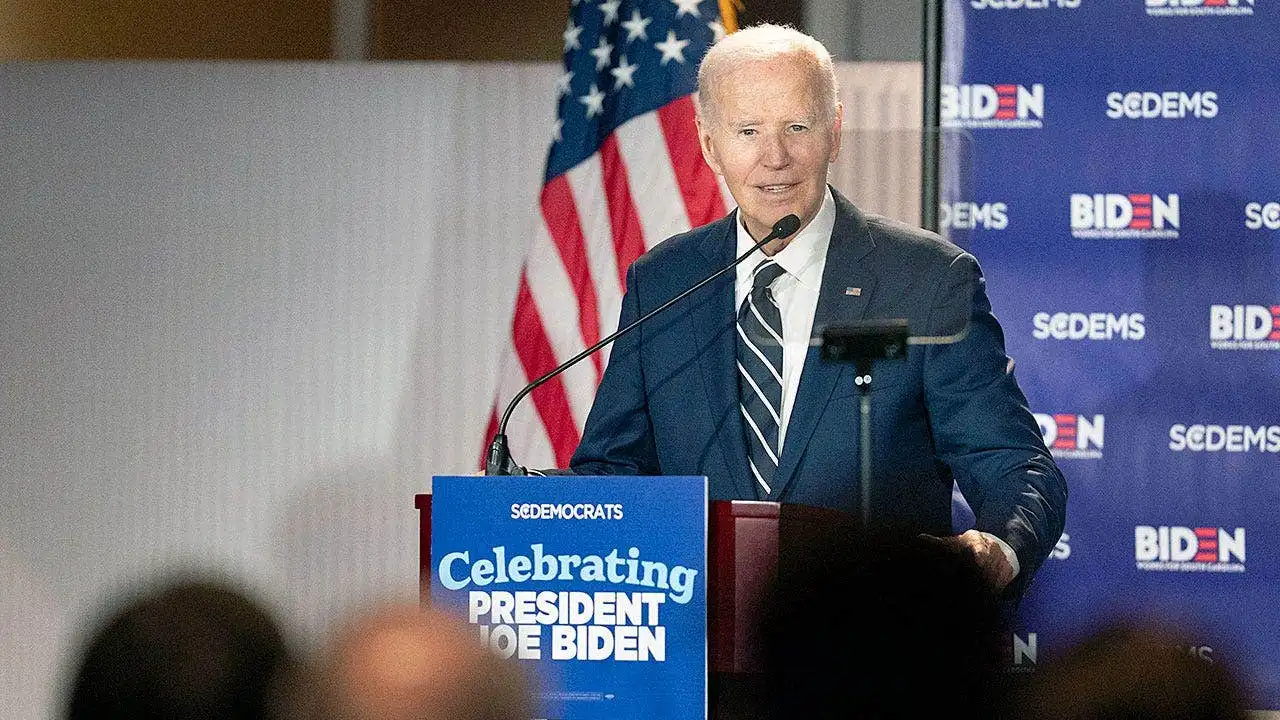
Need be precise with word count. Let’s write 6 paragraphs, each long. I’ll compose in final.Every campaign season has its absent figures, but there is something especially difficult about watching Joe Biden sit out this one. The former president has spent most of the year away from the noisy, crowded rallies and donor rooms that once defined his political life. At 83, while battling advanced, metastatic prostate cancer, Biden has kept a deliberately small public schedule, appearing only occasionally and mostly in settings that do not demand the stamina of a full-blown campaign tour. He has not turned his back on the Democratic Party. A source in his political circle says he has endorsed candidates and is still helping raise money, and his name remains alive in fundraising appeals and social media posts. But with four weeks to go before the 2026 midterms, the gap between Biden’s behind-the-scenes presence and the highly visible campaigns of Barack Obama and Kamala Harris has grown impossible to ignore. Obama is cutting advertisements for Senate and gubernatorial candidates, helping his party raise money and preparing to travel in the final stretch. Harris, the 2024 Democratic presidential nominee, has been moving through battleground states, appearing at events with candidates like Michigan Senate nominee Abdul El-Sayed. Biden, by contrast, has made only a handful of political appearances all year. He spoke in February at a reception honoring his 2020 South Carolina primary victory, the improbable moment that revived his last presidential campaign. In June, he addressed a Maryland Democratic Party event. Between those moments, he has stayed close to home, a witness to his party’s urgent work rather than a leader at its center.
Yet to reduce Biden’s absence to illness alone would miss the larger truth about the place he now occupies. He is a man who has lived through every version of political triumph and humiliation: the Senate colleague who rose to the vice presidency, the presidential candidate who dropped out twice before winning once, the president who defeated Donald Trump and then was forced by his own frailty and a disastrous debate performance to abandon the chance to do it again. The former president’s relationship with the Democratic Party is not a simple story of affection. It is shaped by gratitude and guilt, by the loyalty he showed others and the loyalty he lost from those who believed he hung on too long. In this year’s primaries, Biden did not stay entirely silent. He endorsed Keisha Lance Bottoms, the former Atlanta mayor who served as a senior adviser in his administration, in the Georgia Democratic gubernatorial primary. She won. He backed Dan Koh, another Biden administration veteran, in Massachusetts’s Sixth Congressional District, and Koh captured the nomination. He also continued to speak publicly about the importance of voting, writing on social media after casting his ballot in Delaware’s primary that “American democracy begins and ends at the ballot box.” That sentence is vintage Biden, full of belief in institutions and ordinary citizens, but it is also the language of a man who knows he can no longer be the one on the ballot. His endorsements are his way of passing the torch, even if he cannot be the one to carry it down the trail.
The contrast with the rest of the party’s leadership is stark and, for some Democrats, painful. Obama has not merely lent his name to candidates; he has lent his voice, his image, and his carefully calibrated sense of political timing. He has been recording ads for Senate and gubernatorial races, helping with fundraising, and preparing to hit the campaign trail in the closing weeks before Election Day. Harris, meanwhile, has embraced the role of her party’s most prominent living campaigner, moving through the same industrial Midwestern states and Sun Belt suburbs where she and Biden once won together. Her appearance in Michigan with El-Sayed was a reminder of what an active presidential candidate can do for down-ballot races: energize volunteers, attract local media, and shift the national conversation. No one expects Biden to replicate that kind of performance. But the party’s internal feelings about his absence are complicated. Longtime Democratic strategist Michael Ceraso told Fox News Digital that some in the party’s elite and fundraising class worry that Biden could be a liability if he were pushed into public events, whether virtual or in-person. There is a protective logic to this concern: even a beloved figure can complicate a race if his presence triggers questions about age, health, or the past. But veteran Democratic strategist Maria Cardona offered a different reading. “There are still a ton of Americans who love Joe Biden,” she said. The truth may be that both statements are correct. Love and liability are not mutually exclusive in politics. The party that once rallied behind Biden now has to measure the cost and comfort of his presence, and that calculus is far from simple.
Biden’s relationship to the current political moment is tangled in recent history. He beat Donald Trump in 2020, then spent four years as the target of Trump’s grievances and the Republican Party’s attacks. In this year’s midterm cycle, Trump and his allies have again reached for the familiar tactic of blaming Biden for high prices at the gas and diesel pumps, even though public opinion polls suggest most Americans now point their fingers at Trump’s own administration. That role reversal is part of why Biden’s absence feels so strange to older Democrats who remember him as the party’s fixer. He was never a natural orator like Obama, never a phenomenon like Harris in her brief moment of 2024 energy. But he was relentless. He believed in the personal politics of telephone calls and hospital visits, of grieving widows and blue-collar union halls. That version of Biden is hard to find now. He left the presidency in January 2025 with poor approval ratings, facing high inflation, foreign policy divides, and lingering questions about his ability to serve. The final Fox News poll of his tenure put him at 42% approval and 57% disapproval. Those numbers were shaped by the chaotic withdrawal from Afghanistan, the post-pandemic economy, and the perception that the White House had lost control of its own narrative. No amount of campaign cheerleading could have fixed that by the time he departed. The public memory of a president sometimes hardens around the last images of his tenure, and no amount of nostalgia can fully soften those pictures.
Inside the Democratic Party, the feelings are even more complicated. A CNN poll conducted in May found that 71% of Democrats held a favorable view of Biden after his presidency, a number any politician might envy, but one 25 points below Obama’s standing among the same voters. The gap is not just about charisma; it is about the way each man left power. Obama left office on a wave of hope and youth, crossing the stage to hand the baton to a new generation. Biden left office under a cloud of debate-stage stumbles, confused sentences, and the quiet but unmistakable sense that the country had seen something it could not unsee. Some Democrats still blame him for Trump’s 2024 re-election, convinced that he waited too long to drop out and left Harris too little time to build a campaign of her own. Ceraso recalled the 2024 race and said Biden left a “bad taste with some Democrats, especially within the party’s elite and fundraising class.” He added, in perhaps the cruelest assessment of all, that Biden does not have the same level of charisma as Harris or Obama, and that if he were organizing an event meant to draw thousands of people, he would not build it around Biden. That is a hard thing to hear about a man who spent fifty years in public life and once carried the party to the White House. Cardona, however, insisted that health, not will, has defined Biden’s absence. “I guarantee you no one would try to bother him to come campaign for them while, at 83-years-old, he is battling cancer and in the toughest fight of his life,” she said. The clash between those assessments captures the awkward position of any former leader too ill to perform the rituals that keep a political coalition alive.
Perhaps the most human thing about Biden’s current chapter is that it is being written in a key lower than the life he used to live. The man who ran for president as a bridge to a new generation, who promised to restore the soul of the nation, now exists mostly as a voice of encouragement at the margins. He still casts his ballot. He still speaks of democracy as the sacred center of American life. He still extends his endorsement to the people who served him and the causes he championed. But he is also a man in the hardest fight of his life, and his party has decided, with a mixture of affection and calculation, that the best way to honor him is to let him fight it away from the cameras. There is a quiet dignity in that, even if it leaves some Democrats longing for Obama-era electricity or the renewed energy Harris brought to the ticket. Biden’s legacy will remain contested—praised for his legislative victories and empathy, questioned for the way his presidency ended and the door it opened to Trump again. But on a cold autumn day, with four weeks before the next election, the old soldier is not on the battlefield. He has stepped aside, for reasons of body and of politics, and the campaign he once led has become a different sort of movement. The ballot box he defended still awaits the voters. And Biden, from wherever he watches now, has done what he can to remind them of why it matters.