







The quiet death of a young researcher in a remote Siberian city has sent ripples of unease through the international community, resurrecting Cold War-era fears about the secrecy surrounding Russia’s most dangerous biological facilities. Darya Shipilova, a 28-year-old scientist at the Irkutsk Anti-Plague Research Institute, fell ill in late September and died on October 2nd, with Russian authorities officially attributing her death to “pneumonia of unknown etiology.” While Moscow has moved quickly to downplay the incident, stating that tests found no evidence of a lab-acquired infection, the circumstances have proven fertile ground for speculation, given the nature of the facility where she worked—a hub for research on some of the world’s most lethal pathogens, including the plague. The stark contrast between official reassurances and the persistent, unconfirmed whispers of a more sinister cause has created a vacuum of trust, leaving many to wonder if the full story is being told. This skepticism is not born of mere paranoia, but from a deep-seated, historical understanding of how the Russian state has consistently managed—and often manipulated—information during public health crises, a pattern that makes it nearly impossible to take the Kremlin’s latest pronouncements at face value.
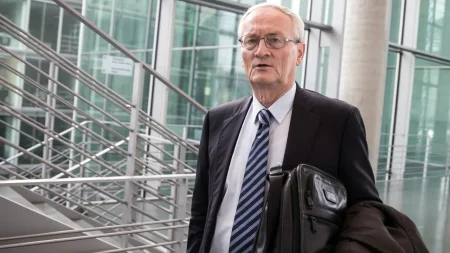
The difficulty in accepting the Russian narrative lies not just in the specific details of Shipilova’s case, but in a long and well-documented history of official deception. Glenn Corn, a former CIA officer and professor at the Institute of World Politics who spent over two decades overseas during his intelligence career and is fluent in Russian, articulated this sentiment perfectly, invoking the parable of the boy who cried wolf. He points to a strategic culture of deceit that has been a defining feature of both the Soviet and Russian governments. Perhaps the most chilling example is the 1979 anthrax outbreak in Sverdlovsk, a city that was then closed to foreigners. For years, the Soviet government steadfastly blamed the deaths of at least 64 people on contaminated meat sold on the black market, a story that conveniently obscured the real cause: an accidental release of aerosolized anthrax spores from a military biological weapons facility on the city’s outskirts. It was only in 1992, with the Soviet Union in its grave, that President Boris Yeltsin finally admitted the truth. This wasn’t an isolated incident but a demonstration of a fundamental principle: in Russia, the state’s narrative is paramount, and the truth, especially an inconvenient one that would expose a vulnerability, is considered a liability to be contained at all costs.
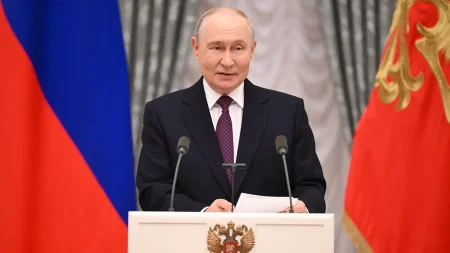
This legacy of secrecy and deception is not a relic of the past; it remains a cornerstone of the current government’s approach under President Vladimir Putin. Corn highlights the Kremlin’s long-standing, and officially denied for years, relationship with the Wagner mercenary group. This murky arrangement was a masterpiece of plausible deniability, allowing Moscow to project military power across Africa and the Middle East while its leadership could claim ignorance of the group’s activities. That fiction finally collapsed when Putin was forced to acknowledge that the Russian state had been the group’s primary financier all along. This pattern of behavior, Corn argues, is rooted in a deep-seated fear of the outside world and a belief that deception is a necessary defensive tool in a zero-sum game where everyone is deceiving you. It is a narrative of control that reverberates through Russian institutions, where the incentive structure is skewed against honest reporting, especially when the news is bad. Nobody wants to be the bearer of tidings that could expose a weakness, as the personal cost—one’s job, one’s freedom, perhaps even one’s life—could be catastrophic.
This culture of narrative control is not unique to Russia, and drawing a parallel to China’s handling of the early COVID-19 pandemic provides a stark illustration of the problem. Both nations, with their intertwined histories of communist rule and centralized power, exhibit a systemic disincentive to full transparency when facing a crisis. In the initial, crucial weeks of the outbreak in Wuhan, the Chinese government withheld and delayed critical information about the emerging virus, a lapse that cost the world precious time to prepare and ultimately contributed to a global catastrophe that has killed millions. As Corn observes, in both systems, truth-telling in the face of a bad story is a dangerous act of courage. Individuals within these bureaucracies are paralyzed by fear, terrified that admitting to a real problem will be seen as a personal failure and lead to severe repercussions. The rational calculation, therefore, is always to minimize, obfuscate, or outright lie, trusting that it is safer to manage a crisis of credibility later than to admit one’s own vulnerability in the present.
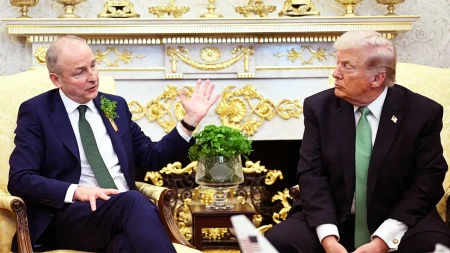
Given this heavy historical baggage, the international response to Shipilova’s death has been one of cautious vigilance rather than blind acceptance. The key question is not necessarily whether the Russian account is false, but whether it can be independently verified, and what the response should be while that verification is pending. While the World Health Organization has stated that the risk of spread outside Russia is “very low,” it has also formally requested more information from Russian authorities to clarify the cause of the severe pneumonia, a sign that the global health body is not fully satisfied with the existing explanation. The fact that Russia’s health watchdog has quarantined around 200 people who may have come into contact with Shipilova suggests that authorities are at least taking some precautions, but the lack of a clear, detailed, and transparent account of the pathogen involved and the lab’s safety protocols fuels the unease. Former senior officials, like Ambassador Gordon Sondland, have gone as far as to warn that the situation could be “far worse” than the plague, suggesting that the cause could be an engineered biological agent, a scenario that, while unproven, cannot be dismissed given the history of both Soviet and Russian biological weapons programs. The United States, with President Trump stating he would speak to Putin “very soon,” is signaling that this is a matter of high-level diplomatic concern, demanding direct engagement at the highest levels of government.
In the end, the death of Darya Shipilova remains an enigma wrapped in a shroud of official ambiguity. The immediate facts are stark: a young researcher dies of a mysterious pneumonia in a lab designed to study some of humanity’s most feared diseases. The Russian government’s assurances that there is no evidence of a lab-acquired infection provide a thin veneer of comfort, but they are hopelessly undermined by a century of state-sponsored deception, from the Sverdlovsk anthrax cover-up to the lies about the Wagner group. The reactions from the WHO and the White House indicate a global awareness that the official story may be incomplete. The immediate health risk might be low, and quarantines may be working, but the deeper issue is one of existential trust. We are left to navigate a world where the assurances of a major nuclear power are treated with profound skepticism, a world where we must consider the worst-case scenario—not out of alarmism, but out of a grimly logical assessment of past behavior. The mystery of one woman’s death has become a global litmus test, forcing us to confront the uncomfortable reality that in the opaque corridors of power in Moscow, the line between public health and state security is dangerously blurred, and the truth, like a potent pathogen, is often considered too dangerous to be released.