




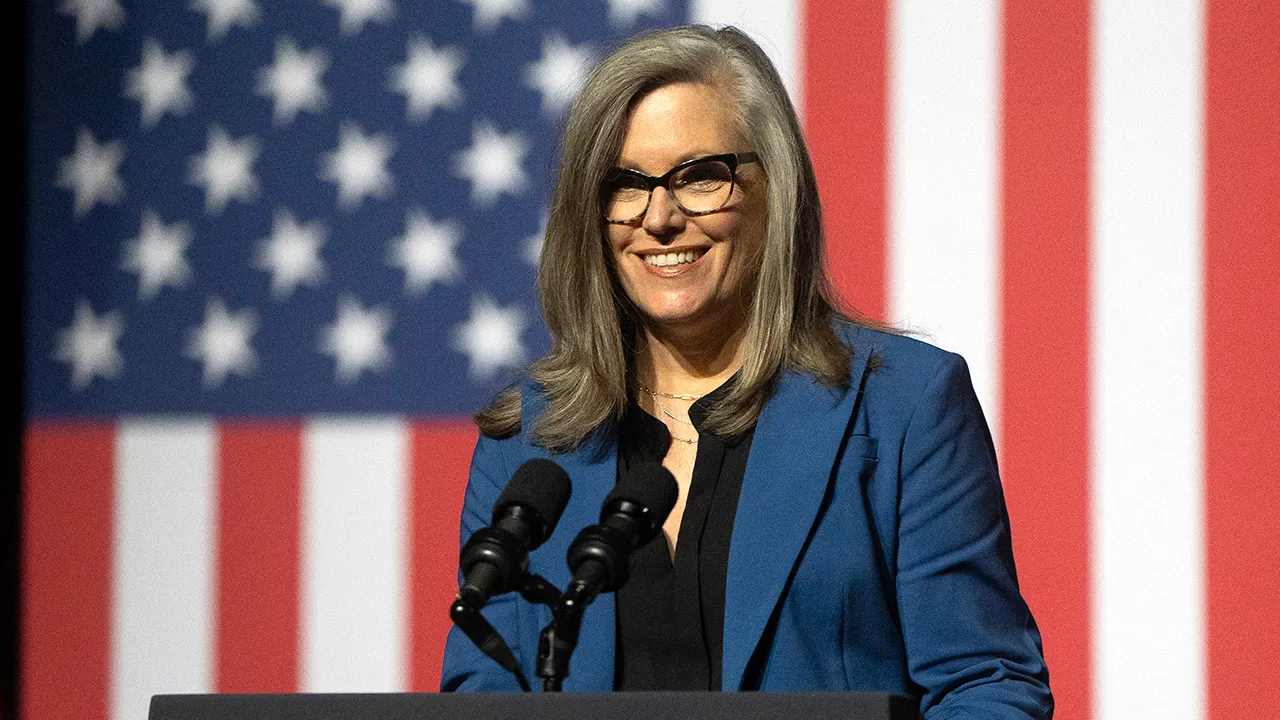
The journey of politics is rarely a smooth, linear progression, but for Arizona’s Democratic Governor Katie Hobbs, it has been a masterclass in quiet endurance and resilience under fire. Just four years ago, Hobbs was thrust into the blinding glare of the national spotlight as Arizona’s Secretary of State, serving as the calm, resolute defender of election integrity during an unprecedentedly polarized cycle before narrowly defeating the firebrand Republican nominee Kari Lake in a gubernatorial race that kept the entire country holding its breath. That hard-fought campaign, marked by intense scrutiny, personal threats, and relentless political theater, forged a leader who is no stranger to the heavy toll of public service in a deeply divided state. On Tuesday, however, the political tides offered Hobbs a rare, peaceful milestone: she cruised to her party’s re-nomination completely unopposed, a quiet but powerful testament to her consolidation of support within a state Democratic party that has historical roots of fragmentation. For Hobbs, this uncontested victory was not merely a procedural formality but a profound moment of reflection on her journey from a dedicated local social worker assisting youth and domestic violence victims, to a state legislative leader, and finally to the governor’s mansion. It highlights her transition from a defensive administrator of democracy to an active executive leader, cementing her place as the steady anchor of a purple state constantly caught in the crosswinds of national political shifts. As she prepares to step back into the electoral coliseum for the general election in this crucial southwestern battleground, this unopposed primary serves as both a validation of her steady, drama-free governance and a momentary, peaceful breath before the inevitable storm of November’s highly anticipated statewide contest begins to rage.
Despite the comfortable absence of a primary opponent challenging her from within her own party, Governor Hobbs made the bold, strategic choice not to sit quietly on her formidable campaign war chest, instead investing an impressive $7 million on a major statewide advertising campaign during the primary season. To the casual observer, spending millions of dollars without an active competitor on the ballot might seem like an unnecessary expenditure, but to Hobbs, it was a vital, proactive effort to connect directly with the hearts and minds of Arizonans long before the general election noise could drown out her voice. This massive financial deployment was designed to do something far more nuanced than simple partisan cheerleading; it was a human-centered, narrative-focused endeavor aimed squarely at independent voters and moderate Republicans who feel increasingly politically homeless in today’s polarized climate. Through these warm, policy-focused advertisements, Hobbs showcased the tangible, everyday economic triumphs of Arizona during her tenure, turning abstract statistics about job growth, semiconductor investments, and business expansion into stories of real families securing prosperous futures. Crucially, the ads emphasized her bipartisan achievements, illustrating her willing commitment to roll up her sleeves and work productively alongside a Republican-controlled legislature to pass common-sense policies that directly benefit the state’s citizens. By speaking directly to reporters, Hobbs defended this aggressive spending strategy with a refreshing candor, explaining that she did not raise campaign funds merely to let them sit idly in a bank account, but to actively use them to build a broad, inclusive coalition, demonstrating that her administration is fully prepared to run the vigorous, high-stakes race required to secure a second term.
As Governor Hobbs waits on her designated side of the political stage, a fiercely competitive and deeply revealing drama has been unfolding within the Republican party as four distinct candidates vie for the chance to challenge her in the fall, representing a fascinating ideological spectrum of modern American conservatism. At the forefront of this primary battle is Representative Andy Biggs, a high-profile, veteran legislator and former chairman of the influential House Freedom Caucus, whose bid for the governor’s office is bolstered by the highly coveted endorsement of former President Donald Trump and the aggressive, youth-driven grassroots backing of Turning Point USA, a conservative powerhouse headquartered right in Arizona. Biggs’ populist platform and combative rhetorical style appeal directly to the passionate conservative base that desires a disruptive, confrontational challenge to the status quo. Alongside him in the crowded GOP field is longtime Representative David Schweikert, a seasoned policymaker known for his deep, analytical focus on fiscal policy, national debt, and complex economic issues, offering voters a brand of conservatism anchored in legislative experience and policy expertise. The primary ballot is rounded out by two compelling outsider candidacies that inject a refreshing dose of real-world, non-political experience into the debate: Scott Neely, a dedicated concrete pumping contractor making his second consecutive run for governor, who speaks straight to the working-class struggles of everyday laborers, and Ken Miceli, a passionate local business owner who advocates for cutting red tape and bringing practical, private-sector problem-solving directly into the halls of government. Collectively, this diverse slate of Republican contenders forces Arizona primary voters to make a profound choice about the ultimate identity and strategic direction of their party, choosing between fiery populist activism, seasoned congressional experience, or the grounded pragmatism of working-class and business-driven outsiders.
This complex political contest is playing out against the breathtaking, sun-drenched backdrop of Arizona itself—a state that has evolved from a historically deep-red conservative stronghold into a dynamic, unpredictable political microcosm of the entire United States. The state’s rapidly shifting demographics, driven by the explosive growth of metropolitan areas like Maricopa and Pima counties, alongside an influx of retirees, young tech workers, and a diverse Hispanic community, have created a uniquely vibrant and highly sensitive electorate that resists simple categorization. Adding a further layer of intrigue and unpredictability to this shifting battlefield is the presence of several third-party and independent political movements on the general election ballot, including candidates representing the Libertarian Party, the Green Party, and the newly energized No Labels movement, which seeks to capture the moderate middle. The rise of these alternative parties points directly to a deeper, human truth in Arizona: many everyday voters are experiencing a profound, exhausting fatigue with the continuous, high-stakes polarization of the two-party system and are looking for alternative pathways to express their civic values. For the major party candidates, the existence of these alternative options on the ballot introduces an element of volatile wild-card math, as even a tiny shift of a few thousand votes away from the mainstream nominees in a state known for razor-thin, triple-digit victory margins could completely upend traditional campaign strategies and dramatically rewrite the political future of the entire American Southwest.
Navigating this delicate, high-wire political act is a daily reality for Governor Hobbs, who has spent her first term mastering the difficult art of governing in a state where the executive branch and the legislative branch are controlled by opposing political parties. This divided government has required Hobbs to continuously balance two very different, highly demanding roles: she must act as a firm, principled safeguard for progressive priorities, using her veto power when necessary, while simultaneously acting as a highly pragmatic mediator who can build constructive, personal relationships with Republican lawmakers to keep the state functioning smoothly. It is this second, collaborative persona that Hobbs has highlighted as the core of her campaign, recognizing that the vast majority of Arizona families are far less interested in partisan cable news talking points than they are in real solutions to pressing regional challenges, such as safeguarding precious water supplies in the face of persistent drought, upgrading aging infrastructure, and funding under-resourced public schools. By presenting her administration as a vehicle for bipartisan success, Hobbs is making a deliberate, human connection with voters, demonstrating that political opponents can sit down at a shared table, find honorable compromise, and pass meaningful budgets that elevate the quality of life for all Arizonans. This approach is not just a clever campaign tactic; it is a labor-intensive, human-centered style of governance that requires patience, humility, and an unwavering belief that public service should be measured by the constructive problems solved rather than the destructive arguments started.
With the primary elections now in the rearview mirror, the stage is set for a general election campaign that will undoubtedly be one of the most intensely contested, high-stakes, and emotionally charged political struggles in the country, attracting hundreds of millions of dollars in national attention and advertising. For Governor Hobbs and her eventual Republican opponent, the marathon journey toward November will test the absolute limits of their physical endurance, emotional resolve, and campaign infrastructures as they travel thousands of miles to speak with voters in bustling Phoenix suburbs, quiet rural farming towns, and historic tribal communities across the state. This upcoming election is not merely a dry, procedural choosing of an executive; it is a deeply human referendum on the soul, culture, and future direction of Arizona, forcing voters to decide whether they wish to continue with Hobbs’ steady, low-drama approach of compromise and incremental progress, or pivot toward a more disruptive, radical restructuring of the state’s government. As local volunteers prepare to pound the pavement, campaign staffs ready their digital war rooms, and ordinary citizens contemplate the immense power of their individual ballots, the collective eyes of a polarized nation will remain fixed on the Arizona desert, waiting to see how this compelling human story of leadership, compromise, and democratic self-determination will ultimately be written by the voters themselves.