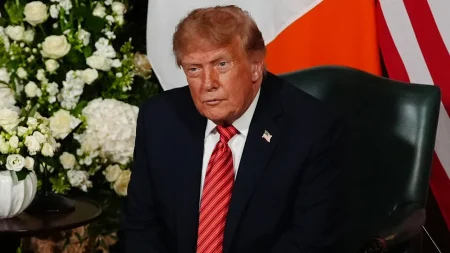







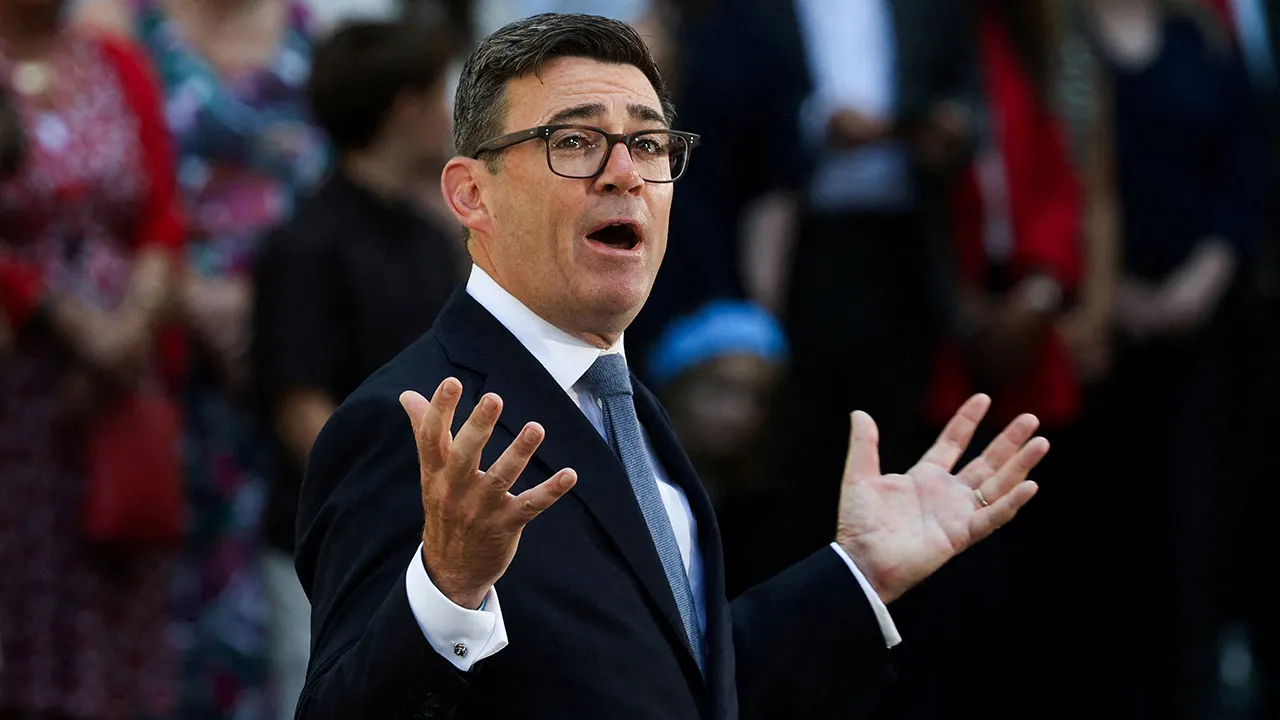
In the delicate and high-stakes world of international diplomacy, few phone calls carry as much historical weight, anticipation, and potential for friction as the first conversations exchanged between a newly inaugurated British Prime Minister and the President of the United States. This time-honored “Special Relationship,” which has survived decades of shifting global sands, world wars, and economic upheavals, officially entered its newest chapter on Monday when President Donald Trump placed a highly anticipated congratulatory call to Britain’s newly appointed leader, Andy Burnham. Taking office amidst an intense tempest of domestic economic anxiety and profound global volatility, Burnham found himself on the receiving end of a dialogue that Trump would later enthusiastically describe to the public as “very good” and highly productive. For a global audience accustomed to watching international relations unfold through carefully choreographed, dry press releases and rigid bureaucratic protocols, the unexpected conversational warmth between these two vastly different political figures offered a genuinely fascinating look into the real, human pragmatism that drives modern statecraft. The call, which took place shortly after Burnham officially assumed his responsibilities at Downing Street, was far more than a simple, polite exchange of diplomatic pleasantries; it was a substantive physical laying of groundwork for what both nations hope will be a highly collaborative bilateral partnership. As Trump later shared, their discussion touched deeply on the sheer scale of the challenges currently looming over the British government, with the American president offering a robust, public vote of confidence in Burnham’s capacity to steer his nation through the storm. By promising that the United States would stand firmly by its closest ally, Trump set an encouraging tone of solidarity that defied many pessimistic critics who had previously predicted a cold beginning for the new Prime Minister’s administration. Ultimately, this first call established a positive foundation for an upcoming personal meeting in the “not too distant future.”
The substantive agenda discussed during this inaugural telephone dialogue was remarkably wide-ranging, covering crucial global hotspots, maritime trade security, and energy independence. At the very center of their diplomatic exchange was the increasingly volatile situation in the Middle East, with Trump providing Burnham with a comprehensive update on recent security developments in the region. This briefing seamlessly transitioned into an active discussion regarding the critical safety of international shipping lanes, specifically focusing on the urgent strategic goal of clearing naval mines from the Strait of Hormuz. The Strait, a narrow and highly contested maritime chokepoint through which a significant portion of the entire world’s daily petroleum supply flows, has long been a geopolitical flashpoint, and Burnham utilized this high-level call to reaffirm the United Kingdom’s unwavering commitment to securing safe passage through these vital waters. For Burnham, this commitment is not merely an abstract exercise in projecting military power, but a vital domestic economic safeguard; as his Downing Street office later emphasized, maintaining secure shipping lanes is absolutely essential to stabilizing global supply chains and reducing everyday costs for hard-working families and local businesses across Britain. To achieve these goals, the two leaders explored potential avenues of cooperation, combining the unmatched naval reach of the United States with the specialized maritime expertise of the Royal Navy. Beyond Middle Eastern security, Trump and Burnham also turned their attention to the strategic value of North Sea oil and the broader, multifaceted trade relationship that exists between their two nations. For many decades, North Sea oil has served as a cornerstone of British energy resilience and a massive source of economic productivity, and their discussion of energy trade indicates a shared desire to secure reliable, domestic energy resources. By addressing energy infrastructure, trade facilitation, and joint defense actions, they demonstrated that the core of their partnership remains deeply material.
On the domestic front, Burnham’s dramatic rise to the absolute pinnacle of British political power represents a bold, ambitious attempt to fundamentally reshape the nation’s internal economic identity, a theme he passionately communicated during his conversation with Trump. Central to Burnham’s grand vision for the country is a comprehensive national strategy of reindustrialization, designed to revive the United Kingdom’s long-dormant manufacturing sectors and breathe economic life back into historic northern regions that have felt abandoned by decades of rapid globalization. This economic philosophy, which prioritizes the creation of local union jobs, domestic manufacturing, and heavy investment in physical infrastructure, shares a highly intriguing rhetoric parallel with the protectionist and industrialist “America First” policies that have defined Trump’s own political rise in the United States. During the course of the call, Burnham made it abundantly clear that economic development, domestic security, and reindustrialization would remain his administration’s top priorities as he seeks to drive sustainable, inclusive economic growth across the entire country, rather than focusing solely on traditional financial hubs like London. By steering the national agenda toward reindustrialization, the new Prime Minister is signaling a major shift away from the service-driven economic policies of the past toward a tangible, labor-oriented future that seeks to rebuild national self-reliance from the ground up. This structural priority likely resonated strongly with Trump, who has spent years championing the return of factories to American soil and criticizing trade policies that neglect domestic workers. As Burnham begins to implement his domestic economic agenda, future discussions between Washington and London will inevitably focus on how bilateral trade agreements can be designed to directly support, rather than undermine, the manufacturing workforces of both nations. For Burnham, reindustrialization is not just a standard economic target, but a vital social necessity to heal deep regional divides.
The profound historical weight of Burnham taking office as Prime Minister can only be fully understood when viewed against the backdrop of the extraordinary political instability that has plagued the United Kingdom over the past ten years. Burnham enters Downing Street as the country’s seventh Prime Minister in a single decade, a dizzying rate of political turnover that has left the British public feeling exceptionally fatigued and desperate for long-term stability. He succeeds Keir Starmer, whose own tenure as Prime Minister lasted just over two years following his victory in the summer of 2024, marking yet another abrupt shift in leadership for a nation struggling to establish a steady course in a post-Brexit world. This constant revolving door of leadership has created an immense sense of urgency for Burnham, who officially assumed office with a vow to establish a “new political model” designed to break the destructive cycle of short-lived governments and restore public faith in democratic institutions. Recognizing the heavy burden resting on his new British counterpart, Trump used their conversation to publicly acknowledge the “big job” that Burnham has ahead of him, while offering a strong reassuring gesture of support. The American president’s public statement that “the U.S.A. will be there to help!” functions as a critical piece of international diplomacy, offering a much-needed anchor of global stability to a British electorate and political establishment that are weary of domestic political shifts. By publicly extending this hand of cooperation, Trump has helped to validate Burnham’s leadership on the international stage from his very first day in office, sending a clear message to the world that this transatlantic bond remains unbreakable. For Burnham, managing this high-stakes political transition while introducing a new systemic governance model is a massive undertaking, and having the explicit backing of the United States is a massive asset.
What makes this initial warmth and cooperation between Trump and Burnham so fascinating is the long history of ideological disagreements and public criticisms that have previously defined their relationship. Years before Burnham assumed the office of Prime Minister, Trump had openly criticized his progressive policies, at one point labeling him “extremely liberal” during a public commentary on British politics. Burnham, conversely, has been highly vocal in his criticisms of Trump’s populist approach and political rhetoric, reflecting a deep-seated philosophical division between Trump’s conservative movement and Burnham’s center-left, northern labor roots. Nevertheless, the ultimate responsibility of holding national office has a way of quickly sweeping away past partisan grievances in favor of practical statesmanship, a reality that was vividly demonstrated during Monday’s productive phone conversation. This sudden pivot from ideological opponents to diplomatic partners highlights a powerful reality of global affairs: that national interests must always override personal political theater. Trump’s enthusiastic summary of the interaction as “interesting” and “very successful,” culminating in his public blessing of “GOOD LUCK AND GODSPEED!” to the new British leader, shows a mature willingness to prioritize broad strategic objectives over past rhetorical disagreements. For Burnham, engaging warmly with a foreign leader he has previously criticized is a critical test of statesmanlike leadership, proving to both his domestic supporters and international observers that he can transcend personal disputes to protect the interests of his nation. This transformation from political campaigners into cooperative world leaders demonstrates that true diplomacy is not about ideological uniformity, but about finding common ground amidst deep differences. It reminds us that behind the grand speeches and national flags are real people who must collaborate to solve global problems. By choosing cooperation, both men have emphasized pragmatism over pride. This pragmatic approach is essential for navigating the complex web of modern international relations, where personal feelings must take a back seat to the urgent needs of the citizens they represent. Their dialogue demonstrates that despite different paths, leaders can align.
Looking ahead, the most telling indicator of how this newly forged relationship will develop lies in the highly symbolic location chosen for their next scheduled meeting. According to the official diplomatic briefing released by Downing Street following the call, Burnham expressed an eager desire to welcome President Trump to the city of Manchester during his next official visit to the United Kingdom, a choice that carries profound political significance. Manchester, the historic birthplace of the global Industrial Revolution and the very heart of Burnham’s regional political identity, stands in stark contrast to the traditional, London-centric venues typically used for high-profile state visits. By proposing Manchester as the site for their upcoming face-to-face summit, Burnham is intentionally placing the industrial heartland of England at the very center of the international stage, aligning perfectly with his domestic agenda of economic reindustrialization. This creative diplomatic move signals a future where the vital US-UK alliance is not just debated in the halls of Westminster, but felt directly within the local communities that are meant to benefit from transatlantic trade, investment, and defense cooperation. As both Trump and Burnham prepare for this future encounter, the highly positive tone of their initial phone call has established an optimistic, albeit unexpected, trajectory for their cooperative relationship. While numerous complex global challenges still loom on the horizon—ranging from volatile trade dynamics to security threats in the Middle East—their early dialogue suggests that both leaders are fully prepared to look past their differences to forge a productive path forward. In an era marked by increasing global fragmentation, the renewed commitment to cooperation between these two historic allies serves as a powerful reminder that history, shared values, and mutual strategic interests can bridge even the widest political divides. Even when leaders enter office with contrasting worldviews, national duties compel them to seek harmony. Ultimately, this highly projected meeting in Manchester will offer the first true test of this promising bilateral partnership, illustrating how regional voices can shape the global arena and drive real-world progress.