





In late 2024, Kentucky Senator Rand Paul opened a digital archive named “The Reading Room,” peeling back the curtain on a hidden administrative battle from the height of the COVID-19 pandemic. At the heart of this disclosure was a jarring discovery: as the world desperately demanded answers about the origins of SARS-CoV-2, American border agents were actively preparing to intercept and interrogate one of the most pivotal and controversial figures in the pandemic origin mystery—Peter Daszak. Newly declassified and leaked communications reveal that agents with U.S. Customs and Border Protection (CBP) had designed a comprehensive, highly sensitive plan to question the British zoologist and disease ecology expert the moment his plane touched down at John F. Kennedy International Airport on February 5, 2021. Daszak was returning from a highly scrutinized, joint World Health Organization (WHO) mission to Wuhan, China, where he and other international experts had been tasked with identifying how the virus first jumped to humans. But before border agents could execute their planned inspection, the Federal Bureau of Investigation (FBI) intervened. The FBI’s New York Field Office issued a direct, urgent request for CBP units to stand down, halting the scheduled questioning and leaving a trail of unanswered questions that would remain hidden from the American public for years. Senator Paul’s public release of these records has reignited a fierce national debate over what federal agencies knew, when they knew it, and why there appeared to be a coordinated effort behind the scenes to suppress inquiries into a potential laboratory origin of the worst public health crisis in a century. By sharing these unredacted, raw communication files directly with the public, Paul seeks to bypass the traditional political gatekeepers and allow citizens to trace the paper trail of what he characterizes as an institutional cover-up of unprecedented proportions.
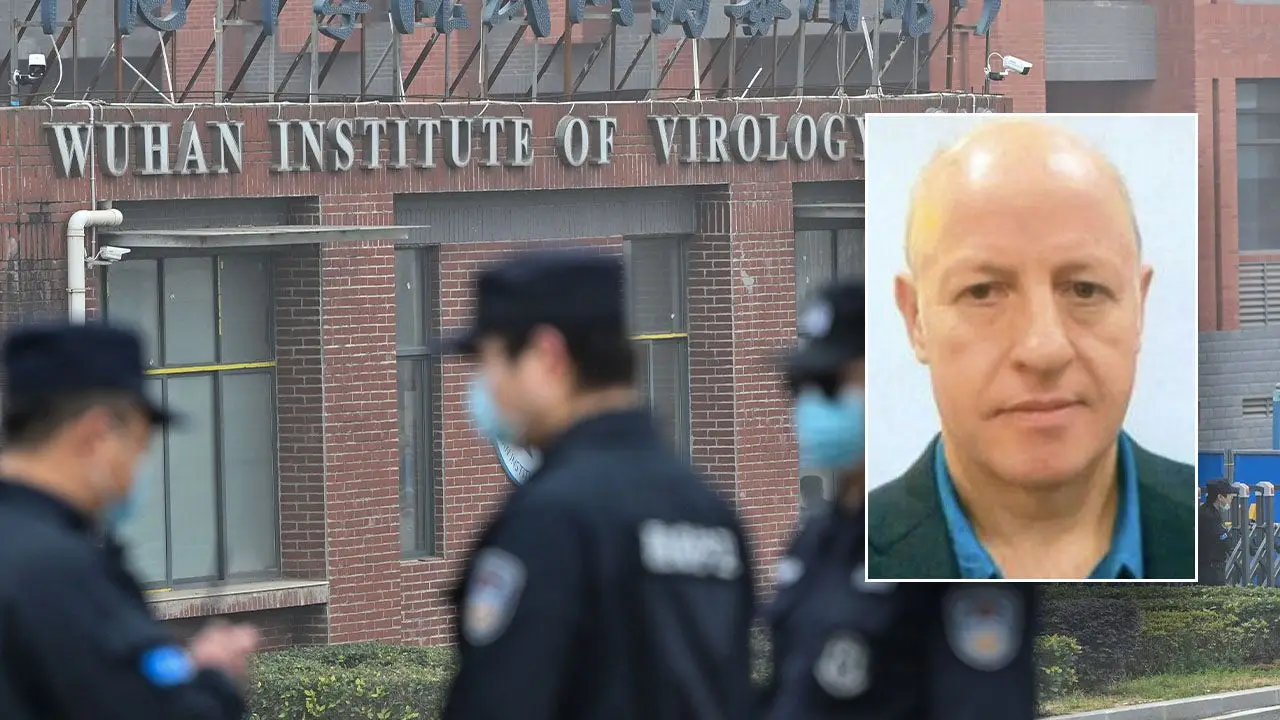
To understand why Peter Daszak was flagged as a “high person of interest” by the CBP’s National Targeting Center, one must look at the intricate, often controversial web of international scientific collaboration that preceded the pandemic. For over fifteen years, Daszak served as the president of the EcoHealth Alliance, a prominent U.S.-based scientific non-profit organization dedicated to identifying and preventing the spillover of dangerous pathogens from wildlife to human populations. Much of his life’s work centered on a deep, enduring partnership with the Wuhan Institute of Virology (WIV) in China and its lead virologist, Dr. Shi Zhengli, famously nicknamed the “Bat Woman” for her extensive field research in cave networks. Through substantial grants funded by the U.S. National Institutes of Health (NIH), Daszak’s organization served as a primary financial conduit, routing American taxpayer dollars to the Wuhan lab to study bat coronaviruses. The primary objective of this research was to understand how these viruses mutate and infect human cells, mapping out potential future outbreaks before they could happen. However, this scientific endeavor frequently crossed into the precarious territory of “gain-of-function” research—a highly debated laboratory methodology wherein scientists deliberately manipulate pathogens to make them more transmissible or lethal to better study their behavior and develop vaccines. While sold to the global scientific community as a vital shield against future pandemics, the practice carried catastrophic risks of accidental laboratory escape. When the novel coronavirus first emerged in Wuhan in late 2019, just miles from the very laboratories where Daszak’s partners were manipulating similar viruses, the line between preventative scientific brilliance and an existential, human-made disaster became terrifyingly blurred, transforming Daszak from a globally respected ecology savior into a key subject of intense suspicion.
The planned interception at John F. Kennedy International Airport represents a dramatic moment where national security, public health, and border sovereignty converged on a busy passenger terminal. The newly released documents reveal that the CBP’s National Targeting Center was preparing for a meticulous, high-stakes interrogation, viewing Daszak’s return to American soil as a rare, fleeting window of opportunity to obtain unvarnished, real-time intelligence directly from the ground in Wuhan. In early February 2021, while the world was still locked down and mourning millions of lost lives, the domestic security apparatus was operating under immense pressure to discover how the virus originated. According to internal agency flight itineraries and drafting logs, agents had prepared a series of pointed, aggressive questions designed to bypass standard diplomatic talking points. They intended to probe deep into Daszak’s actual work in China, his specific interactions with WIV staff during the pandemic’s early days, and whether he was covertly carrying, exporting, or importing biological samples, genetic materials, or viral strains without proper federal authorization. Furthermore, the National Institutes of Health itself had privately asked Daszak to obtain and return the original “type-specimen” utilized by the Wuhan lab for its genetic sequences, alongside demands for him to clarify several gray areas of his collaborative work. Because of this, border agents were authorized to examine his physical belongings, inspect his electronic devices, and request related cell phone communications to see if they could recover lost correspondences or secret agreements that could shed light on the initial outbreak. The scheduled interrogation was designed to treat Daszak not merely as an incoming academic traveler, but as a crucial material witness who might hold the physical and digital keys to resolving the central mystery of our time.
Yet, this meticulously planned administrative operation ground to a sudden, unexpected halt just seventy-two hours before Daszak was scheduled to land in New York. On February 2, 2021, the CBP received an official, highly unusual request from the FBI’s New York Field Office, explicitly demanding that border agents cancel the planned inspection and allow the zoologist to pass through the international arrivals terminal completely unbothered. The internal communications released by Senator Paul lay bare this striking interagency disagreement, documenting a rare bureaucratic struggle where one arm of the federal government attempted to uncover the truth while another stepped in to block the pathway. “FBI New York requested we do not stop the subject below,” the declassified communication read, effectively silencing the security apparatus at the border. This intervention prevented CBP from searching Daszak’s personal electronic devices, isolating his biological samples, or asking the pre-formulated interrogation questions that could have altered the entire trajectory of the COVID-19 origin investigation. The revelation of this stand-down order has sent shockwaves through oversight committees, raising uncomfortable questions about the relationship between high-profile scientific researchers and the American intelligence community. Critics argue that the FBI’s interference looks less like standard interagency coordination and more like an active effort to shield a powerful, well-connected figure from scrutiny, protecting the secret web of federal grants and defensive alliances that bound the U.S. government to controversial research in a foreign adversarial nation. By forcing CBP to retreat, the FBI ensured that whatever secrets, data, or samples Daszak carried home from Wuhan remained entirely private, safe from the eyes of public oversight during a crucial phase of the global crisis.
This files-backed shielding occurred against the backdrop of an increasingly tense global narrative regarding the origins of SARS-CoV-2. At the time of his planned detention, Daszak was traveling as one of only ten handpicked international scientists on the World Health Organization’s investigative team sent to Wuhan. His participation on this mission had already sparked intense public outcry and scientific backlash because of his glaring, undeniable conflicts of interest. To many observers, allowing the president of the EcoHealth Alliance to investigate whether a lab leak had occurred at the WIV—the very lab he had funded, partnered with, and publicly championed for years—was akin to allowing a suspect to head their own criminal investigation. Despite this obvious ethical failure, Daszak was highly influential in steering the early global public consensus away from the laboratory theory and toward a natural animal-spillover origin. In the early months of the pandemic, he had organized a high-profile letter in The Lancet medical journal, signed by prominent scientists, which swiftly condemned any suggestion of a laboratory origin as a “conspiracy theory” that only promoted fear and prejudice. He actively lobbied his peers to maintain a unified front, presenting a narrative of absolute scientific certainty when, in truth, the scientific community was deeply divided. Behind closed doors, however, private messages and emails released through investigation show a far more anxious reality, revealing that many of these same scientific experts who publicly dismissed the lab-leak hypothesis were privately harboring deep, terrifying doubts about the natural zoonotic spillover theory. By presenting an official front of certainty to the global public while privately moving to suppress any real security scrutiny of Daszak upon his return, the federal health and intelligence apparatus cultivated an atmosphere of skepticism, leaving citizens to feel that the official story was a manufactured narrative designed to protect institutions rather than uncover epidemiological truths.
In the years since those highly synchronized plans fell apart at JFK airport, the landscape of public health, science, and government oversight has shifted dramatically, yet the hunger for transparency remains unquenched. Following intense congressional investigations, public scrutiny, and the temporary halting of its federal funding, the EcoHealth Alliance collapsed under the weight of its own administrative scandals. Dr. Peter Daszak, however, has transitioned to a new chapter, now serving as the head of Nature Health Global, an ecological research and pandemic prevention non-profit that operates away from the toxic political spotlight of his previous venture. For Senator Rand Paul, who has spent years grilling public health officials like Dr. Anthony Fauci in intense, viral Senate hearings, the fight is far from over, and the release of these CBP and FBI files is framed as the opening salvo of a much larger, ongoing campaign for accountability. By launching “The Reading Room” and releasing these sensitive files on a rolling basis, Paul hopes to provide the public with the raw, unfiltered evidence needed to judge the federal response for themselves, transcending political bias and official reports. The human cost of the COVID-19 pandemic—the millions of lives lost, the disrupted childhoods, the fractured economies, and the deep erosion of public trust in scientific institutions—demands an honest reckoning with how this tragedy began. Until the gatekeepers of federal agencies are forced to explain why they shielded key actors from basic questioning, the question of how the pandemic started will remain a painful, open wound, serving as a reminder that the pursuit of truth is often a battle against the very institutions built to protect us.