





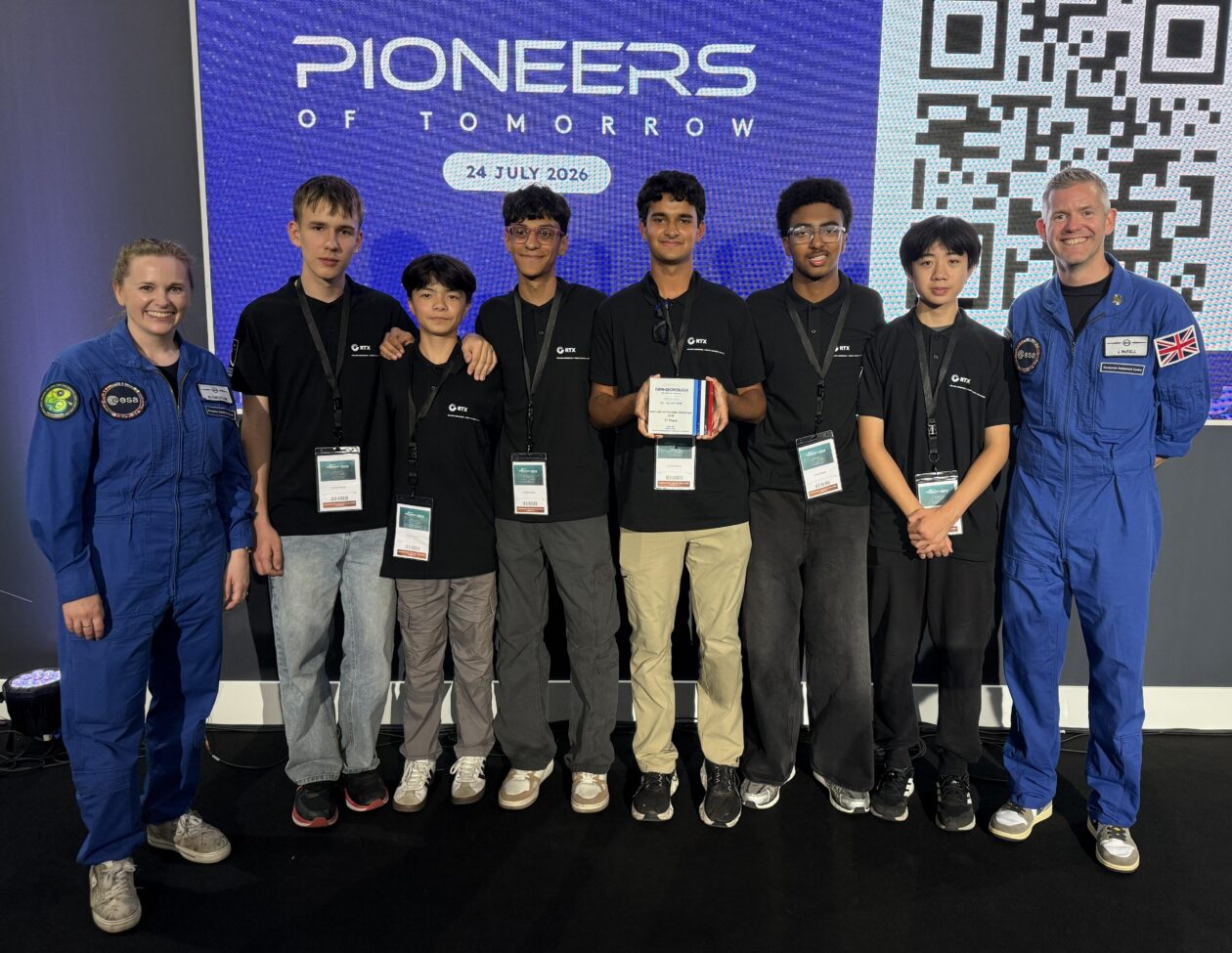
Under a bright, windswept English sky south of London, the roar of jet engines at the historic Farnborough International Airshow was momentarily eclipsed by the triumphant cheers of six teenage boys from Bellevue, Washington. For Daniel Tadesse, Bao-Ky Tran, Mikhail Antipin, Antoine Vigneron, Nikhil Sirivara, and Anay Mediwala—collectively known as Washington Youth Aerospace—this moment represented the absolute pinnacle of a journey that began not in high-tech laboratories, but in local backyards, middle school classrooms, and suburban parks. These ninth-graders from Interlake High School accomplished what many seasoned aerospace professionals only dream of: they soared above elite student engineering teams from France, Japan, the United Kingdom, and Ukraine to capture first place at the highly coveted International Rocketry Challenge. Standing proud in their matching black team shirts alongside pioneering European Space Agency astronauts Meganne Christian and John McFall, the young men held their custom-designed rocket high, embodying a brilliant blend of youthful exuberance and world-class scientific execution. The victory was far more than an academic milestone; it was a deeply emotional culmination of years spent hunched over design blueprints, learning from structural failures, and growing together from childhood friends into a globally dominant engineering unit.
To truly appreciate their achievement, one must understand the breathtaking complexity and unforgiving physics of the competition itself. The core of the challenge is deceptively simple yet agonizingly difficult to execute: teams must construct a reliable, dual-stage model rocket capable of carrying a fragile payload—a single raw egg—to an exact target altitude before returning it safely to the earth, unbroken. Achieving this requires a delicate balance of propulsive force, aerodynamic stability, and parachute drag calculations, as any sudden deceleration or structural wobble can instantly turn the payload into scrambled eggs and disqualify the team. On flight day, the Washington Youth Aerospace rocket sliced through the gray British sky with absolute grace, reaching an altitude of 765 feet—stunningly close to the tournament’s strict 750-foot target—and maintaining a near-perfect total flight duration of 38.16 seconds. While the physical launch accounts for a massive sixty percent of a team’s total score, the remaining forty percent hinges on a grueling oral presentation where students must defend their engineering choices, math, and data before a critical panel of industry judges. Demonstrating a rare eloquence that matched their mechanical genius, the Bellevue teenagers demonstrated complete mastery of their craft, earning the absolute top score in both the flight and presentation categories to secure their unquestioned global victory.
The path to global glory, however, was paved with immense stress, heartbreak, and the kind of high-stakes drama usually reserved for Hollywood films. Just months earlier, during the 2026 National Finals of the American Rocketry Challenge in May, the team faced a devastating logistics crisis when their primary high-powered rocket motor was inexplicably lost in the mail days before the launch. Confronted with the soul-crushing prospect of having to forfeit after months of tireless preparation, the team refused to yield; they launched a frantic, late-night scramble to source, adapt, and calibrate an alternative motor just in time to salvage their run, ultimately securing a spectacular second-place finish nationally. Yet, fate had one more astonishing curveball to throw their way when the first-place national team from California discovered a catastrophic scheduling conflict that prevented them from traveling to England. Suddenly, Washington Youth Aerospace was called upon to step up and represent the United States of America on the grandest stage in student aerospace, proving the timeless adage that fortune favors the prepared, and transitioning their hard-fought second-place national silver into a golden ticket to absolute international stardom.
Beyond the intense pressure of the launching pad and the academic rigor of the judging booth, the journey to England was a profound, life-altering cultural adventure that expanded the boys’ horizons far beyond the borders of the Pacific Northwest. Assisted by parent advisor and dedicated chaperone Sudheer Sirivara, the young rocketeers immersed themselves in a series of unique cross-cultural exchanges where they bonded with fellow teenage competitors from very different corners of the globe, exchanging stories, local traditions, and the shared joys of adolescence. Between competitive flights, the boys explored the dizzying array of cutting-edge flight technology scattered across the Farnborough tarmac, marveling at the sheer engineering scale of massive Chinook and Black Hawk helicopters, and standing awestruck in the shadows of legendary C-130 transport carriers and elite F-35 fighter jets. To top off their historic European expedition, the team spent their remaining hours exploring the historic streets of London, soaking in centuries of architectural history and cultural landmarks before boardng their flight back to Washington with memories, friendships, and a world-championship trophy that would last a lifetime.
Such an extraordinary level of excellence does not happen in a vacuum, but is rather nurtured by a deeply committed ecosystem of families, mentors, and forward-thinking industry initiatives designed to foster the next generation of scientific pioneers. The American Rocketry Challenge serves as the crown jewel of STEM outreach for the Aerospace Industries Association (AIA), heavily supported by global defense and aerospace giants who recognize that the future of space exploration, national security, and planetary science relies entirely on investing in young minds early. For parent chaperone Sudheer Sirivara and the network of mentors who guided the boys through sleepless nights of building and testing, seeing the Washington Youth Aerospace team lauded on LinkedIn and praised by international space personnel was a powerful validation of the impact of collaborative, family-supported STEM education. This remarkable triumph serves as a glowing blueprint for how structured mentorship, early technical exposure, and community support can empower young minds to channel their natural curiosity into hard industrial skills, bridging the gap between high school classrooms and the future workforce of the global aerospace industry.
Now back home in Bellevue, the newly crowned international champions have no intention of resting on their laurels, as their taste of global victory has only fueled their hunger to push the boundaries of youth aerospace even further. Looking to the immediate horizon, Washington Youth Aerospace is adjusting its trajectory toward the highly prestigious and intellectually demanding NASA Student Launch Initiative (SLI), where they will design, build, and fly extremely advanced payloads on high-altitude rockets alongside some of the brightest university minds in the country. Simultaneously, they are already brainstorming design modifications to defend their crown in the upcoming cycles of the American Rocketry Challenge, eager to mentor younger students and keep their beloved local rocketry community thriving. As these six talented ninth-graders prepare for the demanding academic years ahead, they do so not just as high school students, but as proven international leaders, demonstrating to the entire world that with a little passion, resilient teamwork, and an unwavering belief in one’s dreams, there is absolutely no limit to how high the human spirit can fly.