







To the casual observer, Jamshid Ghomi lived the ultimate version of the American Dream, nestled high within the elite, sun-drenched hills of Newport Coast, California. The 63-year-old dual U.S.-Iranian citizen resided in an opulent, custom-built 14,000-square-foot mega-mansion valued at an astonishing $35 million—a modern monument of luxury overlooking the Pacific Ocean. Yet, beneath this glittering facade of Southern California wealth lay a dark and highly dangerous double life. Federal prosecutors have pulled back the curtain on Ghomi, accusing him of operating a prolific, decade-long illicit procurement network that actively fueled Iran’s military and nuclear ambitions. While the Iranian regime publically chanted hostile rhetoric against the United States, Ghomi was allegedly working behind the scenes in his quiet coastal neighborhood, funneling restricted, highly sensitive American technology to Tehran’s most classified state programs, including those responsible for the country’s controversial uranium enrichment.
At the heart of Ghomi’s alleged black-market empire was Faraz Pardaz Rayaneh Co. Ltd. (FPR), a Tehran-based technology enterprise where he served as founder and chief executive. Rather than operating a legitimate consumer tech business, prosecutors reveal that FPR functioned as a vital, covert pipeline designed to bypass strict Western sanctions. For over ten years, the company systematically sourced sophisticated, export-restricted American computer networking hardware, advanced encryption software, and high-level cybersecurity equipment. This technology was not destined for ordinary businesses; instead, Ghomi allegedly routed these critical components directly to the Atomic Energy Organization of Iran (AEOI), as well as the nation’s Ministry of Defense and Armed Forces Logistics. By supplying these military-affiliated entities with cutting-edge American infrastructure, Ghomi is accused of directly strengthening the hands of a foreign adversary and actively compromising global security, all from the comfort of his private Californian sanctuary.
To fund both his illicit operations and his lavish lifestyle, Ghomi created a highly complex, labyrinthine financial network to wash millions of dollars in blood money before importing it into the United States. Recognizing that direct financial transactions between Iran and America would immediately flag federal investigators, Ghomi allegedly established a sprawling web of offshore shell corporations and unregulated money exchange houses. This global laundering pipeline stretched from the secretive banking havens of the British Virgin Islands and Hong Kong to the bustling finance hubs of Turkey and the United Arab Emirates. Over a thirteen-year period, more than $15 million in tainted funds was systematically layered through these accounts and deposited into U.S. banks. To keep the federal government off his trail, Ghomi reportedly falsified wire transfer descriptions, labeling massive influxes of cash as mundane payments for “Consulting Fees” or “Buying Goods,” effectively masking the true origin of his massive wealth.
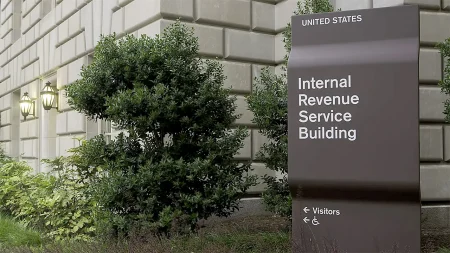
While Ghomi was quietly funneling millions of dollars into escrow accounts to finance the construction of his coastal palace—which cost over $10 million to construct after he purchased the vacant lot for $4.5 million in 2010—his official paperwork pointed to a life of near-poverty. The sheer audacity of Ghomi’s financial deception is highlighted by his federal tax returns, where he reported a peak annual income of just $20,684. In a breathtaking displays of greed and hypocrisy, the multi-millionaire allegedly claimed the federal Earned Income Tax Credit, a government benefit strictly reserved for low-and-moderate-income working families struggling to survive. When questioned by the Internal Revenue Service about the sudden millions pouring into his personal accounts to build his Newport Coast estate, Ghomi falsely claimed the incoming foreign wires were merely a “foreign inheritance,” attempting to use America’s tax laws to shield his illicit smuggling profits from any domestic oversight.
The scope of Ghomi’s smuggling operations was staggering in both volume and logistical calculation. Between 2014 and 2018 alone, Ghomi is accused of orchestrating the illegal export of more than 250 metric tons of restricted computer and networking materials to Iran. This was not a passive operation; it required meticulous planning and deliberate deception to evade the watchful eyes of international customs agents. Ghomi instructed his foreign associates to utilize front companies in the United Arab Emirates as sorting hubs, ensuring that shipments of American hardware were rerouted through Dubai before arriving at their final destination in Tehran. He was hyper-vigilant about operational security, explicitly ordering his co-conspirators to scrub his name, personal details, and business association from all commercial invoices, shipping manifests, and custom declarations to prevent any direct link back to his California residence.
Now, Ghomi’s carefully constructed house of cards has completely collapsed, leaving him facing up to 20 years in federal prison if convicted of conspiracy to violate U.S. sanctions. His arrest represents a major victory in a broader, aggressive campaign by the Department of Justice to dismantle covert foreign procurement networks operating natively within American borders. The case stands as a stark and sobering reminder of the internal threats facing national security, highlighting how easily the freedoms, financial systems, and technological innovations of the West can be weaponized from within. As Ghomi trades his $35 million ocean-view mansion for a barren federal holding cell, his story serves as a cautionary tale of ultimate greed—a man who attempted to enjoy the unparalleled luxuries of American liberty while simultaneously selling out its safety to the highest bidder in Tehran.