


Paragraph 1: Setting the Scene – A Political Counterpunch in Dallas
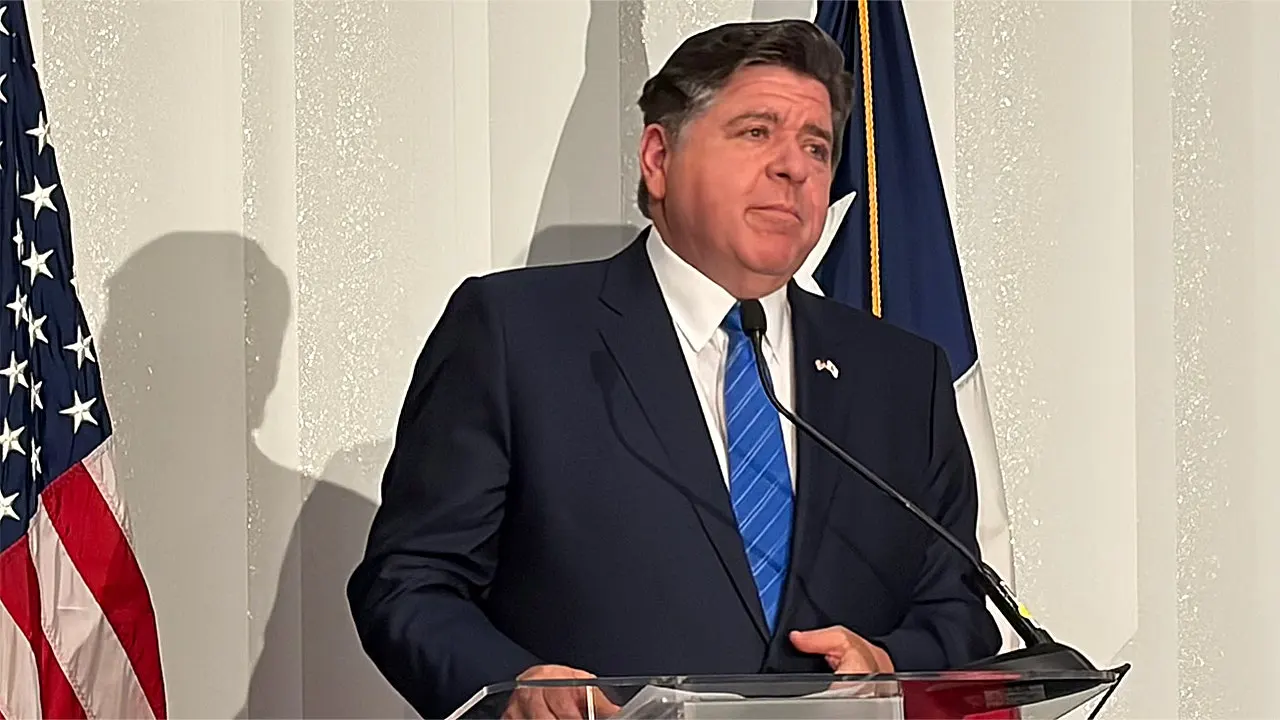
On a sweltering summer afternoon in Dallas, the air inside the convention hall was thick with the kind of tension that only a high-stakes political showdown can produce. Across the street from the Republican National Committee’s first-ever midterm convention, a smaller but equally determined crowd gathered in a rented event space, its windows facing the larger arena like a mirror reflecting a different vision for America. At the center of this counter-programming stood Illinois Governor JB Pritzker, a Democrat with a sharp tongue, a hefty personal fortune, and a willingness to say exactly what he thought about the GOP’s playbook. The timing was no accident – with less than two months until the midterm elections and early voting already under way in many states, every speech, every gesture, every word carried weight. Pritzker was there not just to criticize the opposition but to offer a rebuttal to the Republican message, which he believed was built on fear, division, and a distorted view of the nation’s problems. As he stepped to the microphone, the crowd’s energy was palpable, a mix of local Democratic activists, curious onlookers, and national reporters eager to capture the moment. For Pritzker, this was more than a routine campaign appearance; it was a chance to position himself as a leading voice of the resistance to Donald Trump’s influence, and perhaps to plant a seed for his own future ambitions.
Paragraph 2: The Economic Attack – Trade Wars and the Cost of Living
Pritzker wasted no time in going after the core of the Republican economic message, which had centered on tax cuts, deregulation, and a tough stance on trade. But the governor’s critique was personal and visceral, aimed at the very families that Republicans claimed to champion. He spoke of farmers and ranchers in the heartland who had seen their livelihoods gutted by the ongoing trade war – a conflict that, in his words, “was never about protecting American workers but about satisfying a president’s ego.” He painted a vivid picture of grocery stores where prices for everyday goods had climbed steadily, squeezing working families who could hardly afford to fill their carts. “The cost of a loaf of bread, a gallon of milk, a carton of eggs – these are the numbers that matter,” he told the audience, his voice rising with indignation. He also pointed to the housing market, where skyrocketing rents and home prices had put the American Dream out of reach for millions of young people, and to the health care system, where premiums and deductibles continued to eat away at paychecks. All of this, he argued, was the direct result of policies that favored the wealthy and corporations over ordinary Americans. “They talk about the economy as if it’s a stock ticker,” Pritzker said, “but for too many people, it’s a daily struggle just to keep their heads above water.” His words resonated not because they were new, but because they struck a chord of frustration that had been building for years.
Paragraph 3: Election Integrity – A Veiled Accusation
But the sharpest jab of the afternoon came when Pritzker turned to the issue of voting rights and election integrity. Without naming names directly, he accused the Republican Party of trying to “rig” the upcoming elections by restricting mail-in ballots and imposing new voting laws that disproportionately affected minority and low-income communities. “They know they can’t win on the merits,” he said, “so they’re trying to change the rules to make it harder for people to participate in democracy.” He cited recent legislative efforts in several states to limit drop boxes, shorten early voting periods, and add stringent ID requirements, calling them a coordinated attack on the fundamental right to vote. Pritzker’s own state, Illinois, had expanded mail-in voting and same-day registration, and he contrasted that with the GOP’s approach, which he described as “a solution in search of a problem.” The accusation was careful – he didn’t outright claim that Republicans were planning to steal the election, but he left little doubt that he believed their actions were eroding trust in the system. “Democracy isn’t a zero-sum game,” he insisted. “When you make it harder for some to vote, you weaken it for everyone.” The charge was a direct counter to Trump’s repeated claims of a “rigged” system, flipping the narrative and turning it back on the accusers.
Paragraph 4: Personal Ambitions – The 2028 Whisper
As the press conference wound down, a reporter asked Pritzker whether his appearance in Dallas, far from his own state’s borders, was a signal of larger ambitions. The governor, who has never shied away from the spotlight, smiled but gave a measured response. He said he was there simply because “what happens in Texas matters to every American,” and that the fight for the country’s future was not confined to any single state. Yet the question was unavoidable: Pritzker, a billionaire businessman turned progressive politician, had been mentioned as a potential contender for the Democratic presidential nomination in 2028, should Trump not be on the ballot. His answers hinted at a broader vision, one that extended beyond his own re-election campaign in Illinois, where he was running for a third term. “I care a great deal about what happens in Texas, in Ohio, in Georgia – because we are all in this together,” he said, carefully avoiding a direct confirmation but leaving the door wide open. The crowd, many of whom were already wearing “Pritzker 2028” buttons, began to chant his name, and the governor allowed himself a moment of satisfaction. Whether or not he was genuinely considering a run, his performance in Dallas had certainly made him a more recognizable figure on the national stage, a man who could command attention and deliver a message with both passion and precision.
Paragraph 5: The Broader Battle – Midterm Strategies and the Fight for Control
Beyond the individual moments and accusations, the Dallas counter-event was part of a larger strategic battle for control of Congress. The midterms were shaping up to be a brutal test for Democrats, who were defending thin majorities in both the House and the Senate, and history was not on their side – the party holding the White House typically loses seats in the first midterm after a presidential election. Republicans, buoyed by President Trump’s enduring influence, were seeking to capitalize on voter anger over inflation, crime, and the border, while Democrats hoped to rally their base around issues like abortion rights, gun safety, and the defense of democracy. Pritzker’s speech was an attempt to reframe the narrative, to argue that the GOP’s focus on culture wars and electoral conspiracy theories was a distraction from the real issues that affected people’s lives. “They want you to be afraid – afraid of your neighbors, afraid of the future, afraid of each other,” he said. “But we’re not afraid. We see a different path, one where every family can thrive, where every vote counts, and where the promise of America is kept for everyone.” His message was optimistic but urgent, and it reflected a broader Democratic strategy to make the election a choice between hope and fear, between progress and regression.
Paragraph 6: Conclusion – A Human Voice in a Divisive Time
As the event drew to a close, Pritzker stayed for a while, shaking hands, posing for selfies, and listening to the stories of ordinary Texans who had come to voice their own concerns. He was not just a politician delivering a speech; he was a person engaging with the human side of politics – the single mother worried about her son’s future, the retired veteran struggling with medical bills, the young teacher counting the days until she could afford her own home. In a time of deep division, when political discourse had become increasingly hostile and personal, Pritzker offered a moment of connection. He did not have all the answers, and his critics would surely find plenty to attack in his record and his rhetoric. But for those in the room, his words provided a sense of hope and a reminder that democracy was not just about winning elections but about building a society that worked for everyone. As he walked out into the Texas heat, the chants of “JB! JB!” still ringing in his ears, the governor of Illinois had made his mark. Whether that mark would lead to the White House remains to be seen, but on that day, in that room, he had done what all good politicians do: he had made people feel heard, and he had given them a reason to keep fighting. And that, perhaps, was the most human thing of all.