


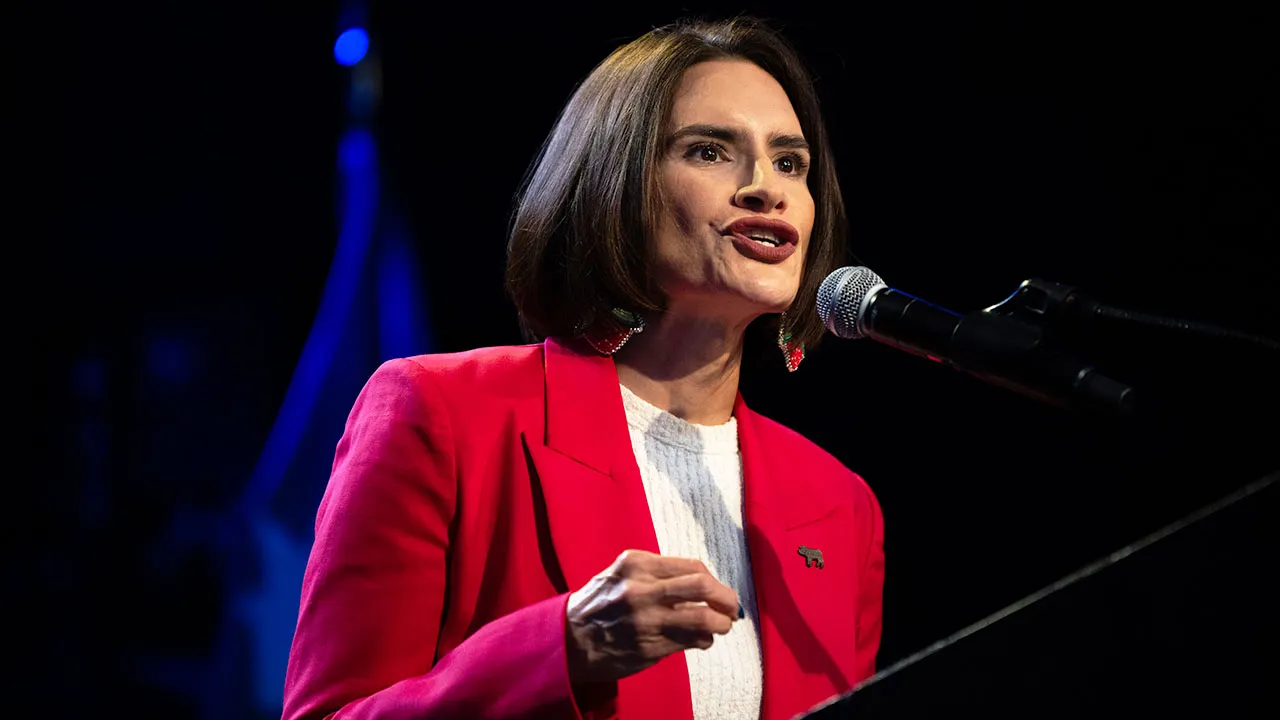
1. The scene in Minnesota on Tuesday night was one of triumph and turmoil, a classic American political drama unfolding under the cold northern lights. Peggy Flanagan, the state’s lieutenant governor and a firebrand of the progressive left, had just achieved what many thought impossible: she toppled the more moderate, well-funded Representative Angie Craig in the Democratic primary for a crucial U.S. Senate seat. The victory party was loud, with cheering activists who saw her as the antidote to a party they believed had grown too cautious. Flanagan took the stage with a wide, victorious smile, her voice ringing with promises of a new era. She spoke of healthcare, of workers’ rights, of the need to fundamentally restructure a system that had failed too many. But for all the confetti and hopeful chants, there was a giant elephant in the room, one that refused to leave. Just under the surface of the celebration lay the devastating fraud scandal that had rocked Minnesota’s government to its core — a scandal that had unfolded on her watch, as the loyal second-in-command to Governor Tim Walz, and one that she conspicuously did not mention during her speech. It was the political baggage she couldn’t shed, and its shadow loomed over what should have been her night of glory. Her silence on the issue spoke volumes, serving as an uneasy prelude to a general election campaign where her opponent, Republican Michele Tafoya, was already sharpening her knives, eager to make that very topic the central question of the race.
2. To understand the fury, one must look at the facts of the “feeding our future” program. A massive government initiative intended to provide meals to low-income children during the COVID-19 pandemic was exploited on a staggering scale, with federal investigators eventually uncovering what some called the largest pandemic fraud scheme in American history. Hundreds of millions of dollars meant for vulnerable families were siphoned off into luxury cars, real estate, and personal bank accounts, while the administration was slow to catch on and even slower to admit fault. For Angie Craig, this became her primary ammunition against Flanagan. During a debate on Minnesota Public Radio, Craig’s frustration finally boiled over. “The lieutenant governor, even as we sit here today, continues to take absolutely no accountability for any of the fraud issues, and she continues to blame the governor,” Craig said, her voice thick with anger. “And I’m going to be honest: It’s pissing me off.” It was a raw, human moment, a stark contrast to the sterile political attacks voters often see. Craig argued that Flanagan had served alongside Walz since 2018 as his right hand, and that you cannot simply shrug off the failure of the ship you helped steer. The voters seemed to feel it too. Polls showed widespread frustration across party lines. But Flanagan held her ground, deflecting blame in a way that many found infuriating. In an interview with the Minnesota Reformer, she stated plainly, “The governor has said that the buck stops with him, and he took the lead here.” That refusal to accept even a sliver of responsibility was a calculated risk that ultimately helped her win the primary, but it left a bitter aftertaste that is sure to resonate in the months to come.
3. Rather than addressing the scandal head-on, Flanagan chose to run on a sharply progressive agenda, and her victory speech was a testament to that choice. There were no apologies, no solemn references to the missing millions. Instead, she doubled down on the fiery rhetoric that made her a darling of the insurgent movement reshaping the Democratic Party. In a moment that sent shockwaves through the political establishment, she vowed to “rip ICE apart,” referencing the immigration enforcement agency in the wake of deadly shootings in Minnesota earlier in the year. It was a rallying cry for the left, a signal that she was not going to moderate her message for a broader electorate. It was also a smart play to shore up her base, but it did nothing to address the lingering questions about her governance. The scandal had already torpedoed Walz’s re-election hopes, with voters seemingly ready to punish everyone associated with the current administration, and Flanagan’s defiant attitude showed a politician who would rather talk about a progressive revolution than face her own past missteps. Yet, for her supporters, this defiance was precisely the point. They saw a woman fighting back against a corrupt system, refusing to let a bureaucratic failure define her. She was humanizing the struggle against an unjust status quo, even as critics saw a dangerous refusal to learn from mistakes. The question now is whether this defiant humanization will translate into real success in November, or whether the bitter reality of stolen money and broken trust will be the cold, hard truth that wins the day.
4. On the Republican side, they are licking their chops at the prospect of turning this scandal into a ticket to the Senate. Michele Tafoya, a familiar face to millions as the sideline reporter for NBC’s “Sunday Night Football,” is the newly crowned Republican nominee, and she wasted no time in pouncing on the issue that her opponent so desperately wants to ignore. “Minnesotans of every political stripe are fed up. They’re exhausted with this fraud,” Tafoya told a Minnesota Fox affiliate, her tone resonant with the kind of shared exasperation that makes for powerful campaigning. “We cannot show our children that failure comes without accountability,” she added, making the scandal a moral lesson for the next generation. Her message was carefully crafted to appeal beyond the hardcore partisan base, framing herself as a common-sense guardian of the taxpayers’ dollars in a state that had been betrayed. National Republicans are buzzing with cautious optimism. Tim Scott, the South Carolina senator who chairs the Republican Senate campaign committee, believes Minnesota, a state that hasn’t elected a Republican senator since 2009, is suddenly in play. “The one thing that gets me excited when I think about this election cycle on the map is Minnesota,” Scott told CNN, his eyes lighting up at the thought of an upset. “I think Minnesota, we have a real shot with Michele Tafoya.” Behind the scenes, GOP operatives are giddy about Tafoya’s crossover appeal. They see her not as a typical fire-breather, but as a moderate-leaning, polished communicator who can unite swing voters, disaffected moderates, and MAGA loyalists into a winning coalition. “Tafoya has the power to appeal to a broader electorate that’s starving for authenticity,” a veteran GOP operative said. “Her career as a sideline reporter makes her relatable to a mainstream crowd.” But the real hope is that the fraud scandal will do the heavy lifting, eroding trust in the Democratic brand enough to let her walk across the finish line.
5. Tafoya is also positioning herself as a nuanced figure on the most divisive cultural issue of the day: abortion, a stance that could pull partisan women away from the Democratic column. In an open letter to Minnesotans, she carefully staked out a middle ground. She wrote that she would oppose taxpayer-funded abortions, support conservative and strict-constructionist judges, and remain completely aligned with President Donald Trump on the issue, while also expressing support for the Dobbs decision that overturned Roe v. Wade. But then came the twist — the part that makes her different from many in her party. “I do not support an outright ban on abortion, and I believe there should be reasonable access in the first 12 weeks of pregnancy,” Tafoya wrote. She went even further, signaling validation for a popular bipartisan cause: “Further, I believe that states who restrict access to fertility treatments like IVF are also acting wrongly — being pro-family is pro-life.” This is a humanizing stance, one that acknowledges the messy reality of reproductive health beyond slogans. It could allow her to appeal to suburban women who are frightened by total bans, while still reassuring social conservatives that she is on their side. She is trying to carve out a space as the adult in the room, a woman who has lived the struggles of family life and understands the emotional weight of these decisions. On the other hand, Flanagan is running as the unapologetic progressive, in a state that still remembers the days of Walter Mondale and Paul Wellstone. The contrast could not be starker, and both women will be fighting to define what “normal” Minnesota values really are.
6. As the general election campaign kicks into high gear, the race is shaping up to be a national referendum on accountability and authenticity. Flanagan has to somehow convince Minnesota voters that she is a force for change, not a continuing part of a tainted administration. She is betting that the energy of the progressive base will drown out the whispers of corruption, and that her fiery persona will rally young voters and minorities to turn out in droves. Tafoya, meanwhile, must walk a tightrope: she needs to harness the anger over the fraud without being branded a Trump lackey, and she must use her mainstream media charm to attract independents who may be wary of her party’s hard-right edge. Neither path is easy. But the stakes are enormous, both for the balance of power in the Senate and for the soul of the Minnesota Democratic Party. The primary results have shown that the insurgent left is fully in control, and Flanagan’s promise to “rip ICE apart” signals a radical shift that will likely energize her base but also terrify the moderates who decide swing elections. On the other side, Tafoya’s genteel, suburban mom demeanor wraps a hard conservative message in a soft, approachable package. In the end, the voters of Minnesota will be faced with a choice that is as much about character as it is about policies. The fraud scandal will not disappear, and Flanagan’s inability to show genuine remorse could be the anchor that sinks her campaign. But in a year of political surprises, nothing can be taken for granted. The camera lights of “Sunday Night Football” may have taught Tafoya how to perform under pressure, but the gritty reality of a Minnesota November will be the ultimate test of whether she can turn this anger into an unforgettable victory.