


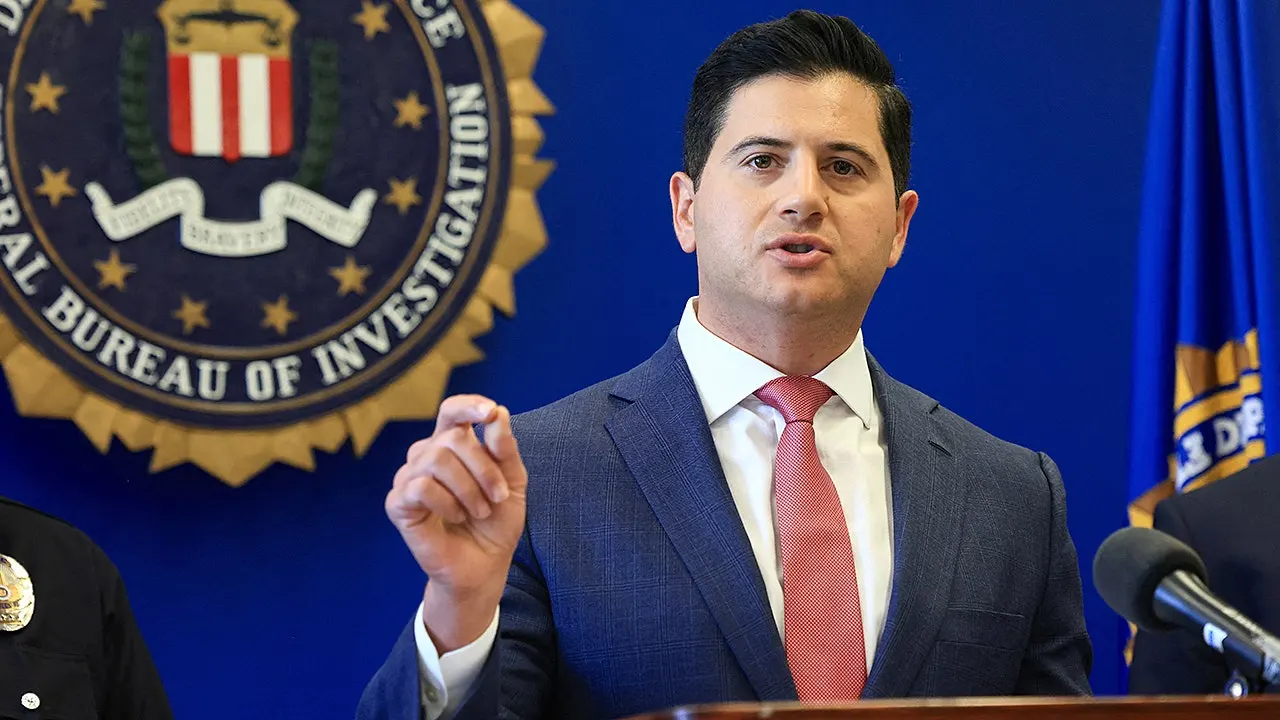
A federal judge has stepped squarely into the middle of an escalating legal fight over who actually runs the U.S. Attorney’s Office in Southern California, ruling that Bill Essayli, the man currently serving as its top prosecutor, has been doing so unlawfully. The judge’s decision, handed down Tuesday, disqualified Essayli from participating in or supervising two criminal cases, after concluding that he is serving as a “de facto” United States Attorney without the legal authority to hold that role. Essayli, who has been in the spotlight as the face of the Justice Department’s efforts against California over thousands of disputed voter registrations, responded with a mix of resistance and confidence, saying the ruling would ultimately be overturned. The judge, however, did not make the disqualification immediate. He left the Justice Department a window to ask for a stay while it seeks an appeal. That brief pause means Essayli can keep showing up to work for now, but the legal cloud over his position is heavier than ever. The case is not merely a technical dispute about job titles. It is the latest chapter in a larger constitutional clash over the limits of presidential power, the role of the Senate in confirming high-level officials, and the aggressive tactics the current Justice Department has used to install people in important positions without going through traditional confirmation processes.
To understand why the judge reached that conclusion, it helps to trace the unusual path of Essayli’s appointment. He originally stepped into the role of interim U.S. attorney for the Central District of California under a temporary appointment that automatically carried a 120-day limit. When that period expired, the administration did not nominate him for a permanent term. The Senate never weighed in on his fitness. Instead, the then-Attorney General, Pam Bondi, appointed him as a special attorney and later designated him as first assistant U.S. attorney. That collection of titles allowed Essayli to continue working in the same office, supervising the same prosecutions, and effectively performing the same duties as a U.S. attorney, even though he had never been formally nominated by the president or confirmed by the Senate. The legal problem is that federal law has specific rules for how U.S. attorneys can be appointed, including temporary appointments after a vacancy and confirmation for permanent ones. The structures exist to make sure that the person wielding the immense power of the federal prosecution is either accountable to the Senate or clearly within the narrow exceptions for acting officials. The administration argued that the creative use of internal titles was a legitimate exercise of executive branch management. The judge, after reviewing the facts, decided it was not.
The ruling did not come out of nowhere. Judge J. Michael Seabright had previously examined the arrangement and found that it did not lawfully make Essayli the acting U.S. attorney, but he had allowed Essayli to keep supervising prosecutions under his other roles as first assistant and special attorney. That was a temporary equilibrium, but it did not last. Over the summer, the Ninth Circuit Court of Appeals ruled against a similar setup involving a federal prosecutor in Nevada, deciding that the Justice Department had unlawfully appointed the state’s top federal prosecutor without Senate confirmation. That decision changed the legal landscape and gave Judge Seabright a reason to revisit his earlier tolerance of Essayli’s situation. The Justice Department, aware of the threat, tried to adapt. Attorney General Todd Blanche, who had succeeded Bondi, issued a revised designation last month aimed at narrowing Essayli’s authority. The idea was to make Essayli look less like the acting U.S. attorney and more like a supervisor operating under the direct control of the Attorney General. But the judge was not convinced. After reviewing the revised designation, he found that Essayli still had enough power and discretion to be effectively occupying the vacant U.S. attorney position. The order was blunt: “In sum, Essayli is unlawfully serving as a ‘de facto’ United States Attorney.” That sentence is now the foundation of the ongoing appellate fight.
Essayli, for his part, did not sound like a man ready to step aside. He issued a statement that framed the dispute as a matter of presidential and prosecutorial authority, not personal ambition. “We respectfully disagree with the court’s order,” he said. “The President and the Attorney General have every right to select supervisors within the Justice Department.” That framing is important. It turns the case from a narrow question about one official’s résumé into a broader assertion that the executive branch should be able to choose its own leaders without the Senate’s interference in internal staffing decisions. Essayli also expressed certainty that the issue would eventually land before the Supreme Court. “Ultimately, this question will be decided by the Supreme Court, and I look forward to serving in my current role until then,” he said. That prediction may be optimistic, but it is not unrealistic. The Ninth Circuit’s Nevada decision and this new ruling create a direct conflict with the administration’s view, and the Supreme Court has shown an appetite for resolving high-stakes questions about executive power in recent terms. For now, however, the immediate effect is that Essayli cannot participate in the two criminal cases named in the judge’s order. The fact that the judge limited the disqualification to those two cases suggests the situation is still fluid, and that more challenges could follow if the government loses its appeal.
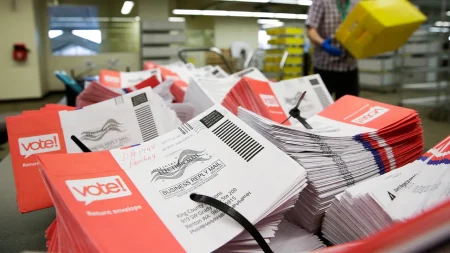
What makes this legal drama especially charged is the political context surrounding Essayli’s current duties. He has been helping lead a high-profile Justice Department effort against the state of California over more than 20,000 registered voters whom the administration says are likely noncitizens. The department has asked a federal court to order that ballots associated with those individuals be separated and set aside while their eligibility is reviewed. At a news conference on Tuesday, Essayli described the case as central to the administration’s mission. “I think this case is really on the forefront of the administration’s battle to fight for election integrity,” he said. “We wanna stop illegal voting. We don’t wanna chase it later.” When a reporter asked him about the judge’s ruling disqualifying him from the criminal cases, he gave a short answer: “That case will be decided by the Supreme Court.” The juxtaposition was striking. Essayli is simultaneously leading an aggressive federal voting case that could affect how ballots are counted in the largest state in the country, while his own legal authority to serve in that role is under attack in another courtroom. The voting case is pending before U.S. District Judge David O. Carter, who was expected to issue a ruling on the administration’s request on Wednesday. Even if the decision in that case is not directly shaped by the disqualification ruling, the timing creates an uncomfortable question: can a federal prosecutor whose appointment has been ruled unlawful be trusted to represent the United States in matters of such national consequence?
More than anything, the controversy over Essayli captures a deeper tension in the current American legal and political landscape. The administration has moved with unusual speed and boldness to install people in key positions, often using temporary appointments and internal designations as a way to bypass a Senate confirmation process that many officials view as slow, adversarial, and sometimes unfair. Courts have begun to push back, insisting that the Constitution’s Appointments Clause is not a loophole to be navigated with paperwork. The Nevada case established a precedent in the Ninth Circuit, and now that precedent has been extended to California. The government’s likely appeal means the question may indeed reach the Supreme Court, and a definitive ruling there could reshape how future administrations staff the Justice Department. For Essayli, the next chapter is uncertain but not necessarily bleak. He is still in his office, still publicly active, and still waiting for the legal system to resolve the contradiction between his role and his title. But the human dimension of the story is not just about one ambitious prosecutor. It is about the way institutional rules, political goals, and the pace of the courts collide in real time. It is about what happens when the government’s own internal decisions are challenged by the judiciary, and about the stubborn faith that every side places in the Supreme Court to answer the questions that no lower court can settle. The judge’s ruling was clear, but it was also temporary in practical terms. The Justice Department was given room to appeal, Essayli was allowed to remain in his role for the time being, and the larger battle over executive power and election integrity is far from finished. Whether Essayli is ultimately vindicated or removed, his case has already become a symbol of a moment when the rules about who can hold power are themselves being tested.