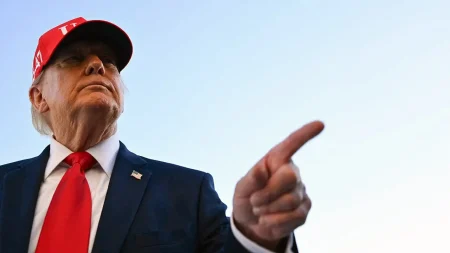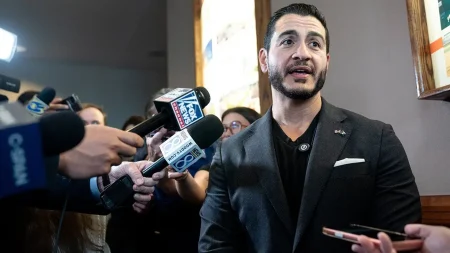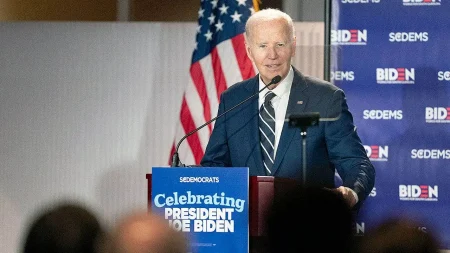



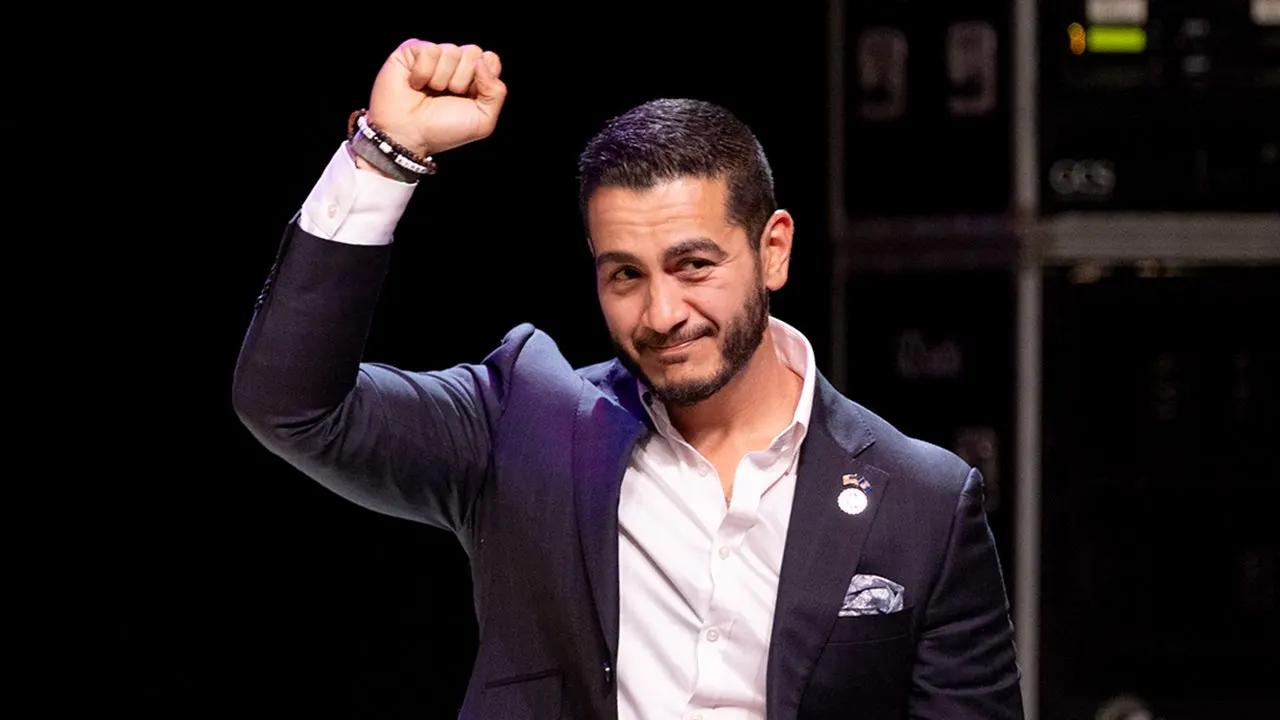
Michigan is never short on political drama, and the 2026 Senate race is shaping up to be one of the most closely watched battles in the country. In a state where every vote feels like it carries the weight of a national mood swing, the latest Fox News Poll shows Republican Mike Rogers holding a narrow, 4-point edge over Democrat Abdul El-Sayed, 51 percent to 47 percent. That gap sits comfortably inside the survey’s margin of sampling error, meaning the race is effectively a dead heat — a fitting status for a state that has become the ultimate electoral pendulum. Donald Trump won Michigan in both 2016 and 2024, each time by less than 2 points, while Joe Biden narrowly carried it in 2020. The state’s voters are used to razor-thin margins, and this Senate contest looks like it will follow the same pattern. El-Sayed, a progressive physician and former Detroit health official, emerged from a heated Democratic primary just days before the poll was conducted. Rogers, a former FBI agent and onetime congressman, has consolidated his party behind him in a way that El-Sayed has not yet fully managed. The result is a race where Democratic enthusiasm runs high, but Republican discipline runs deeper — and where the arithmetic may come down to whether energy or unity matters more in November.
The shape of each candidate’s support reveals two very different coalitions, and both come with warning signs. Rogers’s edge comes almost entirely from nearly unanimous Republican backing: 96 percent of Republicans support him, including 99 percent of MAGA Republicans and 89 percent of non-MAGA Republicans. That kind of party-wide lockstep is a luxury El-Sayed does not yet enjoy. Only a week after his primary victory, about 9 in 10 Democrats and nearly all supporters of the Democratic Socialists of America support him, but that number drops to just 69 percent among non-DSA Democrats and independents. The small independent subgroup narrowly favors Rogers. Demographically, El-Sayed’s base is unmistakably liberal and urban: he draws strength from Black voters, city dwellers, college-educated women, and people who identify strongly with progressive causes. Rogers dominates among conservatives, White evangelical Christians, rural voters, and White men without a college degree. The gender gap is stark — men back Rogers by 11 points, while women are essentially split, 49 to 48 percent. Perhaps more troubling for El-Sayed is that he is underperforming with Black voters, women, and suburban voters compared with Kamala Harris’s 2024 presidential numbers, according to the Fox News Voter Analysis. Rogers, meanwhile, trails Trump’s 2024 support among voters under 30 and independents. Both candidates have clear strengths, but both also have vulnerabilities that could decide the race if they fail to broaden their appeal among skeptical corners of the electorate.
What the poll makes unmistakably clear is that energy in Michigan is on the side of the left. About three-quarters of each candidate’s supporters say they are certain to stick with their choice, and roughly two-thirds say their support is mainly for their candidate rather than against the opponent. That is not the profile of a depressed or reluctant electorate. But among the most engaged voters, El-Sayed holds the advantage: he leads by 11 points among those extremely interested in the election, by 7 points among those extremely motivated to vote, and by 4 points among those who rate their likelihood of voting a perfect 10 out of 10. More Democrats than Republicans say they are extremely interested, extremely motivated, and absolutely certain they will cast a ballot this fall — by margins of 15, 11, and 7 points respectively. Republican pollster Daron Shaw, who helps conduct Fox News polls alongside Democrat Chris Anderson, captured the nuance: “The energy is on the left in Michigan, as it is throughout the country, and that should help with turnout,” he said. “But El-Sayed’s nomination path highlighted party rifts. He needs to reassure a wide range of Michigan Democrats — including Reagan Democrats, Jewish voters, and Black voters — that he will serve their interests rather than pursue an extremist agenda.” That tension between enthusiasm and reassurance may define El-Sayed’s campaign in the coming months. A left-leaning base that is fired up is valuable, but in a state decided by a point or two, winning over skeptical moderates and independents is just as essential.
Voters on both sides have serious reservations about the candidates, and those concerns cut in opposite directions. More than half of the electorate says El-Sayed’s positions on the issues are too extreme, while just over half says Rogers is too close to Donald Trump. The ideological worry is not evenly distributed, however. Twice as many Democrats are concerned that El-Sayed is too extreme as Republicans are concerned that Rogers is too close to Trump — 30 percent versus 14 percent. Independents are more worried about Rogers’s Trump connection by a 10-point margin, with 58 percent concerned about it versus 48 percent concerned about El-Sayed’s issue positions. These numbers suggest a race where progressives must defend against the perception of overreach while Republicans must navigate the baggage of Trump loyalty in a state where Trump himself is underwater. Trump’s favorable rating in Michigan sits at 40 percent favorable, 59 percent unfavorable, a net rating of minus 19. Both Senate candidates also carry negative favorability: El-Sayed is at minus 13, while Rogers is slightly less unpopular at minus 6. The two major parties are viewed with roughly equal skepticism — the Republican Party has a net favorable rating of minus 12, and the Democratic Party is at minus 13. Interestingly, the MAGA movement is viewed more favorably than the Democratic Socialists of America, 40 percent to 30 percent, but MAGA also draws significantly more intensely unfavorable views, with 45 percent strongly unfavorable compared with 37 percent for the DSA. In a race defined by passionate factions, those strong feelings could matter just as much as overall favorable impressions.
When Michigan voters are asked what actually drives their decision, economics is the overwhelming answer. Inflation tops the list of issue priorities at 38 percent, and economic anxiety is palpable: four in ten voters say they are falling behind financially. Immigration and border security, along with healthcare, come next at 14 percent each, followed by political divisions at 11 percent. These priorities sharpen the battle lines considerably. El-Sayed remains competitive largely because of his strength among voters focused on inflation — he leads by 10 points among that group — and dominates among healthcare voters, where he holds a commanding 47-point lead. He also leads by 5 points among those most concerned about political divisions. Rogers, by contrast, wins immigration voters overwhelmingly, by an enormous 82-point margin. Perhaps most striking is the economic anxiety dimension: voters who say they are falling behind financially back El-Sayed by 24 points. That might seem counterintuitive in a race where inflation concerns usually benefit the party out of power, but it speaks to the progressive populism of El-Sayed’s message and his appeal to those feeling squeezed by rising costs. Foreign policy also enters the equation. By an 11-point margin, Michigan voters oppose continued U.S. military aid to the Israeli government — 44 percent favor it, 55 percent oppose it. Those who support the aid back Rogers by 45 points, while those opposed to it prefer El-Sayed by 29 points. The issue is not the top priority for most voters, but it remains a potent dividing line in a state with significant Arab American and Jewish communities, and it could influence turnout and persuasion in unexpected ways.
The governor’s race adds another layer of intrigue to Michigan’s 2026 ballot, and the poll suggests a different Democratic strength there. With Governor Gretchen Whitmer term-limited, Democrat Jocelyn Benson, the current secretary of state, leads Republican John James by 5 points, 52 percent to 47 percent — again within the margin of sampling error. Benson’s coalition is broader than El-Sayed’s, particularly among non-DSA Democrats and independents: 81 percent favor Benson in the governor’s race, compared with 69 percent for El-Sayed in the Senate race. There is also notable ticket-splitting. Rogers’s supporters are nearly three times as likely to cross over and back Benson as El-Sayed supporters are to back James — 14 percent versus 5 percent. That suggests Benson has successfully positioned herself as a more broadly acceptable Democratic candidate, while El-Sayed faces more resistance from moderates. Still, the governor’s race is far from settled. About one in five Benson supporters and one in four James supporters say they may still change their minds before Election Day. Personal favorability helps explain the dynamic: Benson’s net favorable rating is a positive 7 points, with 49 percent viewing her favorably and 42 percent unfavorably, while James sits at a negative 3 points, 41 percent favorable to 44 percent unfavorable. The poll was conducted August 6-10, 2026, under the joint direction of Beacon Research and Shaw & Company Research, including interviews with 1,006 Michigan registered voters selected randomly from a statewide voter file. Live interviewers reached respondents on landlines and cellphones, and some completed the survey online by text message. The full-sample margin of sampling error is plus or minus 3 percentage points, with larger margins for subgroups. In a state where elections are often decided by the narrowest of margins, that tiny statistical fuzziness means the only honest description of Michigan right now is a state in flux — energized, anxious, deeply divided, and entirely unpredictable.