



For most Americans, the mailbox is an unremarkable part of daily life—a place to find bills, catalogs, and the occasional handwritten card. But on a quiet June morning in Eagle Mountain, Utah, that ordinary expectation turned into a breach of civic trust. According to federal officials, a U.S. Postal Service letter carrier named Damon Matai Seei allegedly took hundreds of mail-in ballots, set them aside during his shift, and discarded them without delivering a single one. The 34-year-old Payson resident was later indicted by a federal grand jury on a charge related to the unlawful secretion, destruction, and delay of mail. The case, announced by the Department of Justice on Tuesday, has drawn attention not only because of the sheer number of ballots involved, but because it strikes at a core promise of American elections: that every lawful vote will be counted. For voters in Eagle Mountain, the news may feel deeply personal—a reminder that the path from a kitchen table to the ballot box can be interrupted by the very people trusted to carry it.
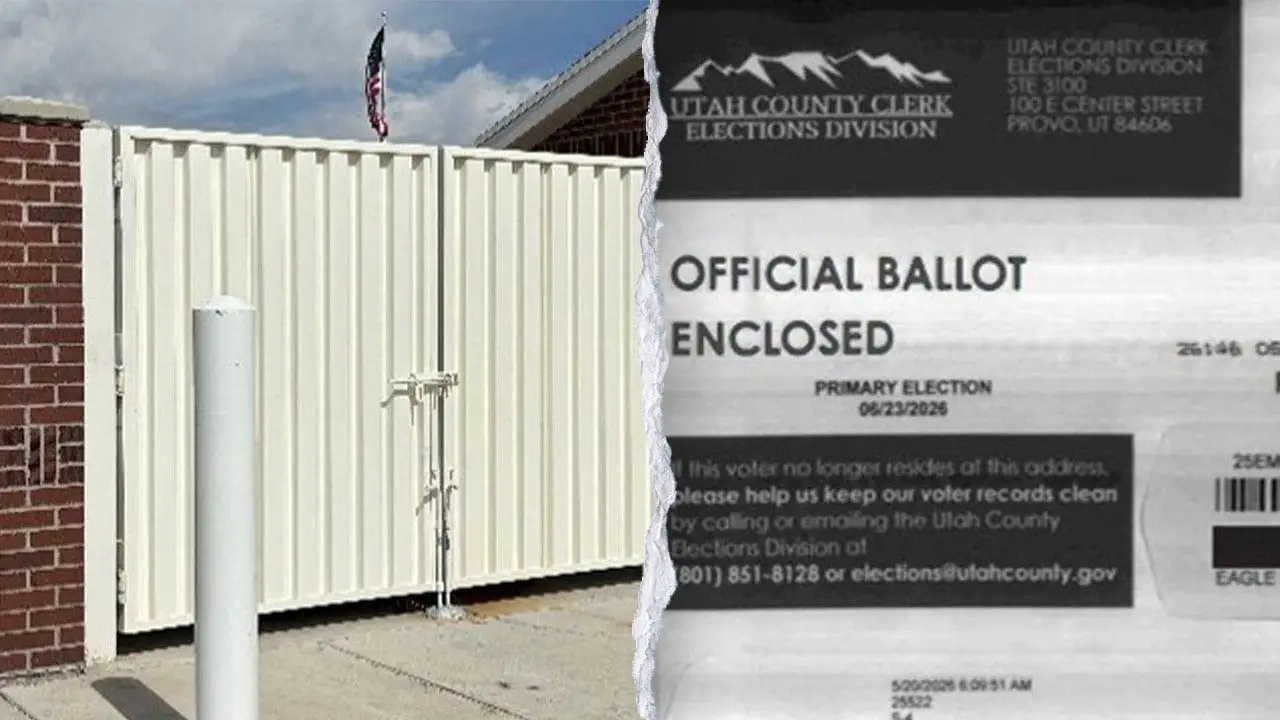
Seei was working as a letter carrier on June 3, entrusted with delivering mail to more than 300 residents in Eagle Mountain, a growing city in Utah County about 40 miles south of Salt Lake City. At the time, the state was gearing up for its June 23 primary election, and the mail included not only advertisements and routine correspondence but also hundreds of mail-in ballots, each clearly marked as an official election document. According to the DOJ, Seei separated those ballots from the rest of the mail shortly after beginning his shift. He then failed to deliver any of them, and within roughly ninety minutes, he discarded them, along with other pieces of mail that were also in his custody. The allegation describes a deliberate, methodical act rather than an accidental loss—one that transformed a letter carrier’s appointed rounds into what prosecutors now characterize as a serious federal crime. There is something almost shocking about the ordinariness of the scene: a worker starting his day, sorting through mail, deciding in the moment to cast hundreds of ballots into oblivion, all while the world outside went about its business unaware of what had happened.
The impact of those missing ballots soon rippled through the community. Several voters who had expected their mail-in ballots never received them and lodged complaints with the Utah County Clerk. Clerks are often the quiet guardians of election integrity, tracking voter participation and investigating anomalies, and this case was no exception. By using county databases, the clerk determined that voter participation in the area where the complaints originated was unusually low—a red flag that pointed directly to the missing mail. What remains uncertain, and perhaps most painful for the affected voters, is whether they were ever able to cast their ballots. Federal officials have said they do not yet know whether all of those residents received replacement ballots or found another way to vote. As part of the continuing investigation, officials plan to contact the affected voters to determine exactly what happened and whether they were ultimately able to participate in the election. For those residents, the incident may feel like a quiet disenfranchisement: not a dramatic confrontation at a polling place, but a mundane, frustrating silence from the mailbox that left them wondering if their vote ever mattered.
As the case moves forward, investigators are also looking closely at the question of motive. According to DOJ officials, Seei has told investigators that he did not have a political motivation for his alleged actions. That statement, if true, may make the alleged crime seem even more senseless—an act of carelessness or misconduct that harmed voters without serving any stated ideological purpose. But regardless of motive, federal prosecutors are treating the case with the full weight of the justice system. Acting Deputy Attorney General Trent McCotter emphasized the gravity of the allegations in a statement, saying, “When American voters lawfully cast their vote, they should feel confident that it is counted. Allegedly throwing away hundreds of ballots is a serious federal crime that undermines the integrity of our elections. Ballot integrity is not a partisan issue.” That final line is worth pausing on. In an era of heated political arguments over election procedures, the principle that no person should have the power to silently discard another person’s vote remains one of the few areas where Americans still expect to agree. The investigation into Seei is being conducted jointly by the U.S. Postal Service Office of Inspector General and Homeland Security Investigations, a pairing that underscores how seriously federal authorities take threats to election infrastructure.
This case also shines a broader light on the fragile trust that underlies mail-in voting. For millions of Americans, mail-in ballots are not a convenience but a necessity—used by elderly voters, military families stationed overseas, and those who simply cannot get to the polls on Election Day. The system depends on a chain of custody that includes printers, postal workers, and election officials, any link of which, if broken, can cast doubt on the entire process. Incidents like the one alleged in Utah are rare, but they are precisely the kind of event that can fuel skepticism about election integrity. This is why the response matters so much: not only the prosecution of wrongdoing, but also the commitment to transparency, outreach, and follow-through. The clerk’s office noticed the discrepancy, officials are investigating, and voters are being contacted—not to shift blame, but to repair a breach of trust. The criminal justice system will now determine Seei’s fate, and he is presumed innocent until proven guilty. But the broader lesson for all of us is that election integrity does not protect itself; it relies on ordinary people doing their jobs honestly, and on institutions willing to hold accountable those who do not.
For now, the case continues on a practical timeline. Seei was arrested Tuesday and made his initial appearance in federal court in Salt Lake City. His next court appearance is scheduled for November 30, and the investigation remains ongoing. In the months ahead, prosecutors will likely work to determine exactly how many ballots were affected, whether any voters were permanently disenfranchised, and what penalties should apply. Legal experts note that charges involving the destruction or delay of mail can carry serious consequences, particularly when election materials are involved. But beyond the courthouse, this story is a reminder of something simpler and more human: every ballot represents a person who took time to think about the future of their community and their country. For the residents of Eagle Mountain, a routine primary election may now be remembered as the time their mailboxes failed them. For the rest of us, it is an opportunity to reflect on how much we depend on quiet systems and the people who run them. The right to vote is foundational, but it is also fragile—and protecting it requires constant vigilance, not just in November, but every single day.