


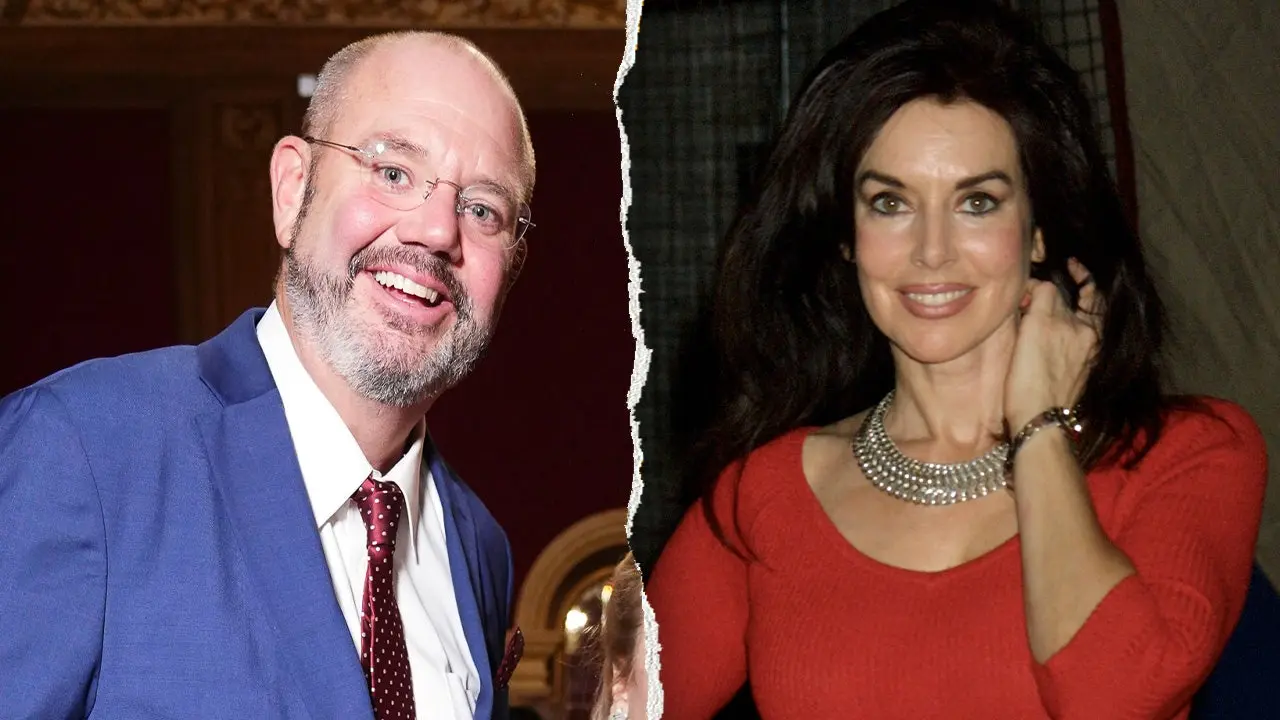
In the quiet aftermath of a primary night that refused to offer any easy answers, Rhode Island Republicans found themselves holding their breath. As the hours ticked past midnight and into the early morning, the race between Elaine Pelino and Aaron Guckian remained a statistical dead heat, a nail-biter of a contest that would ultimately decide who would carry the party’s banner into the November general election. The stakes were considerable, not just for the two candidates who had poured months of their lives into this pursuit, but for the Republican Party itself, which has long struggled to find a foothold in a state that has consistently leaned Democratic in statewide elections. This was more than a simple choice between two names on a ballot; it was a referendum on the direction the state party wanted to take, and a reflection of the very real tensions that exist between ideological purity and pragmatic electability. For Pelino and Guckian, the night represented the culmination of hard-fought campaigns built on vastly different visions, personalities, and paths to the political stage.
Standing on one side of this ideological divide was Elaine Pelino, a woman whose résumé reads like a colorful scrapbook of American life, far removed from the traditional corridors of political power. Before she ever considered running for office, Pelino had been a model, a media personality, and notably, a cheerleader for the Houston Oilers, the franchise that would later evolve into the NFL’s Tennessee Titans. It was a chapter of her life that made her a compelling and unconventional figure on the campaign trail, someone who could speak to voters not as a career politician, but as a woman who had lived a public life in ways most people only glimpse on television screens. In 2011, she added “publisher” to her list of accomplishments, founding Tigress Magazine, a venture that would ultimately release twelve issues before closing its doors. This eclectic background became the cornerstone of her appeal: a candidate who had built careers in demanding, visible, and competitive environments, and who now wanted to apply that same energy and fearlessness to the troubled state she loved. Her pitch to voters was fundamentally personal, rooted in a deep affection for Rhode Island and a conviction that her life experience, rather than a résumé in public office, made her uniquely suited to cut through the dysfunction of state government.
Pelino’s campaign was very much an extension of that personality, bold, direct, and unapologetically conservative in its framing. She swept into candidate forums and community gatherings with a message that resonated with the party’s base, promising to champion merit-based hiring to dismantle the old-boy networks that have long dominated state patronage, to stand firmly alongside law enforcement, to enforce immigration laws, and to expand school choice for families trapped in underperforming districts. Her words at one particular candidate forum captured the essence of her blunt, unvarnished style. “This is what I’m going to do. I’m learning. Everything is a learning curve because I’m not a lifetime politician. I’m here because I love Rhode Island. And I want them to have a great life. I want them to live in a prosperous and safe place. We should get all the illegals out of here,” she said, drawing a line in the sand that delighted her supporters while raising eyebrows among more moderate observers. The admission that she was still learning on the job was refreshingly honest for some, a sign of authenticity in a world of carefully scripted political messaging that often felt phonier than a three-dollar bill. To her supporters, she was a breath of fresh air; to her detractors, a hard-edged outsider whose rhetoric was more likely to energize Democrats than convert undecided independents. There was no mistaking that she represented the party’s conservative soul, a candidate who refused to soften her edges even as the general election loomed.
On the other side of the ledger was Aaron Guckian, a man whose approach to politics could not have been more different in tone or temperament. Rather than marketing himself as an insurgent outsider, Guckian leaned heavily on his experience within the machinery of state government, having served as a former aide to Republican Governor Donald Carcieri. This background gave him a fluency in the language of policy and governance that Pelino simply did not possess, and he used it to craft an image as the more serious, more prepared, and more electable option in the race. Where Pelino offered passion and disruption, Guckian offered competence and a steady hand, framing himself as a centrist problem-solver who could appeal not just to the GOP base, but to the independent voters and even moderate Democrats who ultimately decide statewide elections in Rhode Island. His whole campaign was built around the idea that Republicans needed to be pragmatic, that a candidate who could actually win, rather than one who simply said the right things to fire up the faithful, was the only realistic path back to relevance in a state where the party had spent years in the electoral wilderness. This distinction was the heart of the primary contest: experience versus energy, governance versus disruption, the known quantity versus the wild card.
Guckian’s platform reflected this disciplined, policy-centric worldview in every detail. He did not spend his time at forums delivering fiery broadsides against the cultural issues of the day; instead, he focused his energies on the practical, unglamorous mechanics of making government work better. His core commitments included a comprehensive overhaul of Rhode Island’s notoriously slow and cumbersome permitting process, a promise to improve the quality and speed of service delivery across state agencies, and a strict, disciplined approach to how the state’s revenue was collected and spent. For Guckian, the most urgent crisis facing Rhode Island was not a matter of values, but a matter of arithmetic. He pointed to a startling trajectory of state spending that had ballooned from approximately $9.3 billion in 2019 to more than $14 billion in the 2024-2026 budget cycle, representing a nearly fifty percent increase in just five years. And the timing could not have been worse, as the federal COVID relief dollars that had helped fuel this expansion were now expiring, leaving the state staring into a fiscal void. “Rhode Island made a critical mistake,” he warned on his campaign website. “We built permanent commitments on temporary federal money.” It was a sobering message, a warning that the state was living beyond its means and that the next governor would have to make painful choices to restore fiscal sanity.
As the dust begins to settle on this bruising primary, the larger picture comes into focus, and it is not a comfortable one for either candidate. Regardless of whether Pelino or Guckian ultimately emerges victorious, they will face an uphill climb in the November 3 general election against a Democratic opponent in a state where the party’s registration advantage is enormous and where Republicans have not won a gubernatorial race in years. The memory of the last election still stings: Democratic Governor Daniel McKee defeated Republican challenger Ashley Kalus by a decisive margin of 57.9% to 38.9%, a double-digit blowout that underscored just how deep the Democratic stronghold runs in the Ocean State. That defeat serves as a cautionary tale for the GOP, a reminder that enthusiasm within the party ranks is not always enough to overcome the structural challenges of a statewide race. Yet the party’s faithful remain hopeful, banking on the possibility that a fresh face, whether it be the magnetic Pelino with her cheerleader past and unapologetic conservatism, or the measured Guckian with his insider knowledge and centrist sensibilities, might just break the pattern. The choice made by primary voters will ultimately telegraph the kind of campaign the party intends to run, one based on fire and passion, or one based on competence and calculation. In a state as small and tightly knit as Rhode Island, where everyone seems to know everyone and politics is a blood sport played with passionate intensity, the journey is far from over. The primary may have ended, but the real fight, with all its uncertainty, all its promise, and all its peril, is just beginning.