


Paragraph 1: The Sunlit Vistas and the Shadowy Intruder
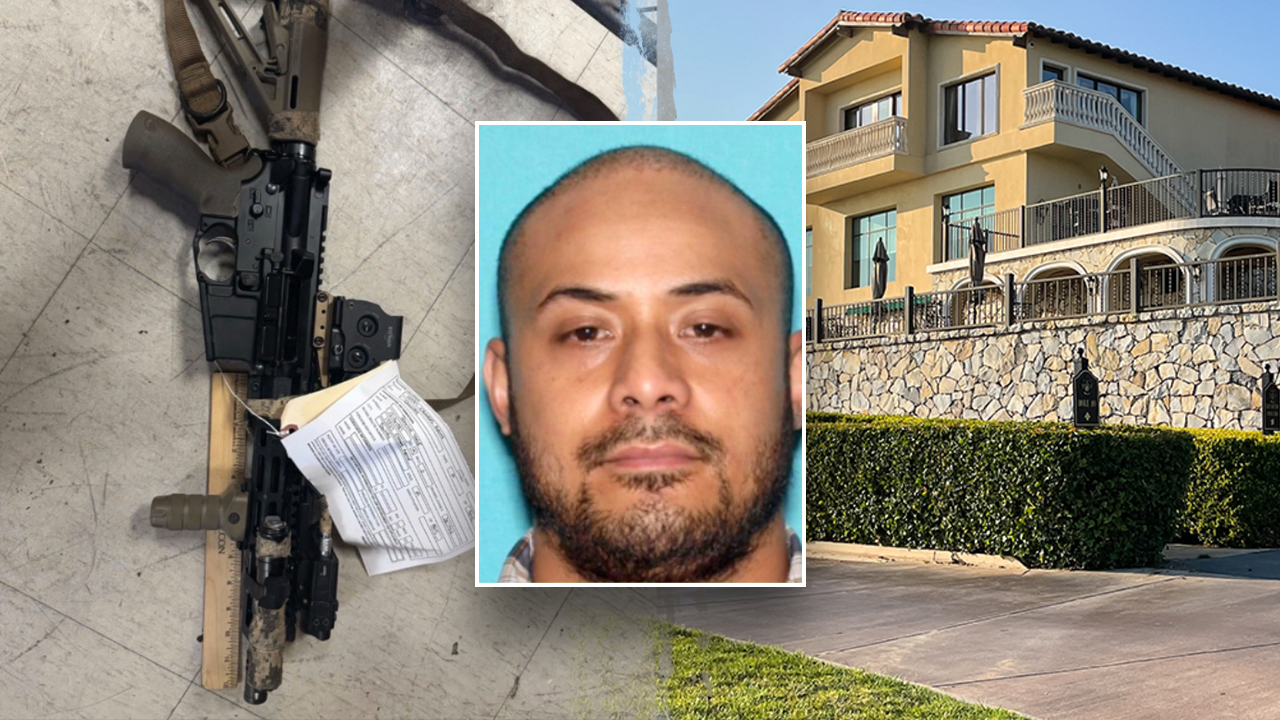
The Pacific Ocean shimmered off the coast of Rancho Palos Verdes, casting a serene, almost cinematic glow over the manicured fairways of Trump National Golf Club Los Angeles. It was a setting designed for leisure, for the solace of a powerful man seeking a brief respite from the chaotic roar of national politics. Yet, on the afternoon of August 2, this idyllic landscape became the stage for a deeply unsettling intrusion. A man named Jeanine John Taele, a 38-year-old Marine Corps veteran, was spotted walking the grounds, his movements carefully observed by plainclothes federal agents who had been tracking his presence with growing alarm. He was not a golfer, nor a guest. He was taking photographs, recording videos, and methodically surveying the property as if mapping its every contour. When authorities detained him, the initial encounter seemed almost benign, but the discoveries that followed peeled back a terrifying layer of reality. In his pants pocket, they found a 16-round magazine loaded with hollow-point ammunition—bullets engineered to expand upon impact, maximizing internal damage—a stark harbinger of violent intent. Taele claimed he was a State Department employee on a security detail, a story that quickly unraveled. As investigators began to piece together the fragments of his life and his plans, they uncovered a chilling tapestry of obsession, meticulous planning, and a troubling descent into a world of political paranoia, all converging on the very doorstep of the former and current president. The serene tranquility of the California coast had been violated by a mind seemingly consumed by a dark purpose.
Paragraph 2: A Trove of Obsession and Intelligence
The full extent of Taele’s fixation became terrifyingly clear during a Los Angeles County court hearing, where prosecutors unveiled a staggering collection of evidence. Within his possession, and later at his Downey residence, they discovered more than 200 pages of writings—a labyrinthine archive of surveillance and planning. Among these documents were specific, detailed schedules belonging to none other than First Lady Melania Trump, outlining her movements in a way that suggested an intimate understanding of her routine. More disturbingly, the notebooks contained meticulous lists and profiles of U.S. Secret Service personnel, including the agents tasked with protecting the president and his family. The information was not vague or speculative; it was precise, including descriptions of individual security details and the rhythms of their protective operations. The writings also featured seven notebooks filled with 208 pages of drawings and sketches of the golf club itself, mapping entry points, potential chokeholds, and the flow of the property. Layered within this cartography of violence were chilling lists detailing how to survive “off the grid”—a testament to the meticulous preparation that often accompanies such plots. This was not the scattered rambling of a confused individual; it was a deliberate, focused dossier of an intended target. The sheer magnitude of the intelligence gathered painted a picture of a man who had spent countless hours, likely days and weeks, embedding himself in the operational details of the president’s world, seeking vulnerabilities in the armor that surrounds the most protected family on earth. The realization that a private citizen could amass such specific operational intelligence sent a shudder through the courtroom.
Paragraph 3: The Arsenal and the Frightening Response
The cache of weaponry law enforcement recovered further solidified the severity of the threat. At the golf course, alongside the magazine in his pocket, authorities searched his vehicle and found a loaded pistol with a round already chambered, along with another magazine containing more hollow-point ammunition. But it was the subsequent search of his home in Downey that revealed the true scale of his preparedness. There, investigators uncovered an illegally modified AR-platform rifle, a firearm capable of tremendous destructive power, along with a .45-caliber pistol, body armor, high-capacity magazines, and a bulk stash of ammunition. Additionally, they seized radio signal devices, suggesting an attempt to communicate or intercept communications, and an array of paraphernalia that pointed to a disturbing level of readiness. The presence of body armor indicated a readiness for a firefight, the modified rifle a tool of lethal force, and the high-capacity magazines a means to sustain a prolonged engagement. The FBI’s Joint Terrorism Task Force, the U.S. Secret Service, and the Los Angeles County Sheriff’s Department all mobilized in a coordinated response, treating this not as a minor disturbance but as a credible threat against a protectee. The image that emerges is of a man on the precipice—someone who had assembled the tools of an assassin but perhaps had not yet crossed the final line. In a political climate already fraught with tension and violence, the arrest served as a stark reminder of the invisible threats that law enforcement works tirelessly to intercept, and the hair-thin margin between a chilling plan and a catastrophic action.
Paragraph 4: The Veteran and the Unraveling Mind
Perhaps the most heart-wrenching layer of this story lies not in the arsenal or the schedules, but in the biography of the man accused. Jeanine John Taele is not a shadowy figure from a spy novel; he is a decorated Marine who served his country in both Iraq and Afghanistan. He fought in the crucible of conflict, bearing witness to the horrors of war that often leave invisible scars that never fully heal. The trajectory from a battlefield hero to a man accused of plotting against the Commander-in-Chief and his family is a tragic, all-too-common narrative in the annals of American violence. Los Angeles County Judge John Lonergan Jr. captured the collective unease with his remarks during the hearing, calling the allegations “alarming,” especially given “the violence that is creeping into our everyday lives, especially with our partisanship in the political environment” leading up to the midterms. The judge’s comments touch upon a broader societal fear—a recognition that the political discord charging the national atmosphere is not just rhetorical; it has real, tangible consequences that can envelop vulnerable individuals. The case was suspended after a pretrial evaluation determined that Taele was not mentally fit to stand trial, shifting the proceedings to a mental health court. This diagnosis forces a grim pivot in the narrative—what does it mean when a man who once served his nation’s ideals now stands accused of betraying them, engulfed by a mental illness that has likely warped his perception of duty, threat, and reality? His public defender, A.J. Bayne, urged the public to withhold judgment, emphasizing that “he’s a veteran, he served our country,” and that “people assume too much” about his motives. The tragedy is compounded by the fact that he has a family that loves him, a support system now grappling with the shattering revelation of his alleged intentions.
Paragraph 5: The Courtroom, the Defense, and the Weight of the Law
Inside the Los Angeles County courtroom, the atmosphere was thick with a bizarre blend of procedural gravity and human tragedy. Judge Lonergan’s decision to suspend criminal proceedings and route the case to the Hollywood Mental Health Court was a legal acknowledgment that Taele, at this moment, is a patient in need of care rather than a defendant prepared for trial. He will remain jailed until a September 9 hearing where mental health professionals will further assess his competency, exploring the intricate interplay between his trauma, his ideology, and his alleged actions. The defense has painted a portrait of a man who, despite the disturbing evidence, is not a hardened terrorist but a deeply troubled individual. The public defender’s plea to avoid hasty conclusions is a vital reminder that the American justice system must navigate the murky waters between intent and illness. Yet, for the Secret Service and the security apparatus, the case is a stark reminder that the credential checks and protective perimeters are not infallible. While the agency maintains its standard stance of not commenting on specific protective intelligence matters, it is clear that the threat was deemed credible enough to warrant immediate detention and a comprehensive multi-agency investigation. The challenge lies in balancing the public’s right to safety with the defendant’s right to a fair trial and humane treatment. The 200 pages of schedules and the loaded weapons are damning, but they are artifacts of a mind that has deteriorated away from the Marine who once swore an oath to protect the Constitution. The legal journey ahead will be arduous, forcing the justice system to simultaneously protect national security interests while grappling with the humane treatment of a veteran who has fallen through the cracks.
Paragraph 6: A Nation on Edge and the Echoes of a Troubled Service
The arrest of Jeanine John Taele does not exist in a vacuum; it is a jarring echo in a decade already marked by threats against President Trump’s life, from the catastrophic shooting in Butler, Pennsylvania, to the latest breach at one of his golf clubs. The Secret Service’s reactive posture, and the recent scrutiny regarding missed opportunities to prevent previous assassination attempts, lends a heightened urgency to this case. President Trump, ever defiant, sought solace in the notion that “only consequential presidents” attract such danger, framing the threat as a bizarre badge of honor. But for the rest of the nation, the revelation that a man had mapped the movements of the First Lady, cataloged the identities of her security detail, and compiled a survivalist manifesto alongside an arsenal of weapons, is deeply unsettling. It speaks to a profound societal sickness—a polarization so intense that it corrodes the mental stability of those already vulnerable. The case forces us to confront uncomfortable questions about the mental health crisis facing our veterans, the radicalization of disenfranchised citizens, and the immense burden placed on law enforcement to predict the unpredictable. As Taele sits in a cell, awaiting a mental health evaluation, his story becomes a cautionary tale about the cost of service, the fragility of the human mind, and the delicate balance we must strike as a society between vigilance and compassion. The sun will continue to rise over Rancho Palos Verdes, the golfers will return, and the president will move on to his next engagement. But the shadow of that August afternoon lingers—a reminder that the greatest threats often come from within, wearing the uniform of a once-proud patriot, their intentions obscured by the fog of a fractured mind.